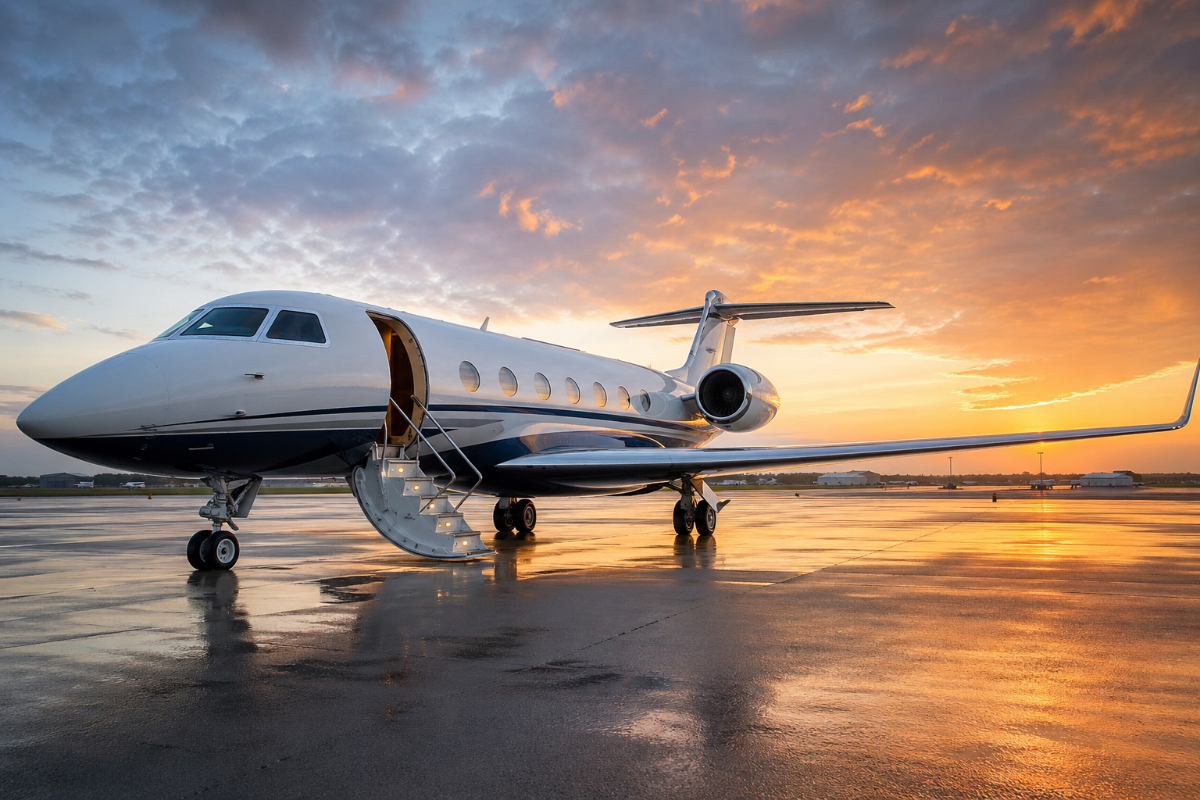
Heavy Jets represent the absolute pinnacle of private aviation in 2026, combining unmatched range, speed, and onboard capability into a single strategic asset. Unlike light jets or mid-size jets, these aircraft are engineered for global missions, allowing ultra-high-net-worth individuals and corporations to move seamlessly between continents without compromise. They are not simply a luxury they are a tool of power, efficiency, and control in a hyper-connected global economy.
In today’s business landscape, time is the most valuable currency. Heavy Jets transform long-haul travel into productive, high-value hours rather than lost downtime. With fully equipped cabins, high-speed connectivity, and optimized pressurization systems, these aircraft enable executives to work, negotiate, and make critical decisions while crossing oceans at near-supersonic speeds.
Moreover, Heavy Jets function as flying headquarters for billionaires, CEOs, and government leaders. They provide a controlled, private environment where strategy is developed and executed mid-flight. In 2026, owning or accessing a Heavy Jet is no longer just about prestige it is a calculated move to maximize global mobility and decision-making efficiency.
What Defines Heavy Jets (Technical Breakdown)?
Heavy Jets are defined by their exceptional performance envelope, combining long-range capability with high passenger capacity and advanced onboard systems. Typically accommodating between 10 and 19 passengers, these aircraft are designed for intercontinental missions that would otherwise require multiple stops in smaller jets. Their ability to fly 5,000 to over 7,700 nautical miles nonstop places them firmly in the ultra-long-range category.
Cruise speeds for Heavy Jets generally range between Mach 0.80 and Mach 0.90, allowing them to significantly reduce travel time on long-haul routes. This performance is supported by large fuel capacities and highly efficient turbofan engines optimized for endurance rather than short bursts. As a result, these jets excel in missions such as New York to Dubai or London to Singapore without refueling.
Another defining characteristic is cabin altitude, typically maintained between 4,000 and 6,000 feet even at cruising altitudes above 40,000 feet. This significantly reduces passenger fatigue and enhances cognitive performance during long flights. Advanced avionics systems further support long-haul operations by optimizing routing, fuel consumption, and weather avoidance in real time.
Heavy Jets are engineered with a clear focus on long-duration efficiency. From aerodynamic wing designs to advanced flight management systems, every component is optimized to deliver maximum range with minimal operational compromise. Consequently, they stand as the most capable and technically sophisticated category in private aviation.
Why Heavy Jets Are the Ultimate Power Move?
Heavy Jets are considered the ultimate power move because they eliminate the constraints of geography. Executives can travel nonstop between major financial hubs, enabling same-day or next-day decision-making across continents. This level of mobility creates a strategic advantage that cannot be replicated through commercial aviation or smaller private jets.
Beyond range, Heavy Jets redefine productivity in the air. Fully equipped cabins allow for uninterrupted work, secure communications, and even high-level negotiations during flight. With conference tables, private offices, and dedicated rest areas, passengers can maintain peak performance regardless of travel duration.
Time-zone optimization is another critical advantage. By carefully scheduling departures and leveraging long-range capabilities, executives can align arrival times with key business hours in different regions. This transforms travel into a strategic planning window rather than a logistical challenge.
Furthermore, Heavy Jets convert travel time into decision-making time. Instead of losing 12–16 hours on a commercial flight, leaders can utilize that period to finalize deals, review strategies, or conduct meetings. In a world where timing is critical, this capability directly translates into competitive advantage.
Heavy Jets Comparison (2026)
| Model | Range (nm) | Passenger Capacity | Cruise Speed | Price Range | Best Use Case |
|---|---|---|---|---|---|
| Gulfstream G700 | ~7,500 | 13–19 | Mach 0.85 | $75M–$80M | Ultra-long-range executive travel |
| Bombardier Global 7500 | ~7,700 | 14–19 | Mach 0.85 | $73M–$78M | Multi-zone luxury + productivity |
| Dassault Falcon 10X | ~7,500 | 12–16 | Mach 0.85 | $75M+ | Wide cabin comfort + efficiency |
| Boeing Business Jet | 6,000+ | 20–50 | Mach 0.80 | $90M–$100M+ | Government/VIP transport |
| Airbus ACJ Series | 6,000+ | 20–60 | Mach 0.80 | $90M–$120M+ | Ultra-luxury flying residence |
Top Heavy Jets in 2026
The Gulfstream G700 leads the market with a range of approximately 7,500 nautical miles and one of the most advanced cabin environments available. Its ultra-low cabin altitude and high-speed connectivity make it ideal for executives who prioritize both performance and comfort. The aircraft’s flexible cabin layout allows for multiple living zones, including sleeping, dining, and meeting areas.
The Bombardier Global 7500 remains a benchmark in the category, offering the longest range at around 7,700 nautical miles. Its four distinct living spaces provide unparalleled versatility, enabling passengers to transition seamlessly between work and rest. The aircraft’s Smooth Flex Wing design enhances both efficiency and ride quality, particularly on long-haul missions.
Dassault’s Falcon 10X introduces the widest cabin in its class, focusing heavily on passenger experience and modular design. Its advanced digital flight controls and fuel-efficient engines position it as a strong competitor in both performance and sustainability. The aircraft is particularly suited for operators seeking a balance between comfort and operational efficiency.
At the ultra-large end of the spectrum, Boeing Business Jets and Airbus ACJ aircraft redefine what a Heavy Jet can be. These platforms are essentially commercial airliners converted into private flying environments, offering space for full bedrooms, lounges, and even showers. They are typically used by governments and billionaires requiring maximum space and customization.
Across all these models, advancements in connectivity, noise reduction, and pressurization systems have elevated the onboard experience. Ka-band internet provides global coverage, while improved insulation ensures a quieter cabin environment. These innovations collectively enhance both productivity and comfort during long-haul flights.
Cost & Ownership Economics
Heavy Jets come with significant financial commitments, with acquisition costs typically ranging from $50 million to over $100 million. Operating costs are equally substantial, averaging between $10,000 and $20,000 per flight hour depending on the aircraft and mission profile. Annual operating expenses can easily reach $3 million to $6 million or more.
Fuel burn is one of the largest cost components, although modern engines have improved efficiency for long-haul operations. Crew expenses include multiple pilots and often dedicated cabin staff, reflecting the complexity and service expectations associated with these aircraft. Maintenance reserves and hangar fees further contribute to the overall cost structure.
However, the true value of Heavy Jets lies in their ability to optimize time. When calculating cost per mile versus value of time, the equation shifts significantly for high-level executives. Saving even a few hours on a critical trip can justify the expense when measured against business outcomes.
Break-even utilization typically occurs around 300 to 400 flight hours per year. Below this threshold, chartering or fractional ownership may be more economical. Above it, full ownership becomes a strategic investment rather than a luxury purchase.
Cabin Experience: Flying Executive Headquarters
The cabin of a Heavy Jet is designed to function as a fully operational executive environment. Full-flat beds and private suites allow passengers to rest effectively during long-haul flights, ensuring they arrive ready for high-level engagements. Conference areas enable in-flight meetings, complete with secure communication systems.
Luxury bathrooms and, in some models, full shower facilities further enhance comfort on extended missions. High-speed WiFi ensures continuous connectivity, allowing passengers to access data, communicate with teams, and manage operations in real time.
From a design perspective, cabins are engineered to reduce fatigue and improve cognitive performance. Lighting systems mimic natural circadian rhythms, while advanced pressurization minimizes the physical strain of high-altitude travel. These features collectively create an environment where productivity can be sustained over long durations.
Ultimately, the cabin is not just about comfort—it is about maintaining peak performance. Heavy Jets enable executives to operate at full capacity regardless of location, effectively turning travel into an extension of the workplace.
Heavy Jets vs Mid-Size Jets vs Light Jets
| Category | Range | Cost | Comfort Level | Productivity | Ideal User |
|---|---|---|---|---|---|
| Light Jets | 1,500–2,500 nm | Low | Basic | Limited | Short regional travel |
| Mid-Size Jets | 2,500–4,000 nm | Moderate | Good | Moderate | Domestic/intra-continental |
| Heavy Jets | 5,000–7,700+ nm | Very High | Exceptional | Maximum | Global executives & billionaires |
Global Mobility & Strategic Advantage
Heavy Jets provide unparalleled access to international markets, enabling direct connections between major economic hubs. This eliminates the inefficiencies associated with commercial travel, such as layovers, delays, and rigid scheduling constraints. As a result, executives can operate with greater flexibility and responsiveness.
The ability to complete multi-continent travel within 24 to 48 hours is a game-changer for global business operations. Leaders can attend meetings in multiple regions, oversee operations, and return without significant downtime. This level of mobility supports faster decision-making and more effective leadership.
Moreover, Heavy Jets play a critical role in global deal-making. Sensitive negotiations can take place in a secure, private environment, free from external interference. This ensures confidentiality and allows for more focused discussions.
In essence, Heavy Jets function as strategic infrastructure for global elites. They enable a level of operational agility that is simply unattainable through other means of transportation.
Why Billionaires Prefer Heavy Jets?
Billionaires and ultra-high-net-worth individuals demand control, and Heavy Jets give them exactly that. From scheduling to cabin setup, owners can tailor every part of the journey to match their needs. As a result, they manage global operations with precision and speed. Moreover, this level of control helps them respond quickly to business changes across multiple regions.
Privacy also plays a critical role. Heavy Jets create a secure space where executives can hold sensitive discussions without exposure. Therefore, high-profile individuals rely on them to protect confidential deals and strategic decisions. In addition, the controlled environment reduces outside interruptions and keeps focus sharp.
Furthermore, the ability to host meetings mid-flight adds real value. Instead of waiting to land, executives start discussions immediately and move projects forward. Consequently, they shorten decision cycles and gain a clear advantage in fast-moving markets.
Ultimately, Heavy Jets match the demands of a high-performance lifestyle. They go beyond transportation and act as powerful business tools. In other words, they turn travel time into productive, high-value work hours.
Limitations & Strategic Trade-Offs
However, Heavy Jets also come with clear trade-offs. High purchase and operating costs limit ownership to a small group of buyers. Because of this, many operators carefully evaluate usage before making a commitment. In many cases, cost becomes the biggest barrier.
Another key limitation involves airport access. Heavy Jets require longer runways and advanced facilities, so they cannot land at smaller airports. As a result, travelers may lose some flexibility compared to light jets. Nevertheless, they still cover major global hubs with ease.
Additionally, there is a clear trade-off between range and flexibility. Heavy Jets perform best on long-haul routes, but they may not suit short trips efficiently. Therefore, operators must balance mission needs with cost efficiency. In the same way, the cost-versus-capability equation requires careful planning to maximize value.
2026 Private Aviation Trends
Demand for Heavy Jets continues to rise in 2026 as global mobility becomes more important. More executives now require nonstop intercontinental travel to stay competitive. Consequently, ultra-long-range capability has become a standard expectation rather than a luxury.
At the same time, cabin design continues to improve. Manufacturers now focus more on productivity and passenger well-being. For example, they introduce better lighting systems, cleaner air circulation, and smarter layouts. As a result, passengers stay productive and feel less fatigue during long flights.
Moreover, sustainability is gaining attention across the industry. Companies now invest in fuel efficiency and sustainable aviation fuels to reduce environmental impact. Although Heavy Jets still consume significant resources, ongoing improvements continue to lower emissions over time.
Most importantly, the role of Heavy Jets is changing. Owners now treat them as strategic business assets instead of luxury items. Therefore, they use these aircraft to speed up decisions, improve global reach, and strengthen leadership efficiency in a fast-moving world.
FAQs
What are Heavy Jets?
Heavy Jets are large private aircraft built for long-range travel. They typically carry 10–19 passengers and fly over 5,000 nautical miles nonstop.
How much do Heavy Jets cost?
Heavy Jets usually cost between $50 million and $100 million or more. In addition, operating costs range from $10,000 to $20,000 per hour.
What is the range of a Heavy Jet?
Most Heavy Jets fly between 5,000 and 7,700+ nautical miles without stopping.
Which are the best Heavy Jets in 2026?
Top models include the Gulfstream G700, Bombardier Global 7500, Dassault Falcon 10X, and Boeing or Airbus business jets.
Who should buy a Heavy Jet?
Heavy Jets suit billionaires, large companies, and government entities that need global mobility and high productivity.