The integration of AI in Superyachts has rapidly shifted from a futuristic concept to an operational reality in 2026, fundamentally redefining how ultra-high-net-worth individuals interact with their vessels, particularly within Private Superyachts. What was once limited to advanced navigation systems has now evolved into fully interconnected intelligent ecosystems capable of learning, adapting, and optimizing nearly every onboard function. This transformation is not just technological it is experiential, operational, and strategic.
In recent years, the global luxury yachting industry has witnessed increasing demand for smarter, more efficient vessels that offer seamless personalization without compromising performance or safety. Consequently, shipbuilders and technology firms are investing heavily in artificial intelligence to create yachts that anticipate needs rather than react to commands. This shift reflects a broader trend across luxury industries, where exclusivity is now defined by intelligence as much as craftsmanship.
Moreover, AI is enabling a new level of autonomy, sustainability, and efficiency that aligns with modern expectations of responsible luxury. From predictive maintenance to AI-driven concierge systems, the superyacht is no longer just a status symbol it is becoming a fully intelligent platform. As 2026 unfolds, AI in Superyachts is not just enhancing the experience; it is reshaping the very definition of luxury at sea.
Overview of AI in Superyachts
The concept of AI in Superyachts refers to the integration of machine learning algorithms, automation systems, and data-driven decision-making tools into the core operations of luxury vessels. Unlike traditional yachts that rely heavily on manual control and predefined systems, AI-enabled yachts continuously analyze data from sensors, user inputs, and environmental conditions to optimize performance in real time. This creates a dynamic environment where systems evolve based on usage patterns and operational needs.
Traditionally, yacht systems operated in silos navigation, climate control, entertainment, and maintenance were managed independently. However, the introduction of AI has unified these systems into a cohesive smart ecosystem, particularly within Private Superyachts. This interconnected framework allows seamless communication between onboard technologies, enabling a synchronized response to both operational demands and guest preferences. As a result, yacht owners experience a level of convenience and control that was previously unattainable.
Furthermore, the growth of smart yacht ecosystems has been accelerated by advancements in cloud computing and IoT (Internet of Things). These technologies allow yachts to remain connected even in remote locations, ensuring continuous data flow and system updates. Consequently, AI in Superyachts is no longer limited by geography, making global operations more efficient and responsive.
AI in Navigation & Safety
Navigation and safety have been among the most transformative areas impacted by AI in Superyachts, particularly in Private Superyachts. AI-assisted route optimization systems now analyze vast datasets, including ocean currents, weather patterns, and maritime traffic, to determine the most efficient and safest routes. These systems operate in real time, allowing captains to make informed decisions with unprecedented accuracy.
Moreover, real-time weather analysis powered by AI provides predictive insights that go beyond traditional forecasting. By processing satellite data and historical weather patterns, AI systems can anticipate changes and recommend adjustments proactively. This not only enhances safety but also improves fuel efficiency by avoiding adverse conditions.
Collision avoidance has also reached new levels of sophistication. AI-driven systems utilize radar, LiDAR, and computer vision to detect potential obstacles and automatically adjust navigation paths. These systems are capable of reacting faster than human operators, significantly reducing the risk of accidents in congested or challenging waters.
Additionally, predictive maintenance alerts have become a critical component of onboard safety. AI continuously monitors engine performance, structural integrity, and system health, identifying potential issues before they escalate. This proactive approach minimizes downtime and ensures that the vessel remains in optimal condition throughout its operation.
AI Applications in Superyachts
| Application Area | AI Functionality |
|---|---|
| Navigation | Route optimization, autonomous adjustments |
| Safety | Collision avoidance, real-time hazard detection |
| Maintenance | Predictive diagnostics, automated alerts |
| Guest Experience | Personalization, AI concierge services |
| Energy Efficiency | Fuel optimization, smart power distribution |
AI-Driven Luxury Experience
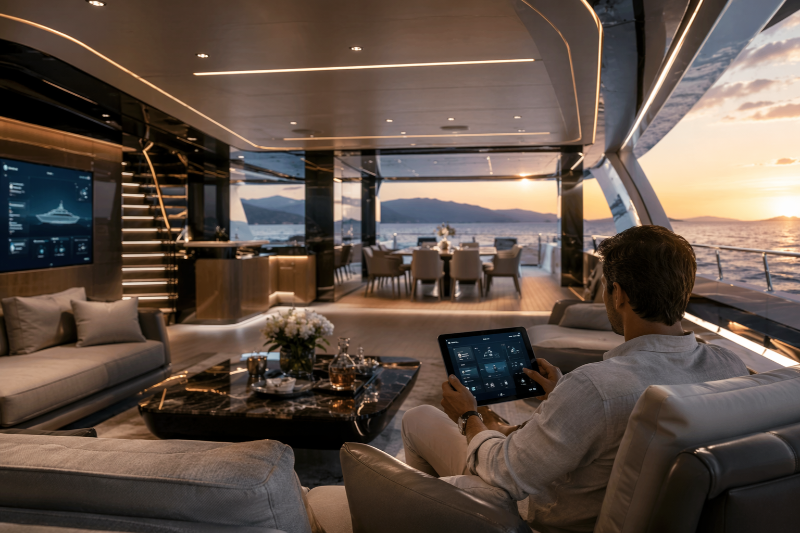
One of the most compelling aspects of AI in Superyachts, especially in Private Superyachts, is its ability to deliver hyper-personalized luxury experiences. AI systems analyze guest preferences, behaviors, and historical data to tailor every aspect of the onboard environment. From adjusting cabin temperatures to curating entertainment playlists, the yacht becomes an extension of the owner’s lifestyle.
Voice-controlled systems have further enhanced user interaction by eliminating the need for manual controls. Guests can manage lighting, climate, security, and entertainment through natural language commands, creating a seamless and intuitive experience. This level of convenience aligns perfectly with the expectations of modern luxury consumers.
AI concierge services represent another significant advancement. These systems can handle reservations, plan itineraries, and even suggest activities based on guest preferences and location data. Consequently, the traditional role of concierge staff is being augmented by intelligent systems that operate around the clock.
Smart Operations & Crew Efficiency
Furthermore, AI facilitates better decision-making by providing actionable insights. Whether it is optimizing fuel usage or scheduling maintenance, these insights enable more strategic planning and resource allocation, ultimately enhancing operational efficiency.
Read also: Mangusta GranSport 34: Elite Performance Meets Timeless Design
Energy Management & Sustainability
Sustainability has become a critical focus in the luxury yachting industry, and AI in Superyachts plays a pivotal role in achieving environmental goals. AI systems optimize fuel consumption by analyzing engine performance and route conditions, ensuring maximum efficiency with minimal waste.
Integration with hybrid propulsion systems further enhances sustainability efforts. AI manages the transition between different power sources, optimizing energy usage based on operational requirements. This not only reduces emissions but also extends the lifespan of onboard systems.
Smart energy distribution is another significant advancement. AI systems monitor power usage across the yacht, allocating resources efficiently to prevent energy wastage. This level of control is particularly important for large vessels with complex energy demands.
Moreover, the reduced environmental impact aligns with the growing demand for responsible luxury. Owners are increasingly seeking vessels that combine performance with sustainability, making AI a key differentiator in the superyacht market.
Traditional Yachts vs AI-Enabled Superyachts
| Feature | Traditional Yachts | AI-Enabled Superyachts |
|---|---|---|
| Automation | Limited | Advanced, adaptive systems |
| Efficiency | Moderate | Highly optimized |
| Crew Dependency | High | Reduced but enhanced roles |
| Guest Experience | Static | Personalized, dynamic |
| Cost Efficiency | Higher long-term costs | Optimized operational costs |
Technology & Integration
The backbone of AI in Superyachts, particularly in Private Superyachts, lies in the integration of IoT devices with advanced AI algorithms. Sensors distributed throughout the vessel collect data on everything from temperature to engine performance, creating a comprehensive data network that feeds into AI systems.
Cloud connectivity ensures that yachts remain linked to global data networks, enabling real-time updates and remote monitoring. This connectivity allows for continuous system improvements and access to advanced analytics, even in remote maritime environments.
However, cybersecurity has become a critical consideration. As yachts become more connected, they are also more vulnerable to cyber threats. Consequently, robust security measures are essential to protect sensitive data and ensure system integrity.
Integration with shore-based systems further enhances operational efficiency. Owners and management teams can monitor and control yacht operations remotely, providing greater flexibility and oversight.
Why It Matters in 2026?
The significance of AI in Superyachts in 2026 extends beyond technological advancement. It reflects a broader shift in consumer expectations, where luxury is defined by intelligence, efficiency, and personalization.
Rising demand for smart luxury experiences is driving innovation across the industry. Owners are no longer satisfied with traditional amenities; they seek vessels that offer seamless integration of technology and lifestyle.
Moreover, efficiency and sustainability have become key priorities. AI enables yachts to operate more responsibly while maintaining high performance standards, aligning with global environmental goals.
Competitive differentiation is another critical factor. Shipbuilders that successfully integrate AI are gaining a significant edge in the market, attracting discerning clients who value innovation and exclusivity.
Benefits of AI in Superyachts
- Enhanced comfort through personalized environments
- Improved safety with advanced navigation systems
- Reduced operational costs over time
- Increased efficiency in energy and resource management
- Elevated guest experience with AI-driven services
Limitations of AI Integration
- High initial implementation costs
- Potential cybersecurity vulnerabilities
- Dependence on advanced technological systems
- Learning curve for crew adaptation
2026 Trends in AI-Driven Yachting
- Rapid growth of AI-powered luxury assets
- Increased integration of autonomous navigation features
- Rising investment in maritime AI technologies
- Growing demand for future-ready superyachts
FAQs
How is AI used in superyachts?
AI is used for navigation, safety, maintenance, guest personalization, and energy management, creating a fully intelligent onboard ecosystem.
Are AI-powered yachts fully autonomous?
Most are semi-autonomous, with AI assisting human operators rather than replacing them entirely.
Does AI reduce the need for crew?
AI reduces manual workload but enhances crew roles rather than eliminating them.
Is AI in yachts safe?
Yes, when combined with robust cybersecurity and monitoring systems, AI significantly improves safety.
What are the costs of AI integration?
Costs are high initially but are offset by long-term efficiency and reduced operational expenses.