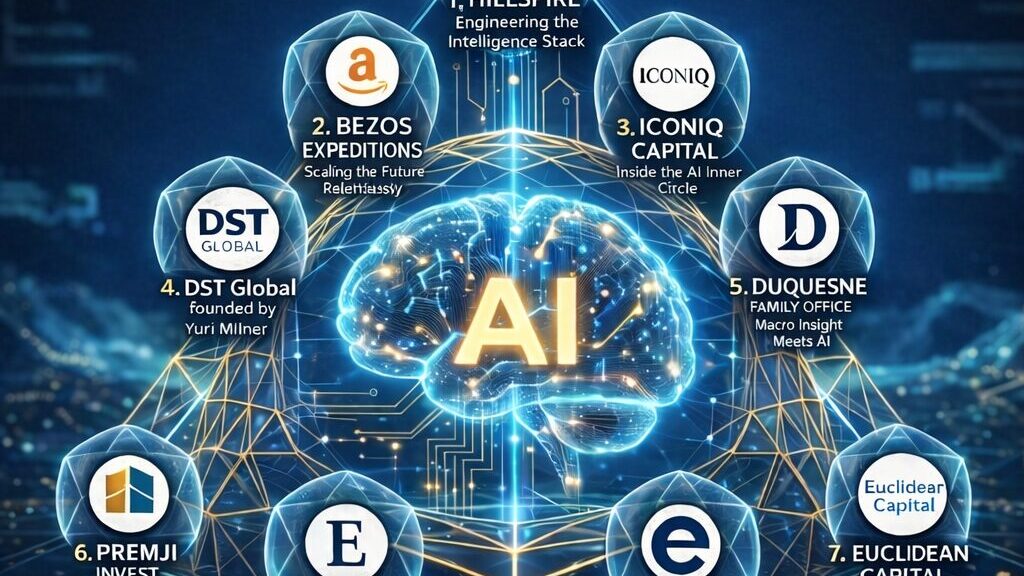
The rise of artificial intelligence is no longer confined to venture capital firms or public markets. Behind the scenes, some of the world’s most influential family offices are quietly shaping the future of AI through strategic investments, long-term capital, and conviction-driven bets. These entities operate with patience and flexibility, allowing them to support transformative technologies at scale.
From Silicon Valley to global investment hubs, these family offices are not only backing AI companies but also influencing how intelligence is developed, deployed, and monetized. Their role is increasingly central to the evolution of the AI economy.
Artificial intelligence is rapidly becoming the foundational layer of the global economy, reshaping industries with a speed and scale not seen since the advent of the internet. From healthcare and finance to defense, real estate, and energy, AI is transforming how decisions are made, how capital is allocated, and how value is created. Algorithms are no longer just tools, they are becoming core infrastructure, embedded in everything from diagnostics and drug discovery to autonomous systems, predictive analytics, and intelligent supply chains.
In healthcare, AI is accelerating breakthroughs in early disease detection, personalized medicine, and drug development. AI is compressing timelines that once took decades into years. In business, it is redefining productivity, enabling companies to automate complex workflows, enhance customer intelligence, and unlock entirely new revenue streams. In defense and national security, AI is emerging as a strategic imperative, powering everything from cybersecurity to autonomous systems and battlefield intelligence. Across financial markets, AI-driven models are influencing trading strategies, risk management, and capital flows at a global scale.
This is not simply a technology cycle. It is a structural transformation of the global economy.
At the center of this transformation are family offices. They are uniquely positioned to lead. Unlike traditional institutional investors bound by short-term performance pressures, family offices deploy patient, flexible, and conviction-driven capital, allowing them to invest early in breakthrough technologies and support them through long development cycles. Their ability to move quickly, think generationally, and partner directly with founders gives them a decisive advantage in a field where timing, access, and insight are everything.
Increasingly, these family offices are not just participants in the AI revolution. They are architects of it. They are backing the infrastructure powering AI, funding the companies redefining industries, and influencing how intelligence is developed, governed, and deployed across society. From Silicon Valley to global financial hubs, their role is becoming central to how the next era of innovation unfolds.
What emerges is a new class of power players who are operating quietly, but shaping one of the most important technological revolutions of our time.
Hillspire: Engineering the Intelligence Stack


AI is not just a technology wave. It’s a national priority and civilization shift
Hillspire, the family office of Eric Schmidt, stands at the intersection of technology and long-term capital. With Schmidt’s deep roots in Google, Hillspire brings both technical understanding and strategic clarity to AI investments. The firm focuses on foundational technologies, including machine learning infrastructure, cybersecurity, and national security applications of AI. Its approach is deliberate and research-driven, often aligning with projects that have both commercial and societal impact.
AI Exposure:
Google / DeepMind ecosystem
Scale AI (data infrastructure)
Rebellion Defense (AI + national security)
Hillspire operates at the intersection of technology, government, and global AI leadership, making it one of the most influential forces shaping the future of intelligence
Bezos Expeditions: Scaling the Future Relentlessly

The biggest wins come from backing technologies that redefine entire industries.
Bezos Expeditions reflects Jeff Bezos’s philosophy of bold, future-oriented investment. The office has backed several frontier technology companies, with AI playing a central role in its portfolio. From automation to space-related AI applications, Bezos Expeditions seeks opportunities that can scale globally. The firm’s willingness to invest in high-risk, high-reward ventures positions it as a key player in shaping AI’s next frontier.
Bezos Expeditions combines bold vision with massive scale.
AI Exposure:
OpenAI
Figure AI (humanoid robotics)
Perplexity AI
Amazon AI ecosystem (AWS, logistics automation)
Bezos is effectively backing AI + robotics + infrastructure at global scale.
ICONIQ Capital: Inside the AI Inner Circle

Access is everything—especially in AI.
ICONIQ Capital, originally established to manage the wealth of Mark Zuckerberg, has evolved into a premier multi-family office serving many of Silicon Valley’s most influential founders and executives, including leaders from companies such as Meta, LinkedIn, Twitter (now X), and other top-tier technology platforms. Widely associated with clients like Sheryl Sandberg, Jack Dorsey, Reid Hoffman, and other prominent tech figures, ICONIQ combines elite network access with sophisticated capital allocation.
With deep roots across the technology ecosystem, the firm operates at the intersection of private wealth and venture innovation, often gaining early exposure to category-defining AI companies. Its approach is highly relationship-driven, leveraging proximity to founders and operators to identify transformative opportunities before they reach broader markets.
ICONIQ Capital manages wealth for Silicon Valley’s most powerful founders—and that proximity is its edge.
AI Exposure / Companies:
Strong ties to OpenAI
Investments in Snowflake (AI + data cloud)
Exposure to Databricks (AI/ML infrastructure)
Backing next-gen AI founders through elite networks
ICONIQ operates as a gateway to the AI elite, often investing before companies become widely accessible.
DST Global, founded by Yuri Milner: Scaling Intelligence Globally

The most important technologies must scale globally—and fast.
DST Global, founded by Yuri Milner, began as a vehicle to back some of the world’s most transformative internet companies and has since evolved into a global investment powerhouse with strong family office characteristics. Known for early and high-conviction investments in companies like Facebook and Alibaba, DST applies a similar strategy to artificial intelligence—targeting platforms with massive scalability and data advantages. The firm operates with a global lens, spanning the U.S., Europe, and Asia, and focuses on companies where AI is central to user growth, engagement, and monetization. Its approach is bold and concentrated, backing a small number of high-impact companies that define entire industries.
DST Global has a track record of backing transformative platforms early.
AI Exposure / Companies:
Investments in Facebook (AI-driven platform evolution)
Exposure to ByteDance (AI recommendation engine)
Backing global AI-driven consumer platforms
Participation in large-scale late-stage AI rounds
DST specializes in AI at planetary scale, where data, users, and intelligence converge.
Duquesne Family Office: Macro Insight Meets AI


AI will be one of the most powerful productivity shocks in modern history.”
Stanley Druckenmiller’s Duquesne Family Office brings a macroeconomic perspective to AI investing. The firm views artificial intelligence as a transformative force across industries and allocates capital accordingly. Its investments often reflect broader economic trends, including automation, productivity growth, and digital transformation. This top-down approach complements the more technology-focused strategies of other family offices.
Stanley Druckenmiller views AI through a macro lens.
AI Exposure / Companies:
Public and private exposure to NVIDIA (AI infrastructure leader)
Investments tied to Microsoft / OpenAI ecosystem
Broad positioning in AI-driven productivity sectors
Semiconductor and compute infrastructure plays
Duquesne focuses on AI as a macroeconomic force, investing across the entire value chain.
Premji Invest: Discipline and Scale


AI must translate into real productivity, not just promise.
Premji Invest, backed by Azim Premji, is one of the most structured and disciplined family offices globally. With a strong presence in technology investments, the firm has steadily increased its exposure to AI. Its strategy emphasizes scalable business models and sustainable growth. Premji Invest often targets companies that integrate AI into enterprise solutions, reflecting its focus on long-term value creation rather than short-term hype.
Premji Invest has built a reputation for disciplined, large-scale technology investing.
AI Exposure / Companies:
Investments in Lenskart (AI-driven retail/vision tech)
Exposure to Automation Anywhere (AI + RPA)
Backing enterprise SaaS platforms integrating AI
Participation in global AI growth-stage rounds
Premji focuses on applied AI within enterprise systems, where adoption drives measurable ROI.
Euclidean Capital (Jim Simons): Data-Driven Investing
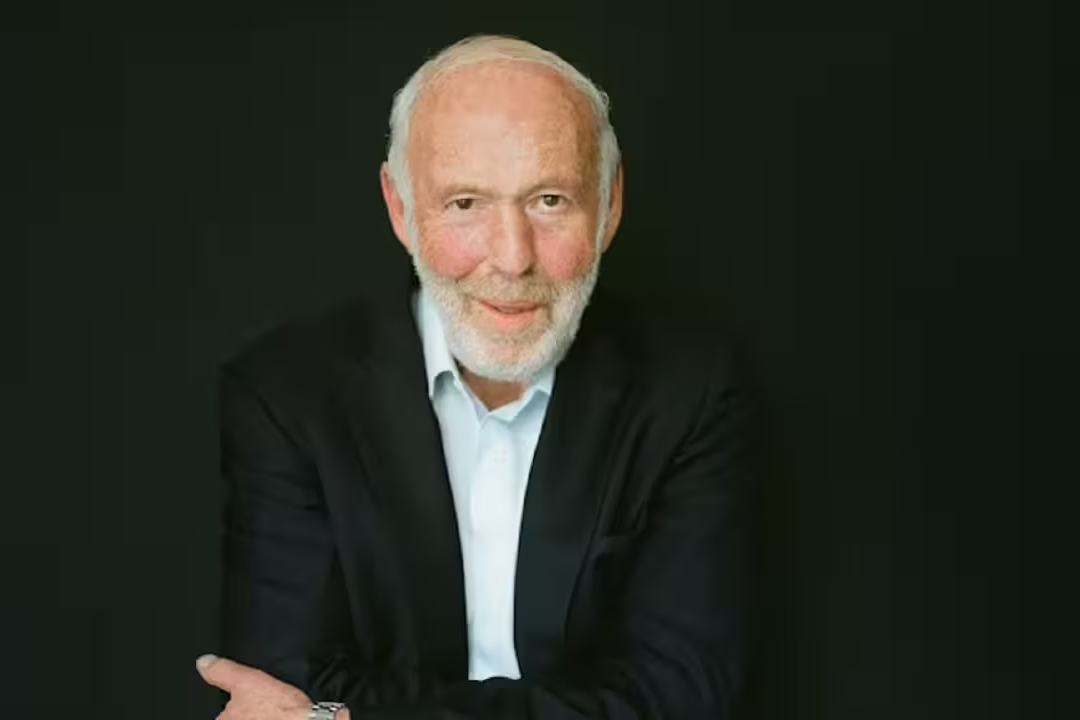

Data is the raw material—algorithms are the edge.
Euclidean Capital, founded by Jim Simons, is deeply rooted in quantitative analysis and data science. This foundation naturally extends into AI investments. The firm supports ventures that leverage advanced algorithms and data modeling, often aligning with its mathematical heritage. Euclidean Capital’s approach is analytical and precise, favoring companies that demonstrate strong technical differentiation.
Founded by Jim Simons, Euclidean Capital is rooted in quantitative mastery.
AI Exposure / Companies:
Investments in algorithmic trading and data platforms
Exposure to machine learning-driven hedge fund strategies
Backing deep-tech AI startups in modeling and prediction
Alignment with academic AI research initiatives
Euclidean targets pure-play intelligence systems—where math, data, and AI converge.
Emerson Collective (Laurene Powell Jobs): AI with Purpose


The future of AI must expand access—not deepen inequality.
Founded by Laurene Powell Jobs, Emerson Collective takes a distinctive approach by blending profit with purpose. Its AI investments often intersect with education, media, and social impact. The organization prioritizes ethical AI development and supports companies that aim to improve access to information and opportunity. This values-driven strategy sets Emerson Collective apart in a landscape often dominated by purely financial considerations.
Emerson Collective focuses on AI with purpose.
AI Exposure:
AI in education platforms
Media + generative AI
Ethical AI initiatives
It is helping define responsible AI in a rapidly evolving landscape.
Builders Vision (Lukas Walton): Innovation with Impact


Artificial intelligence will be critical in solving the world’s hardest problems
Builders Vision, led by Lukas Walton, combines capital with a mission to drive positive change. Its AI investments frequently focus on sustainability, food systems, and climate technology. By integrating AI into these sectors, Builders Vision supports solutions that address global challenges while generating returns. The firm represents a growing trend of impact-oriented family offices entering the AI space.
Lukas Walton’s Builders Vision integrates AI into sustainability and climate solutions.
AI Exposure / Companies:
AI-driven climate analytics platforms
Investments in agtech AI (precision agriculture)
Backing food system optimization using machine learning
Climate risk modeling powered by AI
Builders Vision is defining the intersection of AI + sustainability, one of the fastest-growing investment themes globally.
Raptor Group: Strategic and Opportunistic


AI is transforming how we engage, consume, and compete.
Raptor Group, the family office of Jim Pallotta, takes a more opportunistic approach. Known for its diverse investment strategy, the firm has increasingly turned its attention to AI-driven companies across sectors such as sports, media, and finance. Raptor Group leverages its network and strategic partnerships to identify emerging opportunities, often moving quickly to capitalize on market shifts.
Raptor Group, led by Jim Pallotta, applies AI across entertainment, sports, and finance.
AI Exposure / Companies:
AI-driven sports analytics platforms
Investments in media personalization engines
Exposure to fan engagement + betting AI ecosystems
Data-driven performance technologies
Raptor thrives on consumer-facing AI disruption, where engagement and monetization intersect.
Builders of the AI Economy
While each of these family offices operates with a distinct philosophy, they share a common belief in the transformative power of artificial intelligence. Their investments span infrastructure, applications, and ethical frameworks, creating a comprehensive ecosystem that supports AI’s growth.
Unlike traditional institutional investors, family offices have the advantage of long-term horizons and fewer constraints. This allows them to take risks, support innovation, and remain patient as technologies mature. In the context of AI, this flexibility is particularly valuable, given the complexity and uncertainty of the field.
Conclusion: Quiet Power Behind a Global Shift
The influence of family offices in AI is both profound and understated. They are not always visible in headlines, yet their capital and strategic direction are shaping the trajectory of one of the most important technological revolutions of our time.
As artificial intelligence continues to evolve, these family offices will remain central to its development. Their ability to combine vision, capital, and patience ensures that they will not only participate in the AI economy but actively define it.
Who’s Missing? The Next Power Players in AI Family Office Capital
No list of the top family offices in artificial intelligence is ever complete. The landscape is evolving too quickly—and many of the most influential players operate across hybrid structures, blending venture capital, personal investing, and family office capital.
Several high-impact investors narrowly missed the Top 10, not for lack of influence, but due to structure, visibility, or sector focus. Yet their role in shaping the AI economy is undeniable.
Peter Thiel (Thiel Capital / Founders Fund)
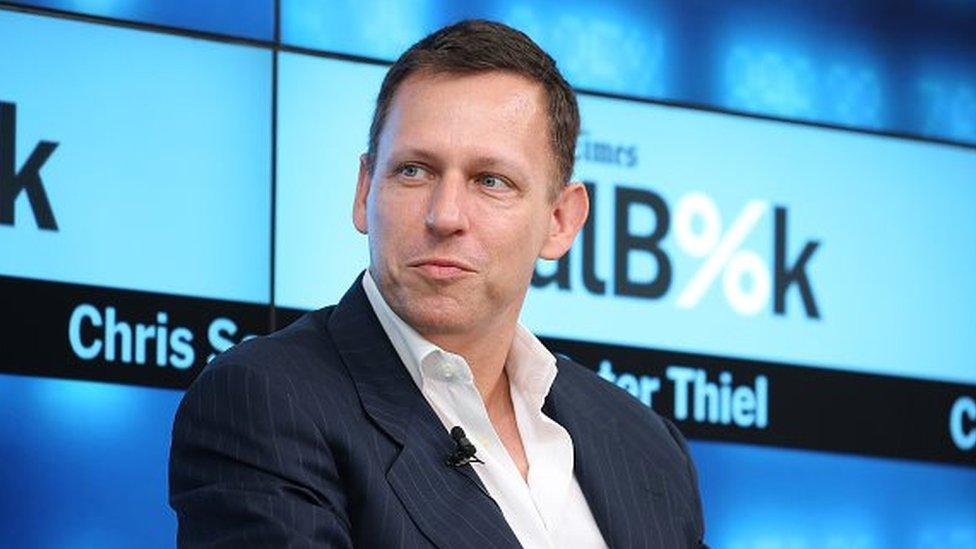
The Contrarian Architect of AI Power
Why He’s Missing:
Thiel’s investments are often deployed through venture platforms rather than a traditional family office structure.
AI Exposure:
Palantir (AI + data analytics powerhouse)
Early backing of DeepMind
Defense and intelligence-focused AI startups
Why He Matters:
Thiel has consistently been early to AI + geopolitics, particularly in defense, surveillance, and national intelligence. His thesis: AI will define global power structures.
Bill Gates (Gates Ventures)

AI for Global Impact
Why He’s Missing:
Gates’ AI exposure is often intertwined with philanthropy and large-scale partnerships rather than concentrated direct bets.
AI Exposure:
Microsoft / OpenAI ecosystem
AI in healthcare, drug discovery, and climate modeling
Backing of frontier science initiatives using AI
Why He Matters:
Gates is driving AI at planetary scale, particularly in healthcare and global development—arguably some of AI’s most important applications.
Elon Musk (Excession / xAI Ecosystem)
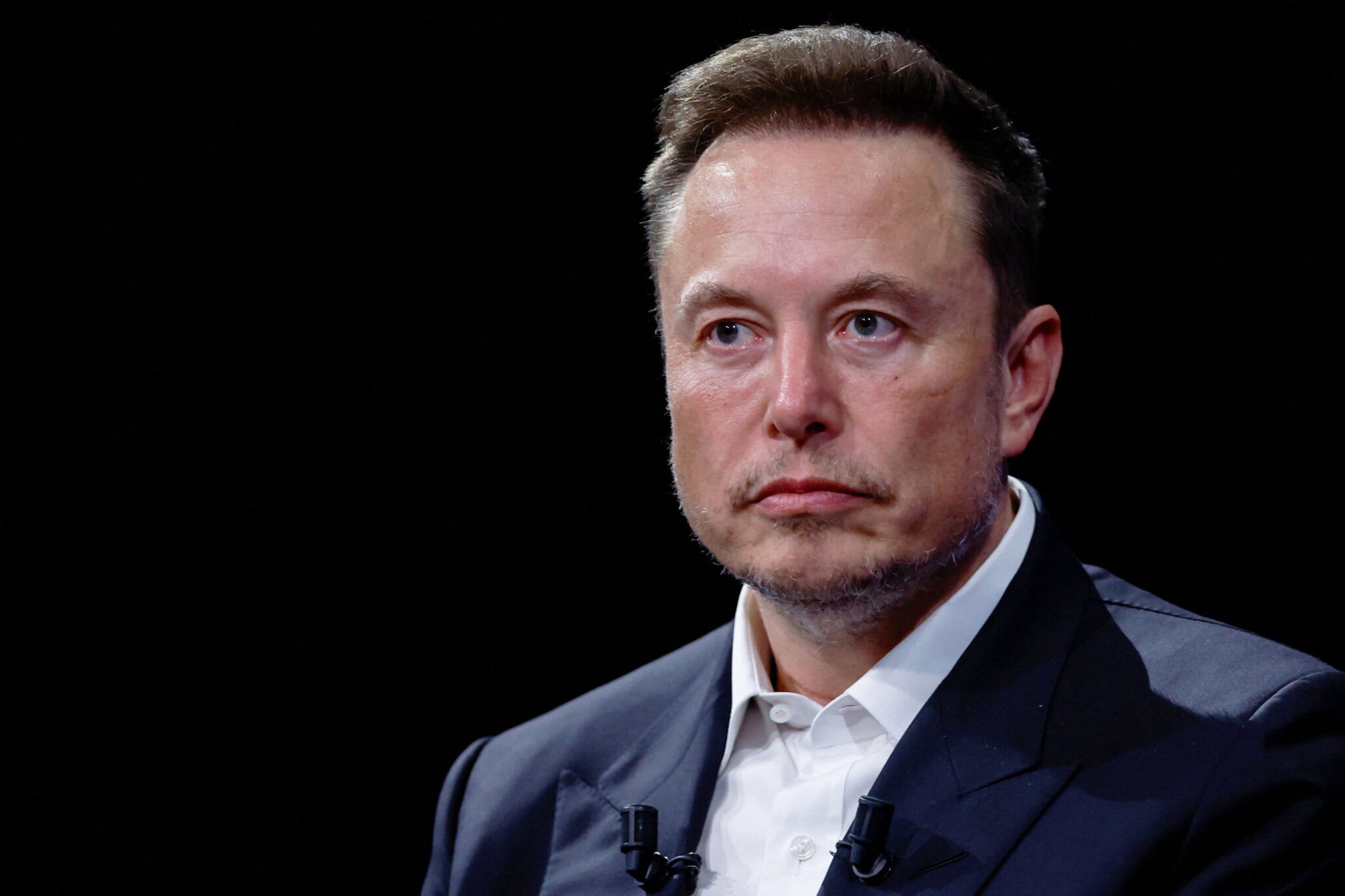
Building AI from First Principles
Why He’s Missing:
Musk operates more as a builder than an investor, with capital flowing through companies rather than a traditional family office.
AI Exposure:
Founder of xAI
Former co-founder of OpenAI
AI integration across Tesla (autonomy) and X (data + models)
Why He Matters:
Musk is not just funding AI—he is actively building competing AI systems at global scale, making him one of the most consequential figures in the space.
Masayoshi Son (SoftBank Vision Fund / Family Capital)
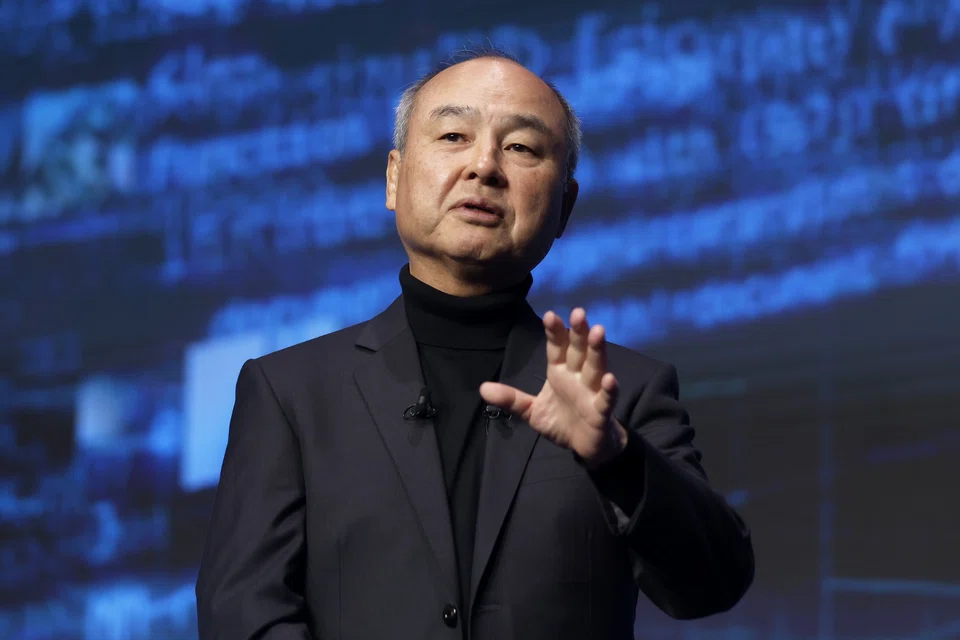
The Billion-Dollar AI Visionary
Why He’s Missing:
SoftBank operates as an institutional fund, but Son’s personal capital and conviction mirror family office behavior.
AI Exposure:
Arm Holdings (AI chip architecture)
Investments across hundreds of AI-driven companies
Continued focus on AI superintelligence thesis
Why He Matters:
Son has declared AI his life’s mission—and continues deploying capital at unprecedented scale.
Mark Zuckerberg (Chan Zuckerberg Initiative / Personal Capital)
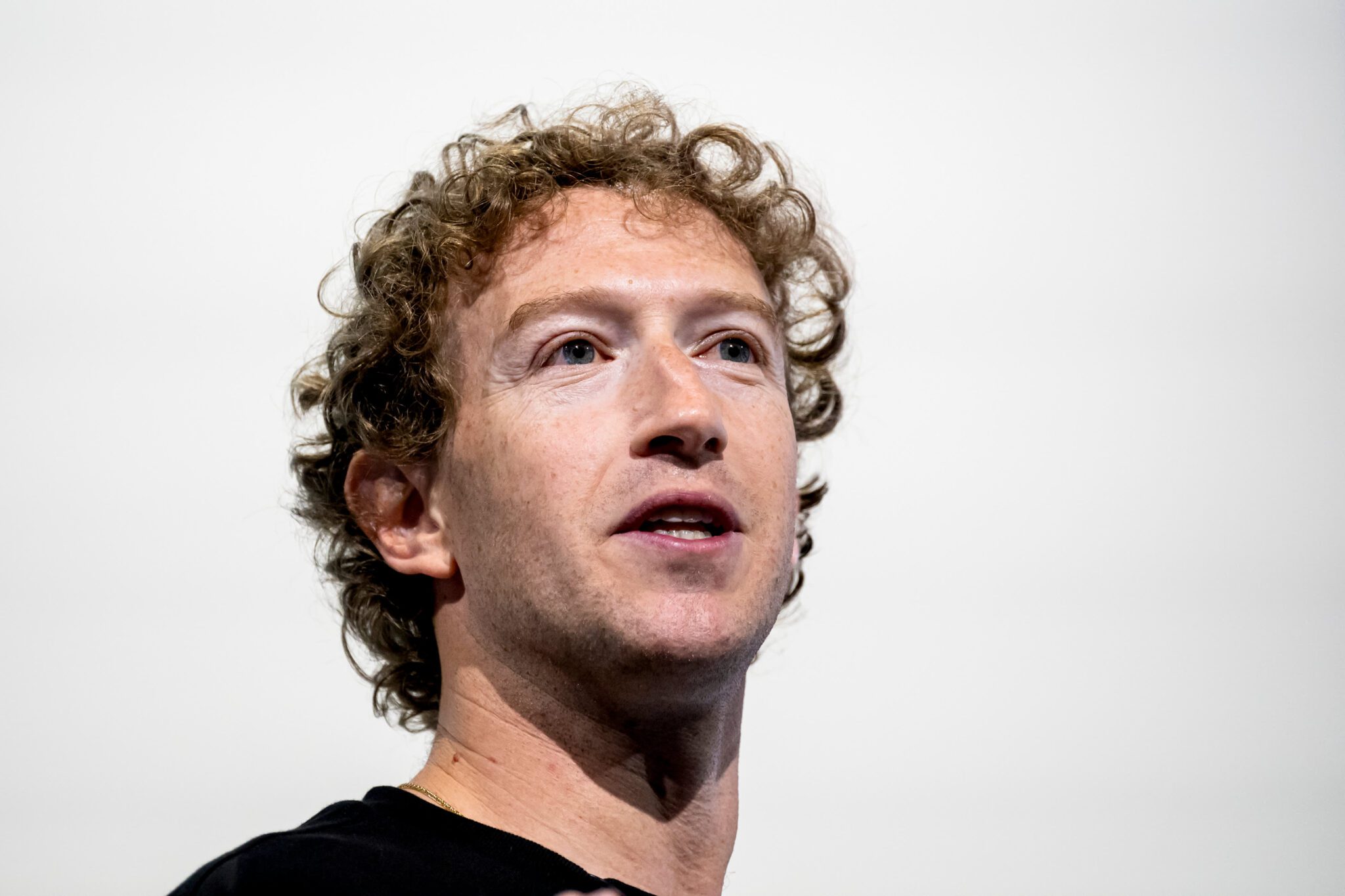
AI + Human Potential
Why He’s Missing:
CZI leans heavily philanthropic, while Meta serves as the primary AI investment vehicle.
AI Exposure:
Meta AI / Llama models
AI-driven social platforms and recommendation engines
Investments in bio + AI convergence
Why He Matters:
Zuckerberg is pushing open-source AI at scale, influencing how models are distributed and democratized.
Larry Page & Sergey Brin (Family Offices / Personal Capital)

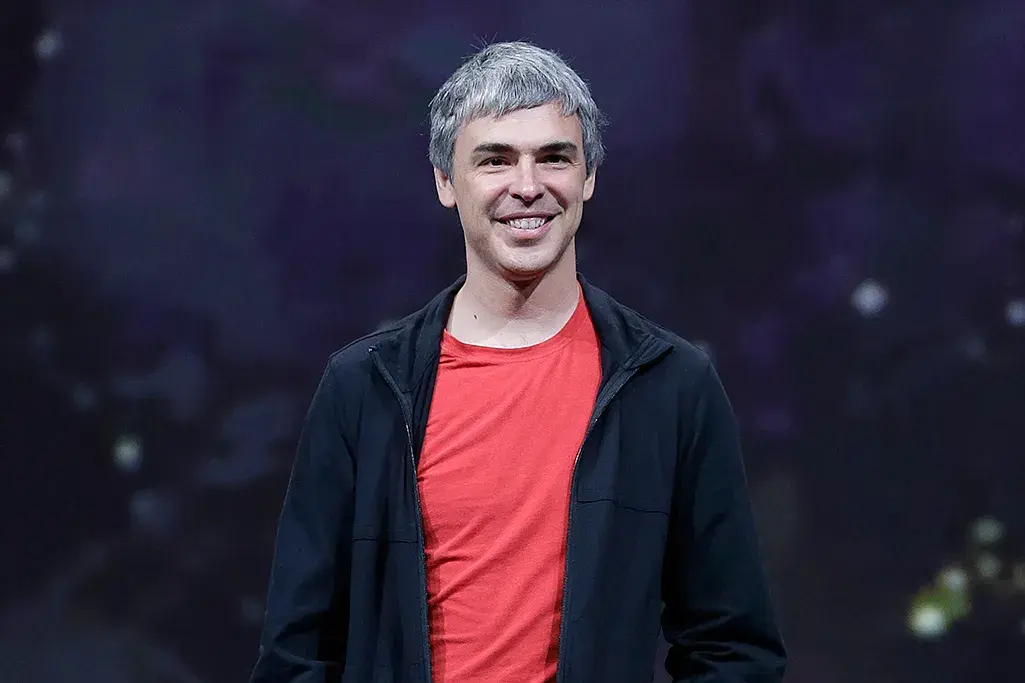
The Original AI Architects
Why They’re Missing:
Their influence is deeply embedded within Alphabet rather than external investments.
AI Exposure:
Founders of Google AI / DeepMind
Ongoing investments in AI moonshots and frontier tech
Why They Matter:
They helped build the modern AI foundation, and continue shaping its evolution behind the scenes.
Sam Altman (OpenAI / Hydrazine Capital / Personal Capital)

The Architect Inside the Machine
Why He’s Missing:
Altman is not a traditional family office investor—he is arguably the most influential AI operator in the world, with capital deployed through a mix of personal investments, venture funds, and his leadership at OpenAI.
AI Exposure:
CEO of OpenAI (ChatGPT, GPT models redefining global AI adoption)
Early investor in Helion Energy (AI-adjacent compute + energy future)
Backer of Retro Biosciences (AI + longevity science)
Investments across frontier tech, compute, and deep science startups
Influence over Microsoft partnership ecosystem (multi-billion-dollar AI scaling)
“AI will be the most powerful tool humanity has ever created, and the most important to get right.”
Why He Matters:
Altman sits at the epicenter of the AI revolution—not just funding it, but directing its trajectory. Through OpenAI, he has accelerated adoption faster than any company in history, while simultaneously shaping conversations around safety, governance, and global deployment.
He represents a new class of power in the AI economy: as a Builder, Capital allocator and Policy influencer
Unlike traditional family offices that back the future, Altman is actively writing it in real time.
The Bigger Picture: A Blurred Line Between Capital and Creation
What this “missing” list reveals is a powerful trend:
The most influential players in AI are no longer just investors but they are:
Builders (Musk, Zuckerberg)
Platform owners (Gates, Page, Brin)
Geopolitical thinkers (Thiel, Son)
Family offices remain uniquely positioned because they combine:
Long-term capital
Flexibility
Direct access to founders
But the AI economy is increasingly shaped by a hybrid elite—where family offices, founders, and institutional platforms converge. If the Top 10 are the architects of AI capital, those on the outside looking in may ultimately be the ones redefining the blueprint itself.