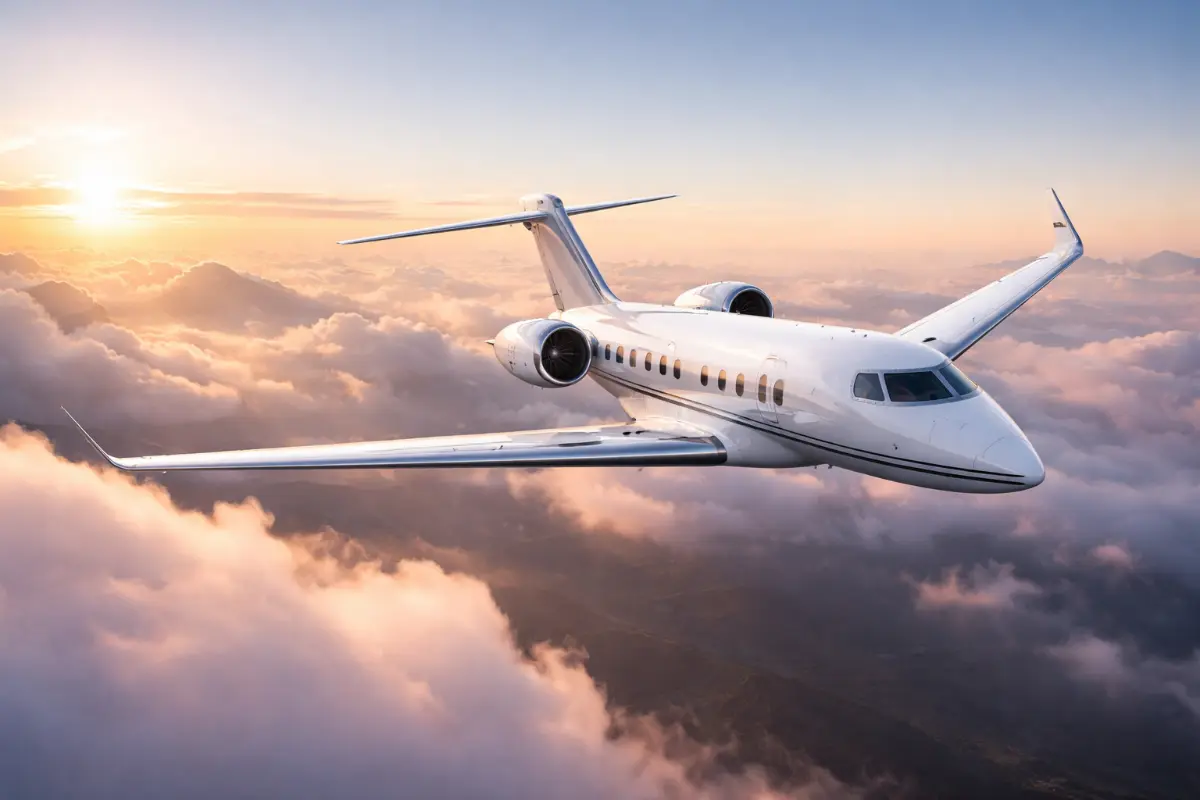
Intercontinental Private Jets have transformed global travel for business leaders, entrepreneurs, and luxury travelers. These advanced aircraft are designed to fly thousands of miles without refueling, allowing passengers to travel directly between continents in a single flight.
Unlike traditional business jets, intercontinental private jets offer ultra-long range performance, spacious luxury cabins, and advanced aviation technology. As a result, travelers can fly between major cities such as New York, Dubai, London, and Singapore without interruptions.
Moreover, the demand for intercontinental private jets continues to grow as global business expands and travelers seek faster, more comfortable ways to reach international destinations.
The Rise of Long-Range Private Jet Travel?
Private aviation has evolved dramatically over the past two decades. Early business jets offered convenience but had limited range, often requiring multiple refueling stops during international travel.
However, growing globalization increased the demand for aircraft capable of connecting continents directly.
Why Non-Stop Intercontinental Flights Matter
Non-stop flights provide several major advantages:
-
Time efficiency – Eliminates refueling stops and airport delays
-
Greater privacy – Fewer airport interactions
-
Improved productivity – Passengers can work uninterrupted
-
More comfort – Fewer takeoffs and landings reduce travel fatigue
Moreover, many corporate executives travel between major financial hubs like New York, Dubai, London, and Singapore. Ultra-long-range jets allow them to reach these destinations quickly and comfortably.
Consequently, manufacturers have invested heavily in aircraft capable of flying 6,000 to 7,700 nautical miles or more without stopping.
What Defines Private Jets That Fly Non-Stop Across Continents?
Not every business jet can handle intercontinental travel. Aircraft capable of crossing oceans or continents must meet several technical requirements.
Ultra-Long Flight Range
The most important factor is range, typically measured in nautical miles (nm). Long-range private jets generally offer:
-
6,000–8,000 nautical miles of range
-
Ability to fly 12–16 hours continuously
-
Capability to connect major global cities
Advanced Aerodynamics and Engines
These jets feature:
-
High-efficiency turbofan engines
-
Optimized wing designs
-
Lightweight composite materials
Therefore, they achieve exceptional fuel efficiency while maintaining high cruising speeds.
Large Fuel Capacity
To travel thousands of miles non-stop, these aircraft carry significantly larger fuel reserves compared with standard business jets.
Spacious Cabins
Because passengers may spend more than half a day onboard, manufacturers design cabins that resemble luxury apartments in the sky.
Typical features include:
-
Private bedrooms
-
Full-size lavatories with showers
-
Conference areas
-
High-speed internet connectivity
Leading Private Jets That Fly Non-Stop Across Continents
Several aircraft dominate the ultra-long-range private aviation category. These models represent the best combination of performance, luxury, and reliability.
Gulfstream G700
The Gulfstream G700 is one of the most advanced long-range private jets currently available.
Key highlights include:
-
Range of approximately 7,500 nautical miles
-
Maximum speed near Mach 0.925
-
Five customizable cabin zones
Moreover, its spacious interior allows passengers to relax, work, and sleep comfortably during ultra-long journeys.
The aircraft can connect cities such as:
-
New York to Dubai
-
London to Singapore
-
Los Angeles to Sydney (with favorable conditions)
Bombardier Global 7500
The Bombardier Global 7500 is widely recognized as one of the longest-range business jets ever built.
Features include:
-
Range of 7,700 nautical miles
-
Four separate living areas
-
Dedicated crew suite
Consequently, the aircraft is ideal for flights like:
-
New York to Hong Kong
-
London to Santiago
-
Dubai to Houston
Moreover, its advanced wing design improves fuel efficiency while providing a smoother ride.
Dassault Falcon 8X
The Falcon 8X blends impressive range with exceptional airport flexibility.
Important characteristics include:
-
Range of 6,450 nautical miles
-
Advanced digital flight controls
-
Quiet cabin design
However, the Falcon 8X stands out because it can operate from shorter runways, allowing access to airports unavailable to larger jets.
Gulfstream G650ER
The G650ER remains one of the most iconic long-range private jets.
Highlights include:
-
Range of 7,500 nautical miles
-
High-speed cruising capability
-
Luxurious multi-zone cabin
Therefore, it remains a favorite among corporate leaders and private owners worldwide.
Long-Range Private Jet Models
| Jet Model | Range (Nautical Miles) | Seating Capacity | Cruising Speed |
|---|---|---|---|
| Gulfstream G700 | 7,500 nm | 13–19 passengers | Mach 0.90 |
| Bombardier Global 7500 | 7,700 nm | 14–19 passengers | Mach 0.90 |
| Gulfstream G650ER | 7,500 nm | 11–18 passengers | Mach 0.90 |
| Dassault Falcon 8X | 6,450 nm | 12–16 passengers | Mach 0.80 |
Moreover, each aircraft offers customizable interiors to meet the needs of business executives, families, or government officials.
Cabin Comfort on Ultra-Long Flights
Flying for more than 12 hours requires exceptional onboard comfort. Consequently, manufacturers focus heavily on cabin design and passenger well-being.
Spacious Living Areas
Most ultra-long-range jets feature multiple cabin zones such as:
-
Lounge areas
-
Dining spaces
-
Conference rooms
-
Private bedrooms
Therefore, passengers can move freely and maintain a comfortable lifestyle during the journey.
Advanced Air Purification
Modern jets use advanced air filtration systems that refresh cabin air every few minutes.
Moreover, lower cabin altitude helps reduce fatigue and jet lag.
Entertainment and Connectivity
Passengers can stay productive or entertained with:
-
High-speed satellite internet
-
Large HD entertainment screens
-
Secure communication systems
Consequently, long flights feel far shorter and more productive.
How Long-Range Jets Save Time and Increase Efficiency?
For busy executives and global entrepreneurs, time is the most valuable resource.
Direct Global Connections
Ultra-long-range jets can connect distant cities directly, such as:
-
New York to Tokyo
-
Los Angeles to Dubai
-
London to Buenos Aires
Therefore, travelers avoid multiple commercial flights and long airport layovers.
Flexible Departure Times
Private aviation allows passengers to depart whenever they choose.
Moreover, travelers can access smaller airports closer to their final destination.
Increased Productivity
During long flights, executives can:
-
Conduct meetings
-
Review documents
-
Participate in video conferences
Consequently, travel time becomes productive work time.
Ultra-Long-Range Jets vs Standard Business Jets
| Feature | Ultra-Long-Range Jets | Standard Business Jets |
|---|---|---|
| Flight Range | 6,000–7,700 nm | 2,500–4,000 nm |
| Passenger Comfort | Multiple cabin zones | Limited cabin space |
| Flight Duration | Up to 16 hours | 5–7 hours |
| Operating Cost | Higher | Lower |
| Intercontinental Capability | Yes | Limited |
However, despite higher operating costs, ultra-long-range jets provide unmatched convenience and global reach.
Technology Behind Intercontinental Private Jets
The ability of Private Jets That Fly Non-Stop Across Continents is largely due to rapid advancements in aviation technology.
Efficient Turbofan Engines
Modern engines generate more power while consuming less fuel.
Moreover, improved engine reliability allows aircraft to travel safely across oceans and remote regions.
Lightweight Composite Materials
Aircraft manufacturers increasingly use carbon fiber and other lightweight materials.
Consequently, jets become lighter and more fuel-efficient without sacrificing structural strength.
Advanced Flight Management Systems
Modern avionics systems optimize:
-
Flight routes
-
Fuel consumption
-
Weather avoidance
Therefore, pilots can choose the most efficient route for ultra-long journeys.
Growing Demand for Intercontinental Private Jet Travel
Demand for long-range private jets has increased significantly in recent years.
Several factors drive this growth.
Global Business Expansion
Executives regularly travel between continents to manage international operations.
Therefore, ultra-long-range jets help them move quickly between global offices.
Increased Demand for Privacy
Many high-net-worth individuals prefer private aviation because it offers complete privacy.
Moreover, avoiding commercial terminals reduces security concerns and delays.
Luxury Travel Experiences
Private jets offer an unmatched travel experience that rivals five-star hotels.
Passengers enjoy gourmet dining, personalized service, and luxury interiors throughout the flight.
Consequently, private aviation continues to expand globally.
Future of Long-Range Private Jets
The next generation of business jets will likely push boundaries even further.
Future aircraft may offer:
-
8,000+ nautical mile range
-
Improved fuel efficiency
-
Sustainable aviation fuel compatibility
-
Enhanced cabin wellness technology
Moreover, manufacturers are exploring hybrid propulsion systems and aerodynamic innovations.
Therefore, the future of Private Jets That Fly Non-Stop Across Continents looks even more impressive.
Frequently Asked Questions
What is the longest-range private jet available today?
The Bombardier Global 7500 currently holds one of the longest ranges among business jets, capable of flying approximately 7,700 nautical miles non-stop.
Can private jets fly across the Atlantic or Pacific Ocean?
Yes. Ultra-long-range business jets like the Gulfstream G700 and Global 7500 are specifically designed to cross oceans without refueling.
How long can a private jet fly without stopping?
The most advanced private jets can fly 12 to 16 hours continuously, depending on weather conditions, payload, and flight route.
How many passengers can ultra-long-range jets carry?
Most long-range private jets can accommodate 12 to 19 passengers, depending on cabin configuration.
Are long-range private jets expensive to operate?
Yes. Operating costs are significantly higher than smaller business jets due to fuel consumption, maintenance, and crew requirements. However, they provide unmatched convenience for global travel.