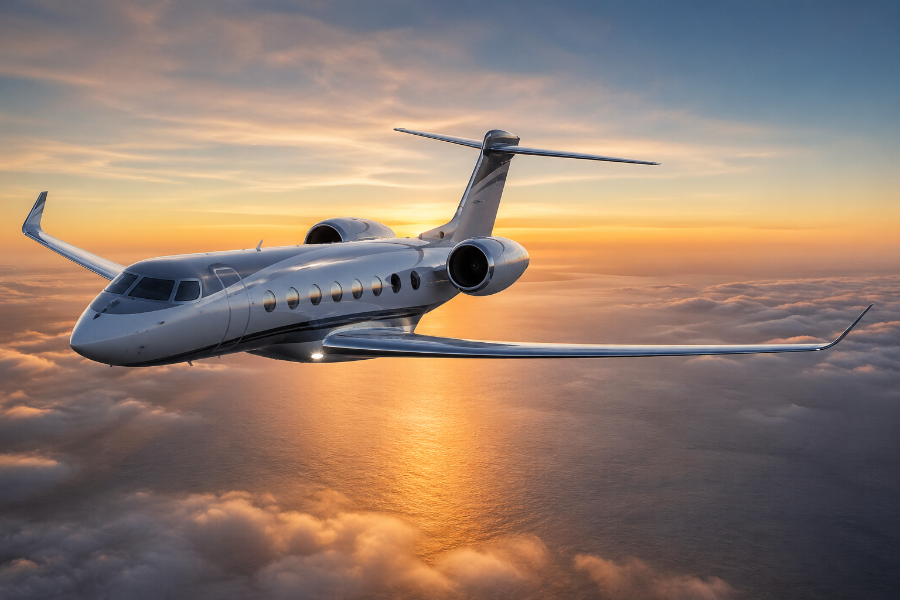
Ultra-Long-Range Jets have become the defining category of modern private aviation in 2026, reshaping how global travel is executed at the highest level of business and wealth. As international markets operate in real time across continents, the ability to travel nonstop between distant financial hubs is no longer a luxury—it is a strategic requirement. These aircraft represent a shift from traditional travel toward uninterrupted mobility, where time efficiency directly impacts decision-making and competitive advantage.
For ultra-high-net-worth individuals (UHNWIs) and multinational corporations, Ultra-Long-Range Jets are more than transportation assets. They function as mobile headquarters, enabling executives to work, rest, and conduct high-level meetings while crossing oceans. The emphasis has moved beyond comfort into productivity, with aircraft designed to support continuous operations during flights exceeding 12 to 16 hours.
In a world where time zones overlap and business never pauses, Ultra-Long-Range Jets allow seamless global connectivity without the inefficiencies of refueling stops. Consequently, they have become the backbone of executive mobility, transforming long-haul travel into a controlled, efficient, and highly productive experience.
What Defines Ultra-Long-Range Jets
Ultra-Long-Range Jets are characterized primarily by their exceptional range, typically spanning between 6,500 and over 8,000 nautical miles. This capability enables nonstop routes such as New York to Hong Kong or London to Perth, eliminating the need for intermediate stops. These aircraft are engineered with extended fuel capacity and advanced aerodynamic designs that optimize lift-to-drag ratios, ensuring efficiency over prolonged distances.
Passenger capacity generally ranges from 12 to 19 individuals, with configurations tailored toward maximizing space rather than density. Unlike traditional heavy jets, Ultra-Long-Range Jets prioritize cabin zoning and mission flexibility. High-speed cruise performance, typically between Mach 0.85 and Mach 0.90, allows operators to reduce travel time without significantly increasing fuel burn, maintaining a balance between speed and efficiency.
Another defining feature is advanced cabin pressurization systems that maintain a lower cabin altitude—often between 4,000 and 6,000 feet. This significantly reduces passenger fatigue on ultra-long flights. Furthermore, cutting-edge avionics systems support extended operations through enhanced navigation accuracy, predictive maintenance systems, and real-time weather optimization.
Compared to heavy and super-midsize jets, Ultra-Long-Range Jets operate at a different scale. While heavy jets may offer comfort and range around 4,000–5,000 nautical miles, they lack the endurance required for true intercontinental nonstop travel. Super-midsize jets, although efficient, are limited in both passenger capacity and global reach, making Ultra-Long-Range Jets the preferred choice for strategic mobility.
Why Ultra-Long-Range Jets Dominate Global Travel?
The dominance of Ultra-Long-Range Jets in 2026 is driven by their ability to eliminate one of aviation’s biggest inefficiencies: fuel stops. Each stop introduces delays, logistical complexity, and potential scheduling disruptions. By removing these variables, operators gain complete control over travel timelines, which is critical in high-stakes business environments.
Nonstop intercontinental routes such as Los Angeles to Singapore or Dubai to New York are now standard missions for these aircraft. This capability not only reduces total travel time but also enhances security and privacy by limiting exposure to multiple airports. Consequently, executives can maintain continuity in operations without interruptions.
Moreover, Ultra-Long-Range Jets convert travel time into productive work hours. Equipped with high-speed Ka-band connectivity and fully integrated communication systems, these aircraft enable real-time collaboration across continents. Executives can conduct meetings, finalize deals, and manage operations mid-flight, effectively turning long-haul travel into an extension of the office.
Therefore, the value proposition extends beyond convenience. Ultra-Long-Range Jets redefine travel as a strategic tool, where efficiency, privacy, and productivity converge to support global decision-making processes.
Read also: Best Light Jets 2026 for Millionaires: Speed, Cost & Luxury Explained
Ultra-Long-Range Jets 2026 Comparison
| Model | Range (nm) | Passenger Capacity | Cruise Speed | Price Range | Best Use Case |
|---|---|---|---|---|---|
| Gulfstream G700 | ~7,500 | 13–19 | Mach 0.90 | $75M–$80M | Ultra-luxury long-haul travel |
| Bombardier Global 7500 | ~7,700 | 14–19 | Mach 0.90 | $73M–$78M | Maximum range and cabin zoning |
| Dassault Falcon 10X | ~7,500 | 12–16 | Mach 0.85 | $75M+ | Wide cabin comfort and efficiency |
| Airbus ACJ350 | ~10,000+ | 25–50 | Mach 0.85 | $300M+ | Government/VVIP transport |
| Boeing BBJ 777X | ~11,000+ | 30–60 | Mach 0.85 | $400M+ | Ultra-large private operations |
Cabin Experience: Flying Without Limits
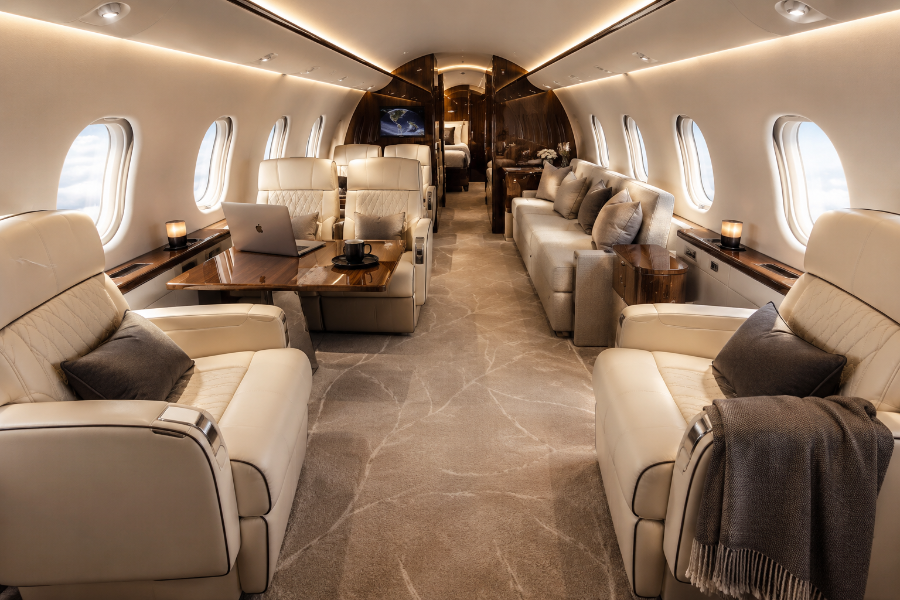
Ultra-Long-Range Jets are designed around the concept of continuous usability. Multi-zone cabin layouts allow passengers to move between workspaces, relaxation areas, and sleeping quarters without disruption. This zoning is critical for maintaining productivity over flights exceeding 12 hours.
Private suites with full-flat beds are standard in many models, while select configurations include shower facilities. These features are not merely luxurious; they address the physiological challenges of long-haul travel by enabling proper rest cycles. Consequently, passengers arrive at their destinations refreshed and ready for immediate engagement.
Conference-ready seating arrangements further enhance onboard productivity. Large tables, secure communication systems, and high-definition displays transform the cabin into a fully functional meeting room. Combined with global internet connectivity, these features allow uninterrupted business operations during flight.
Moreover, cabin design emphasizes noise reduction and air quality. Advanced filtration systems and lower cabin altitude contribute to a healthier environment, ensuring that passengers can sustain high performance throughout the journey.
Ultra-Long-Range Jets vs Heavy Jets vs Mid-Size Jets
| Category | Range | Cost | Comfort | Productivity | Ideal User |
|---|---|---|---|---|---|
| Ultra-Long-Range Jets | 6,500–8,000+ nm | Very High | Maximum | Full mobile office | UHNWIs, global corporations |
| Heavy Jets | 4,000–5,500 nm | High | High | Limited long-haul | Regional executives |
| Mid-Size Jets | 2,000–3,500 nm | Moderate | Moderate | Short-haul focus | SMEs, regional travel |
Cost & Ownership Economics
The acquisition cost of Ultra-Long-Range Jets typically ranges from $60 million to over $100 million, depending on configuration and customization. Wide-body variants such as ACJ or BBJ models significantly exceed this range, often reaching several hundred million dollars.
Operating costs are equally substantial, averaging between $10,000 and $20,000 per flight hour. Annual operating expenses can reach $3 million to $7 million, factoring in fuel, crew salaries, maintenance, and insurance. However, these costs must be evaluated within the context of time-value optimization.
Fuel efficiency plays a critical role in long-range operations. While these aircraft consume more fuel per hour than smaller jets, their ability to eliminate stops reduces overall mission time and associated costs. Consequently, cost-per-mile becomes more favorable when measured against productivity gains.
Ownership efficiency typically requires annual utilization of 300 to 400 flight hours. At this level, the benefits of time savings, flexibility, and operational control begin to outweigh the financial investment. Therefore, Ultra-Long-Range Jets are often viewed as strategic assets rather than discretionary expenditures.
Global Mobility & Strategic Advantage
Ultra-Long-Range Jets provide direct access to global financial hubs without the constraints of commercial aviation. This capability enables executives to operate across multiple regions within a 24 to 48-hour window, significantly accelerating decision-making processes.
Seamless scheduling across continents further enhances operational efficiency. Without dependence on airline timetables, organizations can align travel with business priorities rather than logistical limitations. This flexibility is particularly valuable in industries where timing is critical.
Additionally, these aircraft support global executive ecosystems by enabling rapid deployment of leadership teams. Whether for negotiations, crisis management, or expansion initiatives, Ultra-Long-Range Jets ensure that key personnel can reach any destination quickly and efficiently.
As a result, they have become integral to modern business strategy, bridging geographical gaps and enabling real-time global operations.
Why UHNW Buyers Choose Ultra-Long-Range Jets?
Privacy remains a primary driver for UHNW buyers. Ultra-Long-Range Jets offer a controlled environment where sensitive discussions and operations can take place without external interference. This level of confidentiality is difficult to achieve in commercial aviation.
Moreover, these aircraft eliminate the constraints associated with scheduled flights, including delays, security procedures, and limited routing options. Owners gain complete control over their travel experience, from departure times to onboard environment settings.
The ability to customize interiors further enhances their appeal. Buyers can design cabins to reflect personal preferences while meeting specific operational needs. This level of personalization transforms the aircraft into a tailored mobility solution.
Ultimately, Ultra-Long-Range Jets are perceived not as luxury items but as strategic tools that enable efficiency, privacy, and global reach.
Limitations & Considerations
Despite their advantages, Ultra-Long-Range Jets come with significant limitations. High acquisition and operational costs restrict ownership to a small segment of the market. These financial requirements necessitate careful evaluation of utilization and return on investment.
Airport accessibility is another consideration. Due to their size and performance requirements, these aircraft may not be able to operate from smaller airports. This limitation can reduce flexibility in certain regions.
Crew and regulatory complexities also increase with range and aircraft size. Long-haul missions require multiple pilots and cabin crew, as well as compliance with international aviation regulations. These factors add to operational complexity and cost.
Therefore, while Ultra-Long-Range Jets offer unparalleled capabilities, they require a sophisticated operational framework to maximize their value.
2026 Private Aviation Trends
Demand for Ultra-Long-Range Jets continues to rise as global connectivity becomes increasingly important. Nonstop capability is now a key differentiator, with buyers prioritizing aircraft that can support long-haul missions without compromise.
Cabin design is shifting toward productivity-first layouts. Rather than focusing solely on luxury, manufacturers are integrating features that enhance work efficiency and connectivity. This trend reflects the evolving role of private aviation in business operations.
Sustainability is also gaining attention, with increased adoption of sustainable aviation fuel (SAF) and efficiency improvements. Although challenges remain, the industry is moving toward reducing its environmental impact.
Most notably, Ultra-Long-Range Jets are being redefined as global business infrastructure. They are no longer viewed as optional assets but as essential components of executive mobility strategies. This shift underscores their importance in a rapidly evolving global economy.
FAQs
What are ultra-long-range jets?
Ultra-Long-Range Jets are private aircraft capable of flying 6,500 to over 8,000 nautical miles nonstop, designed for intercontinental travel with maximum comfort and productivity.
How far can ultra-long-range jets fly?
Most models can fly between 12 to 16+ hours nonstop, covering routes such as New York to Hong Kong or London to Perth.
What are the best ultra-long-range jets in 2026?
Top models include the Gulfstream G700, Bombardier Global 7500, Dassault Falcon 10X, Airbus ACJ series, and Boeing Business Jets.
How much do they cost?
Prices range from $60 million to over $100 million for standard models, with wide-body variants exceeding $300 million.
Who uses ultra-long-range private jets?
They are primarily used by ultra-high-net-worth individuals, multinational corporations, and government entities requiring global mobility.