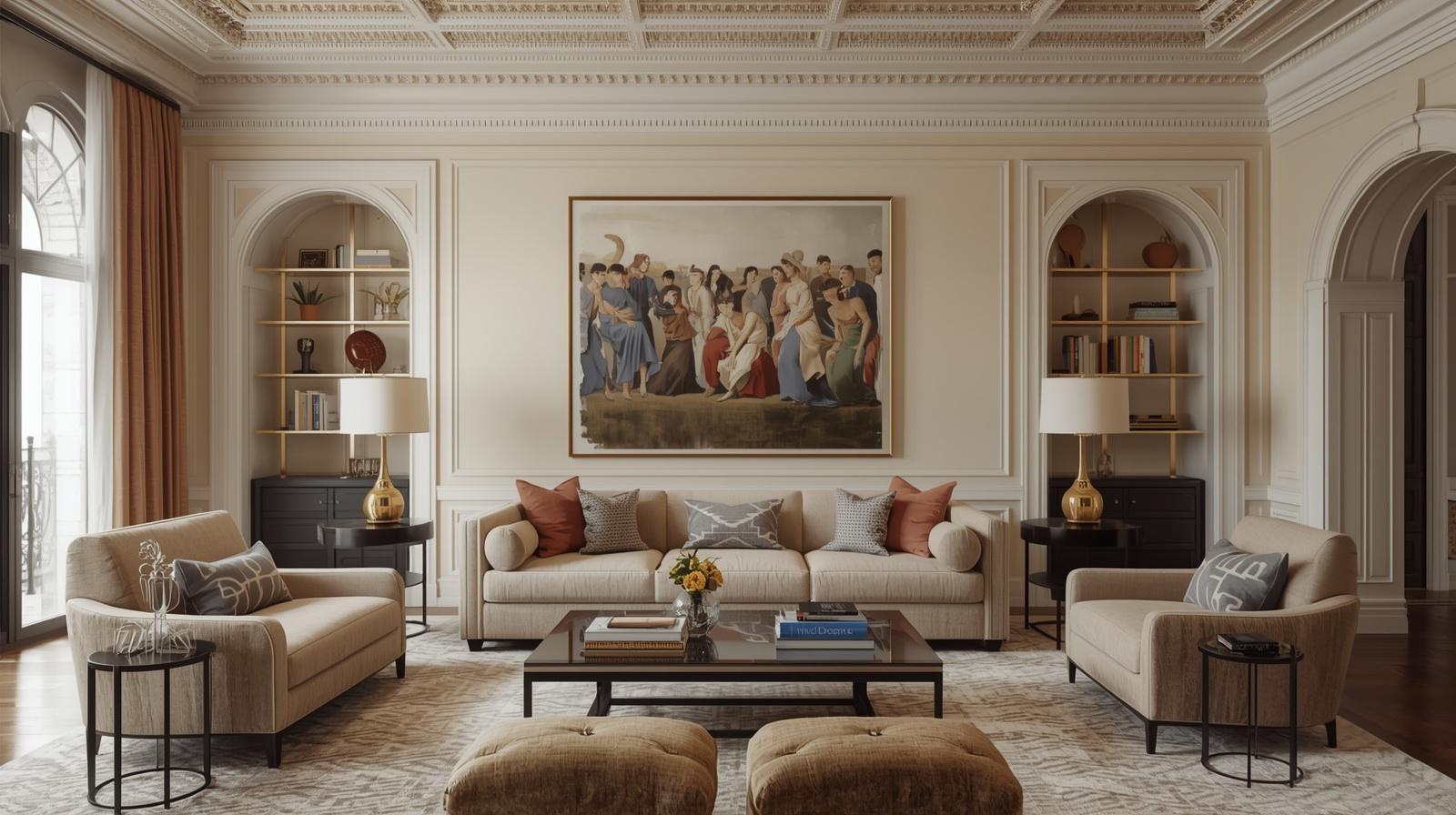
Fine art is a defining feature of high-end interior styling because it helps establish the visual and emotional foundation of a room. While architecture and furnishings provide structure, art introduces individuality and character.
Here’s how a carefully chosen artwork can bring balance to a space by complementing textures, lighting, and color schemes.
Creating a Visual Foundation for Luxury Spaces
Large statement pieces are often used to anchor expansive living rooms or grand entryways, while smaller curated works can be arranged to guide movement along corridors or create intimate viewing areas. In luxury interiors, art is rarely treated as an afterthought. Instead, it is selected early in the design process to help shape the overall atmosphere of the home.
Adding Personality and Storytelling to Interiors
High-end interiors are not only about elegance but also about personal expression. Fine art allows homeowners to reflect their interests, travels, and aesthetic preferences. Spaces feel more authentic when the artwork tells a story or evokes emotional response.
Many collectors appreciate works connected to artistic movements or historical periods because they carry a sense of cultural continuity. Owning historically meaningful art also creates a living connection to artistic traditions that have shaped modern creativity. For example, dream-like imagery and symbolic composition can bring imaginative energy to a room.
Collectors interested in distinctive artistic expression may explore original Salvador Dali paintings for sale. Pieces associated with iconic artists offer striking visual focus while reflecting the creativity and originality that define luxury interiors.
Enhancing Mood and Atmosphere
Different styles of art contribute unique emotional tones to interior spaces. Soft landscapes and classical portraits often create calm, reflective environments suitable for libraries or private lounges; abstract compositions can introduce movement and modern sophistication, especially when paired with minimalist furniture.
Surrealist works, with their imaginative and sometimes unexpected imagery, add curiosity and conversation value to a room. Guests are naturally drawn to study these pieces, making art an engaging social element in entertainment spaces.
Lighting also plays a crucial role in presenting artwork effectively. Proper illumination highlights brushwork, color depth, and fine details while protecting delicate surfaces. Many designers use adjustable gallery lighting to allow artwork to be appreciated at different times of day.
Celebrating Craftsmanship and Historical Ownership
Fine art in luxury interiors often carries the spirit of craftsmanship and history. Many collectors are drawn to artworks that have been carefully preserved or previously owned across generations. The presence of such pieces brings a sense of continuity and respect for artistic heritage.
Antique or historically inspired artworks are particularly valued for their unique characteristics. Subtle signs of age, traditional techniques, or period-specific styles can add authenticity and depth to a modern interior setting.
Versatility in Luxury Design
One of the advantages of incorporating fine art into interior styling is flexibility. Artwork can be rotated, relocated, or combined with new design elements as tastes evolve. This adaptability allows interiors to remain fresh without requiring major structural redesign.
Gallery walls can be updated with new themes, sculptures can be repositioned, and statement pieces can become seasonal focal points. This dynamic quality makes art a living part of the home rather than a static decoration.
Summing Up
Fine art plays a powerful role in high-end interior styling by adding personality, history, and emotional depth. Whether through classic masterpieces or uniquely expressive works, art transforms living spaces into curated environments that reflect individuality and refined taste. When thoughtfully selected and displayed, art becomes the soul of luxury interior design.