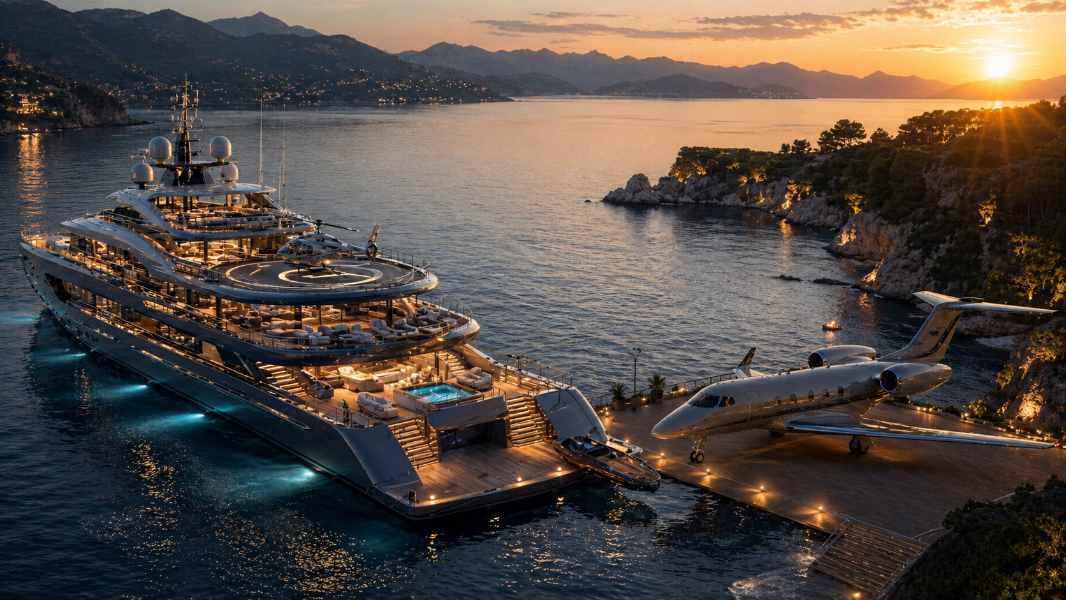
Chartering the Uncharterable has emerged as the next frontier of ultra-luxury travel in 2026, moving far beyond traditional yacht and private jet charters. While standard charter markets offer access to some of the world’s most impressive assets, billionaires are increasingly seeking something rarer experiences that are not publicly listed, not openly marketed, and often not officially available at all. This shift reflects a deeper evolution in how wealth is expressed: not through ownership alone, but through access.
Moreover, the ultra-high-net-worth (UHNW) segment is no longer satisfied with visible luxury. Instead, it prioritizes discretion, exclusivity, and control over assets that remain out of reach for even affluent individuals. Chartering the Uncharterable means unlocking privately owned superyachts, off-market aircraft, and restricted luxury assets that operate within closed networks. These opportunities exist behind layers of relationships, reputation, and negotiation power.
Consequently, off-market charters have become a defining status symbol. They signal not just wealth, but influence and connectivity. In this environment, access is everything, and those who can secure it gain entry into a tier of luxury that operates entirely outside conventional markets.
What Does “Chartering the Uncharterable” Mean?
At its core, Chartering the Uncharterable refers to accessing luxury assets that are not listed on public charter platforms. These include privately owned yachts, jets, and unique vessels that owners typically reserve for personal use. Unlike traditional charter inventory, these assets do not appear in broker listings or marketplaces.
Furthermore, access to these assets is often invitation-only. Owners may allow limited use under specific conditions, typically through trusted intermediaries or long-standing relationships. This creates a closed ecosystem where availability is restricted and highly selective. As a result, even high-net-worth individuals may find themselves excluded without the right connections.
In contrast to standard charter processes, which rely on brokers and listings, Chartering the Uncharterable depends on negotiation and discretion. Deals are structured individually, often with custom terms that reflect the unique nature of the asset. Therefore, each transaction becomes a bespoke agreement rather than a standardized booking.
The Off-Market Charter Ecosystem
The ecosystem behind Chartering the Uncharterable operates through a network of elite intermediaries. Private brokers, family offices, and wealth managers play a central role in facilitating these deals. They act as gatekeepers, connecting clients with asset owners while ensuring confidentiality and trust.
Moreover, many of these transactions occur through direct owner negotiations. In such cases, intermediaries introduce the parties, but the final agreement is shaped through private discussions. This process allows for greater flexibility but also requires a high level of expertise and discretion.
Consequently, the off-market ecosystem functions as a closed loop. Information is rarely shared publicly, and opportunities are distributed within trusted circles. This structure reinforces exclusivity and ensures that only qualified clients gain access to these rare assets.
Public Charter vs Off-Market Charter (2026 Comparison)
| Factor | Public Charter | Off-Market Charter |
|---|---|---|
| Access | Open listings | Invitation-only |
| Cost | Market-based | Premium pricing |
| Flexibility | Standard contracts | Fully customizable |
| Privacy | High | Absolute |
| Exclusivity | Limited | Maximum |
Ultra-Rare Assets Available Off-Market
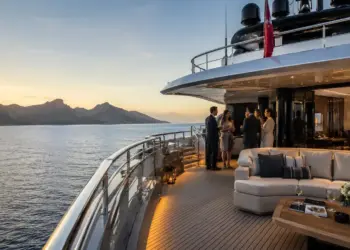
The assets involved in Chartering the Uncharterable represent the highest level of exclusivity in ultra-luxury travel. These include private superyachts that are never publicly listed, often exceeding 100 meters and designed for personal use rather than charter.
In addition, explorer yachts and expedition vessels are frequently available off-market. These ships are equipped for long-range travel and extreme environments, offering access to remote destinations. Their rarity and specialized design make them highly sought after among elite travelers.
Private jets also play a significant role in this ecosystem. Some are configured as VIP airliners with bespoke interiors, while others are historic or one-of-a-kind aircraft. These assets provide a level of personalization and privacy that standard charter fleets cannot match.
Key Off-Market Assets:
- Privately owned superyachts (not listed publicly)
- Explorer and expedition vessels
- VIP-configured private jets and airliners
- Historic or one-of-a-kind luxury assets
How Billionaires Secure Access?
Accessing the Chartering the Uncharterable market requires more than financial capability. Relationships play a critical role, as most opportunities are shared within trusted networks. Billionaires often build long-term connections with brokers, owners, and intermediaries to gain entry.
Moreover, repeat business strengthens these relationships. Clients who consistently engage in high-value transactions are more likely to receive exclusive offers. This creates a cycle where trust and reliability translate into access.
Financial leverage also plays a role. Clients must be willing to pay premiums above standard market rates to secure these assets. Therefore, access is determined by a combination of reputation, trust, and willingness to commit significant resources.
Pricing the “Uncharterable”
Pricing within the Chartering the Uncharterable space differs significantly from traditional charter markets. Instead of fixed rates, costs are negotiated based on scarcity and demand. Premiums can range from 20% to 100% above standard charter prices.
Additionally, many deals involve full buyouts or minimum usage commitments. This ensures that the asset owner receives adequate compensation for making a private asset available. Payment structures may also vary, including upfront deposits and customized terms.
Pricing Insights:
- 20%–100% premium over market rates
- Full asset buyouts common
- Custom contracts and payment structures
- Pricing driven by exclusivity, not benchmarks
Operational & Legal Complexity
The operational side of Chartering the Uncharterable introduces significant complexity. Each deal requires a custom charter agreement, often tailored to the specific asset and usage scenario. These contracts must address liability, usage rights, and operational responsibilities.
Insurance presents another challenge. Non-standard charters may require specialized coverage, particularly for high-value assets or unique itineraries. Compliance with international regulations also adds complexity, especially when operating across multiple jurisdictions.
Therefore, successful execution depends on experienced professionals. Brokers, legal advisors, and operational teams must work together to ensure that all aspects of the charter meet regulatory and safety standards.
Why It’s the Ultimate Status Move?
Chartering the Uncharterable represents the highest level of status in ultra-luxury travel. It goes beyond what money alone can buy, emphasizing access and influence. Clients who participate in this market demonstrate their ability to operate within exclusive networks.
Moreover, these experiences are unavailable to the broader UHNW market. Even wealthy individuals may not have the connections required to secure such opportunities. This creates a clear distinction between wealth and access.
Consequently, off-market charters serve as a signal of power and connectivity. They highlight a level of influence that extends beyond financial resources, reinforcing the client’s position within elite circles.
Read also: Why the Four Seasons Yacht Is Rewriting Ultra-Luxury Travel
Limitations & Considerations
Despite its advantages, Chartering the Uncharterable comes with limitations. Availability remains extremely limited, as most assets are not intended for charter use. This creates competition among clients and increases the importance of timing.
Negotiation complexity is another factor. Deals require time, expertise, and patience, as each agreement is unique. Clients must be prepared to engage in detailed discussions and adapt to changing conditions.
Key Considerations:
- Limited availability
- High negotiation complexity
- Significant cost premiums
- Dependence on relationships
2026 Ultra-Luxury Travel Trends
The rise of Chartering the Uncharterable reflects broader changes in ultra-luxury travel. There is a clear shift toward off-market, invitation-only experiences that prioritize exclusivity over visibility. Clients are increasingly seeking assets that remain hidden from public access.
Moreover, private networks are gaining influence. These networks control access to high-value assets, creating a new layer of exclusivity. As a result, luxury is no longer defined by price alone but by scarcity and availability.
Emerging Trends:
- Growth of off-market experiences
- Increased demand for exclusivity
- Expansion of private access networks
- Luxury defined by scarcity
These trends indicate a shift from ownership to access control. In this environment, Chartering the Uncharterable becomes the ultimate differentiator, offering experiences that redefine the meaning of luxury.
FAQs
What does chartering the uncharterable mean?
It refers to accessing luxury assets not publicly available for charter through private networks.
How do billionaires access off-market yachts?
Through relationships with brokers, family offices, and direct owner connections.
Are uncharterable assets more expensive?
Yes, they often carry premiums of 20%–100% above standard rates.
Is it legal to charter private non-listed assets?
Yes, if structured properly with compliant contracts and insurance.
Who can access these experiences?
Only individuals with the right connections, reputation, and financial capability.