Expanded polystyrene gets treated as a commodity, which is exactly how the wrong sheet ends up on site.
Two sheets can look identical, measure the same thickness, and behave completely differently once load or temperature is applied to them.
The difference sits in density, cut quality, and how carefully the specification was matched to the job.
Getting those three right at order stage costs far less than discovering a mismatch after installation.
Key Takeaways
- Thickness determines R-value while density determines compressive strength, and the two are specified separately.
- Lower densities suit packaging and light insulation; higher densities suit structural and sub-slab work.
- Hot wire cutting leaves a smooth, sealed face on both sides of the sheet.
- EPS is chemically inert, non-toxic, and free from CFC and HCFC blowing agents.
- The material will not support bacterial or fungal growth, which matters in hygiene-controlled spaces.
- Sheets are lightweight and stack efficiently, so freight stays practical even on large orders.
What an EPS Sheet Actually Is
Expanded polystyrene sheets begin as raw polystyrene beads. Those beads are expanded with steam and moulded under pressure into solid blocks, which are then sliced down to the thickness a project calls for.
Enviroclad runs that full sequence at a single facility in Berri, South Australia, using locally produced expanded polystyrene.
Controlling the process from bead to finished sheet is what keeps consistency stable across an entire order.
Thickness and Density Do Two Different Jobs
This is the distinction most orders get wrong. Thickness determines the thermal resistance of the sheet, expressed as an R-value, while density governs compressive strength and whether the sheet can carry load at all.
Confusing the two produces predictable problems. A thick sheet at low density will insulate beautifully and then compress under weight it was never rated to hold.
Where Lower Densities Belong
Thinner sheets at lower densities are built for packaging and light insulation tasks. Thermal lining, void filling, and protective packing all sit in that category, where the material needs to insulate or cushion rather than support anything.
The cost advantage at that end of the range is worth taking. There is no benefit in paying for structural density on an application that will never see compressive load.
Where Higher Densities Earn Their Cost
Thicker, higher-density sheets are specified for structural insulation and sub-slab applications. They are also the right call anywhere the material will bear weight or resist compression over an extended period.
Long-term compression is the failure mode worth designing against. A sheet that holds its dimension through the first year but creeps afterwards quietly undermines everything sitting above it.
Cut Quality Is Not a Cosmetic Issue
Sheets are produced by feeding full-size EPS blocks through hot wire cutting equipment. The method delivers clean edges and accurate dimensional control, which is what lets sheets sit tightly against one another without gapping.
Hot wire cutting also leaves a smooth, sealed surface finish on both faces of the sheet. That matters wherever the EPS sits directly against another building material or where the finished surface stays visible.
Material Behaviour Once It Is Installed
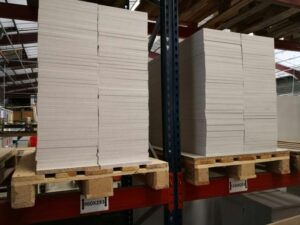
Expanded polystyrene is chemically inert, non-toxic and free from CFC and HCFC blowing agents.
It is compatible with most common construction substrates, including concrete, timber framing, steel and plasterboard, and will not react with or degrade them over time.
Specifiers who want to compare grades before locking a specification can browse polystyrene sheets in Australia and work backwards from the application rather than forwards from a price.
Enviroclad produces multiple density grades and keeps an in-house engineer on the technical team who can recommend the right thickness and density pairing.
Hygiene and Chemical Exposure
EPS does not support bacterial or fungal growth, which makes it viable in environments carrying strict hygiene requirements.
It also resists dilute acids and alkalis, so incidental chemical contact is not an immediate problem.
Food processing and cold storage are the obvious beneficiaries. Both demand materials that stay stable and clean through years of wash-down cycles and temperature swings.
Dimensional Stability
Polystyrene sheets hold their dimensions across a wide temperature range. Once manufacturing is complete, there is no significant shrinkage, warping, or off-gassing left to account for.
That stability is what makes EPS predictable to detail around. A sheet that stays the size it was cut to keeps junctions tight and avoids remedial sealing later in the build.
Freight, Order Size and Lead Planning
Sheets are lightweight and stack efficiently, which keeps freight costs practical even on large-volume orders.
The freight economics are unusual for a product this bulky, and they widen the sensible sourcing radius considerably.
Enviroclad dispatches daily from Berri into Adelaide and surrounds and services regional South Australia directly.
Interstate orders move through freight partners into Victoria, New South Wales and the Northern Territory.
How to Brief a Supplier Properly
Lead with the application rather than a product code. Describe what the sheet has to do, what will sit on top of it, and what temperature and moisture conditions it will live in.
Then ask the supplier’s technical team to confirm any compliance requirements attached to your specific use.
Enviroclad stays away from minimum order complexity, so a single thickness for a residential insulation job gets the same attention as a multi-density bulk order for a commercial fit-out.
Frequently Asked Questions
What is the difference between thickness and density in EPS sheets?
Thickness sets the thermal resistance, or R-value, of the sheet. Density sets compressive strength and determines whether the sheet is suitable for load-bearing use.
Can polystyrene sheets be used under a concrete slab?
Yes, sub-slab work is one of the applications higher-density expanded polystyrene sheets are specified for. The correct density depends on the load the sheet needs to carry, so confirm it with the supplier before ordering.
Will EPS react with concrete, steel or timber?
No, expanded polystyrene is chemically inert and compatible with most common construction substrates. It will not react with or degrade adjacent materials over time.
Is expanded polystyrene suitable for hygiene-controlled environments?
EPS does not support bacterial or fungal growth and resists dilute acids and alkalis. That combination makes it workable in spaces with strict hygiene requirements, though the specification should still be confirmed against your project documentation.
How are custom thicknesses produced?
Full-size EPS blocks are sliced using hot wire cutting equipment set to the required thickness. The process gives clean edges, accurate dimensions and a sealed finish on both faces.
Where does Enviroclad deliver?
Daily dispatch runs into Adelaide and surrounds, with direct service across regional South Australia. Interstate freight partners cover Victoria, New South Wales and the Northern Territory.
Conclusion
Most EPS ordering mistakes trace back to a single habit, which is treating thickness and density as one decision instead of two.
Separate them, describe the application honestly, and the correct specification usually becomes obvious without much argument.
The manufacturing side matters just as much as the numbers on the order form. A sheet cut cleanly to an accurate dimension, from a producer controlling the process end to end, is what turns a specification on paper into something that performs on site.