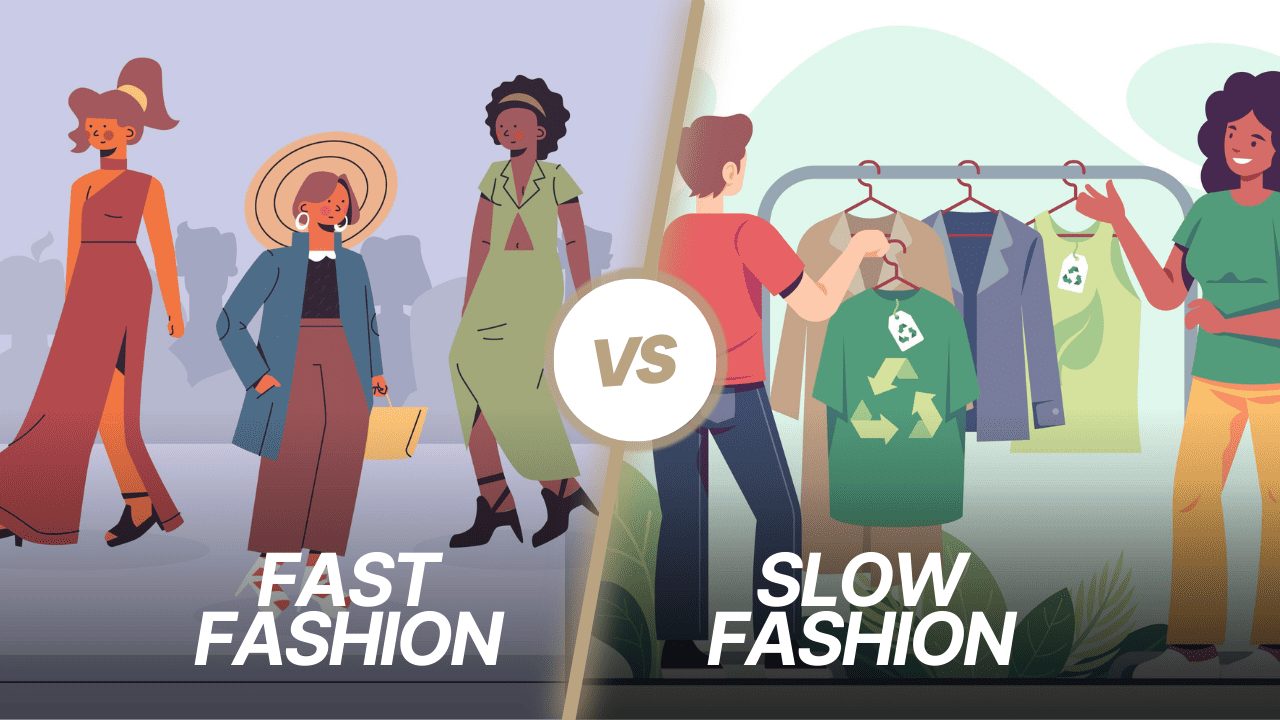
Fashion gives people the freedom to express their personality, follow trends, and experiment with different styles. But behind every piece of clothing is a larger process involving design, materials, manufacturing, transportation, marketing, and disposal. The way this process works has led to two very different approaches: slow fashion and fast fashion.
The debate around slow fashion vs fast fashion is becoming increasingly important as shoppers think about clothing quality, affordability, environmental responsibility, and ethical production.
Fast fashion makes trendy clothing available quickly and cheaply, while slow fashion encourages people to buy thoughtfully and choose clothing designed to last. Understanding the differences between these two models can help you decide which approach best suits your lifestyle and budget.
What Is Fast Fashion?
Fast fashion is a clothing production model built around speed, affordability, and rapidly changing trends. Fashion companies monitor popular styles and attempt to bring similar designs to consumers as quickly as possible.
Instead of releasing a small number of collections each year, fast-fashion retailers may introduce new products frequently. This encourages shoppers to return regularly to discover new styles.
The biggest attraction of fast fashion is affordability. Consumers can purchase dresses, shirts, jeans, accessories, and seasonal pieces without making a large financial investment.
However, the low-price model can encourage overconsumption. When clothing is inexpensive and trends change quickly, shoppers may purchase more items than they actually need and replace them sooner.
What Is Slow Fashion?
Slow fashion takes a more deliberate approach to clothing. Instead of focusing primarily on speed and high-volume production, it emphasizes quality, longevity, thoughtful design, and responsible consumption.
Slow-fashion clothing is often designed to remain useful beyond a single trend cycle. Brands may focus on durable materials, better construction, ethical production, repair services, or smaller collections.
Slow fashion also involves consumer behavior. Buying fewer garments, wearing clothes repeatedly, repairing them, and shopping secondhand are all ways to adopt a slower approach.
Slow Fashion vs Fast Fashion at a Glance
The following table highlights some of the major differences between the two models:
| Factor | Fast Fashion | Slow Fashion |
|---|---|---|
| Main Priority | Speed and affordability | Quality and longevity |
| Production | High-volume | More deliberate |
| Trends | Rapidly changing | Mostly timeless |
| Price | Usually lower | Often higher initially |
| Clothing Lifespan | Can be shorter | Designed for longer use |
| Buying Habits | Frequent purchases | More intentional purchases |
| Materials | Wide variety | Often focuses on durable or responsible options |
| Waste | Can encourage disposal | Focuses on reducing waste |
| Repairs | Less central | Often encouraged |
| Shopping Experience | New styles frequently | Smaller, carefully selected collections |
Why Is Fast Fashion So Popular?
Fast fashion succeeds because it responds quickly to what consumers want. If a particular color, silhouette, or style becomes popular, retailers can quickly introduce similar products.
Social media has made this cycle even faster. Trends can become popular within days, creating demand for affordable clothing that allows people to participate without spending a lot.
Fast fashion also makes fashion accessible. Someone who cannot afford expensive designer clothing can still experiment with current styles.
For many shoppers, affordability is a genuine necessity rather than simply a preference. This is why discussions about fashion sustainability should recognize the economic realities consumers face.
The Benefits of Slow Fashion
Slow fashion offers several potential advantages.
Longer-Lasting Clothing
Quality and durability are central ideas in slow fashion. Clothing that can survive frequent wear for several years may reduce the need for constant replacement.
More Intentional Shopping
Slow fashion encourages consumers to consider whether they genuinely need something before buying it. This can reduce impulse purchases.
Timeless Style
Instead of focusing entirely on short-lived trends, slow fashion often favors classic and versatile designs. These pieces can remain useful across multiple seasons.
Reduced Consumption
Buying fewer garments and wearing them for longer can reduce the demand for constant production.
Greater Transparency
Many slow-fashion brands provide information about materials, factories, manufacturing processes, and labor standards. This allows consumers to make more informed decisions.
Is Slow Fashion Always Sustainable?
Not necessarily.
A brand using the term “slow fashion” is not automatically sustainable or ethical. Sustainability involves many factors, including materials, manufacturing, transportation, packaging, worker conditions, product durability, and end-of-life options.
Similarly, a single fast-fashion item is not automatically the worst possible purchase. The bigger issue is the overall system of high-volume production and frequent consumption.
Consumers should therefore look beyond marketing labels and examine the actual practices of individual brands.
The Environmental Side of Fashion
Clothing production requires resources. Depending on the material, manufacturing a garment can involve water, energy, chemicals, raw materials, packaging, and transportation.
The environmental impact can become more significant when garments are produced in huge quantities and discarded quickly.
Slow fashion attempts to address this problem through longer product lifespans, reduced consumption, responsible material choices, and circular practices such as repair, resale, and recycling.
However, simply purchasing a garment labeled sustainable does not eliminate its environmental footprint. One of the most effective things a consumer can do is use clothing for as long as possible.
Ethical Issues in Fast Fashion
Another important part of the slow fashion vs fast fashion discussion involves workers.
Fashion supply chains can involve many stages and numerous workers. Concerns may include wages, workplace safety, working hours, and factory conditions.
Ethical fashion attempts to place greater attention on these issues by encouraging transparency and responsible labor practices.
When shopping, consumers can look for information about where garments are made and whether brands disclose their suppliers or labor standards.
Why Slow Fashion Can Cost More
One reason shoppers hesitate to embrace slow fashion is the price.
A garment made with higher-quality materials and more careful production may cost more than a mass-produced alternative. This higher upfront price can be difficult for shoppers working with limited budgets.
However, price should be considered alongside how frequently the garment will be worn.
For example, a $30 jacket worn only a few times may offer less value than a $100 jacket worn regularly for several years.
This is why cost per wear is a useful way to evaluate clothing. Instead of asking only, “How much does this cost?” consider, “How many times will I realistically wear it?”
How to Shop More Slowly
You don’t need to completely change your shopping habits overnight. Small changes can make a meaningful difference.
Before purchasing an item, ask yourself whether you need it and whether it works with clothing you already own.
Choose versatile garments that can be styled in multiple ways. Neutral colors can make mixing and matching easier, while classic designs can remain useful when trends change.
Shopping secondhand is another practical option. Pre-owned clothing allows existing garments to remain in use while often providing lower prices than buying new.
Taking care of your clothing is equally important. Follow washing instructions, repair small problems, and store garments properly.
Can Fast Fashion and Slow Fashion Coexist?
For many consumers, the answer is yes.
Not everyone has the budget to purchase premium ethical clothing exclusively. A realistic wardrobe can include secondhand items, affordable basics, existing garments, and selected higher-quality pieces.
The goal does not have to be perfection. Instead, consumers can gradually reduce unnecessary purchases and become more intentional.
For example, you might continue buying affordable basics while investing more in frequently worn items such as coats, shoes, jeans, or workwear.
Which Fashion Model Should You Choose?
The right choice depends on your priorities.
If affordability and immediate access to trends are your main concerns, fast fashion may appear more practical. If durability, responsible consumption, and timeless design are more important, slow fashion may be a better fit.
There is also a middle ground. You can shop within your budget while buying less, choosing better-quality items when possible, shopping secondhand, and taking care of what you already own.
The most important change is moving away from automatic consumption toward conscious decision-making.
Final Thoughts
The difference between slow fashion vs fast fashion goes beyond price or production speed. It represents two different approaches to how clothing is designed, purchased, worn, and replaced.
Fast fashion offers affordability, convenience, and constant access to new trends. Slow fashion emphasizes durability, thoughtful consumption, timeless style, and responsible practices.
You don’t need to choose one approach exclusively. By buying only what you need, considering quality, shopping secondhand, repairing clothing, and wearing your favorite pieces for longer, you can create a wardrobe that is both practical and more conscious.
Ultimately, the best fashion choice is one that fits your budget, lifestyle, personal style, and values while encouraging you to make thoughtful decisions about every purchase.