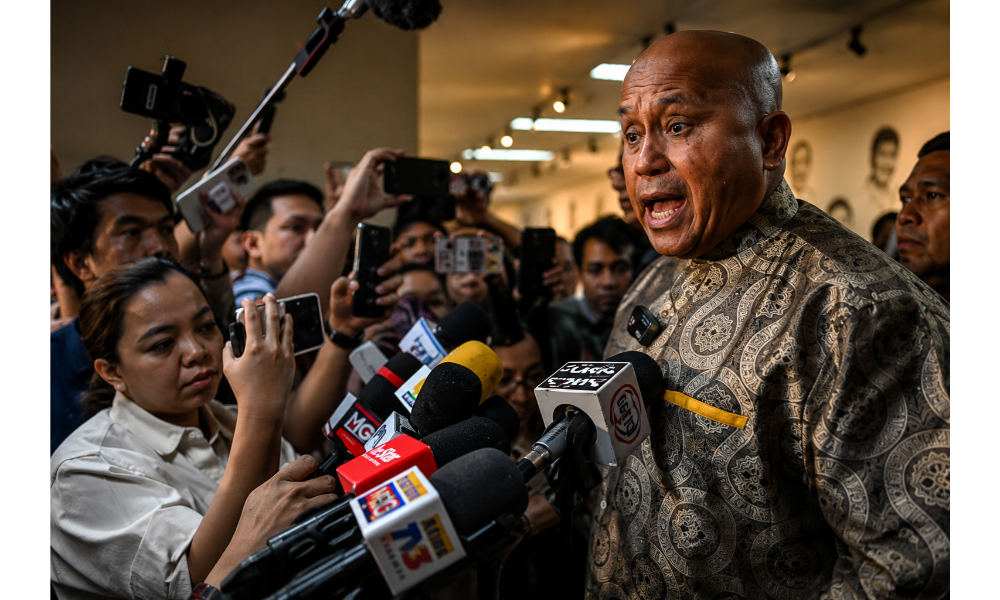
The Philippine Senate Shooting Crisis has triggered a wave of political concern across Southeast Asia after chaos surrounding a shooting incident near the Philippine Senate prompted emergency government action in Manila. According to reporting from Reuters., the Philippine president moved quickly to convene an emergency meeting involving senior security officials and government agencies as authorities attempted to contain uncertainty and reassure the public.
The incident immediately intensified concerns surrounding institutional security, political stability, and public trust in government protection measures. Moreover, it placed renewed attention on vulnerabilities facing democratic institutions in politically tense environments. Although Philippine authorities sought to prevent panic and maintain order, the event rapidly became a broader national security discussion rather than only a criminal investigation.
Meanwhile, regional observers and international investors closely monitored the government’s response. Political disruptions in emerging economies often carry implications beyond domestic politics because markets, diplomatic partners, and multinational businesses view institutional stability as a core indicator of long-term reliability. Consequently, the emergency meeting signaled not only a security response but also a strategic effort to preserve confidence in governance.
The crisis also arrives during a period of heightened geopolitical sensitivity across Asia. Governments throughout the region are increasingly confronting political polarization, online misinformation, and rising security concerns surrounding public institutions. Therefore, the Philippine administration now faces pressure to demonstrate effective crisis management while maintaining transparency and public confidence.
In addition, the incident has intensified scrutiny of Senate security protocols and crisis preparedness in Manila. Public expectations for rapid government action remain high, especially when political institutions become associated with violence or disorder. As a result, the Philippine Senate Shooting Crisis may become a defining test of leadership communication and institutional resilience in 2026.
Why the Philippine Senate Shooting Crisis Is Politically Significant?
The Philippine Senate Shooting Crisis carries deep symbolic importance because the Senate represents one of the country’s most visible democratic institutions. Any security breach or violent incident linked to such a location immediately raises concerns about the state’s ability to protect national institutions and maintain political order. Moreover, incidents involving political spaces often generate stronger emotional and political reactions than ordinary security events.
The situation has also amplified fears surrounding political violence in the Philippines. Although authorities moved rapidly to stabilize conditions, the incident created fresh debate over political tensions and institutional vulnerability. Consequently, the government now faces growing pressure to reinforce security systems while avoiding perceptions of instability.
International attention further increased the significance of the crisis. Foreign governments, investors, and regional observers often interpret incidents involving political institutions as indicators of governance strength. Therefore, the Philippines must now manage not only domestic public confidence but also its international image.
Several factors explain the political significance of the incident:
- The Senate symbolizes democratic continuity and constitutional governance
- Security disruptions can weaken public trust in institutions
- Political instability concerns may affect economic sentiment
- International media scrutiny increases diplomatic pressure
- Leadership response speed shapes global perception
Nevertheless, the broader geopolitical implications extend beyond Manila. Political security incidents in emerging economies frequently influence regional confidence because neighboring countries monitor how governments respond under pressure.
How the Philippine Government Responded to the Crisis?
The Philippine government responded quickly by organizing emergency meetings involving senior officials, law-enforcement agencies, and national security advisers. According to Reuters reporting, the administration prioritized coordination between multiple agencies to assess the situation and prevent escalation. Moreover, authorities emphasized the importance of maintaining public calm while investigations continued.
Government communication became a central element of the response strategy. Officials attempted to reassure citizens, investors, and international partners that state institutions remained functional and secure. Consequently, leadership messaging focused heavily on continuity, stability, and institutional resilience.
Meanwhile, security reviews reportedly intensified around government buildings and political institutions in Manila. Authorities also examined emergency response procedures and protection protocols. Such measures are increasingly common during political crises because governments seek to demonstrate immediate operational control.
The response strategy included several important objectives:
- Preventing misinformation and panic
- Reinforcing institutional security measures
- Coordinating intelligence and law-enforcement agencies
- Reassuring foreign investors and diplomatic partners
- Demonstrating continuity of government operations
However, rapid response alone may not fully resolve public concerns. Governments facing political security crises must also sustain credibility over time through transparent investigations and visible institutional reforms.
Key Factors Behind the Philippine Senate Shooting Crisis
| Factor | Political Impact | Security Concern | Government Response | Public Reaction |
|---|---|---|---|---|
| Senate-related violence | Increased political tension | Institutional vulnerability | Emergency security review | Anxiety over stability |
| Leadership pressure | Demand for rapid action | Crisis management gaps | Emergency government meeting | Calls for accountability |
| Media attention | Intensified global scrutiny | Information control challenges | Public communication strategy | Rising public debate |
| Investor sensitivity | Market uncertainty concerns | Stability perception risks | Reassurance to business sector | Concern over economic impact |
| Regional implications | Diplomatic attention | Cross-border security worries | Coordination with agencies | Focus on national image |
Why Political Security Has Become a Growing Concern in Southeast Asia?
Political security concerns have become increasingly prominent across Southeast Asia as governments confront polarization, misinformation, and evolving domestic tensions. The Philippine Senate Shooting Crisis reflects a broader regional trend in which institutional security is no longer viewed solely as a domestic policing issue. Instead, it now intersects with economic confidence, diplomatic credibility, and geopolitical competition.
Moreover, political institutions throughout the region face growing exposure to online disinformation campaigns and public distrust. Such dynamics can amplify political incidents rapidly, especially when social media accelerates speculation and misinformation. Consequently, governments are under pressure to strengthen intelligence coordination and crisis communication systems.
Security experts also warn that political polarization can increase institutional vulnerability. In contrast to previous decades, modern political crises unfold in real time under intense global scrutiny. Therefore, governments must respond immediately while balancing transparency and security concerns.
Key regional concerns include:
- Vulnerabilities around high-profile institutions
- Challenges posed by misinformation ecosystems
- Growing public distrust toward political systems
- Need for stronger intelligence coordination
- Pressure to maintain democratic credibility
As a result, Southeast Asian governments increasingly view institutional stability as essential for both national security and economic competitiveness.
Impact on Investor Confidence and International Perception
Political instability often influences investor confidence because financial markets respond quickly to uncertainty surrounding governance and security. The Philippine Senate Shooting Crisis therefore carries potential economic implications even if authorities successfully contain immediate tensions.
Foreign investors generally evaluate political stability alongside economic indicators when assessing emerging markets. Consequently, incidents involving national institutions can create temporary concerns about policy continuity and operational security. Moreover, multinational corporations typically prefer predictable political environments when making long-term investment decisions.
Tourism and business sentiment may also experience indirect effects. Although isolated incidents do not necessarily produce lasting economic damage, international perception matters significantly in competitive regional markets. Therefore, governments frequently prioritize reassurance campaigns after political security events.
However, Philippine authorities appear focused on projecting stability and continuity. Government communication has emphasized institutional resilience and coordinated security responses. Such messaging is intended to prevent panic and reinforce confidence among both domestic and international audiences.
Political Crisis Response vs Institutional Stability
| Response Area | Government Objective | Public Concern | Economic Impact | Long-Term Challenge |
|---|---|---|---|---|
| Emergency meetings | Restore confidence | Fear of instability | Market uncertainty | Sustaining trust |
| Security reinforcement | Protect institutions | Safety concerns | Investor caution | Funding security reforms |
| Public communication | Prevent panic | Transparency questions | Business sentiment | Maintaining credibility |
| Law-enforcement action | Ensure accountability | Investigation integrity | International perception | Institutional reform |
| Diplomatic outreach | Preserve regional confidence | Reputation management | Foreign investment stability | Long-term political trust |
How Leadership Communication Shapes Crisis Management?
Leadership communication plays a critical role during political emergencies because public perception can influence both stability and institutional credibility. The Philippine president’s decision to call an emergency meeting served not only as a security measure but also as a symbolic demonstration of active governance.
Moreover, governments must reassure citizens that institutions remain operational and capable of managing crises effectively. Clear communication helps reduce speculation, prevent misinformation, and maintain social calm. Consequently, crisis messaging has become one of the most important tools in modern political security management.
Media management also shapes international perception. Global investors and foreign governments closely monitor official statements during emergencies because inconsistent messaging can damage credibility. Therefore, administrations often balance transparency with operational security considerations.
Important elements of crisis communication include:
- Rapid public updates from leadership
- Coordination between agencies and spokespersons
- Consistent messaging to domestic and international audiences
- Transparency regarding investigations
- Reassurance about institutional continuity
Nevertheless, communication strategies must align with visible action. Public trust can weaken if official statements are not supported by credible security measures and transparent governance.
Risks Facing the Philippines After the Senate Incident
The Philippines now faces several interconnected political and security risks following the Senate-related incident. Although authorities moved quickly to stabilize the situation, longer-term concerns may persist depending on investigation outcomes and public perception.
Political polarization represents one major challenge. Security incidents connected to political environments can deepen divisions and increase public distrust in institutions. Moreover, opposition groups and political rivals may interpret government responses differently, potentially intensifying political tensions.
Law-enforcement agencies also face increased scrutiny regarding preparedness and intelligence coordination. Consequently, authorities may encounter pressure to strengthen institutional security measures and improve emergency response capabilities.
Key risks include:
- Rising political polarization
- Declining public confidence in institutions
- International reputational damage
- Increased pressure on security agencies
- Fear of future escalation
However, effective crisis management could limit long-term damage if authorities maintain transparency and demonstrate institutional competence.
Why Institutional Stability Matters for Emerging Asian Economies?
Institutional stability remains a critical asset for emerging Asian economies because political confidence strongly influences investment flows, tourism, and business expansion. The Philippine Senate Shooting Crisis illustrates how security incidents can rapidly become economic concerns in globally connected markets.
Investors typically prioritize stable governance environments when evaluating long-term opportunities. Consequently, countries experiencing political uncertainty may face higher risk perceptions even if economic fundamentals remain strong. Moreover, geopolitical competition across Asia increases the strategic value of political reliability.
Tourism sectors are especially sensitive to international perception. Travelers and multinational companies often respond quickly to security-related headlines, particularly when incidents involve political institutions. Therefore, governments work aggressively to restore confidence after crises.
The relationship between governance and economic growth includes several factors:
- Investor confidence depends on institutional reliability
- Tourism benefits from political stability
- Regional trade requires predictable governance
- Diplomatic partnerships favor stable political systems
- Economic competitiveness increasingly includes security credibility
As a result, institutional resilience has become closely linked to economic strategy throughout Southeast Asia.
How the Philippine Senate Shooting Crisis Reflects Broader Global Trends?
The Philippine Senate Shooting Crisis reflects broader global concerns surrounding political institution security and crisis governance. Governments worldwide increasingly confront situations where domestic political incidents rapidly evolve into international news events with economic and diplomatic consequences.
Moreover, political stability now influences global competitiveness more directly than in previous decades. Financial markets react instantly to uncertainty, while digital media amplifies public scrutiny. Consequently, leadership response speed often shapes international perception as much as the incident itself.
The crisis also demonstrates the growing overlap between domestic security and geopolitical reputation. Emerging economies must now manage political incidents under intense global observation. Therefore, institutional credibility depends not only on security capacity but also on communication effectiveness and governance transparency.
Importantly, the Philippine government’s handling of the crisis may influence domestic political trust and international standing in the months ahead. Governments today face immediate global scrutiny during emergencies, and investor confidence increasingly depends on perceptions of institutional stability.
The situation further highlights several global trends:
- Political security incidents carry international economic consequences
- Crisis communication shapes diplomatic perception
- Institutional credibility affects market confidence
- Governments face pressure for faster emergency responses
- Domestic instability increasingly influences geopolitical positioning
Ultimately, the Philippine Senate Shooting Crisis demonstrates how political security incidents in emerging economies can evolve into broader tests of governance credibility, investor confidence, and regional stability. Southeast Asian stability remains strategically important for global markets and regional diplomacy, making effective crisis management essential not only for domestic order but also for international trust.
FAQs
Why did the Philippine president call an emergency meeting?
The Philippine president called an emergency meeting to coordinate security agencies, assess the Senate-related incident, and restore public confidence following the crisis.
What happened during the Philippine Senate shooting crisis?
The crisis involved chaos linked to a shooting incident connected to the Philippine Senate, prompting emergency government action and heightened security concerns.
Why is the incident politically significant?
The Senate represents a major democratic institution, so any security incident involving it raises broader concerns about political stability and institutional protection.
How has the Philippine government responded?
Authorities organized emergency meetings, increased security reviews, coordinated law enforcement agencies, and reassured the public and investors.
Could the crisis affect investor confidence?
Yes. Political instability concerns can influence market sentiment and foreign investment decisions, especially in emerging economies.
Why is institutional security important in politics?
Institutional security protects democratic continuity, maintains public trust, and supports national stability during political tensions.
How does political instability affect Southeast Asia?
Political instability can influence investor confidence, regional diplomacy, tourism, and perceptions of governance reliability across Southeast Asia.
What risks does the Philippines face after the incident?
Potential risks include political polarization, public distrust, reputational challenges, and increased pressure on security agencies.
How do governments manage political security crises?
Governments typically use emergency coordination, crisis communication, intelligence cooperation, and public reassurance strategies.
Could the incident impact the Philippines’ global image?
Yes. International perception often depends on how effectively governments respond to political crises and maintain institutional stability.