The Canada EPC Summit has become a key reference point in 2026 geopolitical discourse as Canada deepens its engagement with European partners while reaffirming its commitment to Ukraine. At the recent European Political Community gathering in Armenia, Canada announced a $270 million support package for Ukraine, signaling continued alignment with Western security priorities amid an increasingly fragmented global order.
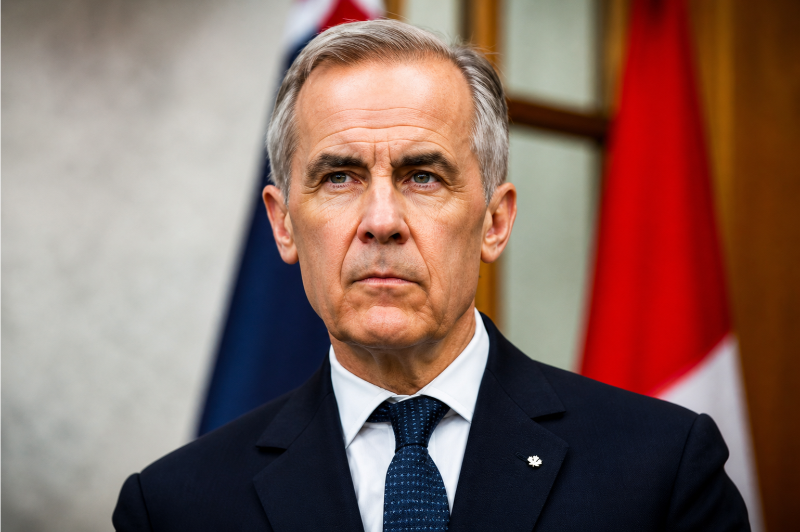
Under the leadership of Mark Carney, Canada’s foreign policy direction reflects a structured effort to strengthen transatlantic ties. The summit brought together multiple European and partner states under the framework of the European Political Community, focusing on security coordination, economic resilience, and geopolitical stability. Canada’s participation marks a significant expansion of its diplomatic footprint beyond traditional North American alignments.
In a period marked by global uncertainty, shifting U.S. political dynamics, and ongoing conflict in Ukraine, the Canada EPC Summit is being closely monitored by policymakers and financial markets. The decisions made here reflect not only immediate foreign aid commitments but also long-term strategic positioning in a rapidly evolving international system.
Canada EPC Summit: Strategic Context of the $270M Ukraine Commitment
The Canada EPC Summit served as a platform for Canada’s announcement of a $270 million commitment to Ukraine, reinforcing its ongoing support for Kyiv amid the prolonged conflict with Russia. This funding aligns with broader Western assistance frameworks that combine military, humanitarian, and economic stabilization efforts.
Canada’s contribution fits within a coordinated international response structure involving European and NATO-aligned partners. The aim is to sustain Ukraine’s financial stability while ensuring long-term reconstruction capacity. This reflects a shared understanding among allied nations that fragmented or inconsistent support could weaken strategic outcomes.
From a policy perspective, Canada’s commitment is not an isolated gesture but part of a structured geopolitical strategy. It strengthens Canada’s position as a reliable partner within European security discussions while reinforcing its credibility in multilateral institutions.
Key implications of the funding:
- Strengthens Ukraine’s fiscal and humanitarian resilience
- Reinforces Western unity in long-term conflict management
- Expands Canada’s role in European security frameworks
- Signals continuity in transatlantic cooperation
However, challenges remain. Sustaining financial commitments over time could strain domestic budgets, and coordination among multiple donors may introduce inefficiencies. Despite this, the overall direction reflects strong alignment with European partners.
Canada EPC Summit and Western Alliance Realignment
The Canada EPC Summit highlights a broader trend of Western alliance restructuring, where countries are increasingly diversifying their diplomatic and economic partnerships. Canada’s engagement with Europe reflects a strategic effort to reduce overdependence on any single geopolitical actor.
This shift is driven by evolving global conditions, including uncertainty in U.S. political leadership and changing trade dynamics. As a result, Canada is strengthening ties with European economies in areas such as energy, defense, and advanced technology.
At the same time, Europe is actively seeking deeper cooperation with non-European partners to expand its strategic reach. Canada’s participation in the EPC thus represents mutual alignment rather than unilateral realignment.
Key drivers of alliance restructuring:
- Increasing geopolitical fragmentation
- Trade diversification strategies
- Energy and security cooperation needs
- Desire for strategic autonomy among mid-sized powers
Outcomes observed:
- Greater policy coordination between Canada and Europe
- Expanded dialogue on defense and infrastructure
- Increased emphasis on supply chain resilience
While this realignment enhances stability, it also introduces complexity. Differing national priorities may slow decision-making processes, and overlapping commitments could reduce efficiency in implementation.
Key Stakeholders in the EPC Framework
| Country/Entity | Strategic Interest | Economic Influence | Political Objective | Alliance Role |
|---|---|---|---|---|
| Canada | Trade diversification | High | Strengthen EU ties | Expanding partner |
| European Union | Regional stability | Very High | Policy coordination | Core bloc leader |
| UK | Global repositioning | High | Post-Brexit influence | Strategic connector |
| France | Defense leadership | High | Security integration | Policy driver |
| Germany | Economic stability | Very High | Industrial coordination | Economic anchor |
| Ukraine | Security survival | Moderate | War recovery support | Recipient state |
Geopolitical Implications for Global Markets
The Canada EPC Summit carries meaningful implications for global financial markets, particularly in terms of risk perception, capital flows, and currency stability. Markets tend to respond positively to signals of coordinated geopolitical stability, especially in conflict-affected regions.
In this context, Canada’s Ukraine funding announcement contributes to broader investor confidence in European stability. However, the long-term impact depends on the consistency of Western support and the trajectory of the conflict.
Market-level effects:
- Stabilization of European risk sentiment
- Moderate support for euro and allied currencies
- Increased investor confidence in defense-related sectors
- Gradual improvement in long-term capital planning
Balanced outlook:
- Upside: Reduced geopolitical uncertainty supports investment
- Downside: Prolonged conflict may sustain market volatility
- Neutral: Incremental improvements without structural shifts
Overall, markets interpret the summit as a stabilizing but not transformative event.
Canada EPC Summit: Economic and Policy Strategy
The Canada EPC Summit also reflects Canada’s long-term economic strategy focused on diversification and resilience. By engaging more deeply with European partners, Canada aims to reduce exposure to concentrated trade dependencies and strengthen its global positioning.
Key policy directions emerging from this engagement include:
- Expansion of bilateral and multilateral trade agreements with Europe
- Enhanced cooperation in clean energy and critical resources
- Regulatory alignment to facilitate cross-border investment
- Strengthening of technology and innovation partnerships
These initiatives indicate a structured attempt to integrate Canada more deeply into European economic systems while maintaining flexibility in global trade relations.
However, implementation will require sustained coordination across regulatory frameworks and domestic economic priorities. Diverging standards and policy timelines may slow progress.
Geopolitical Alignment vs Economic Impact
| Factor | Strong Alignment | Moderate Alignment | Weak Alignment |
|---|---|---|---|
| Trade Stability | High | Medium | Low |
| Market Confidence | Strong | Neutral | Weak |
| Currency Impact | Stable | Mixed | Volatile |
| Investment Flow | Increasing | Balanced | Declining |
| Risk Level | Low | Moderate | High |
Global Power Dynamics and U.S. Political Influence
The Canada EPC Summit must also be viewed through the lens of broader global power dynamics. In particular, the evolving role of the United States in international alliances is shaping how countries design their foreign policy strategies. Historically, the U.S. has served as the central pillar of Western security and economic coordination. Therefore, most Western policies have long depended on American leadership.
However, shifting political conditions and expectations surrounding Donald Trump have encouraged allies to reassess their strategic dependencies. As a result, many countries are now exploring more flexible and balanced partnerships. This does not indicate a breakdown of alliances. Instead, it reflects a gradual diversification of strategic options across the West.
Key dynamics:
- Allies strengthening independent partnerships
- Increased focus on regional cooperation
- Strategic hedging against policy uncertainty
- Continued but more flexible U.S. engagement
Analytical outcome:
- Upside: Greater resilience through diversified alliances and reduced dependency on a single power
- Downside: Possible fragmentation of coordination and slower decision-making
- Neutral: A balanced multi-alignment strategy that evolves over time
Moreover, Canada’s participation in the EPC reflects this hedging approach. The country is combining its traditional North American ties with expanded European engagement. In addition, this strategy helps Canada reduce risk while increasing diplomatic flexibility in a changing global order.
Canada EPC Summit: Risks and Strategic Trade-Offs
While the Canada EPC Summit improves diplomatic and economic coordination, it also brings structural limits that cannot be ignored. Multilateral frameworks often face execution challenges. This is mainly because member states have different national priorities and economic pressures.
Key risks:
- Divergence in policy goals among member countries
- Overlapping commitments that reduce efficiency
- Budget and funding limits over the long term
- Slower decision-making processes in large coalitions
Furthermore, these risks can reduce the speed of implementation, especially in crisis situations where quick decisions are required. However, despite these challenges, the overall direction of cooperation remains stable.
Balanced assessment:
- Upside: Stronger collective resilience and shared security frameworks
- Downside: Coordination issues and possible policy delays
- Neutral: Gradual progress without major structural disruption
Consequently, the success of the summit depends heavily on long-term political commitment. In addition, institutional flexibility will be essential to manage differences among participating countries.
2026 Geopolitical Trends and Adaptive Alliance Strategy
The Canada EPC Summit reflects a larger shift in global diplomacy. In simple terms, the world is moving away from rigid alliance systems toward flexible and adaptive partnerships. Traditional power blocs are becoming less dominant. Instead, issue-based cooperation is becoming more common.
Key global trends:
- Rise of multi-alignment strategies among nations
- Expansion of regional cooperation frameworks
- Decline of strict geopolitical blocs
- Greater independence for mid-sized powers
Moreover, Canada’s participation highlights this transformation clearly. Countries are no longer relying on a single alliance structure. Instead, they are engaging with multiple partners at the same time to balance risk and opportunity.
As a result, global governance is becoming more flexible. In addition, adaptability is now more important than rigid alignment. This shift allows countries to respond more effectively to economic shocks, security threats, and political changes.
Therefore, the Canada EPC Summit represents not just a diplomatic event but also a sign of long-term structural change in international relations.
FAQs
What is the Canada EPC Summit?
It refers to Canada’s participation in the European Political Community framework focused on geopolitical and economic coordination.
What is the European Political Community?
It is a multilateral forum designed to strengthen political and security cooperation across Europe and partner nations.
Why did Canada commit $270M to Ukraine?
To support Ukraine’s economic and humanitarian stability amid ongoing conflict.
Who is Mark Carney?
Mark Carney is a Canadian leader involved in shaping economic and geopolitical policy direction.
How does this affect global markets?
It improves short-term confidence in European stability but does not eliminate long-term geopolitical risk.
How does this impact U.S.-Canada relations?
It represents diversification rather than replacement of U.S. ties.
What are the risks of such alliances?
Coordination challenges, funding pressures, and policy divergence.
What is the main goal of the EPC?
To enhance cooperation on security, energy, and economic stability.
Does this change global power structure?
It contributes to gradual multipolar realignment rather than immediate transformation.
What does this mean for 2026 geopolitics?
A shift toward flexible, adaptive, and multi-layered alliance systems.