For decades, exotic supercars symbolized the pinnacle of wealth, exclusivity, and status. However, affluent investors in 2026 increasingly view many high-end vehicles as lifestyle purchases rather than dependable stores of value. Although certain ultra-rare automotive icons continue attracting collectors, most modern supercars experience aggressive depreciation, rising maintenance costs, and shifting market demand. Consequently, wealthy buyers now allocate larger portions of their portfolios toward luxury assets with stronger long-term value retention.
This shift reflects broader changes in affluent investment psychology. High-net-worth individuals no longer pursue luxury solely for visibility or prestige. Instead, they increasingly prioritize financial durability, scarcity, and portfolio diversification. Moreover, evolving global economic conditions have intensified interest in tangible assets capable of preserving wealth during inflationary periods and currency instability.
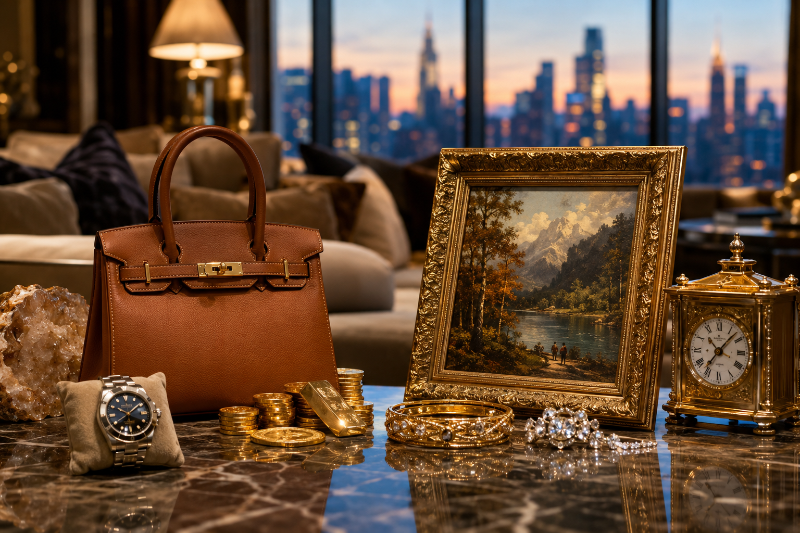
As a result, categories such as prime real estate, fine art, luxury handbags, rare watches, jewelry, and gold coins now command serious investor attention. These assets blend emotional ownership with measurable financial potential. Meanwhile, secondary resale ecosystems, auction platforms, and digital authentication technologies continue strengthening confidence in collectible luxury markets.
Real estate remains a foundational wealth-preservation asset because it offers stability, rental income opportunities, and inflation protection. Fine art and jewelry continue attracting collectors seeking cultural prestige alongside appreciation potential. Additionally, luxury handbags have evolved into sophisticated resale-driven investment categories with strong demand dynamics. Rare gold coins and portable collectibles also appeal to investors searching for globally recognized stores of wealth.
Today’s affluent investors increasingly balance passion with strategic capital allocation. Therefore, luxury assets now operate as hybrid lifestyle-investment instruments rather than simple symbols of consumption.
Why Supercars Often Lose Value Faster Than Other Luxury Assets?
Supercars undoubtedly deliver emotional excitement, engineering brilliance, and social prestige. Nevertheless, most luxury vehicles depreciate rapidly after purchase. Even high-end exotic brands frequently lose substantial market value within the first several years of ownership.
One major reason involves the accelerating pace of automotive technology. Electric performance vehicles, AI-assisted driving systems, and evolving emissions regulations continuously reshape the luxury automotive sector. Consequently, older models often become technologically outdated faster than previous generations of collectible cars.
Moreover, ownership costs significantly impact long-term returns. Insurance, climate-controlled storage, specialized servicing, transportation logistics, and maintenance expenses collectively reduce investment efficiency. In contrast, many other luxury assets require lower ongoing operational costs.
Changing consumer behavior also affects depreciation trends. Younger affluent buyers increasingly prioritize experiences, diversification, and collectible scarcity over visible automotive excess. Therefore, demand patterns continue shifting away from broad supercar ownership toward highly selective collector vehicles.
Several factors contribute to supercar depreciation:
- High maintenance and insurance costs
- Rapid technological obsolescence
- Increased production volumes for some models
- Narrow resale buyer pools
- Regulatory shifts toward electrification
Certain historically significant cars still appreciate dramatically. However, those exceptions typically involve ultra-limited production runs, racing heritage, or extraordinary provenance. For most buyers, exotic vehicles function primarily as luxury consumption rather than wealth preservation.
Luxury Real Estate Remains a Core Wealth Asset
Luxury real estate continues serving as one of the world’s most reliable wealth-preservation vehicles. Prime global property markets consistently attract affluent investors because land scarcity, demographic growth, and urban desirability support long-term value stability.
In cities such as Dubai, London, Singapore, and New York City, branded residences and ultra-prime properties continue commanding exceptional demand. Moreover, wealthy buyers increasingly seek residences that combine lifestyle prestige with long-term capital resilience.
Real estate also offers advantages unavailable in many collectible categories. Rental income potential generates ongoing cash flow, while property ownership often provides inflation protection through rising asset values and lease pricing. Additionally, tangible ownership creates psychological security during periods of market volatility.
Meanwhile, luxury hospitality-linked developments and branded residences continue expanding globally. These projects attract affluent buyers seeking premium services, international mobility, and asset-backed lifestyle experiences.
| Luxury Asset | Value Stability | Appreciation Potential | Liquidity Level | Wealth Preservation Benefit |
|---|---|---|---|---|
| Prime Real Estate | High | High | Medium | Strong inflation protection |
| Fine Art | Medium | High | Low | Cultural and financial prestige |
| Luxury Watches | High | Medium-High | Medium | Portable wealth |
| Gold Coins | High | Medium | High | Crisis-resistant store of value |
| Luxury Handbags | Medium-High | High | Medium | Strong resale ecosystem |
Moreover, global wealth migration trends continue strengthening premium property demand. Affluent investors increasingly acquire international residences as strategic assets tied to lifestyle flexibility, tax planning, and geographic diversification.
Why Luxury Handbags Became Investment Assets?
Luxury handbags transformed dramatically over the past decade. What once represented fashion consumption now functions as a serious collectible market with sophisticated resale dynamics.
Limited-edition releases, controlled production volumes, and brand-managed scarcity significantly influence pricing behavior. Consequently, select handbags from elite fashion houses frequently outperform traditional luxury consumer goods in resale markets.
Moreover, digital resale platforms have expanded transparency and liquidity within the handbag sector. Buyers now access authentication services, historical pricing data, and international marketplaces with greater ease. As a result, investor confidence in luxury handbags continues rising.
Several factors drive handbag investment demand:
- Limited production availability
- Strong brand heritage
- Celebrity and cultural influence
- Growing secondary market infrastructure
- Global collector demand
Certain ultra-rare handbags appreciate because supply remains intentionally constrained while demand expands globally. In contrast to supercars, handbags also require lower maintenance costs and provide easier storage, portability, and resale access.
Meanwhile, younger affluent consumers increasingly view luxury handbags as alternative luxury investments rather than purely fashion-oriented purchases. This generational mindset shift continues reshaping the broader luxury market.
Fine Art and Collectibles Continue Attracting Wealthy Buyers
Fine art remains deeply connected to wealth culture, cultural influence, and prestige ownership. However, art investment today extends beyond social signaling. Wealthy collectors increasingly view fine art as a diversification strategy capable of preserving long-term capital.
Auction houses such as Christie’s and Sotheby’s continue driving international collector demand through curated sales, private transactions, and digital bidding platforms. Moreover, globalization has expanded participation from buyers across the Middle East, Asia, and emerging wealth regions.
Ultra-rare artworks benefit from scarcity dynamics similar to other collectible markets. Therefore, museum-quality pieces from historically important artists often achieve exceptional appreciation over time. Nevertheless, the art market remains selective and highly expertise-driven.
Collectors also value fine art for emotional and cultural reasons. Ownership creates personal identity, intellectual engagement, and legacy-building opportunities that purely financial assets rarely provide.
Key drivers behind art market resilience include:
- Global collector competition
- Institutional buying activity
- Cultural prestige
- Intergenerational wealth transfer
- Scarcity of historically significant works
However, art investing requires careful due diligence. Provenance verification, authenticity research, insurance planning, and market timing all influence outcomes significantly.
Jewelry, Watches, and Gold Coins as Portable Wealth
Luxury watches, fine jewelry, and rare gold coins continue attracting affluent investors seeking portable stores of value. Unlike real estate, these assets offer mobility, discretion, and international liquidity.
Rare watches benefit from strong collector culture, controlled production, and heritage brand influence. Certain timepieces maintain waiting lists that fuel secondary-market premiums, particularly for limited or historically significant models.
Jewelry also appeals because precious gemstones and metals retain intrinsic material value. Moreover, exceptional craftsmanship and rarity often create additional collectible premiums beyond raw commodity pricing.
Gold coins remain particularly attractive during economic uncertainty. Investors frequently view them as historically proven stores of wealth capable of preserving purchasing power across generations.
| Asset Category | Ownership Cost | Long-Term Appreciation | Emotional Value | Market Volatility |
|---|---|---|---|---|
| Supercars | Very High | Low-Medium | Very High | High |
| Luxury Watches | Medium | Medium-High | High | Medium |
| Fine Art | Medium | High | High | Medium-High |
| Gold Coins | Low | Medium | Medium | Low |
| Luxury Handbags | Low-Medium | High | High | Medium |
Additionally, portable luxury assets offer flexibility during geopolitical instability or financial market disruptions. Wealthy families often appreciate the ability to transfer or liquidate these assets internationally with relative ease.
Meanwhile, collectible watches and jewelry increasingly function as cross-generational wealth-transfer tools. Families pass rare pieces through generations while preserving both emotional and financial value.
Why Tangible Luxury Assets Appeal During Economic Uncertainty?
Economic uncertainty consistently increases interest in tangible wealth assets. Inflation concerns, volatile equity markets, and currency instability often encourage affluent investors to diversify into physical holdings with perceived durability.
Tangible luxury assets provide psychological reassurance because owners can physically possess and enjoy them. In contrast, purely digital wealth categories sometimes feel abstract during periods of financial stress.
Moreover, many collectible luxury assets historically demonstrated resilience during inflationary environments. Rare collectibles, precious metals, and prime real estate frequently maintain demand even when broader markets experience turbulence.
Affluent investors increasingly value:
- Portfolio diversification beyond equities
- Inflation-resistant asset categories
- Physical ownership security
- Global resale flexibility
- Legacy-oriented investments
As a result, luxury collectibles increasingly occupy strategic positions within wealth-preservation portfolios rather than serving solely as passion purchases.
The Role of Exclusivity and Scarcity in Luxury Asset Value
Scarcity remains one of the most powerful drivers of luxury asset appreciation. Limited supply combined with expanding global wealth creates long-term upward pricing pressure across multiple collectible categories.
Heritage luxury brands carefully manage production volumes to maintain exclusivity. Consequently, scarcity becomes a strategic economic mechanism rather than an accidental market condition.
Collector psychology also plays a major role. Wealthy buyers often pursue assets that communicate rarity, connoisseurship, and cultural sophistication. Therefore, exclusivity frequently amplifies demand rather than limiting it.
Several scarcity-related dynamics influence luxury asset values:
- Limited production runs
- Historical significance
- Celebrity provenance
- Craftsmanship complexity
- Brand heritage strength
Meanwhile, rising global wealth expands the number of potential buyers competing for finite collectible inventory. This imbalance between supply and demand continues strengthening premium luxury markets.
In contrast, many modern supercars lack true scarcity because manufacturers increasingly produce larger volumes to meet commercial growth objectives. Consequently, exclusivity dilution weakens long-term appreciation potential.
The Future of Luxury Assets in 2026 and Beyond
Luxury asset investing continues evolving rapidly. Technology now plays a growing role in authentication, valuation, ownership verification, and market transparency.
AI-driven valuation platforms increasingly help investors assess collectible pricing trends, rarity metrics, and market demand patterns. Meanwhile, blockchain-based authentication systems improve provenance tracking for fine art, watches, handbags, and jewelry.
Digital resale ecosystems also continue expanding globally. As a result, liquidity within luxury collectible markets improves steadily, attracting broader investor participation.
Several future trends appear increasingly important:
- Blockchain ownership verification
- AI-powered valuation analytics
- Institutional collectible investment funds
- Luxury resale market growth
- Cross-border digital marketplaces
Moreover, institutional investors increasingly recognize collectibles as legitimate alternative assets. Family offices, wealth managers, and private investment groups now allocate capital toward luxury collectibles more systematically than in previous decades.
Nevertheless, successful luxury asset investing still requires patience, expertise, and careful selection. Emotional enthusiasm alone rarely guarantees financial performance.
Unique Insight: Luxury Assets Reflect a New Wealth Psychology
The growing popularity of luxury assets reflects a deeper transformation in affluent financial behavior. Wealthy individuals increasingly prioritize preservation, resilience, and strategic ownership over visible consumption.
In previous decades, status often centered around overt displays of luxury spending. However, modern affluent buyers increasingly seek assets capable of combining emotional satisfaction with financial utility. Therefore, collectibles now operate as hybrid lifestyle-investment instruments.
Younger wealthy buyers particularly embrace this mindset. Many view luxury watches, handbags, fine art, and rare collectibles as alternative investment classes comparable to private equity or real estate diversification strategies.
Moreover, digital-native affluent consumers feel increasingly comfortable participating in global resale ecosystems and authenticated collectible platforms. Consequently, liquidity and transparency within luxury markets continue improving.
Future wealth portfolios may increasingly blend traditional finance with collectible ownership. Real estate, equities, fine art, rare watches, gold coins, and luxury collectibles will likely coexist within diversified wealth-preservation frameworks.
This evolution demonstrates that luxury ownership in 2026 involves far more than prestige. It increasingly reflects strategic capital behavior shaped by scarcity, psychology, inflation awareness, and long-term value preservation.
FAQs
What luxury assets hold value best?
Prime real estate, rare watches, fine art, luxury handbags, and gold coins generally demonstrate stronger long-term value retention than most luxury consumer goods.
Why do supercars depreciate quickly?
Supercars often depreciate because of high maintenance costs, technological obsolescence, changing consumer demand, and larger-than-expected production volumes.
Are luxury handbags good investments?
Certain limited-edition luxury handbags perform strongly in resale markets due to scarcity, brand prestige, and global collector demand.
Does fine art appreciate over time?
Museum-quality and historically significant artwork can appreciate substantially. However, performance varies depending on artist reputation, rarity, and market demand.
Why do wealthy people invest in gold coins?
Gold coins provide portable wealth, inflation protection, global liquidity, and historical value preservation during economic uncertainty.
Is luxury real estate still a strong investment?
Yes. Prime real estate continues attracting affluent investors because of scarcity, rental income potential, and long-term wealth-preservation benefits.
What makes a collectible asset valuable?
Scarcity, provenance, cultural relevance, condition, craftsmanship, and collector demand all influence collectible asset values.
Are watches considered investment assets?
Many luxury watches function as collectible investment assets because of limited production, strong brand heritage, and active secondary markets.
How do luxury resale markets work?
Luxury resale platforms authenticate products, connect buyers and sellers globally, and facilitate pricing transparency across collectible categories.
What is the future of luxury asset investing?
The future likely includes AI valuation systems, blockchain authentication, expanding resale ecosystems, and greater institutional participation in collectible markets.