For much of modern investing, wealth has been associated with ownership.
Own the building. Own the land. Own the company. Own the shares.
But a different form of ownership is becoming increasingly important: access.
Across major markets, some of the most valuable economic resources are becoming difficult to secure not necessarily because they are disappearing, but because demand is accelerating faster than new supply can be created.
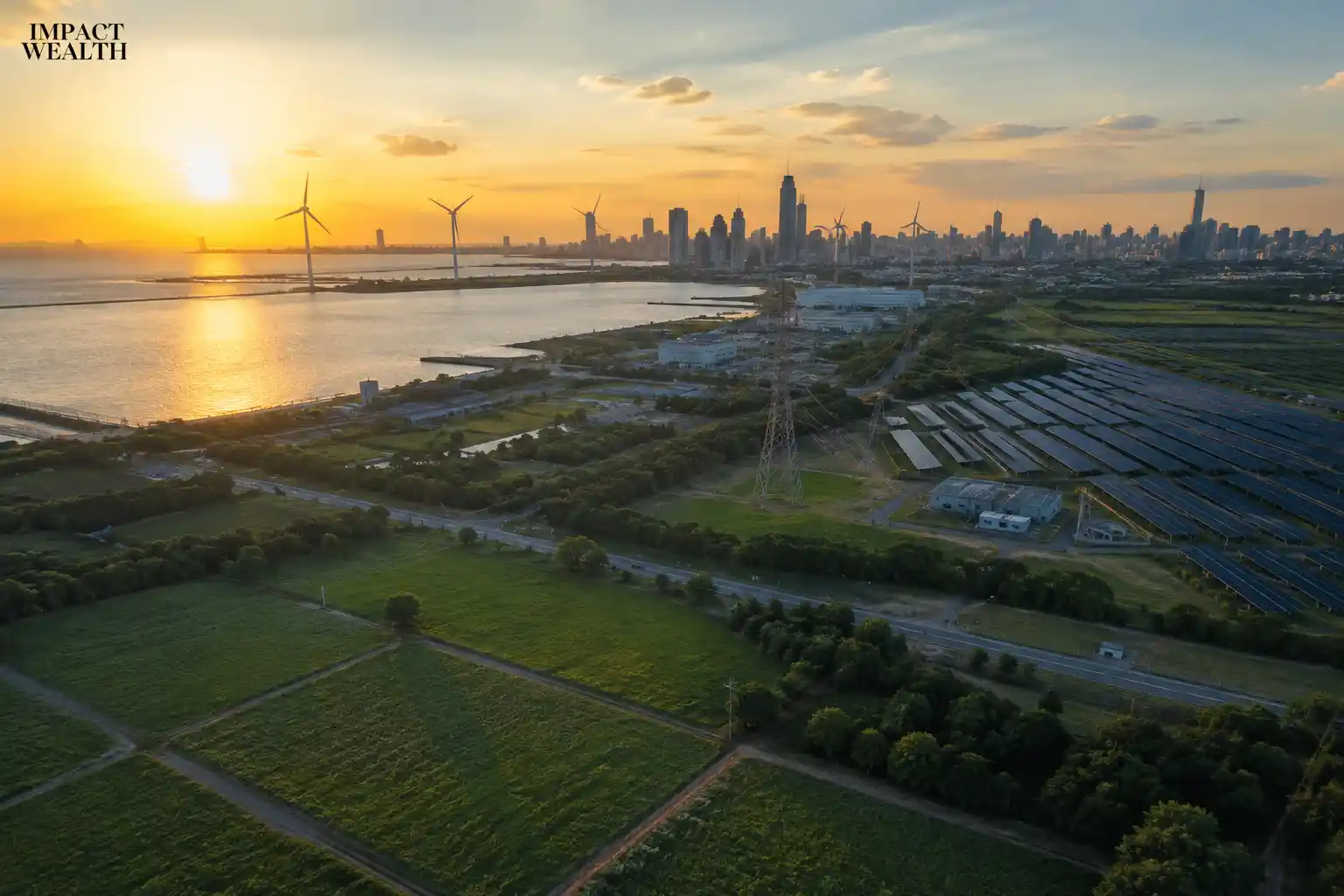
Land, energy and infrastructure are becoming increasingly consequential as artificial intelligence, electrification, industrial reshoring and geopolitical fragmentation reshape the global economy. Development-ready land, reliable electricity, grid connections, transport links, water and fiber networks are becoming increasingly difficult to secure.
For wealthy investors and family offices, this creates a new investment question.
It is no longer simply what should we own?
It is increasingly which scarce resources should we control access to?
From Ownership to Scarcity
Scarcity has always been fundamental to wealth creation.
Prime waterfront land, central business districts, agricultural acreage and natural resources have historically commanded premiums because their supply is constrained. But the definition of scarcity is expanding.
Today, a parcel of land without electricity may be significantly less valuable than a smaller parcel with a secured grid connection. A logistics property near a major transportation corridor can command a different economic premium from an otherwise comparable building with limited connectivity.
The distinction is becoming particularly visible in digital infrastructure.
AI data centers require enormous amounts of electricity, suitable land, cooling capacity and connectivity. As demand for computing infrastructure accelerates, developers are increasingly searching for locations where these resources can be assembled quickly.
Reuters reported in August 2026 that European data-center developers were moving projects farther from major cities in search of cheaper land, available power and faster grid connections.
This changes the investment equation.
The scarce asset may not be the data center itself. It may be the location capable of becoming a data center.
Powered Land Is Becoming a New Real-Asset Concept
Real estate investors have traditionally evaluated land through familiar metrics: location, zoning, population growth, development potential and comparable sales.
A new variable is becoming increasingly important: power availability.
Land with a credible path to electricity can possess dramatically greater development potential than land without one.
This has created growing interest in what infrastructure investors describe as “powered land” sites where land is combined with access to grid infrastructure and other development requirements.
The concept is important because securing electricity can take years. Obtaining land may be comparatively straightforward; obtaining the necessary transmission capacity, permits and grid connection can be considerably more difficult. “Powered land” is best understood as an emerging real-estate and infrastructure concept rather than a standardized asset class: its value comes from combining development-ready land with credible access to the power and infrastructure required for a future project.
That creates a new layer of scarcity.
For an investor capable of securing land before competing developers can obtain power, the advantage may come not from speculation on land prices alone but from controlling a development bottleneck.
The same principle can apply to industrial parks, logistics centers, semiconductor facilities, renewable-energy projects and other energy-intensive assets.
Land, Energy and Infrastructure Are Becoming Wealth Assets
Energy has always been economically important. What is changing is the scale and strategic value of reliable electricity.
The International Energy Agency expects global energy investment to reach approximately $3.4 trillion in 2026, with electricity-related spending accounting for nearly 60% of total energy investment. That shift toward electricity-related investment is particularly relevant for investors because it reflects the growing economic importance of grids, generation, storage and other infrastructure required to deliver reliable power.
AI is adding another layer of demand.
Data centers, semiconductor manufacturing, electrified transportation, advanced manufacturing and industrial automation all require dependable power. Meanwhile, grids in many developed markets were designed for a different era of electricity consumption.
The result is an unusual investment environment: enormous amounts of capital are available, but capital alone cannot immediately create transmission lines, substations, generation capacity or suitable development sites.
That gap can create value.
For family offices with long investment horizons, ownership of energy infrastructure or strategic stakes in the assets supporting energy delivery can provide exposure to an increasingly fundamental component of economic activity.
The opportunity is not limited to renewable generation.
Depending on geography and regulation, it can encompass grid infrastructure, battery storage, nuclear power, natural-gas generation, transmission assets and other forms of reliable capacity.
The central investment principle is increasingly reliability rather than ideology.
Infrastructure Is Becoming a Wealth Multiplier
Infrastructure has traditionally been viewed as a relatively defensive asset class.
Roads, ports, airports, utilities and telecommunications networks generate long-duration economic activity and, in many cases, predictable cash flows.
But infrastructure is acquiring a broader role.
McKinsey estimates that the world could require approximately $106 trillion of infrastructure investment through 2040, covering traditional assets such as roads and power grids as well as data centers, charging networks and fiber-optic infrastructure. Global infrastructure fundraising reached nearly $200 billion in 2025.
For private wealth, this matters because infrastructure increasingly sits underneath other investments.
A logistics portfolio depends on transportation networks.
A data-center portfolio depends on electricity and fiber.
Industrial real estate depends on roads, ports and power.
Luxury residential developments depend on water, transportation, communications and energy.
Infrastructure therefore becomes a multiplier of asset value.
Owning an asset without access to critical infrastructure can limit its potential. Owning infrastructure that enables multiple assets can create a different economic position.
The Geographic Premium Is Changing
Scarcity also changes how investors should think about geography.
The most desirable location is not always the most prestigious city.
For certain forms of investment, the winning location may be a secondary market with abundant land, available electricity and room for infrastructure expansion.
This is already happening in data centers.
Developers are moving away from congested metropolitan hubs because the economics of land and power increasingly outweigh the traditional advantages of proximity to major cities.
For family offices, this opens a broader question around infrastructure-led geography.
Which regions have:
- Available development land?
- Reliable electricity?
- Expanding transmission capacity?
- Strong digital connectivity?
- Water availability?
- Transportation access?
- Supportive planning regimes?
- Political and regulatory stability?
The answers could identify tomorrow’s strategic real-estate markets before they become today’s obvious destinations.
Why Family Offices Are Particularly Well Positioned
Scarcity-driven investments often require patience.
Infrastructure projects can take years to develop. Land may need to be held before its highest-value use becomes apparent. Grid connections and permitting can involve long timelines. Large infrastructure assets can also require substantial capital and complex governance.
These characteristics can disadvantage investors seeking rapid liquidity.
They can favor family offices.
Family offices typically have longer investment horizons and greater flexibility than many traditional institutional mandates. Impact Wealth’s coverage of family-office investing has similarly highlighted how these investors increasingly move beyond conventional portfolios into infrastructure, real estate and other long-duration assets.
For wealthy families, the attraction of land, energy and infrastructure is therefore not necessarily simply yield.
It can be strategic control.
A family office that owns land with infrastructure potential, energy assets supporting industrial development, or stakes in essential networks may gain exposure to the economic activity created around those assets.
That is a different form of wealth preservation.
Scarcity Can Create Pricing Power
The fundamental economic principle is straightforward.
When demand rises while supply remains constrained, the owners of scarce resources can gain pricing power.
But today’s scarcity is often more complicated than simply owning a finite commodity.
The most valuable position may be controlling several complementary resources simultaneously.
Consider a hypothetical industrial or data-center site.
Land alone may have moderate value, but adding zoning can increase its development potential. Highway access can add another layer of value by improving connectivity and expanding the site’s viable uses.
Now add a confirmed grid connection, available power capacity, water access, fiber connectivity and the permits required for development. The site’s economic potential can change substantially not because the land itself has changed, but because the number of viable uses has expanded.
The investor has effectively transformed raw land into infrastructure-enabled optionality. For a competing developer, reproducing that position may take years of permitting, grid negotiations and infrastructure investment.
That optionality can be particularly valuable because competitors may not be able to reproduce it quickly.
The New Luxury: Optionality
For ultra-high-net-worth investors, this may ultimately represent a broader evolution in the concept of luxury.
Luxury has historically been associated with exclusivity: private islands, trophy residences, yachts, aircraft and invitation-only experiences.
The next form of exclusivity may be less visible.
It could mean access to scarce electricity, strategically located land and reliable water supplies. It could mean proximity to critical transportation corridors and digital infrastructure, or control over development rights in jurisdictions where capital can move efficiently.
In this emerging definition of luxury, access itself becomes the scarce asset.
In other words, the ultimate premium may increasingly be attached to optionality the ability to do something that others cannot easily replicate.
That is especially relevant as AI and electrification accelerate demand for physical resources. BlackRock’s 2026 investment outlook describes the current environment as one in which scarcity in power, infrastructure, labor and materials is increasingly shaping investment opportunities.
What This Means for Wealth Strategy
The scarcity thesis does not mean wealthy investors should indiscriminately accumulate land, energy assets or infrastructure.
Scarcity alone does not guarantee attractive returns. Grid-connection delays, permitting risk, power-price volatility, financing costs, regulatory changes, environmental constraints and technological shifts can materially affect an investment’s outcome. Data-center demand, for example, can change faster than infrastructure projects can be developed, creating the risk that an apparently strategic site becomes less competitive.
Location, regulation, financing costs, technological change, environmental constraints and execution therefore remain critical. The investment case depends not simply on scarcity, but on whether the scarce resource can be converted into durable economic value.
Instead, the opportunity is to identify structural bottlenecks.
The most compelling assets may be those positioned between rapidly growing demand and supply that is difficult to expand.
For family offices, this can encourage a more integrated approach to real assets.
Rather than evaluating property, energy and infrastructure as completely separate categories, investors can examine how they interact.
A parcel of land becomes more valuable when infrastructure makes it productive.
Infrastructure becomes more valuable when it serves high-growth assets.
Energy becomes more valuable when it provides reliable capacity where new demand is emerging.
The investment thesis therefore moves from individual assets toward systems of scarcity.
The Wealth Advantage of Being Early
The greatest advantage may ultimately belong to investors who identify scarcity before it becomes obvious.
Once everyone recognizes that a particular location has valuable power capacity, transportation access or development potential, much of the premium may already be reflected in the price.
The opportunity lies earlier in the cycle.
Family offices with patient capital can potentially acquire strategic positions while infrastructure is still being planned, markets are still developing and future demand remains underappreciated.
This is not a strategy built around predicting the next luxury property market.
It is about understanding where economic activity will require physical resources and positioning capital around those constraints.
A New Definition of Wealth
The next era of wealth creation may be less about accumulating increasingly expensive assets and more about controlling the conditions that make assets valuable.
Land, energy and infrastructure matter individually but their greatest value may emerge when they intersect.
But their greatest value may emerge when they intersect.
As AI expands, electricity demand rises, industrial capacity is reshored and governments invest in strategic infrastructure, the competition for these resources is likely to intensify.
For UHNW investors and family offices, that creates a potentially important shift in portfolio thinking.
The question is no longer simply whether an asset is scarce.
It is whether access to that asset can create economic power that competitors cannot easily reproduce.
In a world where capital is abundant but physical capacity is constrained, scarcity itself can become a form of wealth.
And increasingly, the greatest luxury may not be owning more.
It may be having access when everyone else is waiting.
FAQs
1. Why are land, energy and infrastructure becoming more valuable to wealthy investors?
Land, energy and infrastructure are becoming increasingly valuable because economic growth is creating demand for resources that cannot always be expanded quickly. AI, data centers, electrification, industrial development and logistics are increasing competition for development-ready land, reliable power and critical infrastructure.
2. What does “the new scarcity” mean for wealth investors?
The new scarcity refers to the growing importance of resources that are difficult or slow to reproduce, including suitable land, electricity capacity, grid connections, water, transportation links and digital infrastructure. Controlling access to these resources can create strategic advantages and potentially increase asset values.
3. Why is access to electricity becoming an investment consideration?
Electricity availability can determine whether a site can support data centers, manufacturing facilities and other energy-intensive developments. As power demand grows, locations with reliable and expandable electricity access can become more strategically valuable.
4. Why are family offices interested in infrastructure?
Family offices can often invest with longer time horizons than investors focused on short-term liquidity. This can make infrastructure, strategic land and other long-duration real assets attractive because their development and value creation can take years.
5. What is “powered land”?
Powered land generally refers to development sites where access to electricity is available or sufficiently advanced to support future projects. In markets where grid connections are difficult to secure, power availability can become a major component of a property’s investment value.
6. Can scarce infrastructure create pricing power?
Potentially. When demand for a resource grows faster than its supply, owners of strategically located or difficult-to-replicate infrastructure can gain greater pricing power. However, regulation, location, financing, competition and execution remain important factors.
7. How is AI changing the value of physical assets?
AI is increasing demand for data centers, electricity, transmission capacity, fiber networks, cooling systems and suitable development sites. This means digital growth is increasingly creating demand for physical infrastructure.
8. Is infrastructure investing suitable for every wealthy investor?
No. Infrastructure investments can involve substantial capital requirements, long development periods, regulatory complexity and limited liquidity. Suitability depends on an investor’s objectives, risk tolerance, liquidity requirements and investment horizon.
9. What should family offices look for when evaluating scarce real assets?
Family offices can examine power availability, land quality, zoning, infrastructure connectivity, water access, transportation, regulatory conditions, population or industrial growth and the ability to expand capacity over time.
10. Could access itself become a form of wealth?
Increasingly, yes. In markets where capital is abundant but physical resources are constrained, having early or exclusive access to land, power, infrastructure or development rights can create an economic advantage that is difficult for competitors to replicate.