In 2026, Privacy While Traveling has become one of the defining priorities for affluent global travelers. While luxury once centered heavily on visibility and status signaling, modern ultra-high-net-worth individuals increasingly value discretion, operational control, and seamless mobility. Consequently, private aviation, superyacht travel, secure transportation, and concierge-managed itineraries now play a larger role in luxury travel culture than ever before.
Digital exposure has accelerated this shift. Social media visibility, cybersecurity risks, location tracking, and public scrutiny increasingly influence how wealthy travelers move through the world. Moreover, younger affluent travelers often prefer understated experiences over highly public luxury displays. As a result, “quiet luxury” behavior continues reshaping premium hospitality, private transportation, and executive travel services globally.
Private aviation and yacht mobility remain central to this transformation. Both offer controlled environments, flexible scheduling, and reduced exposure compared with commercial travel infrastructure. Meanwhile, luxury hospitality brands increasingly expand privacy-focused services, including private entrances, villa-style accommodations, secure concierge coordination, and discreet guest management systems.
Affluent travelers also seek greater operational convenience. Therefore, many rely on integrated concierge ecosystems that manage transportation, accommodations, security coordination, and digital privacy simultaneously. Rather than pursuing extravagance alone, modern wealthy travelers prioritize frictionless experiences that minimize unpredictability and public attention.
The broader evolution reflects a deeper cultural shift across global wealth communities. Privacy itself increasingly functions as a premium asset. Consequently, luxury mobility now blends executive security, digital protection, and personalized lifestyle management into one highly curated travel ecosystem.
Why Privacy Became a Luxury Asset?
The ultra-wealthy increasingly view privacy as a form of modern luxury because visibility often creates operational and emotional burdens. In previous decades, affluent travel frequently emphasized public prestige. However, modern wealth culture increasingly prioritizes control, flexibility, and discretion.
Social media has played a major role in this transition. Constant digital exposure allows locations, travel habits, and personal routines to spread rapidly online. Consequently, many affluent travelers deliberately avoid broadcasting their movements in real time. Younger wealthy individuals especially value selective visibility rather than permanent public exposure.
Executive security concerns also continue influencing affluent travel behavior. Business leaders, investors, entertainers, and public figures frequently manage complex professional responsibilities while traveling internationally. Therefore, minimizing unpredictability and protecting personal information has become increasingly important.
Several factors explain why privacy now functions as a luxury asset:
- Public attention creates operational complications
- Digital surveillance increases data vulnerability
- Social media amplifies location exposure
- Discretion improves emotional comfort during travel
- Controlled mobility reduces unnecessary stress
Moreover, wealthy travelers increasingly associate privacy with freedom. The ability to move discreetly, avoid crowds, and maintain schedule flexibility often matters more than visible extravagance itself.
How Private Aviation Improves Privacy While Traveling?
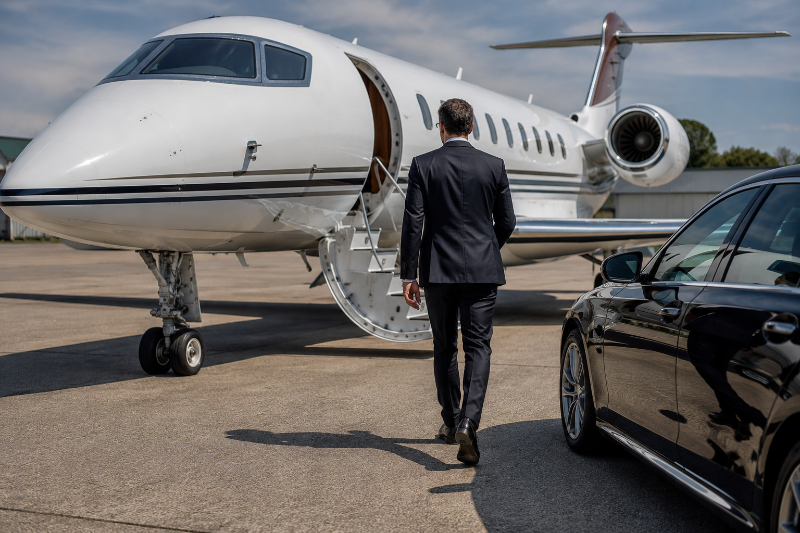
Private aviation remains one of the most effective tools for improving Privacy While Traveling. While commercial aviation exposes passengers to crowded terminals, unpredictable delays, and public scrutiny, private aviation creates controlled travel environments designed around discretion and efficiency.
Private terminals significantly reduce exposure. Travelers can bypass crowded airport infrastructure, streamline security procedures, and access aircraft directly through Fixed Base Operators (FBOs). Consequently, executives and affluent families maintain greater control over schedules, logistics, and visibility.
Flexibility also plays an important role. Private aviation allows travelers to adjust departure times, select discreet airports, and reduce overnight layovers. Moreover, onboard environments support confidential meetings, productivity, and family privacy without interruption.
Private aviation offers several major advantages:
- Reduced public exposure during transit
- Faster airport processing and security screening
- Flexible scheduling and route planning
- Increased confidentiality for business discussions
- Personalized onboard environments
Meanwhile, the overlap between private aviation and luxury hospitality continues expanding. Many affluent travelers now coordinate private flights with luxury villas, yacht charters, and secure ground transportation through integrated concierge services.
However, modern private aviation focuses increasingly on operational sophistication rather than visible excess. In contrast to earlier eras of highly public luxury travel, today’s wealthy travelers often prioritize low-profile efficiency and predictable mobility.
Privacy Advantages of Luxury Travel Methods
| Travel Method | Privacy Level | Main Advantage | Security Benefit | Typical User Profile |
|---|---|---|---|---|
| Private Jet | Very High | Controlled airport access | Reduced public exposure | Executives and entrepreneurs |
| Superyacht | Extremely High | Isolated mobility environment | Flexible travel routes | Ultra-high-net-worth families |
| Luxury Villa | High | Private accommodation space | Limited guest interaction | Long-stay affluent travelers |
| Executive Chauffeur Service | High | Controlled local mobility | Route and schedule management | Business travelers |
| Luxury Hotel Suite | Moderate to High | Concierge-driven privacy | Secure guest handling | International travelers |
Why Superyachts Offer Discreet Global Mobility?
Superyachts provide one of the world’s most private forms of luxury mobility. Unlike traditional hotels or commercial tourism environments, yachts create self-contained travel ecosystems that combine transportation, accommodation, hospitality, and leisure within a highly controlled setting.
Waterfront mobility naturally reduces exposure. Owners and guests can travel between destinations without relying heavily on public transportation hubs or crowded hospitality environments. Additionally, private marina access allows discreet arrival and departure procedures in many global yacht destinations.
Superyachts also provide flexibility that conventional travel infrastructure often cannot match. Routes can change quickly based on privacy concerns, weather conditions, or scheduling needs. Consequently, affluent travelers maintain greater control over their environment and daily routines.
Several factors make yacht travel especially attractive for privacy-conscious individuals:
- Isolated onboard living environments
- Confidential professional staff operations
- Flexible international routing
- Integration with private aviation logistics
- Reduced interaction with large public crowds
Meanwhile, luxury yacht culture increasingly aligns with the broader “quiet luxury” movement. Many wealthy travelers now prefer secluded Mediterranean anchorages, private island destinations, and understated marina communities over highly visible tourist environments.
Nevertheless, yacht mobility still requires careful operational management. Crew confidentiality, marina security, and digital communication systems all influence how effectively owners maintain discretion during international travel.
The Role of Luxury Hotels and Private Residences
Luxury hotels continue adapting rapidly to affluent travelers seeking stronger privacy protections. While traditional five-star hospitality emphasized social visibility and grand public spaces, many premium hospitality brands now prioritize discretion-focused guest experiences.
Private entrances, dedicated elevators, and villa-style accommodations increasingly attract high-net-worth travelers. Moreover, luxury residences and branded private villas offer greater environmental control than traditional hotel settings. Consequently, affluent guests can maintain comfort while minimizing exposure to public traffic.
Concierge services have also evolved considerably. Many luxury properties now coordinate airport transfers, executive transportation, private dining, and customized security arrangements through dedicated guest management teams. As a result, wealthy travelers experience smoother and more discreet mobility throughout their stay.
Key privacy-focused hospitality strategies include:
- Private check-in and entrance systems
- Secure transportation coordination
- Personalized concierge management
- Confidential guest handling procedures
- Villa-style accommodation layouts
However, digital risks remain important considerations. Online booking systems, location tracking, and cybersecurity vulnerabilities can still expose sensitive travel information. Therefore, affluent travelers increasingly combine physical privacy strategies with digital protection measures.
Key Privacy Strategies Used by Ultra-Wealthy Travelers
| Strategy | Purpose | Travel Benefit | Security Impact | Long-Term Trend |
|---|---|---|---|---|
| Encrypted Communication | Protect sensitive data | Safer global communication | Reduced cyber risk | Rapid adoption |
| Private Aviation | Reduce exposure | Flexible mobility | Controlled transit environments | Continued growth |
| Concierge Coordination | Simplify logistics | Operational convenience | Centralized travel management | Expanding globally |
| Low-Profile Travel | Avoid public attention | Reduced visibility | Lower unpredictability | Increasingly common |
| Private Residences | Enhance accommodation control | Greater personal privacy | Limited outside interaction | Growing demand |
Digital Privacy Is Becoming Just as Important as Physical Security
Digital privacy now shapes affluent travel behavior as strongly as physical security measures. While luxury travelers once focused primarily on transportation and accommodation safety, cybersecurity increasingly influences every stage of international mobility.
Public Wi-Fi networks, data tracking systems, and social media exposure create vulnerabilities that affluent travelers actively seek to minimize. Consequently, encrypted communication platforms, VPN services, and secure device management have become standard components of executive travel planning.
Social media behavior has changed significantly as well. Many wealthy travelers intentionally delay posting travel content until after returning home. Moreover, younger affluent individuals increasingly avoid public geotagging entirely.
Several digital privacy practices now dominate executive travel culture:
- Encrypted messaging platforms
- Secure Wi-Fi and VPN usage
- Reduced social media visibility
- Controlled sharing of itinerary information
- Professional cybersecurity support during travel
Meanwhile, luxury hospitality companies continue investing in cybersecurity infrastructure. High-end hotels increasingly recognize that data protection now directly influences guest trust and brand reputation.
The broader trend reflects a larger transformation in affluent lifestyles. Digital privacy no longer functions as a technical concern alone. Instead, it has become an essential element of modern luxury mobility.
Why Executive Transportation Matters?
Executive transportation plays a crucial role in maintaining Privacy While Traveling because ground mobility often creates the most unpredictable stage of luxury travel. Even travelers using private aviation remain vulnerable if local transportation lacks coordination or discretion.
Professional chauffeur services therefore remain highly valuable within affluent travel ecosystems. Experienced executive drivers understand route management, schedule flexibility, secure arrival procedures, and discreet client handling. Consequently, they reduce logistical friction while improving operational control.
In certain regions, affluent travelers also utilize armored vehicles and specialized transportation teams. However, most luxury travel security strategies focus more heavily on minimizing attention rather than creating visibly aggressive protection environments.
Several transportation factors matter most:
- Airport-to-hotel coordination
- Route flexibility and planning
- Professional driver confidentiality
- Secure luxury vehicle fleets
- Discreet arrival and departure procedures
Meanwhile, executive transportation increasingly integrates with broader concierge-managed travel systems. Wealthy travelers now expect seamless coordination between flights, accommodations, dining reservations, and local mobility services.
The Rise of Concierge-Driven Travel Ecosystems
Affluent travelers increasingly outsource operational complexity to professional concierge ecosystems. Rather than managing logistics independently, many now rely on integrated travel advisors who coordinate every aspect of mobility and privacy simultaneously.
Luxury memberships and private travel networks have expanded rapidly in response. These services often combine aviation management, accommodation planning, restaurant access, security coordination, and wellness experiences within a single personalized system.
Consequently, wealthy travelers experience greater convenience and reduced unpredictability. Concierge-driven ecosystems also improve privacy because fewer external vendors handle sensitive itinerary information independently.
Modern concierge ecosystems commonly provide:
- End-to-end itinerary coordination
- Private aviation management
- Secure transportation logistics
- Personalized security arrangements
- Confidential hospitality partnerships
Moreover, affluent clients increasingly expect seamless personalization rather than visible luxury theatrics. Therefore, the most successful concierge providers focus heavily on discretion, operational efficiency, and trusted long-term relationships.
Why Younger Wealthy Travelers Are Choosing Quiet Luxury?
Younger affluent travelers continue reshaping global luxury culture through “quiet luxury” preferences. Instead of emphasizing public status displays, many prioritize privacy, wellness, flexibility, and understated sophistication.
This shift strongly influences how wealthy individuals approach travel. For example, many younger travelers prefer private villas, wellness retreats, and yacht experiences over highly public luxury resorts. Additionally, discreet luxury brands increasingly outperform overtly logo-driven status products within affluent demographics.
Social media fatigue also contributes to this trend. In contrast to earlier influencer-driven luxury behavior, many wealthy travelers now deliberately reduce online visibility during personal travel experiences.
Several behavioral trends define quiet luxury travel:
- Reduced social media exposure
- Preference for discreet luxury environments
- Wellness-focused travel planning
- Flexible mobility lifestyles
- Greater emphasis on emotional comfort
Consequently, luxury hospitality providers increasingly design experiences around privacy, personalization, and low-profile exclusivity rather than spectacle alone.
What Privacy Trends Mean for the Future of Luxury Travel?
The future of luxury travel will likely revolve increasingly around controlled, curated, and privacy-focused experiences. While traditional luxury emphasized visible extravagance, modern affluent consumers increasingly prioritize seamless operational sophistication.
Hospitality design already reflects this evolution. Private entrances, biometric access systems, AI-driven personalization, and villa-style accommodations continue expanding throughout premium travel markets. Moreover, secure digital ecosystems now influence purchasing decisions as heavily as physical amenities.
Luxury mobility is also becoming more integrated. Private aviation, yacht travel, executive transportation, and concierge ecosystems increasingly operate together as unified lifestyle infrastructures. Consequently, affluent travelers experience greater continuity, flexibility, and discretion across international journeys.
Several long-term trends will likely shape luxury travel privacy:
- AI-enhanced personalized travel management
- Increased biometric security integration
- Growth of discreet hospitality environments
- Stronger digital privacy expectations
- Operational convenience replacing visible extravagance
Ultimately, the Privacy While Traveling trend reflects a broader transformation across global affluent culture. Modern wealth increasingly values control, flexibility, and confidentiality over public spectacle. Therefore, privacy itself may become one of the world’s most influential luxury assets during the next decade.
FAQs
Why do wealthy travelers prioritize privacy?
Affluent travelers value privacy because it improves security, emotional comfort, flexibility, and operational control during international travel.
How do private jets improve travel privacy?
Private jets reduce public exposure through private terminals, flexible scheduling, and controlled travel environments.
Are superyachts more private than luxury hotels?
In many cases, yes. Superyachts offer isolated living environments, flexible routing, and highly controlled onboard operations.
Why is digital privacy important while traveling?
Digital privacy protects travelers from data tracking, cybersecurity threats, location exposure, and unauthorized information sharing.
How do luxury hotels protect VIP guests?
Luxury hotels increasingly use private entrances, secure concierge services, discreet guest handling, and personalized transportation coordination.
What is quiet luxury travel?
Quiet luxury travel emphasizes discretion, privacy, personalization, and understated sophistication instead of visible extravagance.
Why are concierge travel services growing?
Affluent travelers increasingly outsource logistics to improve convenience, reduce unpredictability, and maintain privacy.
Do wealthy travelers avoid social media while abroad?
Many do. Delayed posting and reduced geotagging help minimize real-time location exposure.
How does executive transportation improve security?
Professional chauffeurs and coordinated mobility systems reduce logistical risks while improving discretion and schedule control.
What trends are shaping luxury travel privacy in 2026?
Digital privacy, concierge ecosystems, private mobility, biometric security, and quiet luxury behavior all shape modern affluent travel.