
Key Takeaways
- DNA reports provide probabilities and clues, not a complete picture of a person’s health or heritage.
- Ancestry estimates can change when a company updates its reference groups or methods.
- A health-related finding is not automatically a diagnosis and should not replace clinical care.
- A negative result may mean that the specific variants included in the test were not detected.
- Raw DNA files should be handled carefully because privacy terms may differ across services.
At-home DNA testing can offer interesting clues about ancestry, relatives, traits, and certain health-related genetic variants. Whether a report comes from 23andMe or another testing service, it is best read as a collection of evidence, estimates, and possibilities rather than a final statement about identity, health, or family history.
Results can feel deeply personal, especially when they raise unexpected questions about relatives or health. Taking time to understand what the test measured, what it did not measure, and what action is appropriate can help you use the information thoughtfully.
Why DNA Reports Can Feel Confusing
A single report may combine ancestry percentages, relative matches, physical traits, carrier status, disease-risk information, and medication-related findings. Colorful maps and simple labels can make a result appear more certain than it is. In practice, each section answers a different question and has different limits.
Start by separating the report into categories. An ancestry estimate compares your DNA with reference populations. A relative match suggests a possible biological connection. A health report may identify selected variants associated with a condition, while a trait report usually describes a likelihood rather than a guarantee.
Start With the Test Type
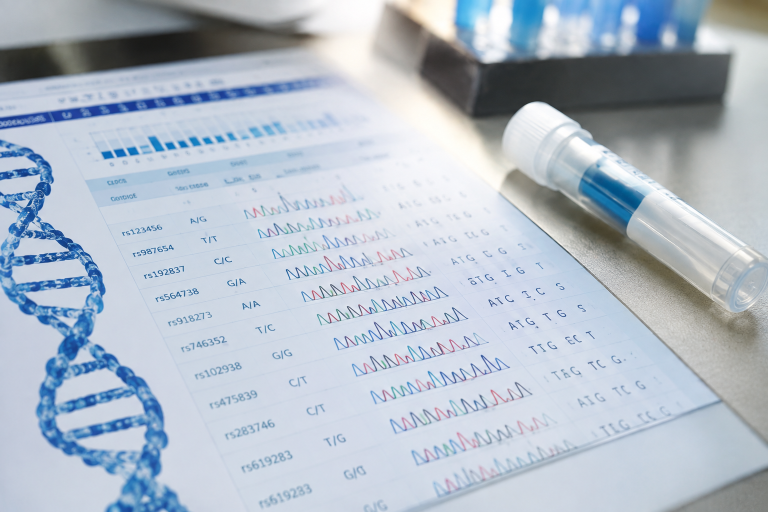
Before interpreting any result, find out what kind of test was used. Many consumer services use genotyping, which checks selected positions in DNA. Sequencing examines a broader stretch of genetic material, although the amount and depth of sequencing can still vary. Two companies can therefore give somewhat different results because they may test different markers, use different comparison data, or apply different analysis methods.
The limits of direct-to-consumer tests matter most when reading health information. A test’s description should explain which variants it includes, which populations were used to study the result, and whether the report is intended for medical decision-making.
How to Read Ancestry Percentages
Ancestry percentages are statistical estimates based on similarities between your DNA and a company’s comparison groups. They do not prove citizenship, nationality, cultural identity, or membership in a present-day community. Small percentages can be less stable, particularly when nearby populations share long histories of migration and intermarriage.
Use ancestry results as a starting point for research. Compare them with birth, marriage, census, immigration, and military records, as well as family photographs and oral histories. If an estimate changes after an update, your DNA did not change. The company’s reference data or calculation method did.
What DNA Relative Matches Can and Cannot Show
A DNA match is someone who shares enough DNA with you to suggest a biological relationship. Services often describe shared DNA in centimorgans, a measurement that helps estimate how closely two people may be related. However, more than one relationship can fit the same amount of shared DNA.
Do not rely on one match alone to identify a parent, grandparent, or cousin relationship. Review shared matches, available family trees, locations, ages, and historical records. Be especially considerate before contacting or publicly discussing a match who may not be aware of a family connection.
How to Read Health-Related Results
Health sections commonly include carrier status, genetic health risk, trait likelihood, and pharmacogenetic information about how genetics may affect drug metabolism. These categories should not be treated the same way. Carrier status may be relevant to family planning, whereas a genetic risk result may indicate only one of many factors influencing a condition.
An increased-risk result does not mean a person will develop a disease, and a reduced-risk result does not guarantee protection. Family history, age, environment, lifestyle, other genes, and routine medical care also matter. Do not start, stop, or change medication, treatment, diet, or screening plans based solely on an at-home report.
Why a Negative Result May Not Rule Out Risk
“Not detected” is not the same as “impossible.” A consumer test may check a limited set of variants related to a condition while missing other variants linked to the same risk. Someone with a strong personal or family history of disease should discuss that history with a qualified clinician, even if an at-home result is negative.
When to Seek a Genetic Counselor
A genetic counselor can be particularly helpful after an unexpected health result, a result that conflicts with family history, or a finding that affects family-planning decisions. They can explain what was tested, whether confirmatory clinical testing may be useful, and what the result may mean for relatives. The meaning of direct-to-consumer genetic results is often clearer when considered alongside medical history and professional guidance.
How to Handle Raw DNA Data
- Download files only through a trusted account protected by a strong, unique password and two-step verification.
- Read a third-party service’s privacy terms before uploading anything.
- Check whether the service retains, shares, de-identifies, or allows deletion of uploaded data.
- Avoid posting raw DNA files in public forums or sending them casually by email.
Raw data is not a medical report and can be easy to misread. Privacy protections offered by the original testing service may not apply after a file is transferred elsewhere.
Common Mistakes to Avoid
- Treating an ancestry percentage as a complete family history.
- Assuming a health-risk finding is a diagnosis.
- Ignoring the test’s coverage, intended use, and limitations.
- Assigning an exact relationship from one DNA match alone.
- Sharing surprising family findings without considering how relatives may react.
A Simple Review Process
- Identify the report type. Determine whether it covers ancestry, relatives, traits, carrier status, or health risk.
- Read the limitations. Look for the variants, conditions, and populations included in the analysis.
- Separate estimates from conclusions. Pay attention to terms such as likely, predicted, associated, or increased risk.
- Compare other evidence. Consider family records, family medical history, and clinical information.
- Pause before acting. Seek professional guidance before making a health or family decision.
Questions Readers May Have
Can DNA ancestry results change?
Yes. Your DNA remains the same, but the estimate can change when the testing company updates its comparison groups or analysis methods.
Does a positive health result mean someone has a disease?
No. It may indicate a tested variant, carrier status, or an association with risk. It does not necessarily establish a diagnosis.
Are DNA relative matches always exact?
They can provide useful evidence of a biological connection, but the specific relationship may require additional matches, family trees, and records to confirm.
Conclusion
At-home DNA reports can be useful tools for exploration when they are interpreted with care. Treat each result as one piece of a larger picture, verify important findings with reliable records or clinical testing, and seek qualified support when the information could affect health, family planning, or close relationships.
photo by depositphotos