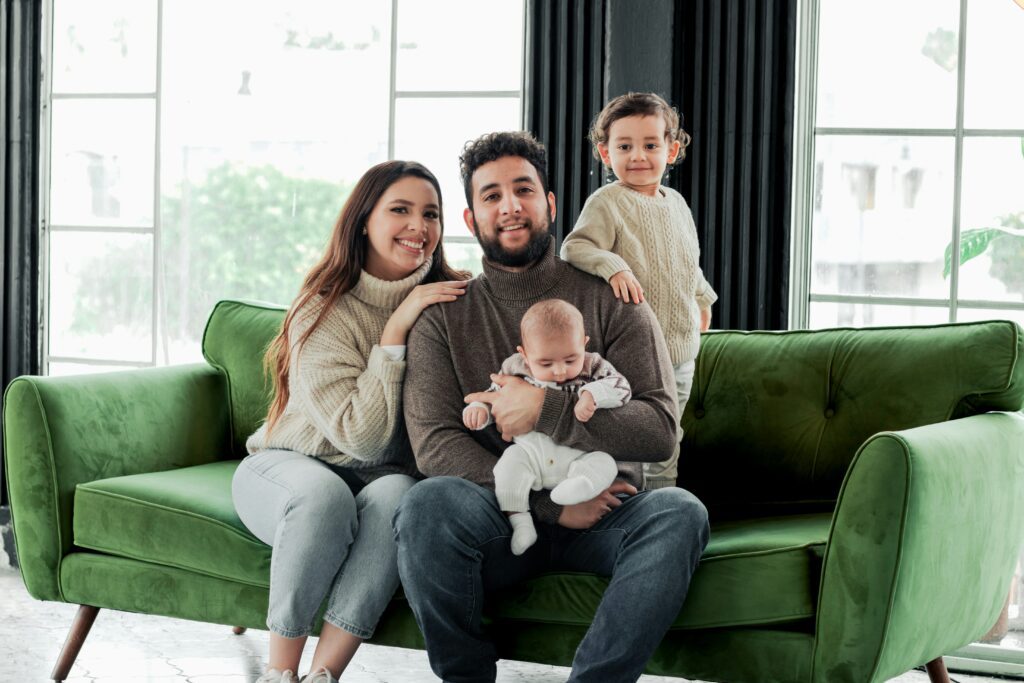
A family oriented man is someone who consistently places the wellbeing, connection, and stability of his family above competing priorities like status, convenience, or self-interest. Family oriented man characteristics typically include emotional availability, reliability, active involvement in daily family life, respect for elders and children, and a long-term commitment to nurturing close relationships rather than just providing financially.
Key Takeaways
- Family oriented man characteristics psychology points to attachment security, empathy, and generativity — not just “liking kids” or “wanting marriage.”
- Being family oriented is a pattern of consistent behavior over time, not a single grand gesture or statement of intent.
- In dating and marriage, family oriented man characteristics show up as reliability, emotional presence, conflict repair skills, and shared decision-making.
- These traits can be learned and strengthened; they are not purely innate or fixed by personality type.
- Genuine family orientation is behavioral and observable — it can be distinguished from performative or convenient displays of “family values.”
What Are Family Oriented Man Characteristics? (Meaning & Core Traits)
Definition and Meaning
Family oriented man meaning centers on a consistent life orientation: a man who organizes his time, money, energy, and long-term decisions around the health of his family unit — whether that’s parents and siblings, a spouse, children, or all of the above. It is less about a single personality trait and more about a hierarchy of values where family relationships routinely outrank other competing demands, such as career ambition, social status, or personal convenience.
This does not mean a family oriented man has no interests, career goals, or independent identity outside the home. Rather, it means that when priorities genuinely conflict, family tends to be the deciding factor, and the man actively works to protect and nurture those bonds rather than treating them as a passive backdrop to his life.
Core Traits That Define a Family Oriented Man
The following traits appear consistently across relationship psychology literature, family sociology research, and clinical observations of healthy family functioning:
- Emotional availability — he shows up for hard conversations, not just celebrations.
- Reliability and follow-through — promises to family members are treated as commitments, not suggestions.
- Active participation — involvement in daily routines like meals, school events, chores, and caregiving, not just financial provision.
- Respect for extended family — maintaining relationships with parents, in-laws, and siblings, not just the immediate household.
- Conflict repair skills — willingness to apologize, de-escalate, and resolve disagreements rather than stonewalling.
- Long-term thinking — decisions about work, money, and location factor in family stability, not just personal gain.
- Protective instinct without control — he looks out for family members’ safety and wellbeing while respecting their autonomy.
- Consistency across contexts — he behaves the same way toward family whether or not others are watching.
Core Traits at a Glance
| Trait | What It Looks Like Day-to-Day | Why It Matters |
| Emotional availability | Listens without dismissing feelings; initiates check-ins | Builds trust and psychological safety at home |
| Reliability | Shows up on time for family commitments; keeps his word | Reduces family stress and uncertainty |
| Active involvement | Helps with school runs, chores, caregiving | Demonstrates partnership, not just provision |
| Respect for extended family | Maintains contact with parents/in-laws; handles conflict respectfully | Preserves the wider support network |
| Conflict repair | Apologizes, de-escalates, revisits disagreements calmly | Prevents resentment from accumulating |
| Long-term thinking | Weighs job offers or moves against family impact | Signals family is a real priority, not just words |
Common Misconceptions About Family Oriented Man Characteristics
A frequent mistake is equating “family oriented” with simply wanting marriage and kids someday. Wanting a family and being family oriented are related but distinct — the first is a goal, the second is an ongoing behavioral pattern. A man can want children in theory while still being emotionally distant, unreliable, or dismissive of the family he already has (parents, siblings, or a partner). Conversely, a man without biological children can be deeply family oriented through how he treats his parents, siblings, or a partner’s children.
Another misconception is that family orientation means self-sacrifice without boundaries. Healthy family orientation includes personal boundaries; it is not the same as enmeshment, where a man cannot separate his own identity or needs from those of his family members.
Family Oriented Man Characteristics in Psychology
The Psychological Roots of Family Orientation
Family oriented man characteristics psychology draws on several established frameworks in developmental and relationship psychology. Two of the most relevant are attachment theory and Erik Erikson’s concept of generativity.
Attachment theory, originally developed by psychiatrist John Bowlby, proposes that early relationships with caregivers shape a person’s expectations and behavior in adult relationships. Men who developed a secure attachment style in childhood tend to find it easier to be emotionally present, trust their partners, and stay engaged during family conflict rather than withdrawing. Men with insecure attachment patterns (anxious or avoidant) may still deeply value family but struggle with the behaviors that sustain closeness, such as vulnerability or consistent communication — which is why family orientation is better understood as a skill set that can be developed, not just a fixed trait someone either has or lacks.
Erikson’s psychosocial theory describes a stage of adulthood centered on “generativity versus stagnation” — the drive to nurture the next generation and contribute to something beyond oneself. Men who successfully navigate this stage often channel that drive into parenting, mentorship, and sustained investment in family life. This helps explain why family orientation frequently becomes more pronounced with age and life stage rather than being a static personality feature present from adolescence onward.
What Research Shows About Involvement Trends
Family involvement among men has changed measurably over the past several decades, which is relevant context for understanding modern family oriented man characteristics. According to Pew Research Center’s analysis of U.S. Bureau of Labor Statistics time-use data, fathers have nearly tripled their time with their children, from 2.5 hours per week in 1965 to 7.3 hours per week in 2011. Housework participation followed a similar trend: fathers today spend more than twice as much time doing housework as they did in the 1960s.
This shift has continued into the present decade. Pew’s 2023 analysis found that fathers with children under 18 spend an average of 1.62 hours with their kids on a given day, including time on physical care, play, and reading. That same research found 85% of fathers say being a parent is one of the most, or the most, important aspect of who they are, and 81% find parenting enjoyable most or all of the time.
Interestingly, involvement and satisfaction don’t always move together. A separate Pew survey found 63% of fathers say they spend too little time with their kids, suggesting that many men who are family oriented in values and intent still feel constrained by work demands or life circumstances — a distinction worth keeping in mind when evaluating a man’s family orientation based on time availability alone rather than intent and effort.
Nature, Nurture, or Both?
Psychologists generally reject a purely “nature” explanation for family orientation. While temperament (such as natural empathy or agreeableness) can make certain behaviors easier, the research consensus favors a developmental model: family orientation is shaped by a combination of upbringing, modeled behavior from one’s own parents, attachment history, cultural expectations, and deliberate choices made in adulthood. This is encouraging for anyone assessing a partner or working on themselves — it means these characteristics can be built through consistent practice rather than being permanently fixed by personality alone.
Nature vs. Nurture Influences on Family Orientation
| Influence Type | Examples | Can It Change? |
| Temperament | Natural empathy, patience, agreeableness | Partially — behavior can be trained even where temperament is less naturally suited |
| Family of origin | How his own parents modeled involvement and conflict | Strongly influential but not deterministic |
| Attachment style | Secure, anxious, or avoidant patterns from early life | Can shift over time through self-awareness and therapy |
| Life stage | Age, generativity drive, readiness for responsibility | Often increases family orientation with maturity |
| Cultural and social context | Community norms, religious or cultural values around family | Shapes expression, not necessarily depth of care |
| Deliberate practice | Actively choosing presence, follow-through, repair after conflict | Highly changeable with consistent effort |
Family Oriented Man Characteristics in a Relationship
How Family Orientation Shows Up in Dating
Family oriented man characteristics in a relationship become visible fairly early, even before marriage or children enter the picture. In dating, this often looks like:
- Talking about his family with warmth and respect, even when acknowledging imperfections.
- Introducing a partner to family relatively early and comfortably, without hiding the relationship.
- Making time for family events (holidays, birthdays, check-in calls) without needing reminders.
- Asking about a partner’s family and remembering details that matter to them.
- Discussing future family goals honestly, including timelines, values, and expectations around children or caregiving.
- Showing patience and involvement with children already in a partner’s life, such as nieces, nephews, or kids from a previous relationship.
How It Shows Up in Long-Term Partnership and Marriage
Once a relationship becomes long-term, family orientation is tested by daily logistics rather than romantic gestures. It tends to show up as:
- Sharing household and parenting responsibilities rather than treating them as “help.”
- Making major decisions (relocation, career changes, finances) collaboratively, with family impact as a factor.
- Staying emotionally engaged during stressful periods instead of withdrawing or over-working to avoid home life.
- Supporting a partner’s relationship with their own family and in-laws.
- Prioritizing family time deliberately, such as protecting weekends or evenings from work encroachment.
- Modeling respectful conflict resolution in front of children, rather than avoidance or hostility.
Green Flags vs. Red Flags: Distinguishing Real Family Orientation from Performance
Not everyone who talks about wanting a family demonstrates these characteristics consistently. This comparison table can help separate genuine patterns from surface-level signals.
| Signal | Likely Genuine Family Orientation | Possible Red Flag / Performance Only |
| Talking about family | Speaks about family with nuance, including challenges | Idealizes family only in vague, generic terms |
| Involvement with kids | Actively engages, disciplines calmly, shows patience | Enjoys “fun” moments but avoids routine caregiving |
| Handling conflict | Repairs after disagreements, apologizes sincerely | Stonewalls, blames, or disappears during conflict |
| Extended family ties | Maintains respectful contact with parents/in-laws | Estranged from family with no explanation or accountability |
| Consistency | Same behavior in private and public settings | Family-focused only around others or on social media |
| Financial priorities | Balances saving, spending, and family needs transparently | Secretive about money or resentful of family expenses |
| Time investment | Proactively schedules family time | Family time only happens when convenient |
Family Oriented Man Characteristics vs. Career-Oriented or Independent Mindsets
It’s worth noting that family orientation and career ambition are not inherently opposed. Many men balance both successfully. The distinction lies in what happens during genuine conflict between the two.
| Dimension | Family-Oriented Approach | Career-First Approach (Not Necessarily Negative) |
| Decision-making during conflict | Family impact weighed heavily, sometimes decisively | Career growth weighed heavily, family adapts around it |
| Time allocation | Protects family time proactively | Time protected for work; family time is residual |
| Relocation decisions | Considers school, extended family, partner’s roots | Considers job opportunity primarily |
| Long-term identity | Partly defined through family roles | Partly defined through professional achievement |
Neither approach is automatically “better” — healthy relationships require alignment between partners on which values take priority and when, rather than one partner assuming the other shares the same hierarchy by default.
How to Build, Strengthen, or Recognize These Qualities
For Men Who Want to Become More Family Oriented
Family orientation is learnable, and small, consistent behavioral changes tend to matter more than dramatic declarations. Practical steps include:
- Protect recurring time. Block specific days or evenings for family, and treat them with the same seriousness as a work meeting.
- Practice active listening. Put away devices during conversations with a partner, children, or parents, and reflect back what you hear before responding.
- Take initiative on logistics. Learn school schedules, appointments, and routines rather than relying on a partner to manage and delegate.
- Repair after conflict. Apologize specifically, without deflecting blame, and revisit unresolved tension rather than letting it fade unaddressed.
- Stay connected to extended family. Regular, low-effort contact (calls, messages, visits) sustains relationships better than occasional grand gestures.
- Seek support when needed. Therapy or coaching can help address attachment patterns or communication habits that make consistent presence difficult.
For Partners Trying to Evaluate These Characteristics
If you’re assessing whether someone demonstrates genuine family oriented man characteristics, behavior over time is a far more reliable indicator than stated intentions. Useful approaches include:
- Observe how he treats his own family members directly, not just how he describes them.
- Watch how he handles a real disagreement, not just how he behaves during easy, low-stakes moments.
- Notice whether family commitments hold up under competing demands like work or social plans.
- Ask specific, concrete questions about future expectations (division of labor, caregiving, location) rather than general ones like “do you want a family.”
- Pay attention to consistency across different settings and over multiple months, not a single strong impression.
Limitations to Keep in Mind
Family orientation exists on a spectrum, and circumstances can constrain even a genuinely family-oriented man’s ability to demonstrate it fully — for example, demanding jobs, financial hardship, health issues, or geographic separation from family. Evaluating someone fairly means distinguishing between constrained circumstances and a genuine lack of prioritization, which usually requires open conversation rather than assumptions based on time availability alone.
Frequently Asked Questions
What does it mean when a man is family oriented?
It means he consistently prioritizes the wellbeing and closeness of his family in his decisions, time, and behavior — not just in how he talks about family, but in how he actually acts toward parents, siblings, a partner, or children over time.
What are the psychological traits of a family oriented man?
Psychologically, these men tend to show secure attachment patterns, high empathy, strong conflict-repair skills, and what psychologist Erik Erikson called generativity — a drive to nurture and invest in the next generation rather than focusing purely on personal achievement.
How can you tell if a man is family oriented in a relationship?
Look for consistent behavior: he makes time for family without being reminded, handles disagreements by repairing rather than withdrawing, maintains respectful ties with extended family, and factors family impact into major life decisions like relocation or career changes.
Is being family oriented the same as wanting kids?
No. Wanting children is a stated goal, while being family oriented is an ongoing behavioral pattern that can exist with or without children — for example, through how a man treats his parents, siblings, or a partner’s existing family.
Can a man become more family oriented over time?
Yes. Research on attachment and adult development suggests these traits are shaped by upbringing, life stage, and deliberate practice rather than being fixed permanently, meaning consistent effort — such as protecting family time and practicing active listening — can build these qualities over time.
Do family oriented men make better long-term partners?
Not automatically, but the underlying behaviors — reliability, emotional availability, and conflict repair — are strongly associated with relationship stability and satisfaction in family and couples research, which is why they’re often valued in long-term partnership.
What’s the difference between family oriented and overly dependent on family?
Healthy family orientation includes personal boundaries and independent identity; it is not the same as enmeshment, where a man cannot make decisions or maintain his own needs separately from his family’s wishes or approval.
Can a career-focused man still be family oriented?
Yes, as long as family remains a genuine priority when real conflicts arise between work and home, and he actively protects time and emotional presence for family rather than letting career demands consistently override it by default.
What are common red flags that contradict claimed family orientation?
Inconsistency between words and actions is the biggest red flag — for example, speaking positively about family in general terms while avoiding routine caregiving, stonewalling during conflict, or being estranged from family without accountability or explanation.
How do family oriented man characteristics differ across cultures?
The core behaviors — reliability, involvement, and respect for family — tend to be valued broadly, but their specific expression (such as living arrangements, financial support obligations, or decision-making roles) can vary significantly based on cultural and religious norms around extended family.
Are family oriented men less career-driven?
Not necessarily. Many men successfully balance strong career ambition with genuine family orientation; the meaningful difference shows up in how they behave when the two priorities genuinely conflict, not in ambition level alone.
Conclusion
Family oriented man characteristics are best understood as a consistent, observable pattern of behavior — emotional presence, reliability, active involvement, and genuine conflict repair — rather than a single trait or a stated intention to “want a family someday.” The psychology behind these traits points to attachment security and generativity as key drivers, and research shows that involvement patterns among men have shifted substantially over recent decades, with fathers today spending significantly more time on caregiving than previous generations. Whether you’re trying to build these qualities yourself or evaluate them in a partner, the most reliable signal is consistency over time, across easy and difficult moments alike, rather than appearances in any single context.