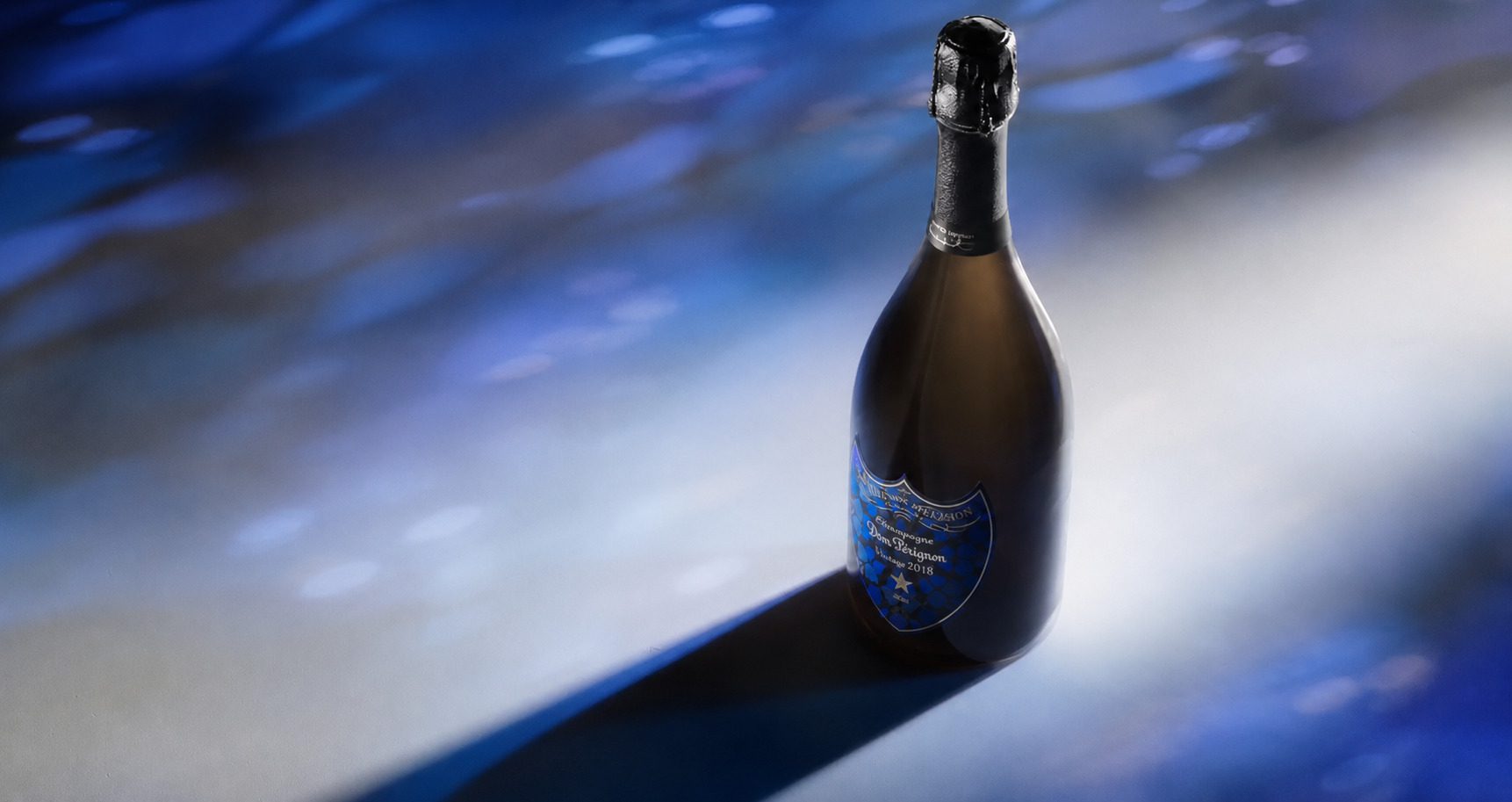
The legendary Champagne house joins forces with one of contemporary art’s most provocative visionaries to create a limited-edition collection that celebrates creativity, craftsmanship, and the art of collecting.
What happens when one of the world’s most celebrated Champagne houses collaborates with an artist whose work has challenged the boundaries of contemporary art for nearly four decades? The result is more than an extraordinary bottle of Champagne. It is a convergence of artistic vision, heritage, and luxury that transforms an everyday ritual of celebration into an expression of cultural significance.
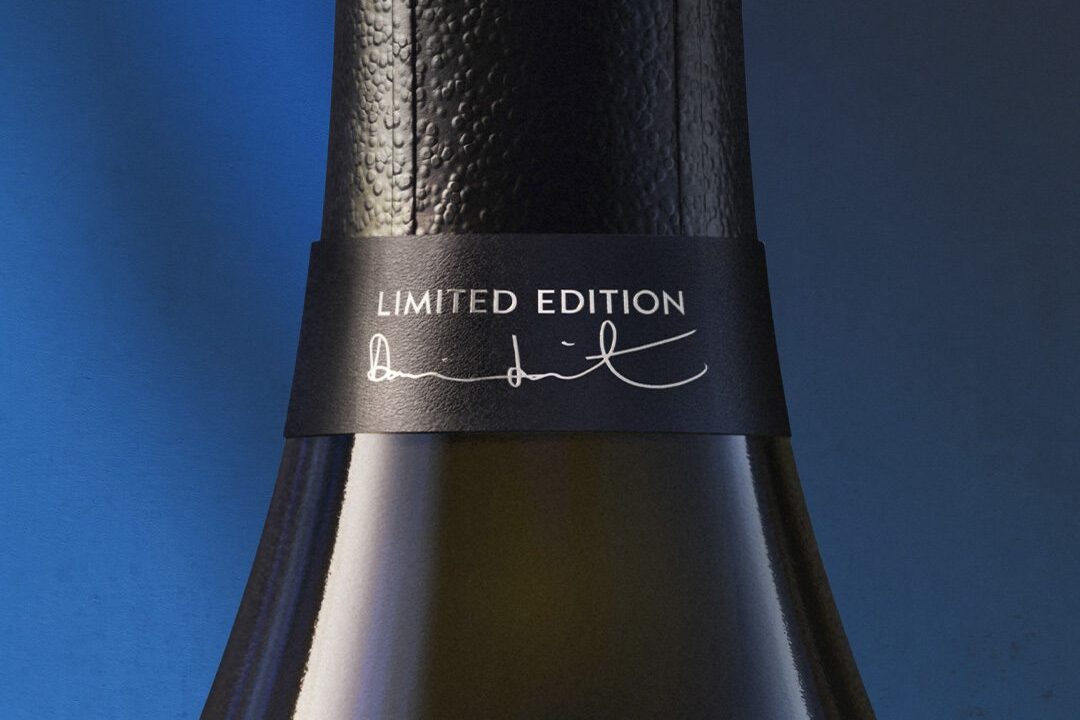
For its End of Year 2026 Limited Edition, Dom Pérignon has partnered with British contemporary artist Damien Hirst, whose provocative installations, iconic butterfly compositions, and kaleidoscopic imagery have made him one of the most recognizable figures in the global art market.
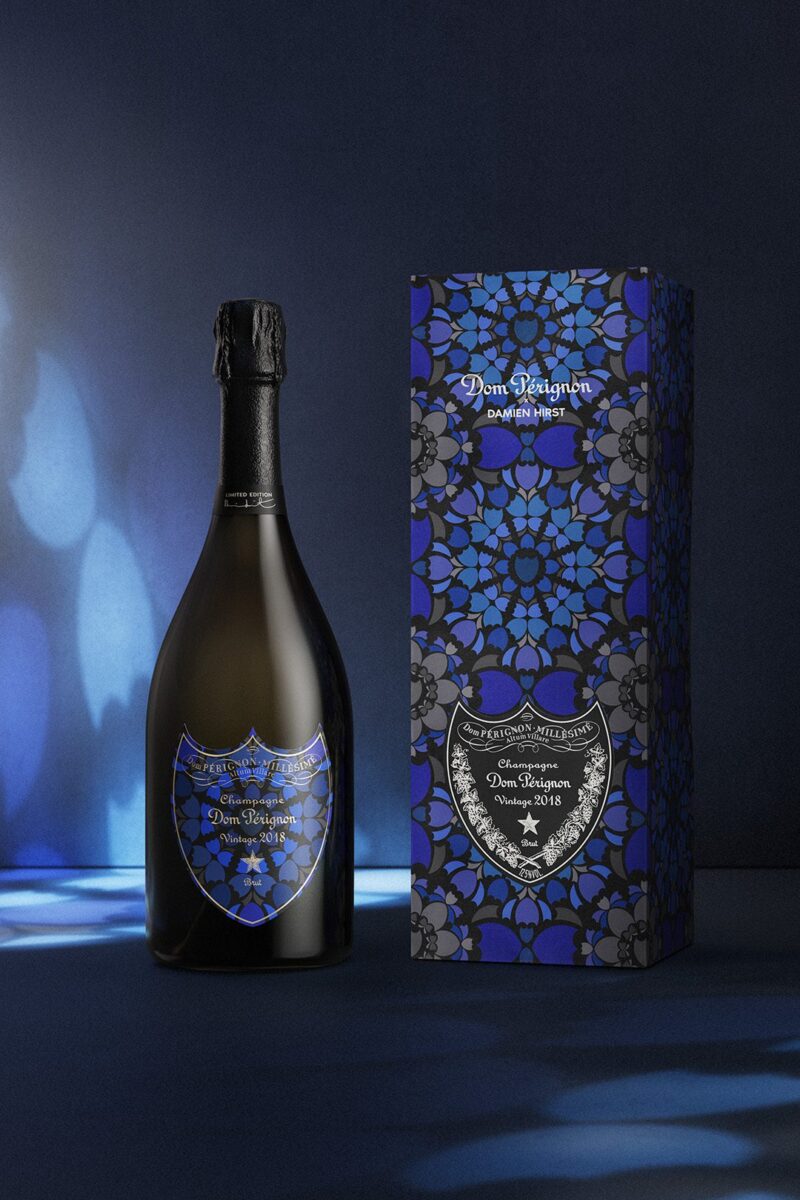
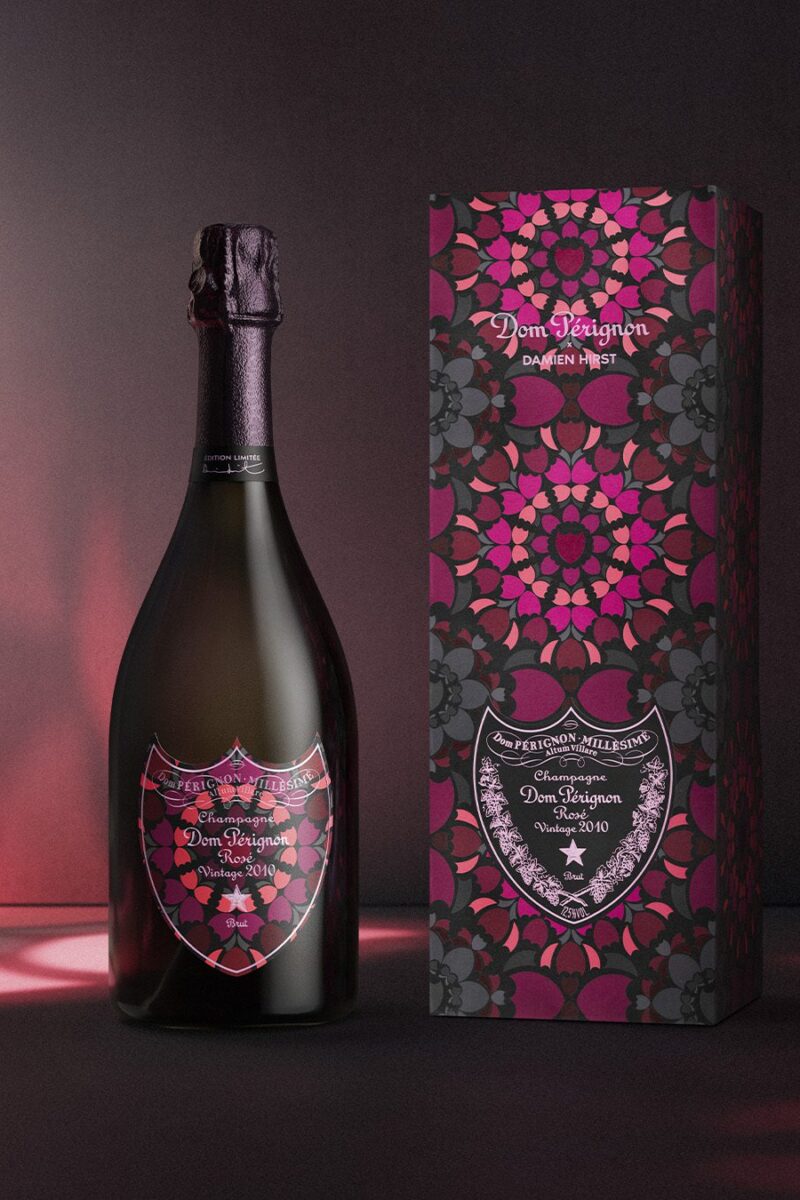
The collaboration reimagines two exceptional expressions from the Maison’s portfolio—Dom Pérignon Vintage 2018 and Dom Pérignon Rosé Vintage 2010—through Hirst’s distinctive artistic language, creating a striking marriage of fine wine and contemporary art.
For collectors and luxury connoisseurs, the partnership speaks to a larger evolution in the luxury landscape, where provenance, artistic collaboration, and cultural relevance increasingly contribute to an object’s desirability.
A Meeting of Two Creative Icons
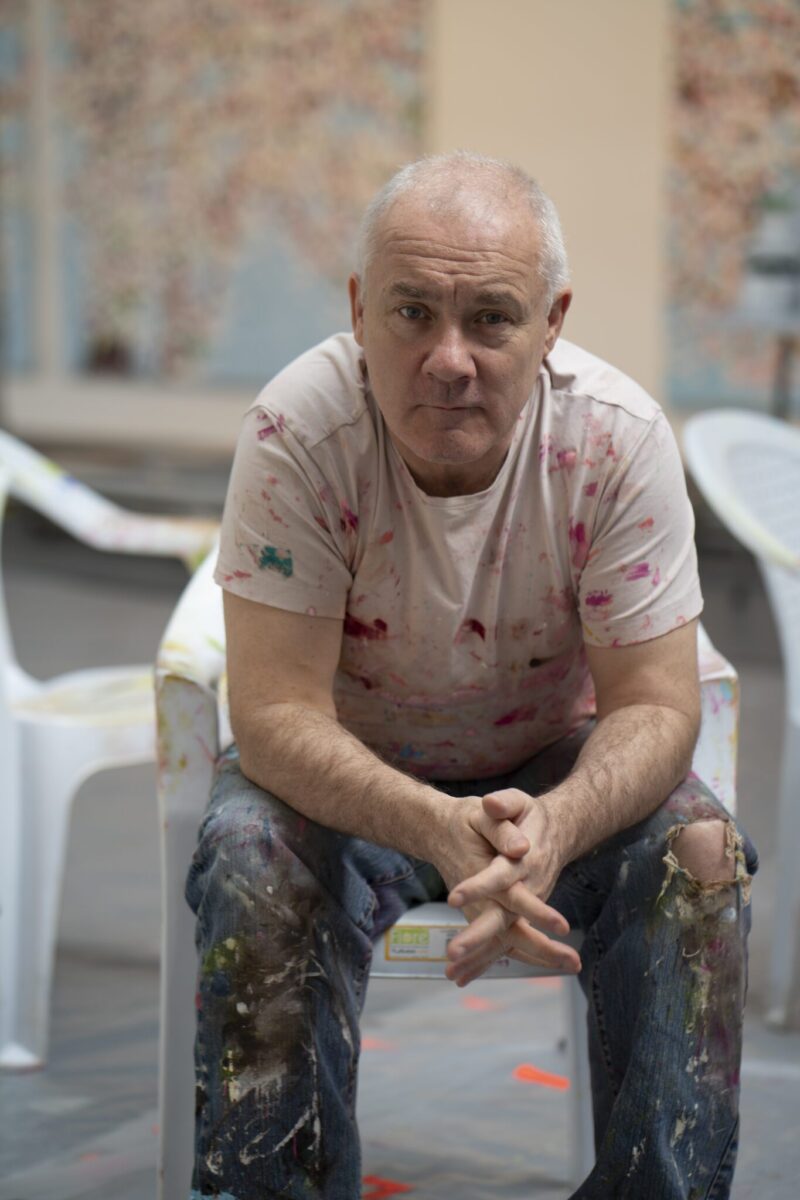
For Damien Hirst, the opportunity to collaborate with Dom Pérignon was irresistible.
“Dom Pérignon approached me to create their end of year 2026 limited edition, and I said yes immediately,” Hirst reveals in an interview accompanying the collaboration. “I was excited to join such an amazing list of artists associated with Dom Pérignon: Warhol, Lynch, Koons, Basquiat, Murakami. And it’s an icon before you even incorporate any art.”
The partnership continues Dom Pérignon’s longstanding dialogue with influential creative figures, including Karl Lagerfeld, Lenny Kravitz, and Lady Gaga, reinforcing the Maison’s position at the intersection of fine Champagne and contemporary culture.
Yet Hirst sees a deeper philosophical connection between his own artistic process and the meticulous craftsmanship behind Dom Pérignon.
“I’ve said anything done well is art. Music, food, wine, furniture, anything,” he explains.
That philosophy finds a natural counterpart in Dom Pérignon’s winemaking tradition, where every vintage is an exercise in balancing nature, time, experimentation, and creative intuition.
Hirst likens the lengthy process of creating a work of art to the development of a great Champagne, in which the unpredictable characteristics of nature become an essential part of the final composition.
For the artist, the most compelling creations are those in which individual elements combine to produce something greater than their parts.
“I see it as a mathematical sum where 1 plus 1 equals 3 or even more,” he says.
It is a philosophy that resonates with both the artistic and winemaking worlds: true luxury is not simply the sum of exceptional ingredients, but the transformative vision that brings them together.
The Art of the Kaleidoscope
At the heart of the collaboration is Hirst’s celebrated Kaleidoscope series, an artistic exploration of symmetry, repetition, transformation, and beauty.
Known for incorporating butterfly wings into intricate, hypnotic compositions, Hirst has long explored the relationship between natural forms and human perceptions of life, beauty, and mortality.
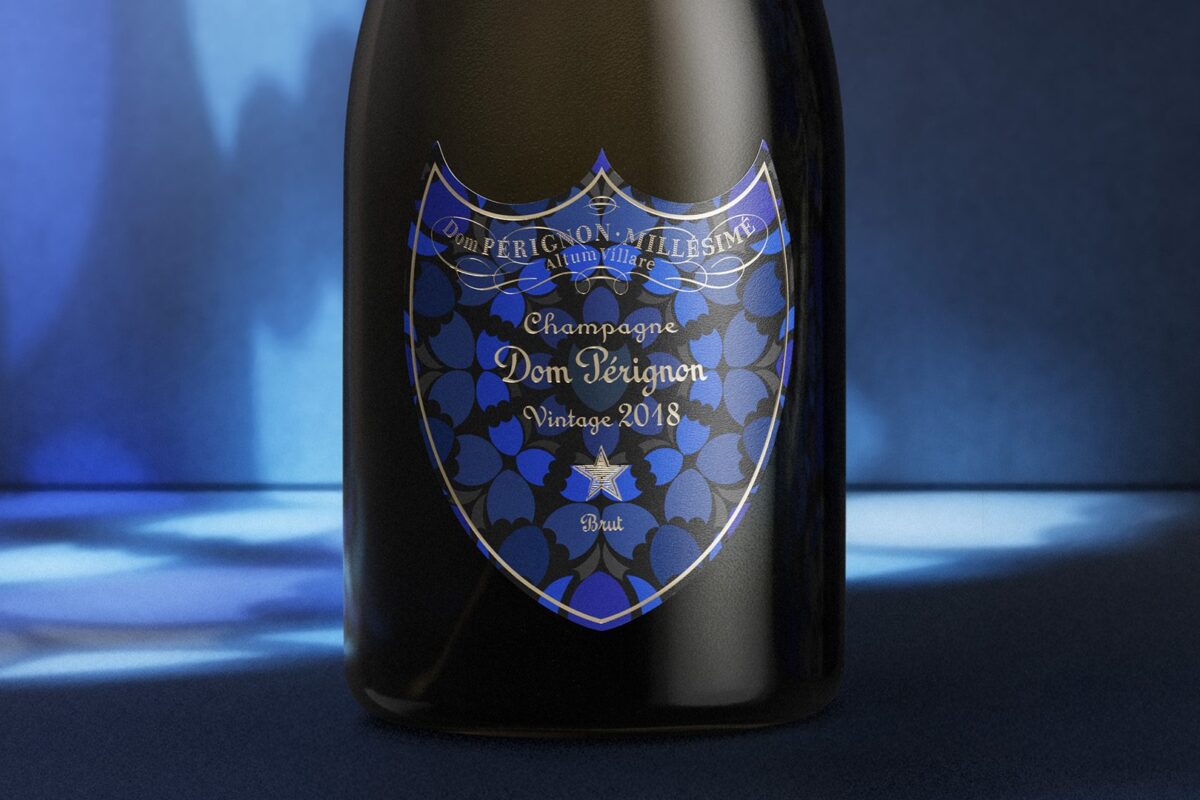
For Dom Pérignon, he found inspiration in an unlikely but instantly recognizable canvas: the Champagne house’s iconic shield.
“Dom Pérignon’s iconic shield was the starting point,” Hirst explains. “I saw a lot of parallels with my Kaleidoscope series.”
The artist points to the butterfly-wing shapes, inspired by Victorian tea trays, and the underlying principle of assemblage that connects his paintings to the Maison’s approach to winemaking.
A Dom Pérignon vintage is created by blending grapes from a single harvest into a harmonious whole, much as Hirst’s Kaleidoscope works bring individual elements together to create a unified visual composition.
The result is a reinterpretation of the house’s signature shield through two distinctive color palettes.
Dom Pérignon Vintage 2018 is presented in a mesmerizing combination of deep blue and violet, evoking infinity, spirituality, and the luminous character of the vintage.
Dom Pérignon Rosé Vintage 2010 takes on a warmer, more sensual identity through shades of pink and purple, reflecting the expressive intensity of Pinot Noir and the wine’s more introspective personality.
The kaleidoscopic patterns appear to multiply across the shield, creating an impression of continuous movement while preserving the identity of the historic Champagne house.
Rather than obscuring the brand’s heritage, Hirst’s artwork amplifies it.
Two Vintages, Two Expressions of Luxury
Beyond their visual appeal, the two Champagnes represent distinct expressions of Dom Pérignon’s winemaking philosophy.
The Vintage 2018 reflects a particularly favorable growing season, marked by generous sunshine, well-balanced water availability, and early grape maturity in August.
Under the direction of Chef de Cave Vincent Chaperon, the vintage developed a profile emphasizing minerality, fruit, salinity, and tactile complexity.
The Rosé Vintage 2010 offers a contrasting experience, characterized by the density and expressive power of Pinot Noir.
Its deeper, more contemplative character provides a counterpoint to the vibrant energy of the 2018 vintage.
Together, the two releases form a compelling duality: one radiant and expansive, the other intimate and intense.
For Hirst, the finished bottles represent an opportunity to elevate an already iconic object without sacrificing its original purpose.
“I think the bottle transcends its function even further,” he says. “It’s craftmanship meets imagination, tradition meets reinvention.”
And while his artistic interventions can transform objects into collectibles, Hirst remains adamant that beauty should never compromise usability.
“I love aesthetics but never at the expense of function.”
When Luxury Becomes Collectible Culture
The collaboration also reflects a broader transformation in the luxury market, where the boundaries between fine art, collectible design, rare wines, and experiential luxury continue to blur.
For high-net-worth collectors, an object increasingly derives its appeal not only from craftsmanship and scarcity, but also from the cultural narrative surrounding its creation.
A limited-edition Champagne bottle designed by a globally recognized contemporary artist occupies an intriguing position within this landscape.
It combines the prestige of an established luxury house with the creative identity of an artist whose work has become a fixture in major museums, private collections, and international art-market conversations.
Hirst’s career offers an especially compelling context.
Since emerging as a leading figure of the Young British Artists movement in the late 1980s, he has built an artistic identity that extends far beyond traditional gallery walls.
His formaldehyde sculptures, Spot Paintings, Spin Paintings, and Kaleidoscope works have challenged conventional notions of artistic value while demonstrating the power of a recognizable creative signature.
The Dom Pérignon collaboration brings that signature into a different collecting category, one in which the artwork is inseparable from a luxury product intended to be experienced.
Unlike a painting or sculpture, however, collectible Champagne presents a fascinating paradox: its contents are designed to be consumed, while the bottle and its artistic identity may retain significance long after the final glass has been poured.
For collectors, the appeal lies in that tension between permanence and pleasure.
Although artist collaborations can enhance desirability, limited-edition packaging does not automatically guarantee investment appreciation. Production quantities, provenance, condition, storage, and future demand remain important considerations for anyone approaching collectible Champagne as an alternative asset.
Nevertheless, the intersection of art and fine wine represents an increasingly interesting dimension of luxury collecting, particularly for those who value the cultural significance of an acquisition as much as its potential resale value.
Reinvention as the Ultimate Luxury
Perhaps the most compelling aspect of the Dom Pérignon and Damien Hirst collaboration is the shared belief that heritage should serve as a foundation for innovation rather than a constraint.
Dom Pérignon’s identity is rooted in an unwavering commitment to vintage Champagne, with each release expressing the characteristics of a single harvest.
Hirst’s artistic practice, meanwhile, has been defined by experimentation, unconventional materials, and a willingness to challenge established ideas about what constitutes art.
“Creativity thrives in that tension between tradition and reinvention,” Hirst observes.
For the artist, creative freedom means embracing uncertainty rather than attempting to control every aspect of the outcome.
“I personally love breaking boundaries,” he says.
That philosophy is particularly relevant in today’s luxury industry, where historic maisons face the challenge of preserving their identities while remaining culturally relevant to new generations of collectors and consumers.
The most successful collaborations are those that create a genuine dialogue between two distinct creative worlds rather than simply placing a famous name on an established product.
In this case, the connection between Hirst’s Kaleidoscope compositions and Dom Pérignon’s philosophy of assemblage gives the partnership an artistic rationale that extends beyond decorative packaging.
Both celebrate the transformation of individual elements into a harmonious whole.
Both embrace the interplay between precision and unpredictability.
And both recognize that extraordinary creations require time, experimentation, and a willingness to challenge convention.
A Celebration Worth Collecting
As Dom Pérignon unveils its End of Year 2026 Limited Edition, the collaboration with Damien Hirst offers a compelling perspective on the future of luxury.
In an era when exclusivity alone is no longer sufficient to distinguish the exceptional from the merely expensive, the most desirable objects increasingly carry stories of artistic expression, craftsmanship, and cultural relevance.
The Dom Pérignon x Damien Hirst collection captures that philosophy in two visually arresting bottles that celebrate both the art of winemaking and the imagination of one of contemporary art’s most influential figures.
For the collector, it is an opportunity to acquire an artist-designed interpretation of a celebrated Champagne house. For the connoisseur, it is an invitation to experience two distinguished vintages through an entirely new aesthetic lens.
And for Hirst, it is another expression of his enduring belief that art need not be confined to museums or galleries.
Sometimes, it can be found in the simple, extraordinary pleasure of opening a bottle of Champagne.
The Dom Pérignon x Damien Hirst End of Year 2026 Limited Edition features Dom Pérignon Vintage 2018 and Dom Pérignon Rosé Vintage 2010.