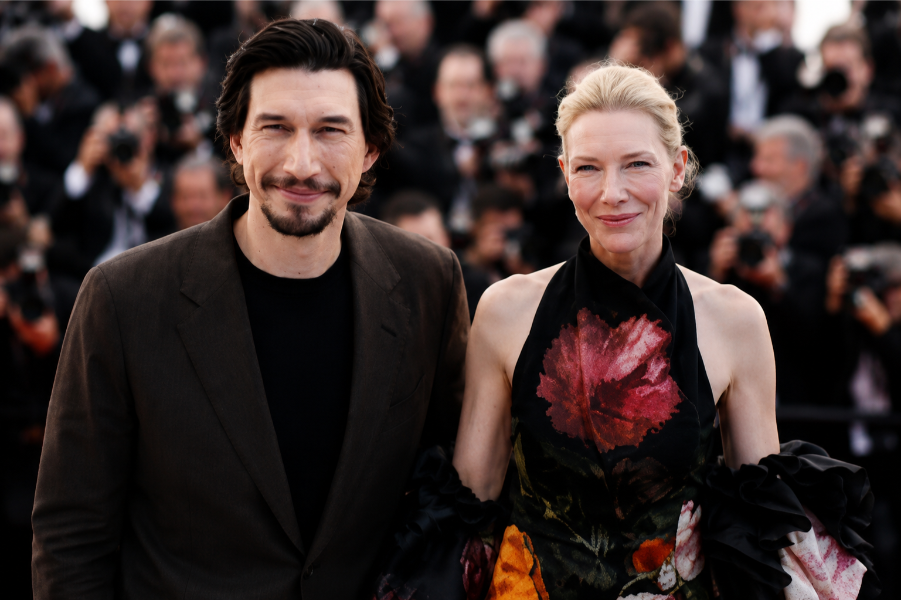
The 2026 edition of the Cannes Film Festival once again demonstrated why the event remains one of the most influential gatherings in global entertainment. While film premieres continued to dominate headlines, broader conversations surrounding Hollywood culture, accountability, media visibility, and celebrity influence quickly became central to festival coverage. Consequently, much of the international attention shifted toward Cate Blanchett and Adam Driver, two major figures whose appearances generated extensive discussion across entertainment media.
Blanchett drew significant interest during a Cannes panel focused on gender equality, leadership, and evolving workplace culture in the entertainment industry. Meanwhile, Driver attracted widespread media attention during interviews and public appearances connected to ongoing public-interest conversations surrounding Hollywood visibility and celebrity scrutiny. Although both situations emerged from different contexts, they collectively reflected how Cannes increasingly operates as more than a film showcase.
Moreover, the festival has evolved into a platform where entertainment journalism, digital culture, and broader social conversations intersect in real time. Audiences now follow Cannes not only for cinematic achievements but also for insight into how major celebrities navigate cultural expectations. As a result, moments involving established actors frequently extend beyond red carpets and premieres into larger discussions about transparency, ethics, and influence within the modern entertainment industry.
The attention surrounding Cate Blanchett and Adam Driver also highlights a larger transformation taking place across Hollywood in 2026. Celebrity visibility now involves far more than promotional appearances. Instead, audiences increasingly evaluate public figures through the lens of accountability, authenticity, and cultural relevance. Therefore, Cannes continues to shape global entertainment narratives in ways that extend well beyond cinema itself.
Why Cannes Continues to Shape Global Entertainment Conversations?
For decades, the Cannes Film Festival has stood as one of the entertainment industry’s most prestigious cultural events. However, the festival’s role has expanded considerably in the digital era. Cannes now functions as both a cinematic showcase and a real-time global media platform where industry debates unfold in front of international audiences.
Moreover, the festival attracts filmmakers, actors, executives, journalists, streaming companies, and digital creators from around the world. This concentration of influence naturally transforms Cannes into a space where broader entertainment-industry conversations emerge. Consequently, interviews, panel discussions, and public statements often become as widely discussed as the films themselves.
Social media has accelerated this transformation even further. Viral clips from press conferences or red-carpet appearances now circulate globally within minutes. Therefore, celebrities attending Cannes face an environment where every statement can shape broader public narratives surrounding Hollywood culture.
Key reasons Cannes remains globally influential include:
- Extensive international media coverage
- High concentration of influential entertainment figures
- Real-time social media amplification
- Strong connection between film and cultural debate
- Global audience engagement beyond cinema audiences
In contrast to earlier decades, modern Cannes coverage increasingly focuses on the intersection of entertainment, ethics, celebrity identity, and industry accountability. As a result, the festival now reflects wider shifts taking place across contemporary media culture.
Cate Blanchett’s Role in Hollywood Culture Discussions
Cate Blanchett attracted considerable international attention during Cannes 2026 after participating in discussions centered on gender equality and workplace culture within Hollywood. Her comments aligned with ongoing industry-wide conversations about leadership, inclusion, and accountability in entertainment environments.
Blanchett has long been associated with advocacy surrounding professional equity in film spaces. Therefore, her presence at Cannes naturally generated strong media interest. Additionally, her comments arrived during a period when audiences continue to examine how entertainment institutions respond to cultural expectations regarding fairness and representation.
Rather than framing the discussion through controversy, much of the coverage focused on the broader implications for the entertainment industry. Cannes audiences and journalists increasingly expect influential actors to engage thoughtfully with evolving workplace conversations. Consequently, Blanchett’s remarks became part of a wider dialogue about how established industry figures can influence institutional change.
Several themes emerged from the conversation:
- Gender equality in film production and leadership
- Representation within global entertainment systems
- Industry accountability and workplace standards
- The influence of high-profile actors in cultural debates
- Long-term reform discussions within Hollywood
Nevertheless, the significance of Blanchett’s appearance extended beyond the panel itself. Her participation demonstrated how Cannes increasingly provides a space where artistic achievement and cultural reflection exist simultaneously. Meanwhile, audiences continue to expect major celebrities to contribute meaningfully to conversations shaping the future of entertainment.
Adam Driver and the Pressure of Modern Celebrity Visibility
Adam Driver also became a major focus of Cannes coverage during the festival. Media attention surrounding Driver reflected the growing pressures public figures face while navigating high-profile appearances in an era dominated by constant digital visibility.
Modern entertainment journalism often moves rapidly between film promotion and broader cultural discussion. Consequently, actors attending global festivals increasingly encounter questions connected not only to their creative work but also to wider public-interest narratives. Driver’s Cannes appearances highlighted how celebrities must carefully balance professionalism, privacy, and audience expectations during public engagements.
Moreover, digital media has significantly intensified the visibility surrounding celebrity responses. Interview moments that might once have remained confined to festival press rooms now circulate instantly across social platforms. As a result, even brief interactions frequently become part of wider entertainment-industry discourse.
Several factors contributed to the intense media focus:
- Real-time social media amplification
- Increased scrutiny surrounding public figures
- Viral entertainment-news cycles
- Audience demand for transparency
- Expanded expectations placed on celebrities
However, the broader significance extends beyond one actor or one festival appearance. Driver’s experience reflects how modern celebrity culture has changed fundamentally in the digital era. Public figures now operate within an environment where visibility remains constant, and entertainment narratives evolve continuously online.
Key Themes Emerging From Cannes 2026 Discussions
| Topic | Industry Relevance | Celebrity Influence | Public Interest | Long-Term Impact |
|---|---|---|---|---|
| Gender equality | Workplace reform discussions | High-profile advocacy | Strong global engagement | Ongoing structural change |
| Celebrity accountability | Reputation management | Public statements shape narratives | Intensified audience scrutiny | Evolving media standards |
| Social media amplification | Faster news cycles | Viral interview moments | Continuous online reactions | Permanent digital visibility |
| Transparency expectations | Trust-building within entertainment | Authentic communication valued | Increased audience demands | Long-term cultural shift |
| Festival media culture | Cannes as discussion platform | Celebrity visibility central | Global entertainment attention | Expanded festival influence |
How Hollywood Culture Continues to Evolve?
Hollywood culture in 2026 remains deeply influenced by conversations surrounding accountability, workplace expectations, transparency, and institutional reform. Although these discussions intensified several years ago, they continue to shape entertainment-industry standards today.
Audiences increasingly expect film studios, executives, and celebrities to address cultural concerns openly. Consequently, entertainment reporting now focuses not only on projects and performances but also on how influential figures engage with broader societal conversations. This shift has fundamentally altered the relationship between celebrities and the public.
Moreover, workplace culture discussions have expanded beyond isolated controversies into larger conversations about long-term institutional improvement. For example, issues involving representation, leadership diversity, and professional ethics remain frequent topics at international festivals and industry conferences.
Several ongoing changes continue influencing Hollywood culture:
- Greater focus on workplace transparency
- Expanded public engagement through digital platforms
- Increased visibility surrounding leadership decisions
- More scrutiny of entertainment institutions
- Stronger audience expectations regarding accountability
Nevertheless, balancing meaningful reform with fair public discourse remains challenging. On the other hand, many industry observers argue that these conversations have encouraged more thoughtful approaches to leadership and professional responsibility across entertainment sectors.
Why Social Media Is Reshaping Celebrity Narratives?
Social media now plays a defining role in how entertainment stories develop during major global events such as Cannes. Meanwhile, platforms including short-form video apps, live updates, and digital news feeds have dramatically accelerated the speed of celebrity coverage.
Viral interview moments frequently dominate online discussion within minutes of taking place. Consequently, celebrities attending international festivals operate within a highly reactive media environment where public responses form almost instantly. Entertainment journalism has therefore adapted to increasingly rapid news cycles driven by audience engagement.
Additionally, social media allows audiences worldwide to participate directly in entertainment conversations. Viewers no longer rely solely on traditional press outlets. Instead, fans, commentators, influencers, and journalists collectively shape evolving public narratives in real time.
Key effects of digital media on entertainment culture include:
- Faster spread of celebrity-related stories
- Increased audience participation in public discourse
- Greater pressure on celebrities during interviews
- Higher reputational risks tied to viral moments
- Reduced space for nuanced online discussion
However, digital visibility also creates complications. Nuanced conversations can become oversimplified when reduced to short clips or headlines. Therefore, celebrities and entertainment journalists alike face growing pressure to communicate carefully within highly accelerated online environments.
Entertainment Industry Changes Influencing Hollywood in 2026
| Industry Shift | Purpose | Audience Impact | Industry Challenge | Future Outlook |
|---|---|---|---|---|
| Increased transparency | Build public trust | Stronger audience engagement | Managing constant scrutiny | Likely to continue growing |
| Digital-first entertainment coverage | Faster information delivery | Real-time participation | Viral misinformation risks | Permanent industry feature |
| Diversity and inclusion initiatives | Improve representation | Broader audience connection | Long-term implementation | Gradual institutional progress |
| Celebrity accountability culture | Encourage responsibility | Heightened public expectations | Reputation management pressure | Continued cultural influence |
| Festival media evolution | Expand global relevance | Wider international engagement | Balancing art with discourse | Cannes influence expected to grow |
How Cannes Reflects Modern Hollywood Priorities?
The Cannes Film Festival increasingly reflects many of the priorities shaping the contemporary entertainment industry. While cinema remains central to the event, discussions surrounding diversity, ethics, representation, and celebrity influence now receive comparable media attention.
Moreover, entertainment companies understand that global audiences evaluate public figures differently than in previous decades. Celebrity branding today often involves cultural awareness alongside artistic success. Consequently, Cannes has become an environment where entertainment visibility intersects directly with broader social expectations.
The festival also illustrates how international audiences engage with Hollywood culture on a global scale. In contrast to earlier eras dominated primarily by industry insiders, Cannes conversations now unfold across worldwide digital platforms. Therefore, the event functions as a global media ecosystem rather than solely an elite film gathering.
Several modern Hollywood priorities visible at Cannes include:
- Diversity and inclusion discussions
- Expanded global audience engagement
- Celebrity image management
- Transparency within entertainment institutions
- Integration of digital media into festival culture
As a result, Cannes increasingly symbolizes the evolving relationship between entertainment, media visibility, and public accountability.
Risks and Challenges Facing Hollywood’s Accountability Era
Although accountability discussions have reshaped Hollywood culture in significant ways, the industry continues to face substantial challenges in navigating this evolving environment. Public reactions frequently become polarized, particularly when social media amplifies incomplete or emotionally charged narratives.
Moreover, entertainment journalism sometimes struggles to balance urgency with nuance. Rapid digital reporting can intensify speculation before full context emerges. Consequently, celebrities, studios, and audiences often confront an information landscape shaped by speed rather than careful analysis.
Reputation management has therefore become increasingly complex for public figures. Even routine interviews or festival appearances may generate intense online discussion. Additionally, celebrities face pressure to respond quickly to evolving narratives while maintaining professionalism and privacy.
Major challenges within the accountability era include:
- Social media-driven polarization
- Sensationalism risks in entertainment coverage
- Pressure for immediate public responses
- Difficulty maintaining nuanced discussion online
- Reputation instability tied to viral moments
Nevertheless, many observers argue that increased scrutiny has also encouraged more responsible industry practices. Therefore, Hollywood continues attempting to balance transparency, fairness, and cultural relevance within a rapidly changing media environment.
Why Audiences Increasingly Expect More From Celebrities?
Modern audiences increasingly expect celebrities to contribute thoughtfully to wider cultural conversations rather than remain limited to film promotion alone. This shift reflects broader changes in media consumption, digital engagement, and public awareness surrounding entertainment-industry influence.
Younger audiences, in particular, often evaluate public figures through a combination of artistic achievement, authenticity, and ethical visibility. Consequently, celebrity image now extends beyond performances into broader discussions involving leadership, communication, and social awareness.
Additionally, social media has created a more direct relationship between celebrities and audiences. Fans frequently expect transparency and responsiveness from influential actors and filmmakers. As a result, entertainment culture has become more interactive and participatory than ever before.
Several factors driving changing audience expectations include:
- Greater public engagement through digital media
- Increased awareness of entertainment-industry culture
- Demand for authenticity from public figures
- Real-time celebrity accessibility online
- Expansion of entertainment conversations beyond films
Meanwhile, festivals like Cannes remain highly visible spaces where these evolving expectations become particularly apparent. Celebrity appearances now carry cultural significance that extends well beyond movie premieres or promotional campaigns.
Why Cannes 2026 Represents a Changing Entertainment Landscape?
Cannes 2026 ultimately demonstrated how modern entertainment culture increasingly blends cinema, celebrity influence, digital visibility, and broader cultural debate into one interconnected media environment. The attention surrounding Cate Blanchett and Adam Driver reflected this transformation clearly.
Film festivals today operate as global conversation platforms as much as artistic showcases. Consequently, celebrity appearances frequently shape international discussions surrounding transparency, ethics, workplace culture, and media accountability. Moreover, digital platforms ensure these conversations unfold instantly before worldwide audiences.
The Cannes Film Festival therefore continues evolving alongside Hollywood itself. Entertainment journalism now functions within a real-time ecosystem driven by online engagement, viral visibility, and rapidly shifting audience expectations. As a result, celebrities increasingly navigate an environment where cultural relevance matters alongside cinematic achievement.
Most importantly, the broader attention surrounding Blanchett and Driver highlights a deeper transformation occurring across modern entertainment culture. Audiences increasingly evaluate celebrities beyond on-screen performances alone. Instead, public figures now operate within an industry where visibility includes ethical expectations, communication responsibilities, and cultural engagement.
Therefore, Cannes 2026 represented more than another major film festival. It reflected an entertainment landscape increasingly defined by transparency, digital influence, evolving public expectations, and the growing intersection between celebrity culture and global conversation.
FAQs
Why are Cate Blanchett and Adam Driver trending at Cannes 2026?
Cate Blanchett and Adam Driver attracted significant media attention at Cannes 2026 due to broader conversations surrounding Hollywood culture, accountability, celebrity visibility, and public engagement during festival appearances.
What did Cate Blanchett discuss at Cannes?
Cate Blanchett participated in discussions focused on gender equality, workplace culture, leadership, and evolving expectations within the entertainment industry.
Why is Cannes important for Hollywood conversations?
The Cannes Film Festival serves as a major global media platform where cinema, celebrity culture, industry trends, and broader cultural discussions intersect.
How is Hollywood culture changing in 2026?
Hollywood culture continues evolving through increased focus on transparency, accountability, workplace standards, diversity, and audience engagement through digital media.
Why do celebrity statements receive so much attention?
Celebrity comments often influence wider entertainment narratives because public figures hold substantial cultural visibility and media influence across global audiences.
How has social media changed entertainment journalism?
Social media has accelerated entertainment news cycles, increased audience participation, and amplified celebrity moments in real time across digital platforms.
What role does Cannes play in global media culture?
Cannes functions as both a prestigious film festival and a global media ecosystem shaping conversations about cinema, celebrity influence, and entertainment-industry culture.
Why are audiences demanding more transparency from celebrities?
Audiences increasingly value authenticity, accountability, and openness from public figures due to expanded digital engagement and cultural awareness.
How are film festivals evolving in the digital era?
Film festivals now extend beyond film promotion into real-time global conversations shaped by social media, viral coverage, and audience interaction.
What trends are shaping the future of Hollywood culture?
Key trends include transparency expectations, digital media influence, accountability discussions, diversity initiatives, evolving celebrity branding, and audience-driven entertainment narratives.