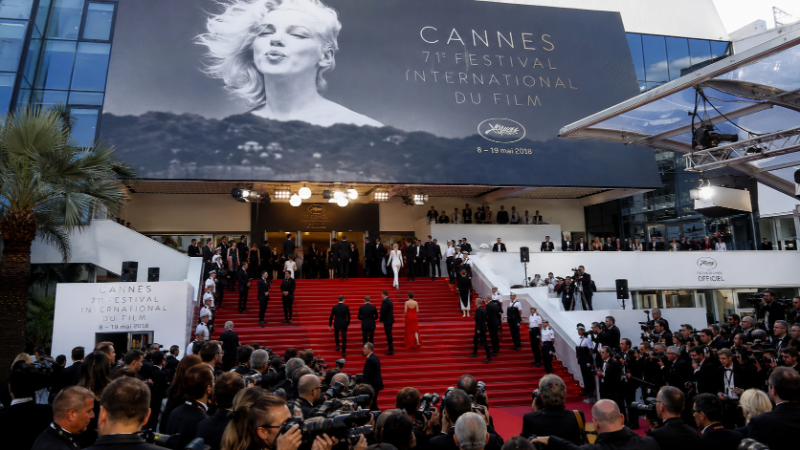
The Cannes Film Festival 2026 is once again positioning itself as the defining cultural and cinematic event of the global film calendar. Running from May 12–23, 2026, on the French Riviera in Cannes, this year’s festival arrives with unusually strong anticipation from critics, distributors, luxury brands, and awards strategists alike. While previous editions leaned heavily on Hollywood premieres, Cannes Film Festival 2026 appears far more focused on auteur-driven cinema, international storytelling, and prestige filmmaking.
Moreover, the festival’s growing influence extends well beyond film criticism. Cannes now operates as a global media ecosystem where streaming deals, awards campaigns, luxury fashion partnerships, and international distribution strategies intersect in real time. Consequently, every premiere, standing ovation, and red carpet appearance can alter a film’s commercial trajectory within hours.
This year’s Cannes lineup 2026 reflects broader industry shifts. Major directors including Pedro Almodóvar, Hirokazu Kore-eda, Asghar Farhadi, Steven Soderbergh, Nicolas Winding Refn, and Jane Schoenbrun are returning with ambitious projects that already dominate awards-season conversations. Meanwhile, celebrity appearances from Rami Malek, Cara Delevingne, Gillian Anderson, Barbra Streisand, and John Travolta are expected to drive global red carpet coverage.
However, Cannes Film Festival 2026 is not merely about celebrity spectacle. The festival increasingly represents the rise of global arthouse cinema at a moment when audiences are becoming more receptive to international storytelling, experimental filmmaking, and non-English-language features. As a result, this year’s edition may become one of the most culturally influential Cannes festivals in recent memory.
Why Cannes Film Festival 2026 Is One of the Strongest Lineups in Recent Years
The Cannes Film Festival 2026 lineup has generated strong industry enthusiasm largely because it marks the return of multiple acclaimed international auteurs. Unlike recent editions that relied on blockbuster premieres for mainstream visibility, this year’s festival emphasizes creative ambition and artistic prestige.
Moreover, the competition slate demonstrates remarkable geographic diversity. Filmmakers from Spain, Japan, Iran, South Korea, Poland, Romania, and France dominate the conversation, reflecting Cannes’ growing commitment to international cinema. Consequently, critics have already described this edition as one of the strongest auteur-focused lineups of the decade.
Another important factor is the reduced Hollywood studio presence. While some American productions remain involved, the festival no longer depends on major studio franchises to attract attention. Instead, Cannes 2026 movies focus on personal storytelling, political themes, psychological drama, and experimental narratives. In contrast to heavily commercialized festival strategies elsewhere, Cannes continues prioritizing cinematic prestige over mass-market spectacle.
Key reasons the lineup stands out include:
- Return of globally respected directors
- Strong emphasis on international arthouse cinema
- Increased diversity in storytelling perspectives
- Greater visibility for independent productions
- Strong awards-season positioning for Palme d’Or contenders 2026
Additionally, Cannes remains one of the most influential launchpads for Oscar campaigns. Films premiering here often gain immediate momentum among critics and distributors, therefore shaping the global awards conversation months before Oscar season officially begins.
Most Anticipated Movies at Cannes Film Festival 2026
Among the most anticipated films Cannes 2026 audiences are discussing, Bitter Christmas from Pedro Almodóvar stands near the top of nearly every prediction list. The Spanish-language drama reportedly explores artistic exhaustion, emotional isolation, and family tension during the holiday season. Moreover, industry insiders believe the film could become one of the strongest Palme d’Or contenders 2026.
Meanwhile, Hirokazu Kore-eda’s Sheep in the Box is attracting attention for its emotionally layered science-fiction premise. The film follows a couple who adopts a humanoid child in a near-future society, blending technological anxiety with Kore-eda’s signature humanistic storytelling style. Critics already expect it to become a major talking point during the festival.
Asghar Farhadi returns with Parallel Tales, a psychological drama reportedly inspired by interconnected moral dilemmas and fractured family relationships. The film features a prominent European cast and continues Farhadi’s tradition of socially driven narratives filled with emotional ambiguity. Consequently, many analysts consider it a serious awards-season contender.
Another notable premiere is All of a Sudden from Ryusuke Hamaguchi. The French-language drama centers on a Paris nursing-home director whose life changes after meeting a terminally ill Japanese playwright. The film blends emotional intimacy with cultural reflection, continuing Hamaguchi’s growing global influence after previous critical successes.
Most Anticipated Films at Cannes Film Festival 2026
| Film | Director | Genre Style | Buzz Level | Awards Potential |
|---|---|---|---|---|
| Bitter Christmas | Pedro Almodóvar | Emotional drama | Very High | Palme d’Or contender |
| Sheep in the Box | Hirokazu Kore-eda | Sci-fi family drama | Very High | Strong critical contender |
| Parallel Tales | Asghar Farhadi | Psychological drama | High | International awards favorite |
| All of a Sudden | Ryusuke Hamaguchi | Character-driven drama | High | Critics’ favorite |
| Hope | Na Hong-jin | Genre thriller | High | Breakout possibility |
| Fatherland | Paweł Pawlikowski | Historical road drama | High | European awards attention |
| Teenage Sex and Death at Camp Miasma | Jane Schoenbrun | Experimental horror | Rising | Cult breakout potential |
| Her Private Hell | Nicolas Winding Refn | Provocative thriller | Strong | Visual cinema discussion |
Stars and Celebrities Expected at Cannes 2026 Red Carpet
The Cannes red carpet 2026 will likely remain one of the most photographed entertainment events of the year. However, celebrity appearances at Cannes increasingly function as strategic global marketing opportunities rather than simple fashion showcases.
Expected Cannes stars 2026 include:
- Rami Malek
- Cara Delevingne
- Gillian Anderson
- Barbra Streisand
- John Travolta
- Adam Driver
- Scarlett Johansson
- Demi Moore
- Chloé Zhao
Additionally, honorary events involving Barbra Streisand and Peter Jackson are expected to attract substantial media attention throughout the festival. John Travolta’s directorial debut, meanwhile, adds another layer of celebrity interest to the overall Cannes atmosphere.
Celebrity visibility remains important because global media coverage often expands a film’s reach far beyond traditional cinephile audiences. Consequently, actors, filmmakers, luxury brands, and distributors increasingly coordinate appearances to maximize international publicity.
Why Cannes Red Carpet Moments Matter Beyond Fashion?
Although Cannes is fundamentally a film festival, its red carpet remains a powerful cultural force within entertainment marketing and luxury branding. Every major appearance instantly circulates across digital platforms, fashion publications, streaming campaigns, and entertainment news outlets.
Moreover, luxury fashion houses increasingly treat Cannes as a global advertising platform. Partnerships between stars and fashion brands generate massive online engagement, therefore extending the festival’s influence beyond cinema itself. Viral red carpet moments can significantly elevate both a celebrity’s visibility and a film’s media profile.
The broader impact includes:
- Increased global media exposure
- Luxury brand partnerships
- Viral digital marketing opportunities
- Expanded audience awareness for indie films
- Enhanced awards-season visibility
Nevertheless, Cannes continues balancing spectacle with cinematic credibility. Unlike some entertainment events driven purely by celebrity culture, the festival still prioritizes artistic achievement and auteur filmmaking. As a result, the red carpet functions less as distraction and more as amplification for the films themselves.
Key Trends at Cannes Film Festival 2026
| Trend | Industry Impact | Audience Effect | Distribution Outcome | Cultural Significance |
|---|---|---|---|---|
| Rise of auteur cinema | Stronger prestige positioning | More interest in arthouse films | Expanded international sales | Reinforces artistic filmmaking |
| Reduced Hollywood presence | Shift away from studio dominance | Greater global diversity | Independent distributors gain leverage | Expands international storytelling |
| Streaming competition | Aggressive acquisition deals | Faster worldwide access | Hybrid release strategies | Changes festival economics |
| Fashion-media integration | Luxury branding growth | Viral social engagement | Wider mainstream visibility | Merges cinema and fashion culture |
| International co-productions | Increased global financing | Diverse narratives | Cross-border distribution | Reflects globalized filmmaking |
How Cannes Influences Global Film Distribution and Awards Season?
Cannes Film Festival 2026 remains one of the most important marketplaces for film acquisitions and distribution negotiations. Streaming platforms, independent distributors, and international sales companies all view the festival as a crucial environment for discovering prestige titles.
Moreover, critical reception at Cannes frequently shapes Oscar predictions months in advance. Films that receive strong reviews, extended standing ovations, or Palme d’Or recognition often secure major awards momentum almost immediately. Consequently, Cannes continues functioning as an early indicator of global awards-season trends.
Streaming services now play a larger role as well. Companies increasingly compete for worldwide rights to acclaimed festival titles because international arthouse cinema has become commercially valuable in the streaming era. Therefore, films premiering at Cannes can rapidly move from niche festival projects to globally distributed streaming releases.
The festival-to-awards pipeline now influences:
- International distribution deals
- Oscar campaign strategies
- Streaming acquisition battles
- Prestige marketing campaigns
- Global theatrical rollout planning
This evolution demonstrates how Cannes now bridges arthouse cinema and the broader entertainment business simultaneously.
Shift Toward International and Auteur-Driven Cinema
One defining feature of Cannes Film Festival 2026 is the reduced dominance of Hollywood productions. In contrast to previous years dominated by studio-backed premieres, the 2026 festival emphasizes artistic storytelling from global filmmakers.
Moreover, international auteurs increasingly attract younger audiences through platforms like Letterboxd, MUBI, and streaming services specializing in world cinema. As a result, global audiences are becoming more open to non-English-language storytelling and experimental narrative styles.
Directors such as Pedro Almodóvar, Kore-eda, Hamaguchi, Farhadi, Pawlikowski, and Cristian Mungiu represent a broader industry shift toward internationally collaborative filmmaking. Additionally, international co-productions now provide greater creative flexibility compared to traditional studio financing structures.
This transition reflects several larger industry realities:
- Audiences increasingly embrace global storytelling
- Streaming platforms encourage international discovery
- Independent cinema carries stronger prestige value
- Auteur branding attracts dedicated global audiences
Consequently, Cannes Film Festival 2026 may symbolize a broader transformation in how prestige cinema operates worldwide.
Risks and Challenges Facing Cannes Film Festival 2026
Despite its prestige, Cannes still faces substantial industry challenges. Streaming competition continues reshaping viewing habits, while younger audiences increasingly consume entertainment through fragmented digital ecosystems rather than traditional theatrical models.
Additionally, distribution fragmentation creates uncertainty for independent films seeking broad international releases. While Cannes can generate critical buzz, converting festival acclaim into long-term commercial success remains difficult for many arthouse projects.
Other challenges include:
- Declining theatrical attendance in some markets
- Oversaturation of streaming content
- Rising production and marketing costs
- Political and geopolitical instability
- Pressure to balance art with commercial visibility
Nevertheless, Cannes continues adapting effectively by emphasizing exclusivity, international diversity, and cultural prestige. Therefore, the festival still retains enormous influence within the global film industry.
Why Cannes Film Festival 2026 Still Defines Global Cinema Culture?
The Palme d’Or remains one of the most prestigious awards in world cinema, and Cannes continues shaping the creative direction of international filmmaking. Winning or premiering successfully at Cannes can permanently elevate a director’s global reputation.
Moreover, Cannes maintains a unique balance between artistic credibility and mainstream visibility. Few events successfully combine auteur cinema, luxury fashion, celebrity culture, international media, and awards-season strategy on such a massive scale.
Importantly, Cannes Film Festival 2026 reflects a modern reality where film festivals are no longer simply exhibition platforms. They now function as interconnected marketing ecosystems influencing streaming deals, awards narratives, cultural prestige, and international distribution simultaneously.
The festival’s continued relevance comes from its ability to unite:
- Global cinema culture
- Prestige filmmaking
- Fashion and luxury branding
- International media influence
- Awards-season momentum
As a result, Cannes remains the most powerful intersection of cinema, fashion, and global entertainment influence in the modern industry.
FAQs
When is Cannes Film Festival 2026 happening?
The Cannes Film Festival 2026 runs from May 12–23, 2026, in Cannes, France.
Which movies are most anticipated at Cannes 2026?
Major anticipated titles include Bitter Christmas, Sheep in the Box, Parallel Tales, Hope, and All of a Sudden.
Who are the major stars attending Cannes 2026?
Expected attendees include Rami Malek, Cara Delevingne, Gillian Anderson, Barbra Streisand, John Travolta, and Adam Driver.
What is the Palme d’Or at Cannes?
The Palme d’Or is the festival’s highest award and one of the most prestigious honors in international cinema.
Why is Cannes important for the film industry?
Cannes shapes awards-season momentum, distribution deals, global media coverage, and prestige film marketing.
How does Cannes influence Oscar predictions?
Films receiving strong reviews or awards at Cannes often become major Oscar contenders later in the year.
Which directors are featured at Cannes 2026?
Pedro Almodóvar, Hirokazu Kore-eda, Asghar Farhadi, Ryusuke Hamaguchi, Nicolas Winding Refn, and Jane Schoenbrun are among the featured filmmakers.
Why is the Cannes red carpet so important?
The red carpet drives global media exposure, fashion partnerships, and promotional visibility for films and celebrities.
Are streaming platforms involved in Cannes 2026?
Yes. Streaming services are actively competing for acquisition deals and worldwide distribution rights at the festival.
What makes Cannes 2026 different from previous years?
Cannes Film Festival 2026 features fewer Hollywood studio productions and a stronger emphasis on international auteur cinema and arthouse storytelling.