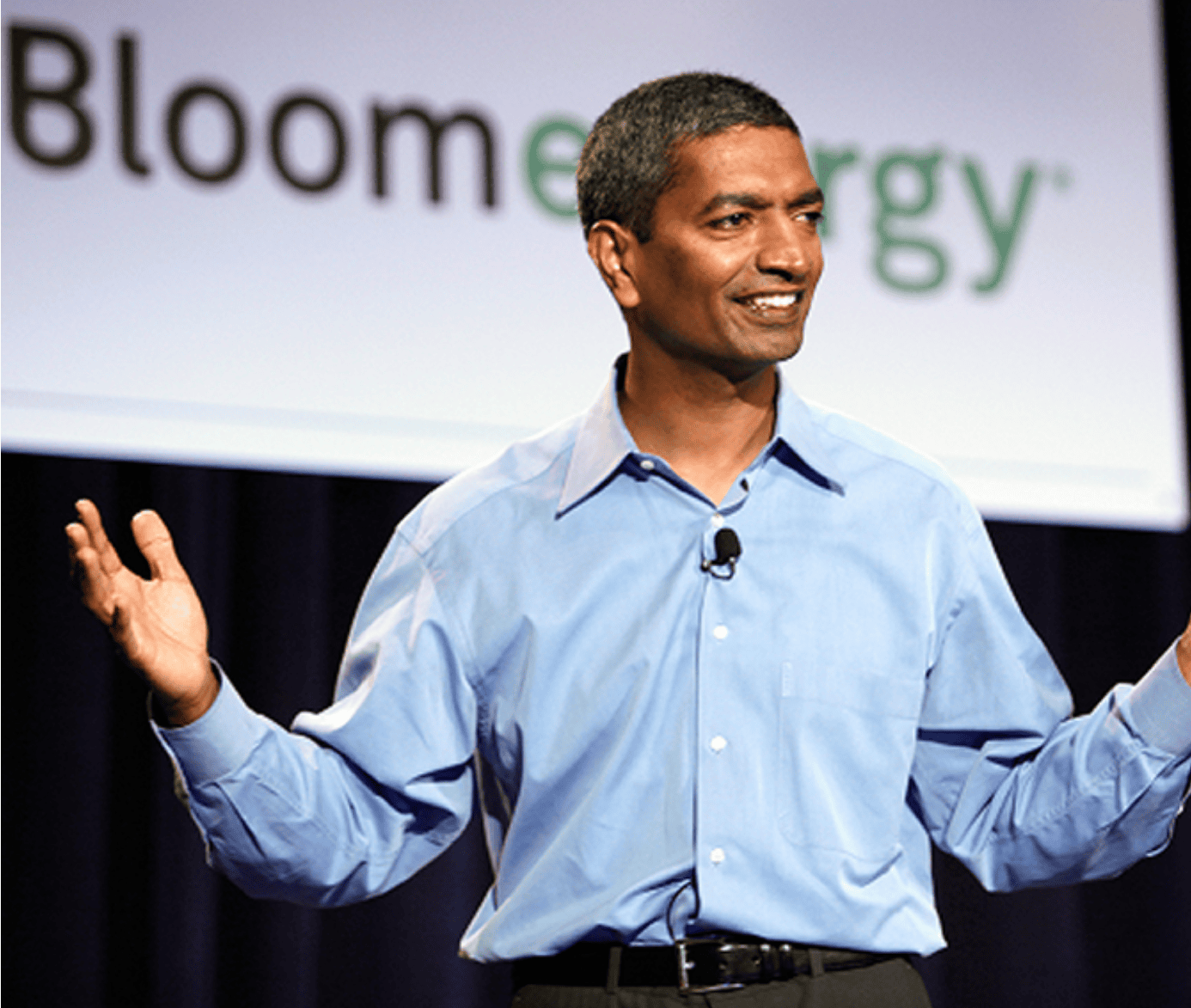
The global demand for electricity is growing faster than ever—driven by digitization, economic expansion, and the urgent need to decarbonize. At the same time, traditional energy systems are struggling to keep up, constrained by aging infrastructure, rising costs, and increasing climate-related disruptions. Leading Bloom Energy through this transformation is its founder, Chairman, and CEO Dr. K.R. Sridhar, a visionary whose career has been defined by one central question: How do we deliver clean, reliable, affordable energy to everyone?
Bloom Energy’s roots are anything but ordinary. The company’s story began in the 1960s, when co-founder Jim McElroy helped to build one of the first hydrogen fuel cells for NASA’s Gemini space program. This legacy of innovation continued through decades of work on electrolyzers, life support systems, and advanced energy technologies for space missions.
Dr. Sridhar expanded on this foundation while leading the Space Technologies Laboratory at the University of Arizona. His team developed systems capable of converting carbon dioxide into oxygen for NASA’s Mars missions—work that earned him recognition from Fortune magazine as “one of the top five futurists inventing tomorrow, today.” In 2001, Dr. K.R. Sridhar brought that same bold thinking by founding Bloom Energy.
The mission was clear: make clean, reliable energy affordable and accessible, without forcing businesses or communities to choose between sustainability, reliability, and cost.
Rethinking how power is generated
Under Dr. Sridhar’s leadership, Bloom Energy has challenged the long-standing assumption that electricity must come from centralized, combustion-based power plants and long transmission lines. Bloom’s solid oxide fuel cell technology generates electricity onsite, converting fuels like natural gas, biogas, or hydrogen into power through an electrochemical process—without combustion.
The result is electricity that is dramatically cleaner, with virtually no smog-forming emissions and no water required for normal operation. Bloom Energy Servers also deliver exceptional efficiency, using less fuel to produce the same amount of power, which helps to reduce both emissions and operating costs.
Just as important, Bloom’s systems are designed for resilience. Their modular, fault-tolerant architecture allows for continuous operation, even during maintenance, and avoids the cascading failures common to centralized grids. For businesses that depend on uninterrupted power—data centers, hospitals, manufacturers, and digital infrastructure—this reliability is critical.
A practical path to decarbonization
Dr. Sridhar has long emphasized that solving the climate crisis requires realism as well as ambition. Global populations are growing, economies are expanding, and billions of people still lack access to affordable electricity. Bloom’s approach acknowledges these realities by improving the carbon efficiency of today’s fuels while laying the groundwork for a net-zero future.
Bloom Energy Servers already offer best-in-class carbon performance when operating on natural gas and can transition seamlessly to lower- and zero-carbon fuels like biogas and hydrogen. Over time, these pathways can even enable negative-carbon electricity when paired with carbon capture solutions.
his flexible, future-proof platform allows businesses to decarbonize now—without waiting for perfect conditions or sacrificing reliability.
Powering a more resilient world
In a digitized economy, electricity is no longer a convenience—it’s a necessity on par with water or oxygen. Dr. Sridhar has consistently warned that relying solely on centralized grids and intermittent renewables is not sufficient to meet modern reliability demands, especially as climate-driven disasters become more frequent and severe.
Bloom Energy’s microgrid-ready solutions empower organizations and communities to take control of their energy future. By producing power where it’s needed, businesses gain resilience, predictability, and peace of mind.
Guided by Dr. K.R. Sridhar’s vision, Bloom Energy continues to lead the charge toward a cleaner, more reliable energy system—one that works for businesses today and for the planet tomorrow.