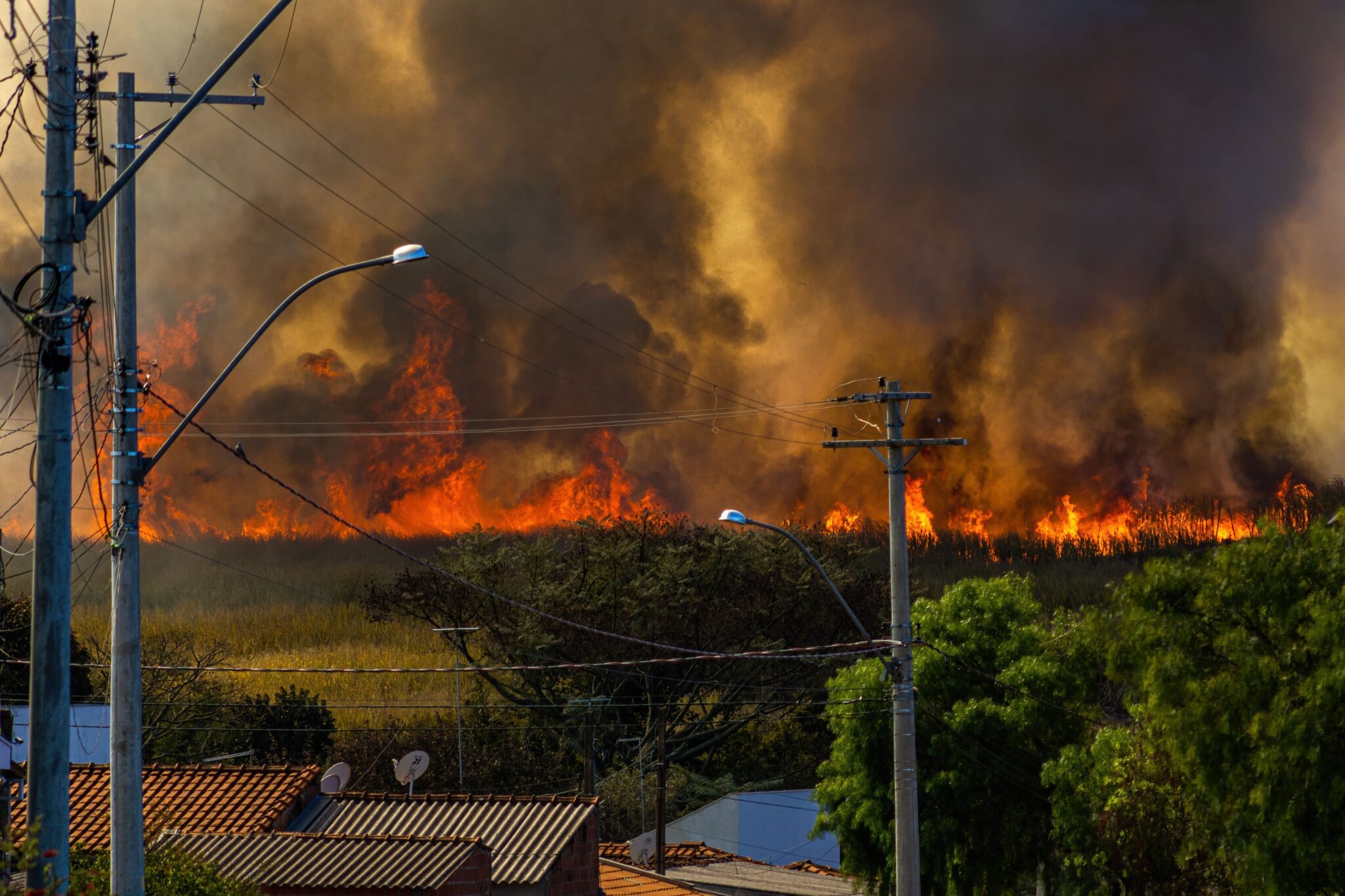
Wildfire smoke can transform air conditions far beyond the area where flames are burning. A clear morning can become hazy later in the day as winds carry smoke into a community, and conditions may change again within hours. The U.S. Environmental Protection Agency’s Air Quality Index gives the public a standardized way to understand those changes and the level of health concern associated with outdoor air pollution.
Understanding the effects of wildfire smoke from miles away also requires knowing what an AQI number does and does not reveal. During a smoke event, checking a single number once in the morning may not capture conditions for the rest of the day. EPA’s AirNow system provides forecasts, current readings, and a Fire and Smoke Map that can help people see how fine-particle pollution is changing where they live.
AQI Turns Pollution Measurements Into Health Categories
EPA uses the Air Quality Index to communicate outdoor air quality and the potential level of health concern. The AQI covers ground-level ozone, particle pollution, carbon monoxide, nitrogen dioxide, and sulfur dioxide. As AQI values increase, air pollution and associated health concerns also rise.
| AQI Range | Category | What It Generally Means |
| 0–50 | Good | Air quality is considered satisfactory, with little or no health risk. |
| 51–100 | Moderate | Air quality is generally acceptable, although some unusually sensitive people may experience effects. |
| 101–150 | Unhealthy for Sensitive Groups | People in sensitive groups may experience health effects, while the general public is less likely to be affected. |
| 151–200 | Unhealthy | Some members of the general public may experience health effects, with sensitive groups facing greater risk. |
| 201–300 | Very Unhealthy | The risk of health effects increases for everyone. |
| 301 and above | Hazardous | Air quality conditions represent a serious health concern for the entire population. |
EPA generally considers AQI values of 100 or below satisfactory. Once the AQI rises above 100, health concerns begin with sensitive groups and extend to more of the population as pollution levels increase.
Fine Particles Are a Major Concern During Wildfires
Wildfire smoke contains a mixture of pollutants, but fine particulate matter, or PM2.5, receives particular attention during smoke events. EPA identifies PM2.5 as a major health threat from wildfire smoke, and AirNow describes it as the key pollutant to watch on its Fire and Smoke Map. These particles are 2.5 micrometers or smaller in diameter.
EPA’s current wildfire health information links short-term smoke exposure with effects ranging from eye irritation, coughing, wheezing, and difficulty breathing to aggravation of asthma and other lung diseases. The agency identifies children, older adults, pregnant people, those with heart or lung disease, and people with greater exposure, including outdoor workers, among groups at increased risk of health effects from wildland fire smoke.
The Number Can Help Guide Outdoor Plans
An AQI forecast can provide an early indication of whether outdoor plans may need to change. AirNow says state and local air-quality forecasters issue forecasts that people can use when planning outdoor activity. Some forecast discussions also identify periods when pollution is expected to be higher or lower during the day.
The category matters because exposure recommendations become more protective as pollution increases. An orange reading does not communicate the same level of concern as a red or purple reading. Rather than relying on whether the sky looks smoky or whether smoke can be smelled, people can use the AQI alongside local public-health guidance to make more informed decisions about exercise, outdoor work, school activities, and other time spent outside.
Current AQI Can Change Faster Than the Daily Forecast
Wildfire smoke rarely stays perfectly constant. Changes in wind, fire behavior, weather, and smoke movement can cause local particle levels to rise or fall. That is why AirNow distinguishes between the daily AQI forecast and its current-air-quality information. A forecast predicts conditions, while current data helps show what is happening more recently.
For ozone and particle pollution, EPA uses a system called the NowCast to report current conditions on the AQI scale. AirNow explains that the PM NowCast uses multiple hours of monitoring data and adjusts its calculation when air quality changes rapidly, including during wildfires. Someone considering an afternoon walk or outdoor practice can therefore learn more by checking current conditions again rather than assuming the morning reading still applies.
The Fire and Smoke Map Adds Context to the AQI
A single AQI number tells only part of the wildfire story. EPA and the U.S. Forest Service jointly produce AirNow’s Fire and Smoke Map specifically for smoke events. According to AirNow, the map displays fine-particle air quality, fire locations, smoke plumes, whether conditions are improving or worsening, and smoke forecast outlooks where those forecasts are available.
That added context can help explain why nearby communities may report different conditions or why air quality is changing. Smoke does not remain confined to the immediate surroundings of a wildfire. Looking at the map can reveal a broader smoke plume and nearby monitoring locations, helping residents understand whether degraded air quality may be connected with fires far outside their county or state.
AQI Does Not Measure One Person’s Exact Exposure
An AQI reading represents measured or estimated outdoor air conditions in an area; it is not a personal exposure measurement. AirNow states that areas shown on its current air-quality map are approximate. Conditions can also differ across locations depending on where monitors or sensors are situated and how smoke is moving through a community.
Indoor conditions can differ from outdoor AQI as well. During wildfire events, EPA recommends reducing smoke exposure and provides separate guidance on cleaner-air rooms, portable air cleaners, and HVAC filtration. Someone staying inside a well-filtered building may experience a different level of exposure from someone working outdoors even though both people see the same local AQI reading.
Repeated Checks Matter During a Smoke Event
Wildfire season makes air-quality monitoring a continuing process rather than a one-time check. AirNow recommends checking forecasts daily because conditions can change, and its current AQI provides more immediate information when pollution levels are shifting. Watching the category, pollutant, trend, and nearby smoke activity provides more context than focusing on one number by itself.
The AQI cannot predict exactly how an individual will respond to smoke, but it can translate complex pollution measurements into information people can use. During a wildfire smoke event, combining AQI forecasts, current readings, the Fire and Smoke Map, and guidance from local health authorities can make it easier to recognize worsening conditions and reduce unnecessary exposure before the air becomes visibly hazardous.