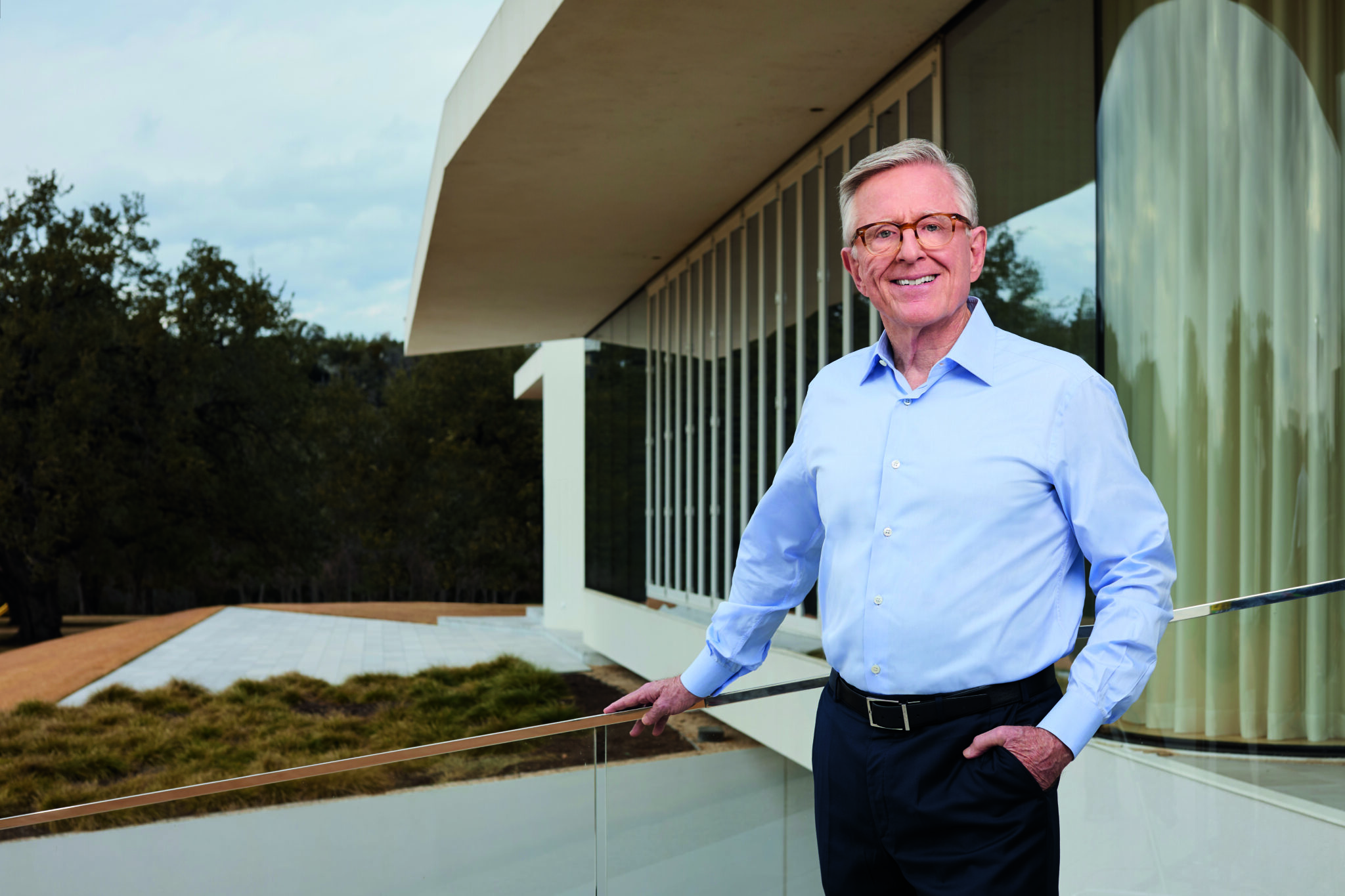
David Booth grew up watching his parents live in quiet financial uncertainty. His father, a World War II veteran who settled in a small Kansas town, never once bought a single stock. Neither did his mother. The market, in their view, was a trap built for insiders, and ordinary people like them had no business near it. They kept their savings in cash, locked in a safety deposit box, untouched for forty years. When Booth opened that box after they passed away in 1985, he found $15,000 sitting there, earning nothing, slowly losing ground to inflation while the stock market quietly multiplied fortunes all around it.
That image never left him. It became a symbol for everything he built.
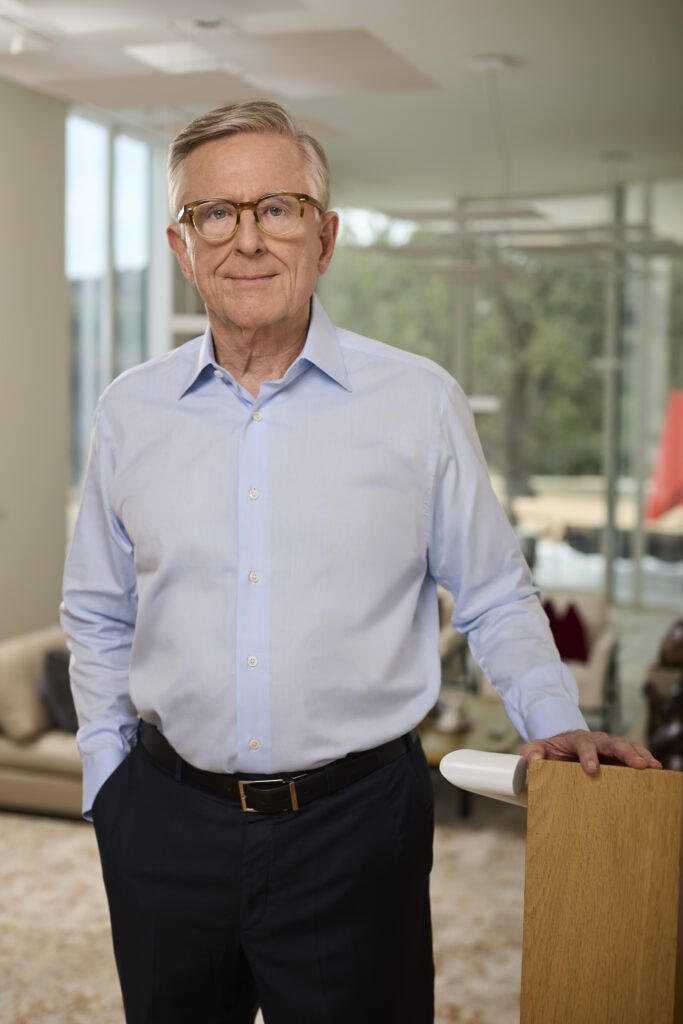
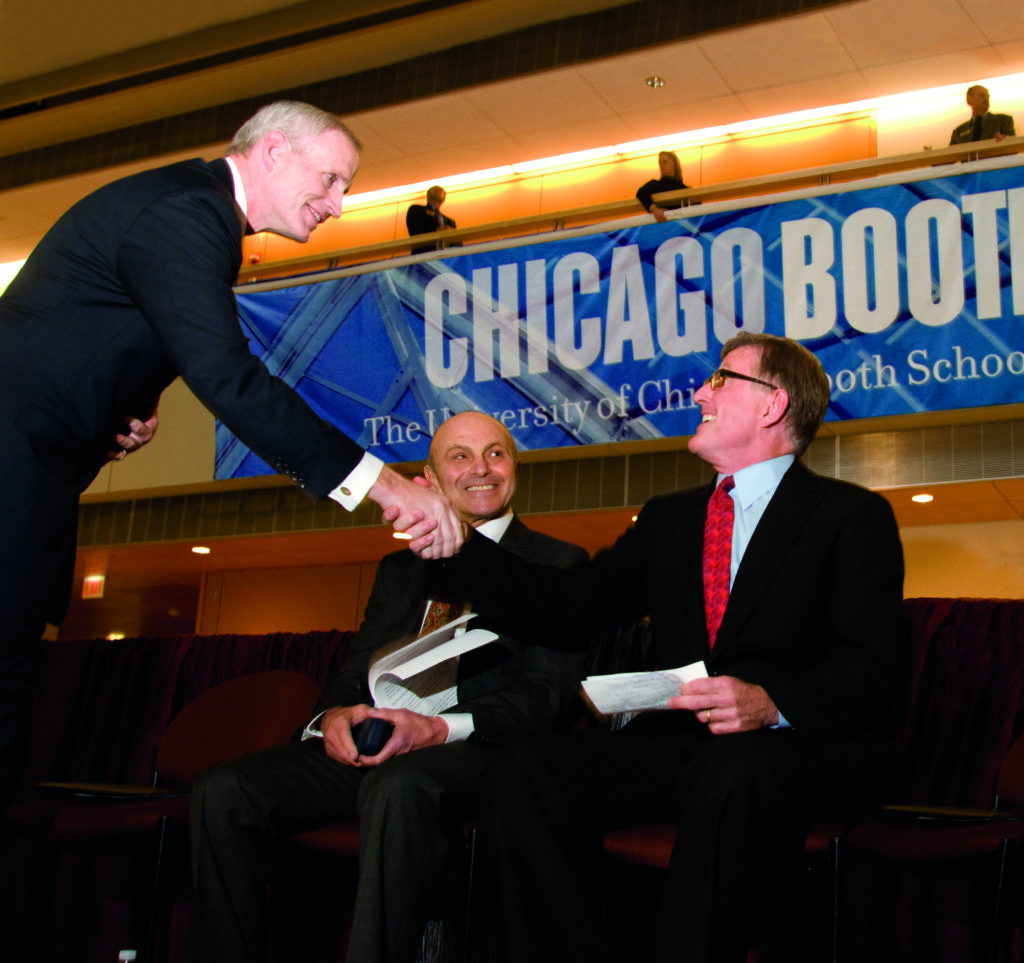
Today, David Booth is one of the most consequential figures in the history of modern investing. As the co-founder of Dimensional Fund Advisors, he turned a set of academic ideas that most of Wall Street dismissed into a firm managing over a trillion dollars in assets. His weapon was never a smarter algorithm or a sharper trading instinct. It was evidence, patience, and an unshakeable belief that ordinary people deserved the same returns that markets had always been capable of delivering, if only someone would stop telling them the game was rigged against them. This revolutionary approach to finance, democratizing academic theory for the everyday investor, ultimately culminated in a historic $300 million gift to his alma mater, which at the time it was given set a record as the largest individual gift ever given to any business school in the world. Today, the University of Chicago Booth School of Business permanently bears his name, standing as a monument to the very ideas his parents once feared, and transforming him into one of global education’s most impactful philanthropists.
That mission now has a name, and it is two words: Stay Calm.
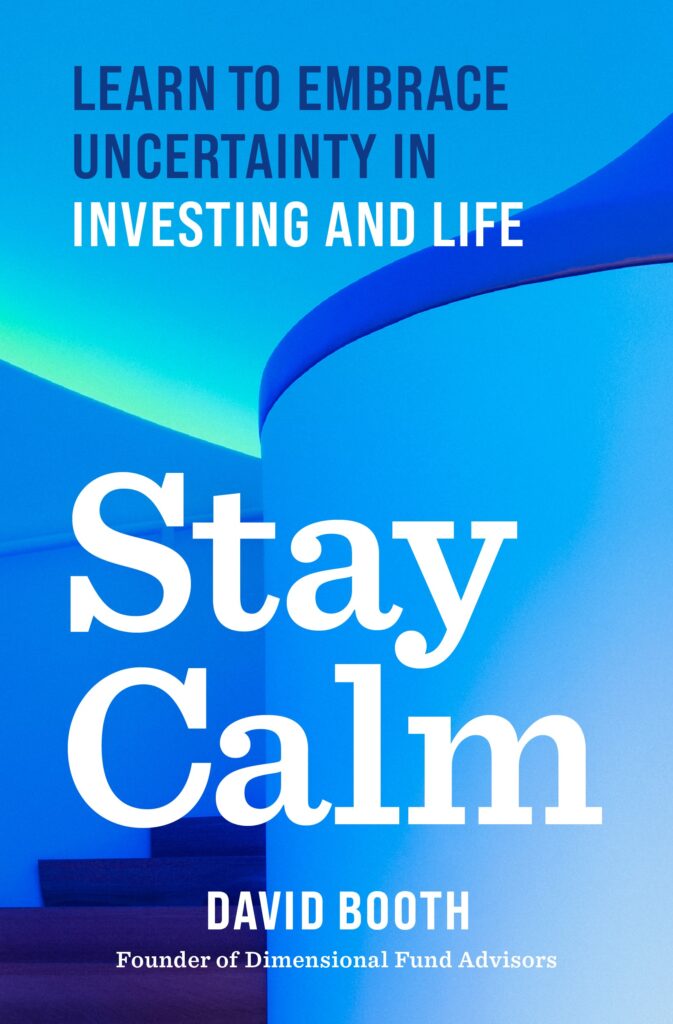
Your book is called Stay Calm. When markets are tumbling and headlines are screaming, what is the first thing an investor should do to keep their emotions from hijacking their portfolio?
Stand back and return to your investment principles. Think long-term. Don’t get caught up trying to time short-term moves in the market. It is always appropriate to review your long-term plan, but the focus should be on what you can control. You can control how much risk you take. The market, you cannot. If you have a well-thought-out investment process, you should not have to make adjustments very often. Warren Buffett has said that over his entire career, he has had to make maybe seven or eight big shifts. That is the spirit you need to have.
You helped create one of the first index funds, which now accounts for a massive share of global assets. Was it clear from the beginning that the idea would have this kind of impact?
Absolutely not. When the idea first emerged that trying to pick individual stocks is a losing game, and people began thinking about indexing as an alternative, it was a genuine challenge to the establishment. That is not a phrase I use lightly. The academic research behind these conclusions came from a new generation of economists who were questioning the orthodoxy that you had to stay up late pulling your hair out trying to pick stocks. That turned out to be a poor way to go.
The good news is you do not have to do any of that to have a good experience. Everybody can buy market portfolios. They are very inexpensive and easy to access. And it turns out that professional money managers do not seem to be able to do any better than that. So the individual investor has as good a chance of getting the market return as the pros. I think that is a miracle. We ought to be having ticker tape parades for this research.
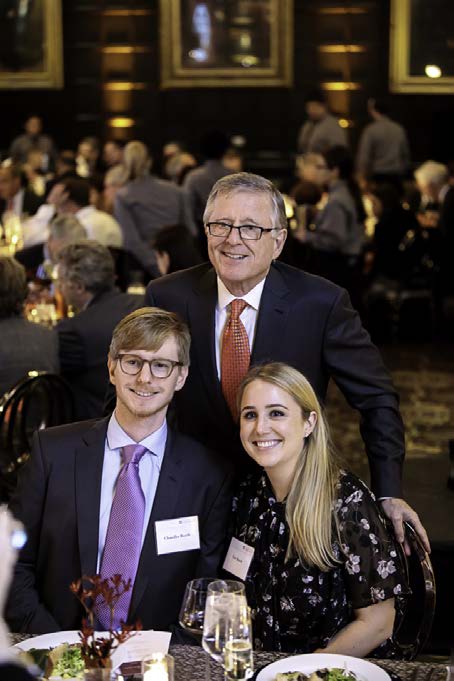
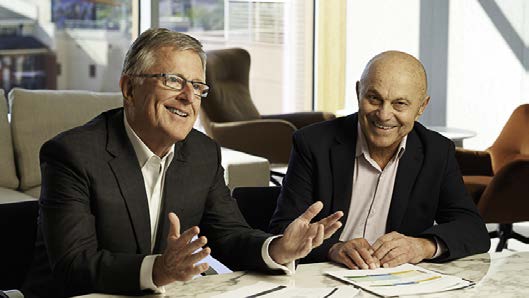
You spent decades collaborating with Nobel Laureates like Eugene Fama and Robert Merton. What is a specific lesson from those relationships that shaped the core message of Stay Calm?
My very first course at Chicago was taught by Gene Fama, and he laid out his view of how markets work and why the conventional wisdom does not hold water once you put it to a test. The breakthrough was really data. Before the 1960s, you did not have the data to properly test investment claims. As a result, people could say anything. The shift came when we finally had data that could put those claims to the proof, and many of them were found wanting.
That was what motivated me. The ideas of Fama and Merton and the other leading academics of that era needed to be applied. They should not stay locked in academic circles. These ideas can change people’s lives. That is what made me want to leave school and start working on putting them into practice. And it is gratifying to see, fifty years later, that they worked. Fees have come way down. Risk controls are much better. People are getting a much better deal than they were when I graduated in 1971.
In the early days of Dimensional Fund Advisors, your small-cap strategy underperformed the broader market for nearly a decade. How did you hold firm, and how did your clients stay the course?
When you have logic, reason, and empirical evidence on your side, that helps. But what we also had was an intuitive pitch that people accepted right away. When we went in to see our first clients, large institutional investors like IBM and Boeing, we made a portfolio argument rather than a stock-picking argument. We would ask: if you are building an equity portfolio, does it not make sense to hold stocks in both large companies and small companies rather than concentrating everything in large caps? That is obviously sensible. Then we would follow up: but you are not doing that. Let us help.
People accepted that idea. And our first decade, as you point out, was an unusually difficult one for small stocks relative to large stocks. But we delivered exactly what small caps did, and over the long haul, we have significantly outperformed small-cap indices. So the clients were getting what they asked for. Sometimes you lean back and ask: does the idea still make sense? Yes, it does. We just had a difficult time. That happens in markets. Every strategy, every idea has its periods when things are disappointing. Since then, small stocks have done better, as history suggested they would.
You have drawn a direct parallel between elite athletes and disciplined investors. As a former professional tennis player myself, I find that comparison fascinating. Do you think elite athletes and elite investors share that mental muscle of letting go and focusing on the next move?
I do. Whether you are a professional athlete or an investor, there is a tendency to cry over spilled milk. I didn’t get that call. I should have done this differently. The theme of Stay Calm is that if you truly understand how markets work, you will come up with an investment plan that is sensible, and you will be able to live through the ups and downs far better than someone who thinks they have some kind of magic edge or special insight. Once you have made good decisions and you are comfortable with your plan, you are much more likely to stay calm when things get difficult.
When you get a bad call in tennis or a bad quarter in the market, judge yourself by the quality of your decision, not the outcome. If you hit the shot the right way but the opponent made something phenomenal, there is nothing you can do about that. You step back and say: I did everything I could. That is true whether you’re playing tennis or investing in the market.
How has your view of uncertainty evolved, from selling shoes in Kansas to managing a trillion-dollar global firm?
The goal is always to manage uncertainty, not to eliminate it. You have to figure out what types of uncertainty you are willing to accept and in what quantity. Control what you can control, and manage what you cannot.
About twenty years ago, I received a serious cancer diagnosis. I looked at all the options, came to a conclusion, and dealt with it. That is controlling what you can control. It turned out well, which is why I am here talking to you today. But that experience crystallized something for me. Anytime you are in a tense situation, fall back to those principles. What are my options? What can I actually influence here? Dealing with uncertainty is fundamentally about resolving trade-offs, and usually there is no perfectly optimal solution. You just do the best you can.
That is why the book is called Stay Calm. If you have made a thoughtful decision, a well-considered one, you can relax a bit afterward. It is the willy-nilly decisions, the reactive ones made under pressure, that spike the anxiety.
Modern culture is obsessed with financial hacks and shortcuts. Why do you think that is, and how can investors resist the temptation?
It is almost basic human nature. In most areas of life, if you are smarter and work harder, you will probably do better than the person next to you. That is simply not true when it comes to investing in public stock and bond markets. And the reason is actually encouraging once you understand it.
Public markets are genuinely remarkable places. Buyers and sellers come together and do not trade unless each side believes they are getting a fair deal. You have very sophisticated institutions on both sides of every transaction. What emerges from all of that activity, with all of its liquidity, its volume, its investor protections, are fair prices. Not perfect prices. Not prices that guarantee a positive return tomorrow. But fair prices. And the implication for the individual investor is powerful: you can get a fair deal simply by buying the market. You do not need to outsmart anyone.
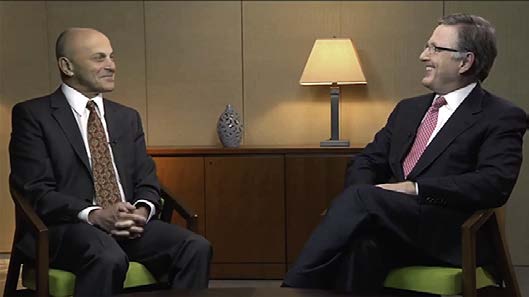
You have shared a beautiful story about your high school math teacher, Mrs. McReynolds, who believed in you when you had given up on yourself. How did that single moment shape your trajectory?
It is a story I told my children often while they were growing up, because it is a lesson in how a single setback can cloud your judgment. Up until the final exam in my senior year calculus class, I was actually excelling in her class. But I became seriously ill right when finals hit and did poorly on the test due to my illness, so I did not do well enough to earn college credit. Being a teenager, I overreacted to the disappointment. I dropped to a lower level math class and convinced myself that I simply wasn’t meant to take math ever again.
My first day in the new class, Mrs. McReynolds walked in. She had noticed I was gone, went to the office to find out where I was, and tracked me down. She told me how badly she felt and asked me to come back. This was a woman who went out of her way to do that for a student. I could not say no. And the short version is that I went on to take a great deal of math after that and earned top marks in every course. I had just had a bad day.
I told that story to my kids every time a result came back disappointing. That is life. You have a bad day. It does not define your capabilities.
Your philanthropic footprint runs from the University of Kansas to the Chicago Booth School of Business. When you decide to support an institution, what are you looking for?
Initially, it was about paying back the people and institutions that helped me. I grew up in modest circumstances, and through education I was able to build a good career. The University of Kansas and the University of Chicago gave me that foundation, and I wanted to give something back.
Now it is more about impact. What can I do that genuinely moves the needle? My gifts to Kansas have had a real effect, not just on the university but on my hometown and the surrounding region. My gift to the Chicago Booth School was really about ensuring it can remain at the very top of business education. I would rather give away my money while I am still around to see the impact, because I genuinely enjoy that. I get more out of it than I put in. It sounds a little corny, but it is true.
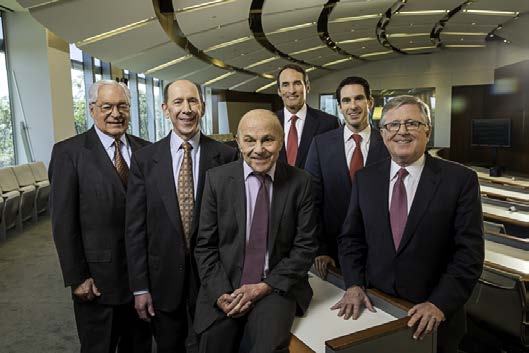
What is the legacy you most hope to leave behind?
Hopefully, more people who have a better understanding of how markets work, and who have arrived at investment solutions they can feel genuinely confident about. Not just financially secure, but safe, in the deeper personal sense. In your personal life, you want to feel that whatever happens, you are going to be okay. That is what we are trying to help people achieve with investing. If you can figure out how to make good decisions in life and in the market, you should be able to feel comfortable with the outcomes, even when those outcomes are not always what you hoped for. If you have done everything you can, that is all you can do.
For financial advisors using your book as a guide for anxious clients, what is the single biggest takeaway?
We organized Stay Calm into three parts, and the final section is really about true wealth. When you ask people what is genuinely important to them, money typically appears fairly far down the list, after family, friends, health, and purpose. My parents were wealthy. They just did not have much money. They had a great family, strong values, a life they were proud of. That was true wealth to them.
The biggest lesson is this: life is about maximizing true wealth, not maximizing your investment portfolio. If you concentrate too hard on the wrong thing, you sacrifice something more important. Keep your eye on the ball. What really matters to you? And then invest, in life and in the markets, in a way that reflects that priority, not the other way around.
How would you define true wealth, and how can readers ensure their money is actually supporting a life of purpose and freedom?
True wealth is something only you can define for yourself. My parents defined it as a good family, a reasonable standard of living, and the knowledge that they could get through life without taking on financial risk that might threaten the things they cared about. That was enough for them, and they were right to feel that way.
For me, true wealth has been the privilege of working alongside extraordinary people, academics and clients who have pushed my thinking and made me better at everything I do. I learned that lesson early. During my second year at Chicago, I went home for Christmas to my grandparents’ house in a small Kansas town. No indoor plumbing, linoleum floors, relatives crammed into every room, everyone bringing their favorite pie. And everyone was laughing and having a wonderful time. I was standing there completely stressed out over my research. My family was mainly farmers. And I looked around and thought: these people have figured something out that I have not. That is where I learned my lesson about true wealth.