A private gym in gym concept reflects a broader shift in fitness, where people want professional coaching and quality equipment without feeling as though they are exercising in front of an entire room of strangers.
For many people, the ideal workout is no longer about entering the biggest fitness facility in the neighborhood; it is about having enough space, attention, and structure to train effectively without unnecessary distractions.
That shift helps explain the growing interest in a private gym in gym environment, where personal training can feel more focused and individualized than a conventional open-floor workout.
Why Traditional Gym Experiences Do Not Work for Everyone
Walk into a busy commercial gym at 6 p.m. and the challenges are immediately obvious.
The squat racks may be occupied, someone could be waiting for the bench you are using, and the trainer working with you may have to adjust the session around whatever equipment happens to be available.
None of these problems necessarily make a large gym bad, but they can make personalized training harder to deliver.
Consider someone who has recently started strength training and is still learning proper squat mechanics.
They may need several attempts, detailed coaching, and time to understand how their hips, knees, and feet should move together.
In a crowded environment, that process can feel rushed or uncomfortable, especially when other members are waiting nearby.
A more private training environment changes the dynamic by giving the trainer greater control over the session and giving the client more room to learn.
Personal Training Is Moving Beyond Rep Counting
There was a time when hiring a personal trainer could mean receiving a workout plan, counting repetitions, and getting a little motivation between sets.
Modern personal training is becoming considerably more individualized.
A good trainer may consider training history, mobility, movement quality, strength levels, recovery, lifestyle, schedule, and specific fitness goals before deciding what belongs in a program.
Two clients who both say they want to “get stronger” could therefore receive completely different workouts.
One might be a 28-year-old office worker who sits for nine hours a day and wants to improve posture while building muscle.
Another might be a 52-year-old recreational tennis player who wants stronger legs, better rotational control, and enough mobility to move comfortably around the court.
The goal sounds similar on paper, but the path toward it is not.
Privacy Makes Individual Coaching Easier
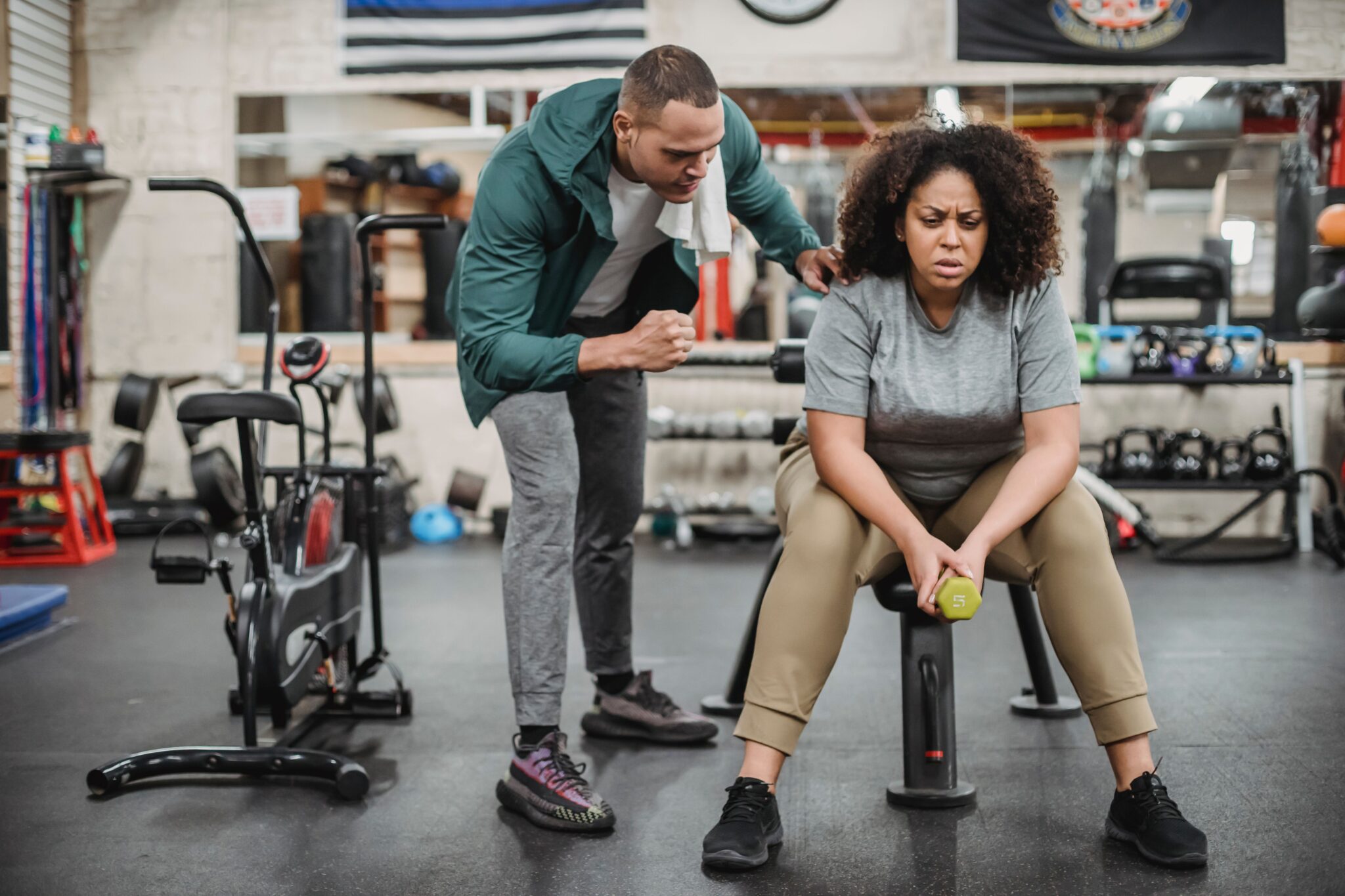
Personalization works best when a trainer can actually observe the person exercising.
Small details matter when assessing a deadlift, squat, lunge, overhead press, or even a seemingly simple plank.
A coach may notice that one knee consistently moves inward, the lower back takes over during an exercise, or fatigue causes technique to deteriorate after the eighth repetition.
These observations allow exercises, loads, repetitions, rest periods, and movement cues to be adjusted in real time.
A quieter personal training space can make that feedback easier to deliver because there are fewer competing distractions.
The client can also ask questions without feeling pressured to hurry through the workout.
The Psychological Side of Private Training
Fitness is physical, but the environment has a surprisingly strong influence on how comfortable someone feels while exercising.
Experienced gym-goers may barely notice a crowded weight room, but a beginner can experience the same room very differently.
Imagine someone learning Romanian deadlifts for the first time while several experienced lifters are training nearby.
Instead of concentrating on hip position and hamstring tension, that person may start wondering whether everyone is watching their technique.
Most people probably are not paying attention at all, but the feeling can still affect confidence.
A private or semi-private gym environment reduces some of that social pressure.
When people feel comfortable making mistakes, asking basic questions, and repeating movements until they understand them, training becomes a learning process rather than a performance.
Less Waiting Can Mean Better Programming
Equipment availability is another overlooked part of personalized fitness.
A carefully planned strength workout might call for squats followed by Romanian deadlifts, split squats, cable exercises, and loaded carries.
In a packed gym, the trainer may discover that the cable station is occupied and the squat rack has a queue.
The workout then becomes a series of compromises.
Having predictable access to equipment allows sessions to follow the intended program more closely.
This becomes particularly important when trainers are tracking progressive overload, managing rest periods, or pairing exercises for a specific training effect.
Personalization Starts With the Goal
Not everyone enters a gym because they want visible abs or bigger muscles.
Some clients want enough strength to carry groceries upstairs without discomfort.
Others are preparing for a hiking trip, returning to exercise after a long break, trying to improve athletic performance, or simply looking for a sustainable routine they can follow consistently.
That is why individualized fitness programs generally start with the person rather than the exercises.
A trainer working with someone who travels frequently, for example, might prioritize movements that can also be performed in a hotel gym.
Someone with only two available training days each week may benefit from full-body sessions instead of a traditional body-part split.
The best program is not necessarily the most complicated one; it is the one that fits the person’s goals, abilities, recovery, and real life.
Progress Can Be Measured More Precisely
Personal training also becomes more useful when progress is measured beyond the number on a scale.
Strength improvements, movement quality, exercise technique, mobility, endurance, training consistency, and recovery can all provide valuable information.
Suppose a client begins goblet squatting with 15 pounds while struggling to maintain control for eight repetitions.
Several weeks later, the same person may perform ten controlled repetitions with 30 pounds and noticeably better positioning.
Their body weight might barely change, yet their physical capacity has clearly improved.
Tracking those changes helps trainers make smarter decisions about when to increase resistance, modify an exercise, add volume, or spend more time developing technique.
Why One-on-One Attention Matters
A personalized training session creates an immediate feedback loop between the coach and client.
The trainer sees what happens, gives a cue, watches the next repetition, and changes the instruction if necessary.
Sometimes a small adjustment makes a substantial difference.
Telling someone to “keep your back straight” might not help them understand a deadlift, while asking them to push their hips toward the wall behind them could make the movement click immediately.
Individual coaching allows trainers to discover which cues actually work for each person.
It also makes it easier to recognize when someone is having an unusually difficult day.
Poor sleep, work stress, travel, or inadequate recovery can all affect performance, and a personalized session can be adjusted rather than forcing the client through a predetermined workout.
Private Training Does Not Have to Mean Intimidating Training
The word “private” can sometimes make a fitness service sound exclusive or designed only for advanced athletes.
In practice, beginners may be among the people who benefit most from a controlled training environment.
Someone entering a gym for the first time has dozens of questions that experienced exercisers barely think about anymore.
How high should the bench be?
How heavy should the first set feel?
How long should the rest period last?
Where should the feet be positioned?
A personal trainer can answer those questions as they arise while gradually helping the client become more independent.
Over time, exercises that once felt complicated become familiar, and the gym itself becomes less intimidating.
The Future of Personal Training Is More Individual
Fitness culture is gradually moving away from the assumption that everyone needs the same workout performed in the same type of gym.
Some people thrive in energetic group classes, while others enjoy large commercial gyms and prefer training independently.
Others perform better with structured coaching, fewer distractions, and greater privacy.
The growing popularity of personalized fitness reflects that diversity rather than replacing one training model with another.
A well-designed private gym in gym setting ultimately gives personal training room to become genuinely personal, with the workout shaped around the individual instead of forcing the individual to adapt to the room.
For clients who value focused coaching, predictable equipment access, privacy, and a program built around specific goals, that combination can make consistent training considerably easier to maintain.