Ask a room full of people what a successful cosmetic procedure looks like and most of them will describe a photograph. Something obvious, something you can hold up side by side and measure with your eyes. That instinct makes sense, because the industry has spent decades selling the reveal. It is also, for a lot of patients, the wrong yardstick entirely.
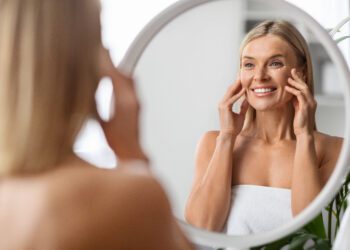
Consider a patient we will call Marta. She is forty-one, has two kids, and had slowly stopped recognizing herself in group photos. She did not want to look like anybody else. She wanted her clothes to sit the way they used to, and she wanted to stop running the same small commentary in her head every morning. When she described her ideal result at the first consultation, she never once used the word dramatic. Eight months later her closest friends knew something had changed but could not name it, and she counted that as the whole point.
That gap between the transformation people expect and the one that actually satisfies them is where the most interesting thinking in aesthetic medicine now sits. Good outcomes are quieter than the advertising suggests, harder to photograph, and far more personal. They also depend on decisions made long before anyone books an operating room.
Success Starts With a Specific Goal
The patients who finish happiest usually walk in with a precise complaint rather than a general mood. There is a real difference between wanting to feel better about yourself and wanting to stop tugging at a neckline. The first is a life project, and no surgeon can deliver it. The second is a problem with edges, which means it can be measured, planned for, and either solved or honestly ruled out.
Careful consultations spend more time on motive than on technique, and the good ones can feel almost intrusive. Why now, what changed, who suggested it, what happens if the result turns out subtle. NHS guidance on cosmetic procedures leans hard on that kind of self-questioning before anything else, and for good reason, because motivation is the single best predictor of whether someone is pleased a year out.
The Quiet Power of Proportion
Proportion is the reason two patients can receive nearly identical procedures and walk away with completely different levels of satisfaction. Frame, height, shoulder width, torso length, and existing asymmetry all shape what reads as natural on one body and off on another. Anyone who spends an evening scrolling galleries of breast augmentation before and after images starts to notice it, because the results that hold up are the ones that look like they belong to the person wearing them.
The Aesthetic Society frames breast augmentation around fit rather than size, describing candidates who feel their breasts are not proportionate to the rest of their figure. That framing matters more than it looks. A number borrowed from a magazine is a wish, while a plan built around your own anatomy is a design brief, and only one of those survives contact with real tissue.
Recovery Belongs to the Result
Nobody sells the middle part, but the middle part is where satisfaction is usually won or lost. Swelling distorts everything for weeks, implants settle over months, scars pass through an ugly adolescent phase before they fade, and the person studying the mirror on day nine is rarely a reliable judge of anything. Patients who know this in advance ride it out. Patients who do not tend to panic, and panic produces bad decisions.
Following aftercare instructions sounds obvious until you are three weeks in, feeling fine, and tempted to get back to the gym. Compression, sleep position, sun exposure, and activity limits all shape the final contour more than people expect. That boring compliance work does nearly as much for the outcome as the operating time does.
A Surgeon Who Is Willing to Say No
The best signal in a consultation is not enthusiasm. It is willingness to push back, to explain why the thing you asked for would not suit you, or to propose something smaller than what you came in requesting. A surgeon who agrees with everything is either an unusually good match or not paying attention, and the odds do not favor the first reading.
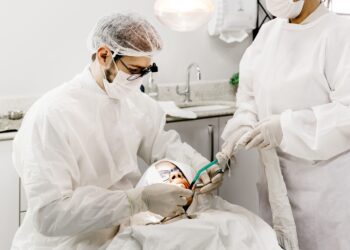
Credentials handle the rest. The American Academy of Dermatology’s guidance on cosmetic treatment safety makes the point every reputable body makes: verify certification, ask where the procedure will be performed, and ask who manages complications when they occur. Treat the decision the way you would treat any other serious investment in your physical wellbeing, with a little skepticism and a lot of homework.
Marta’s photos, for the record, are unremarkable. Side by side they show a modest change that a stranger would struggle to describe. What they cannot show is that she stopped rearranging herself in front of the mirror, or that she now wears whatever she wants without a second thought.
That is the honest measure. A successful aesthetic transformation is not the largest possible change, and it is certainly not the most visible one. It is the change that closes the specific gap a person walked in with, delivered safely, in proportions their own body can carry.
Everything else is theater. The reveal makes for good content and fairly poor medicine, and the patients still happy three years later almost never chased it. They asked for something particular, they were told the truth about what was possible, and they got it.