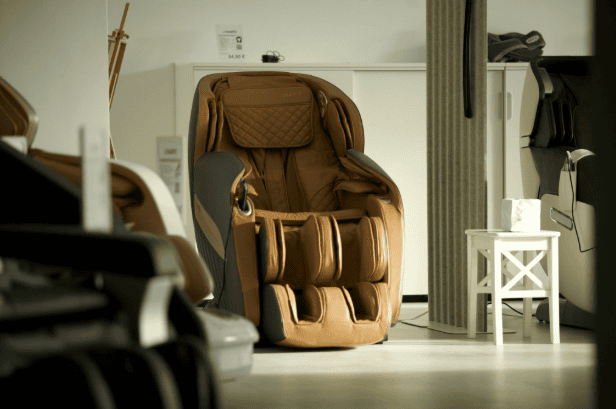
A massage chair is one of the few household purchases where the price range spans a small car. You can spend under $3,000 or comfortably over $20,000, and the difference is not obvious from a photograph.
That gap confuses most buyers into either overspending on features they will never use or buying cheap and replacing it in two years. Understanding what the money actually buys is the whole exercise.
Key Takeaways
- Price differences come down to roller technology, body scanning, and build quality rather than badge value.
- Entry-level chairs suit occasional relaxation, while premium models target genuine therapeutic use.
- You cannot judge a massage chair from a spec sheet, so sitting in one is essential.
- Running costs are modest, sitting around the same as a few household lights.
- A well-made chair should last a decade or more with proper care.
- Some health conditions warrant medical advice before regular use.
Why This Is a Try-Before-You-Buy Purchase
Massage intensity is subjective in a way that few products are. A chair one person calls firm and therapeutic will feel painful to somebody else, and no amount of online research resolves that.
Body dimensions matter just as much. Roller tracks are built around a height range, so a chair that fits a 190cm frame may leave a 155cm user with the neck rollers hitting their shoulders.
What Actually Changes With Price
Entry Level
At the lower end, you get genuine massage function without the sophistication. Expect fixed programmes, simpler roller mechanisms and less precise positioning, which is perfectly adequate for winding down after work.
Compact models sit here too, which matters if space is the constraint. A smaller footprint often costs less because there is simply less mechanism inside it.
Mid Range
The middle of the market is where body scanning and more capable roller systems appear. Chairs in this band typically add stretching functions, better heat integration, and considerably more control over intensity and position.
This is the value sweet spot for most households. You get most of the therapeutic capability without paying for the engineering that separates the top two brackets.
Premium
At the top, the differences are engineering rather than features. Advanced 5D AI systems adjust in real time, roller paths are longer and more precise, and the chairs reproduce techniques a skilled masseur would use rather than approximating them.
Build quality is the other justification. Premium frames, upholstery, and motors are what allow a chair to survive daily use for a decade instead of a few years.
The Features Worth Understanding
Body scanning is the one that changes the experience most. The chair maps your spine and shoulder position, then adjusts the roller path to your body rather than running a generic track.
Neck traction and stretch programmes are the next tier of value. These target the areas most desk workers actually need help with, and cheaper chairs frequently omit them entirely.
Wall-hugging design deserves a mention because it solves the objection most buyers raise. Rather than a metre of clearance behind the chair, a wall-hugging model slides forward as it reclines and sits far closer to the wall than people expect.
Where to Try Them Near Brisbane
Anyone comparing massage chairs Brisbane wide will find the showroom situation is worth planning around.
Relax For Life runs its Queensland showroom at Broadwater Plaza, Hope Island, which the company describes as 45 minutes or less from Brisbane.
That is a Gold Coast address rather than a Brisbane one, so factor the drive in. The trade-off is that a single visit lets you sit in chairs from several brands under one roof, which is far more useful than visiting three separate retailers.
The Hope Island showroom opens Tuesday to Saturday, 10 am to 4 pm, and VIP appointments can be booked in advance.
Brands on display include Fujiiryoki, OHCO, Positive Posture, Synca Wellness and Inada, with Relax For Life holding the exclusive Australian agency for Fujiiryoki.
Allow real time when you go. Ten minutes in a chair tells you almost nothing, while twenty minutes in each of three chairs tells you which one your body actually prefers.
Running Costs and Lifespan
The question of electricity comes up constantly, and the answer is reassuring. A massage chair draws roughly 150 to 250 watts in use, which is comparable to running a few lights.
Lifespan is the more meaningful number. A quality chair should last upwards of ten years with proper care, which reframes the purchase as a long-term cost rather than a one-off expense.
That maths changes how you think about the entry level. A cheap chair replaced twice in a decade may cost more than a mid-range model bought once.

Who Should Check With a Doctor First
This deserves stating plainly rather than buried in fine print. Relax For Life advises seeking medical advice if you are pregnant, have recently had surgery, or have specific muscular, skeletal, or heart conditions and devices.
The reasoning differs by situation. Massage increases blood flow, which is a concern during pregnancy, while post-surgical use depends entirely on the procedure and can interfere with healing.
Anyone with an implanted cardiac device should treat this as non-negotiable. A short conversation with your GP before purchase is far cheaper than discovering a problem afterwards.
Conclusion
The right massage chair is the one that fits your body and the use you will actually give it. Occasional evening relaxation does not justify premium engineering, while daily therapeutic use makes cheap rollers a false economy.
Whatever your budget, the decision belongs in a showroom rather than a browser. Sit in several, take your time, and let the chair that suits your frame make the argument for itself.
Frequently Asked Questions
How much should I spend on a massage chair?
Entry-level models start under $3,000 while premium chairs run past $20,000. Most buyers find the mid-range delivers the best balance, though the honest answer depends on whether you want relaxation or genuine therapeutic use.
Is a massage chair worth the money?
It depends on how often you would use it and what you currently spend on alternatives. If regular remedial massage or ongoing treatment for muscle tension is already part of your budget, the arithmetic tends to work out.
How much does it cost to run?
Around 150 to 250 watts while operating, which is similar to a few household lights. It is not a meaningful addition to a power bill.
How long do massage chairs last?
With proper care, upwards of ten years. Lifespan depends on build quality, maintenance and how heavily the chair is used.
Can I use one every day?
Generally yes, provided you listen to your body and avoid overdoing it. Frequency should suit your health situation and lifestyle rather than follow a fixed rule.
Do they take up a lot of space?
Less than most people expect, particularly wall-hugging models that slide forward as they recline. Compact models are also available if floor space is genuinely tight.
Are there people who should avoid them?
Yes. Pregnancy, recent surgery and certain muscular, skeletal or cardiac conditions all warrant medical advice first, so speak to your doctor before buying if any of those apply to you.