A laser cutter can turn a digital file into a sellable product or bring outsourced work back in-house, and both of those capabilities sound appealing to a growing small business. Neither one automatically makes the machine a good investment. The useful question isn’t what the equipment costs. It’s how much additional economic value that equipment can realistically generate once material, labor, operating expenses, and financing are all accounted for — not just how much it could theoretically produce on a good day.
“Pays for Itself” Needs a Clear Definition
Revenue and profit get conflated constantly in this conversation, and it’s worth stopping that here. If a laser cutter helps a business book $5,000 in new monthly sales, that $5,000 has not paid for anything yet. Materials, packaging, shipping, marketplace or payment processing fees, labor, and machine operating costs all come out of that figure before anything is left to apply toward the equipment. A laser cutter “pays for itself” when the incremental economic benefit attributable to owning it — not gross sales, but what’s actually left after the costs that benefit created — recovers the full cost of acquiring and running the machine.
Start With the Full Investment, Not the Sticker Price
The laser cutter price quoted on a product page is rarely the whole number. Depending on the machine and how it will be used, the real initial investment can also include shipping and freight, ventilation or fume extraction, a water chiller for certain machine types, software, a rotary attachment if the business plans to engrave cylindrical items, workspace modifications or electrical upgrades, safety provisions, and an initial stock of material to work with. Not every machine needs every item on that list, but treating the sticker price as the total cost is one of the most common ways this kind of investment decision goes wrong before the math even starts.
Owner experience reinforces the point. One 50W OMTech owner who described the machine as a genuinely productive part of the business also pointed specifically to exhaust improvements, air assist, and a proper water chiller as additional equipment considerations beyond the machine itself. Those costs vary by machine and workspace, so there’s no fixed number to budget around, but they illustrate the broader financial point: a realistic budget needs to cover what it actually takes to operate the equipment properly, not just the figure shown on the product page.
Calculate What the Machine Actually Adds to the Business
Only two kinds of value should get credited to the equipment: new contribution margin from sales that genuinely required the machine to fulfill, and outsourcing costs avoided by bringing existing work in-house. Sales the business would have made anyway, through channels or products that don’t depend on the new equipment, don’t belong in this calculation — crediting them to the laser cutter overstates its actual contribution.
Contribution margin is simply what’s left from incremental sales after the variable costs tied directly to producing and delivering them — material, packaging, marketplace or payment fees, consumables, and any labor added specifically because of that order. It’s not the same as net profit, which also has to absorb fixed costs and overhead. But contribution margin is the right number for this specific question, because it represents cash that’s actually available to go toward paying back the equipment.
A Simple Payback Framework
A basic planning calculation looks like this:
Total Initial Investment ÷ Average Monthly Incremental Cash Benefit = Approximate Payback Period
Total initial investment is the full list from the section above, not just the machine price. Average monthly incremental cash benefit is contribution margin from genuinely new sales, plus any outsourcing cost avoided, minus the added operating expenses, maintenance, labor, and financing cost that come with owning the equipment. This is a simplified planning tool, not a precise financial model — real months will vary — and there’s no universal payback period that applies across businesses, because sales volume, margins, machine cost, labor, and utilization all differ too much from one shop to the next.
Real examples illustrate the range rather than a fixed number. One independent OMTech owner described starting with a 50W CO2 machine that, in their experience, recovered its purchase cost in roughly nine months; rather than immediately buying more capacity, they kept that first machine working until it generated enough income to help fund a larger 60W system. OMTech’s published story about Jeremy Klein of Hub City Woodworks follows a similar sequence: Klein bought a 50W laser in June 2023, said it had recovered its cost by that Christmas while also opening up new work like acrylic cutting, and moved to a larger 100W system the following January once order volume justified it. Neither payback period should be treated as a benchmark — another business could take considerably longer or never get there. What both examples share is the sequence: demand proved the value of the first machine before additional capital went into an upgrade, rather than the upgrade coming first.
Utilization Can Matter More Than Maximum Speed
A fast, expensive machine that runs a few hours a week produces a worse return than a slower, less expensive one that stays busy with profitable work. Order frequency, seasonal demand swings, product mix, and whatever else is creating a bottleneck in the business all determine how much of the machine’s capacity actually turns into revenue. Buying more capacity than the business can currently put to use doesn’t make the equipment a bad tool — it just means the payback calculation should reflect real, expected utilization rather than the machine’s theoretical maximum output.
It’s also worth asking directly whether the machine is solving an existing production constraint or whether the equipment itself is expected to create demand that doesn’t exist yet. A laser cutter can enable new products, but it doesn’t generate customers on its own. Marketing and distribution remain separate problems that equipment purchases don’t solve.
What Makes the Best Laser Cutter for a Small Business?
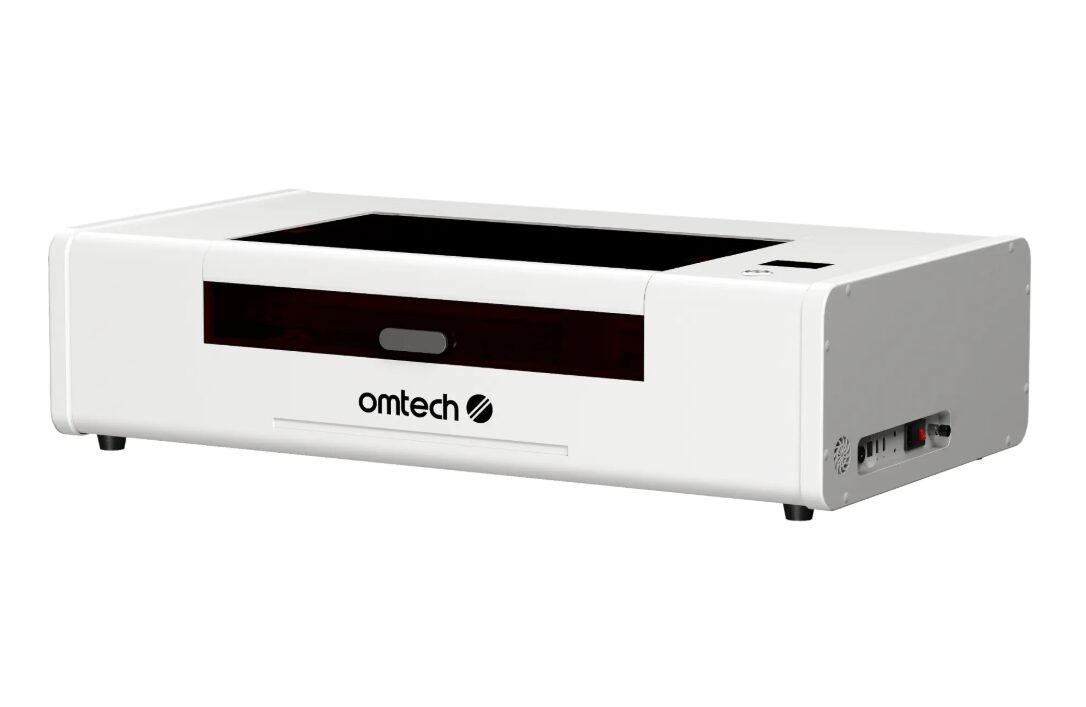
There’s no single machine that qualifies as the best laser cutter for every small business, because the right answer depends on what the business actually makes. The financially sound choice is one that handles the materials the business actually works with, supports the workpiece sizes those products require, provides enough capacity without sitting mostly idle, fits the available workspace and electrical infrastructure, and comes with support suited to an owner who may not have an in-house technician. When comparing laser equipment for small businesses, starting with material, working area, and realistic production volume gets a business further than comparing headline wattage or purchase price across machines that were never built to do the same job.
Machine category matters here too. A business working primarily in wood, acrylic, leather, or similar non-metal materials is generally looking at CO2 equipment, such as the CO2 systems OMTech sells for that category — a different equipment class from fiber-based machines built for direct metal marking or industrial metal cutting. Matching the machine type to what the business actually produces matters more than any single spec on a comparison chart.
Cash Purchase, Financing, or Lease?
How the equipment gets paid for changes the economics as much as the equipment itself. A cash purchase avoids interest and fees entirely but reduces the business’s available liquidity at the moment of purchase — cash that’s tied up in a machine isn’t available for payroll, inventory, or an unexpected expense. Equipment financing preserves more cash up front but adds interest, fees, and a recurring monthly obligation regardless of how the machine performs that month. Leasing works differently depending on the specific terms and how long the business expects to keep the equipment relevant. None of these is automatically the right choice — the decision depends on the business’s existing cash position, its access to credit, and how confident it is in the demand behind the purchase.
What About Taxes and Depreciation?
Equipment purchases can carry favorable tax treatment, and Section 179 of the U.S. tax code currently allows many businesses to deduct the full cost of qualifying equipment in the year it’s placed into service, up to limits that are adjusted annually for inflation and sit well above what a small business laser cutter purchase would cost. Eligibility depends on the business’s specific tax situation, its total qualifying purchases for the year, and current IRS rules, so this is a conversation for a qualified tax professional, not a blog article. The more important point for this decision is that a tax deduction reduces the after-tax cost of a purchase — it does not turn an otherwise uneconomic purchase into a good one. A business that doesn’t need the equipment shouldn’t buy it just because part of the cost is deductible.
When Buying a Laser Cutter May Not Make Sense
Plenty of businesses are better off waiting. Demand that’s too thin or too seasonal to keep a machine reasonably busy rarely justifies the investment. If an outside vendor can still produce the work more cheaply than the business could produce it in-house once labor and overhead are counted, outsourcing remains the better financial choice for now. A lack of appropriate workspace, an owner who genuinely doesn’t have the time to run and maintain a new piece of equipment, financing that would strain monthly cash flow, or products with margins too thin to generate meaningful contribution are all legitimate reasons to hold off. And if the business’s real bottleneck is finding customers rather than fulfilling orders, a laser cutter addresses the wrong problem entirely.
Five Questions to Answer Before Investing
Before committing capital, it helps to answer five questions directly: What recurring demand already exists for work this machine would produce? What is the true initial investment, including everything beyond the machine itself? What contribution does each additional order actually generate after variable costs? How many productive machine hours does the business realistically need each month, based on real demand rather than best-case projections? And can the business fund the purchase without weakening its working capital or its ability to cover payroll, rent, and other fixed obligations?
Payback Is Useful, but It Is Not the Whole Investment Decision
A payback calculation is a useful filter, but it doesn’t capture everything that matters. It says little about cash flows after the payback period, the risk that demand comes in below forecast, the equipment’s resale value if the business’s needs change, or the value of the flexibility a new capability adds to the business. A laser engraving business, like any small manufacturing operation, still depends on customers, differentiated products, pricing, and consistent execution — the machine is productive capacity, not a business model by itself. For a small business, a sound equipment investment is one that improves how the business operates without weakening its financial footing in the process.