The Complete Guide to Comparing Luxury Watch Options
Why Luxury Watches Matter Beyond Timekeeping
Luxury watches are high-end timepieces valued for exceptional craftsmanship, mechanical engineering, heritage, rare materials, and lasting design. The right watch can be a daily tool, a personal statement, a family heirloom, and, for selected references, a collectible asset with meaningful resale demand.
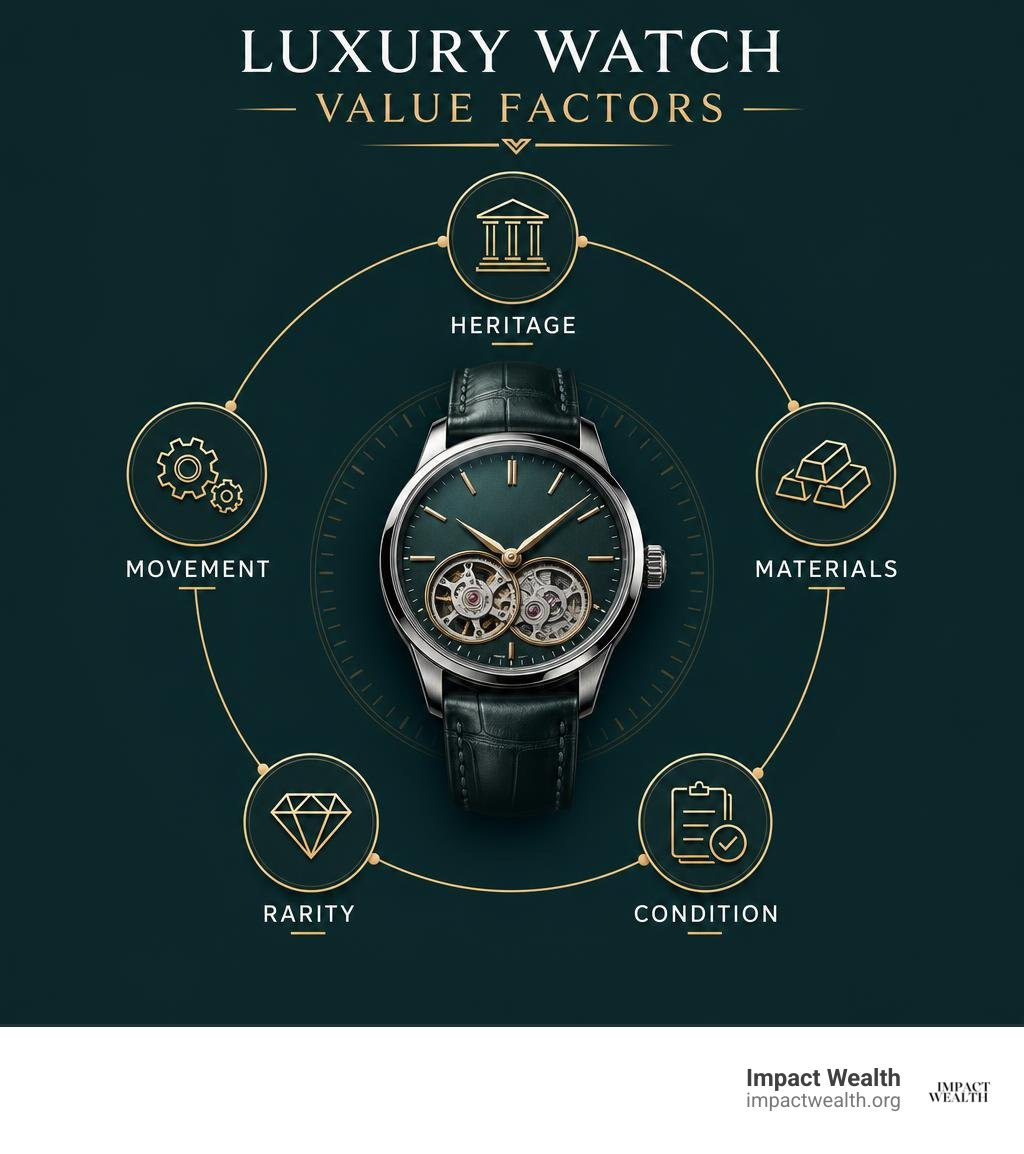
At a glance, compare luxury watches on these core factors:
| Factor | Why it matters |
|---|---|
| Brand heritage | Established maisons often carry stronger collector trust and global recognition. |
| Movement | Mechanical calibers showcase watchmaking skill; quartz offers excellent accuracy and low upkeep. |
| Materials | Steel, gold, platinum, titanium, gemstones, and hand-finished dials affect feel, rarity, and price. |
| Model availability | Limited production and long retail waitlists can push secondary-market prices far above list price. |
| Condition and provenance | Original box, papers, service history, and unaltered parts matter for confidence and resale. |
The market is not uniform. Some sought-after steel sports watches trade at steep premiums when demand outpaces supply, while many outstanding chronographs, dress watches, dive watches, and independent creations remain more readily available. That gap makes comparison essential, especially when capital preservation, personal enjoyment, and collection strategy all matter.
This guide explains how to assess the brands, movements, materials, categories, and market forces behind fine watch value – so each purchase fits both your wrist and your wider wealth plan.
What Defines Luxury Watches and Horological Value?

When we look beyond standard timekeeping, luxury watches exist at the intersection of micro-engineering and high art. A mass-market watch primarily tells time, whereas horological timepieces serve as enduring symbols of status, mechanical artistry, and historic heritage. True luxury status stems from strict standards of production, proprietary in-house calibers, hand-executed finishing, and decades—if not centuries—of brand prestige.
Key Elements of Craftsmanship and Heritage
The heart of fine watchmaking, or haute horlogerie, lies in artisanal details hidden from casual view. High-tier manufactures devote hundreds of hours to microscopic finishing techniques, including Côtes de Genève (Geneva stripes), hand-chamfered anglage edges, and mirror polishing on delicate movement components. Independent certifications, such as the prestigious Geneva Seal (Poinçon de Genève), enforce rigorous aesthetic and structural standards, ensuring every bridge, wheel, and screw head is finished impeccably by hand.
Beyond finishing, value is built upon high complications—intricate functions such as perpetual calendars, split-seconds chronographs, minute repeaters, and multi-axis tourbillons. Combining these mechanical feats with precious metals like 18 ct gold, platinum, and hand-selected gemstones transforms a simple tool into an extraordinary piece of wearable art.
Evaluating Quartz vs. Mechanical Movement Types
Understanding watch movements is foundational when curating a collection. Mechanical timepieces operate purely through stored kinetic energy, whereas battery-powered quartz movements rely on electrical oscillations through a quartz crystal.
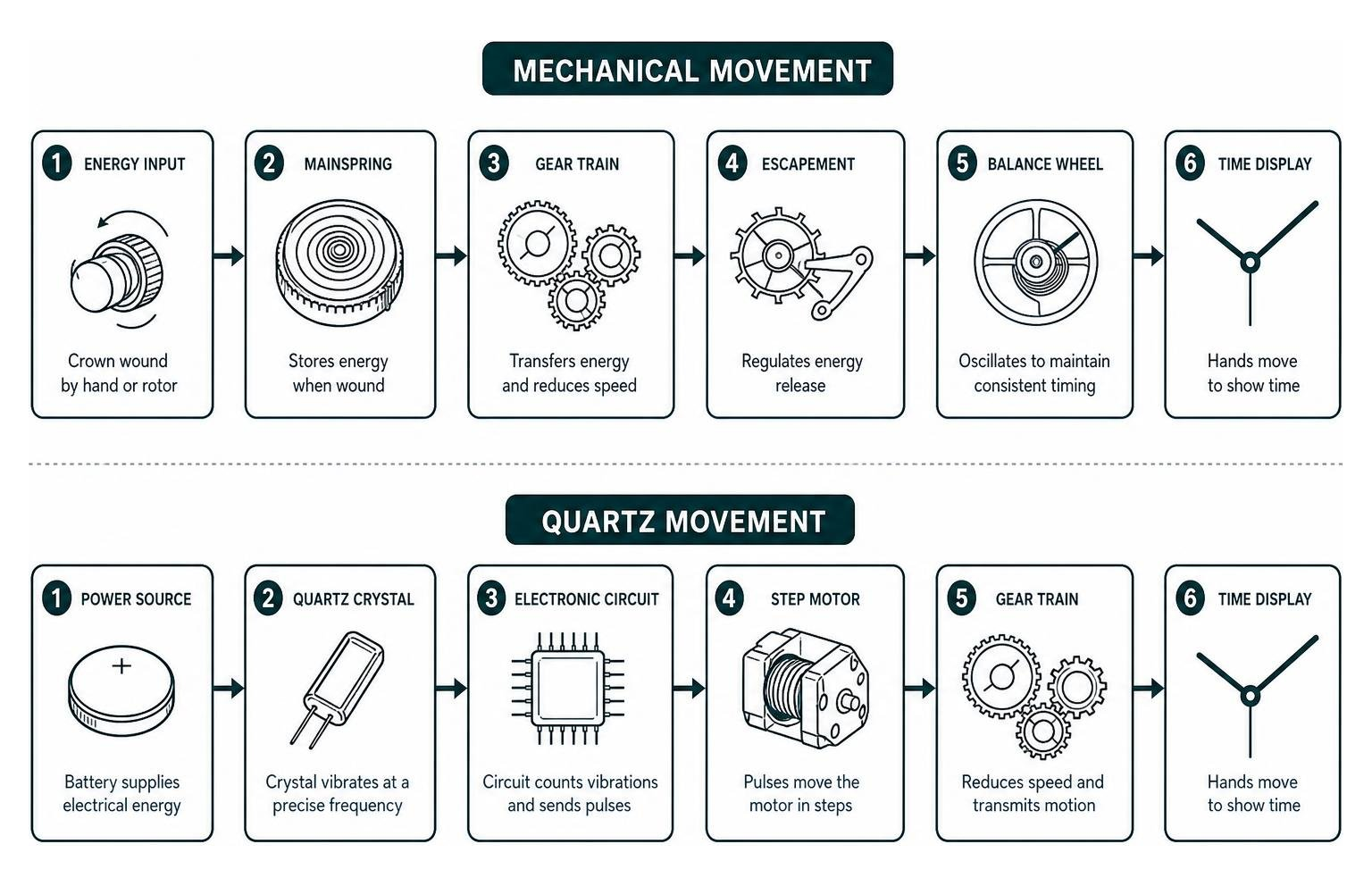
- Manual Mechanical Movements: These classic movements require hand-winding via the crown to tension an internal mainspring. As the mainspring uncoils, energy releases through an escapement to turn the gears. They are celebrated for providing an intimate, tactile connection between owner and watch.
- Automatic Mechanical Movements: Designed for modern convenience, automatic movements feature an integrated weighted rotor. As you move your arm throughout the day, the rotor spins on its pivot, continuously winding the mainspring automatically.
- Quartz Movements: Introduced in the late 1960s, quartz calibers offer remarkable, low-maintenance accuracy. While prized for precise utility, they generally lack the complex internal gears and traditional hand-craftsmanship that mechanical purists seek in fine mens luxury jewelry.
Iconic Brands and Heritage Houses in Fine Watchmaking
In Swiss watchmaking, brand narrative and manufacturing legacy dictate long-term value retention. Established maisons maintain strict production controls and historic archives, protecting the intrinsic value of their timepieces across generations.
The Holy Trinity and Top Tier Manufactures
For decades, collectors have recognized a sacred triad at the pinnacle of traditional horology—known as “The Holy Trinity” of watchmaking:
- Patek Philippe: Founded in 1839, Patek Philippe represents the gold standard of mechanical mastery and family heritage. Famous for timeless dress lines like the Calatrava and high-demand icons like the Nautilus, owning a Patek Philippe is often viewed as stewarding an heirloom for future generations.
- Audemars Piguet: Celebrated for introducing the iconic Royal Oak in 1972—conceived by legendary designer Gérald Genta—Audemars Piguet disrupted the industry by launching the world’s first luxury steel sports watch with an integrated bracelet and avant-garde octagonal bezel.
- Vacheron Constantin: In continuous operation since 1755, Vacheron Constantin combines classic elegance with modern versatility, demonstrated by its acclaimed Overseas collection featuring tool-free interchangeable bracelet systems.
Industry Standard-Bearers of Precision and Elegance
Parallel to the Holy Trinity are industry giants that define luxury precision and global style:
- Rolex: The undisputed titan of global watch culture, renowned for indestructible case architecture, timeless appeal, and unmatched brand equity. From executive staples like the Rolex Day-Date 36 watch: 18 ct Everose gold to professional tool watches, Rolex defines status across every continent.
- Omega: Famous for its space-faring Speedmaster Moonwatch—tested and certified by NASA—and deep-sea Seamaster divers, Omega combines historic exploration with cutting-edge anti-magnetic Co-Axial calibers.
- Cartier: The master of shaped timepieces. With classic silhouettes like the rectangular Tank and the square Santos de Cartier, Cartier bridges haute joaillerie with horological distinction.
- Zenith & TAG Heuer: Historical leaders in precision timing, with Zenith celebrated for its high-frequency El Primero automatic chronograph caliber.
Watch Categories: Matching Style, Function, and Purpose
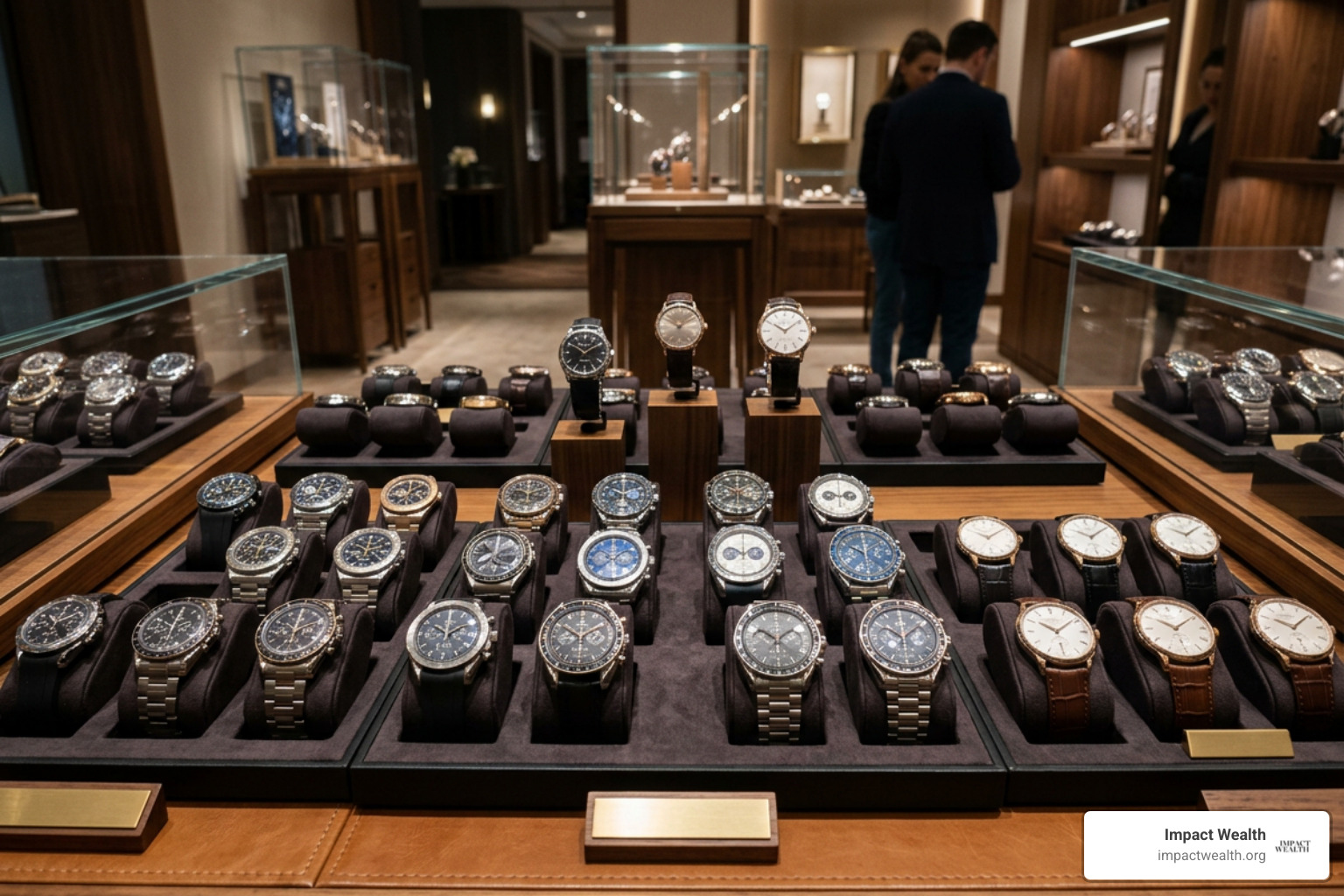
Selecting the right watch requires aligning its functional design and wrist presence with your lifestyle requirements and wardrobe.
Key Features of Sports, Diver, and Chronograph Models
Sports timepieces are engineered for physical performance, aquatic activity, and timing capabilities without compromising luxury aesthetic standards:
- Dive Watches: Defined by robust water resistance ratings (typically 200m to 300m+), high-contrast luminescent hands, and unidirectional rotating bezels to track elapsed dive times securely under water.
- Chronograph Watches: Feature built-in stopwatch functions operated via side pushers, complemented by sub-dials and a tachymeter scale printed on the bezel to calculate speed over distance.
- Sports-Luxe Design: Models featuring scratch-resistant ceramic bezels, screw-down crowns, and integrated metal bracelets effortlessly transition from active leisure to executive boardrooms.
The Art of the Classic Dress Watch
In contrast to bold sports models, dress watches prioritize understated refinement, slim wrist profiles, and minimalist elegance. Encased in precious metals like yellow, rose, or white gold, a traditional dress watch glides effortlessly beneath a tailored shirt cuff.
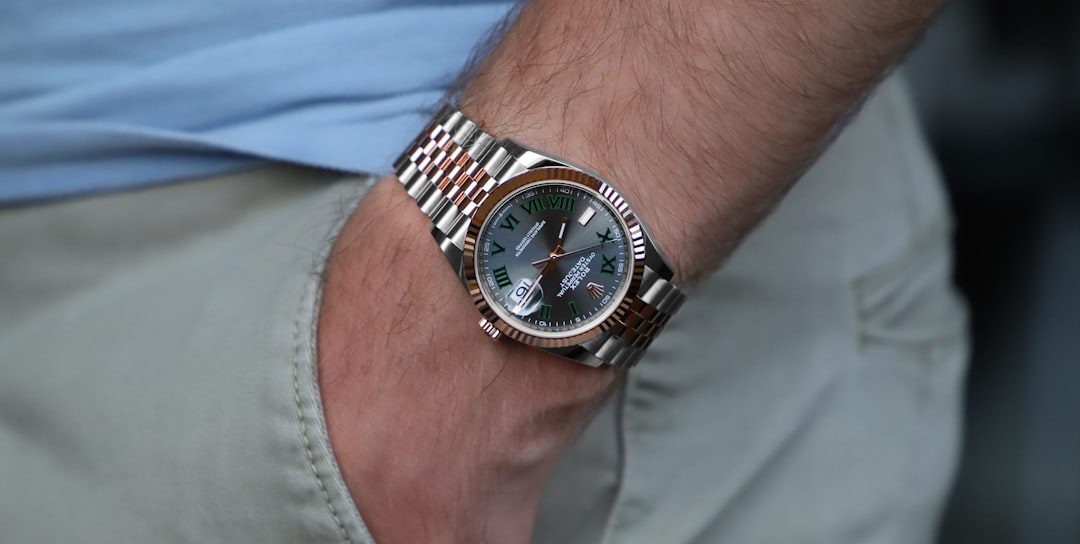
Dials often showcase artistic finishing techniques such as sunray brushing—where microscopic radial grooves diffuse light across the watch face—or mother-of-pearl accents. Elegant models styled for women, highlighting dynamic wrist presence like a classic femme a la montre aesthetic or an intricate Rolex Lady-Datejust watch: Oystersteel and Everose gold, feature signature two-tone metals and diamond settings that capture light from every angle.
Navigating Market Trends, Scarcity, and Valuation
The luxury watch landscape is marked by a clear divide between primary retail list prices (MSRP) and secondary market trading values. Extreme demand, limited boutique output, and speculative buying have created secondary market premiums on specific steel sports references.
| Model / Reference | Official Retail Price (MSRP) | Secondary Market Value | Market Trend Insight |
|---|---|---|---|
| Rolex Cosmograph Daytona | ~£10,500 | £30,000+ | Trades over 180% above retail due to long retail waiting lists. |
| Rolex Submariner ‘Starbucks’ | ~£7,650 | ~£15,500 | High demand for signature green bezel drives roughly 100% markup. |
| Patek Philippe Nautilus ‘Jumbo’ | ~£26,870 | £100,000+ | Discontinued status pushed secondary values up dramatically over 60% in a single year. |
| Vacheron Constantin Overseas | ~£19,100 | ~£35,000 | Strong appreciation backed by interchangeable strap versatility. |
| Tissot PRX Powermatic 80 | ~£565 | ~£565 | Exceptional, highly accessible entry-point for integrated steel design. |
Secondary Market Dynamics for Rolex and Patek Philippe
When supply chain constraints and conservative production limits meet explosive global demand, secondary market premiums inevitably follow. Icon references like the Rolex Submariner and Daytona, along with Patek Philippe’s Nautilus and Aquanaut series, are virtually impossible to purchase instantly at boutique list prices without established client history.
This supply shortage has fueled an active pre-owned trading ecosystem. High-net-worth buyers frequently decide whether to spend years on authorized retail waitlists or pay market-clearing secondary premiums for immediate acquisition.
Exploring Alternative Luxury Watches for High-Demand Markets
For collectors who prefer to avoid hyper-inflated secondary markups, several top-tier alternatives deliver equal horological pedigree and finishing:
- Zenith Chronomaster Sport: Powered by the legendary 1/10th of a second El Primero high-frequency movement, offering incredible historic ties to vintage chronograph heritage.
- Czapek & Cie Antarctique: A standout independent alternative featuring exquisite micro-rotor automatic finishing and a striking integrated bracelet design.
- Certified Pre-Owned Programs: Purchasing authenticated Certified Pre-Owned Luxury Watches provides verified peace of mind, full transparency, and original manufacturer warranty protection across historical collections.
Buyer’s Decision Matrix: Selecting the Right Timepiece
A disciplined approach prevents emotional impulse buying, ensuring your timepiece serves your personal aesthetic and financial goals.
Case Sizing, Materials, and Metallurgy Considerations
Watch case proportions dramatically alter visual weight and daily wearing comfort. Choosing the right size relies on wrist circumference and personal preference:
- Small (<31mm): Elegant, subtle, and discreet profiles typical of vintage sizing or classic women’s jewelry pieces.
- Medium (31mm to 39mm): The classical sweet spot for universal comfort, dress elegance, and balanced wrist presence.
- Large (>39mm): Bold, sporty silhouettes designed for maximum visual impact and functional legibility.
Material choice plays an equally crucial role in valuation:
- Oystersteel: Delivers exceptional corrosion resistance and utilitarian durability for daily wear.
- Rolesor (Steel & Gold): Rolex’s trademarked bi-metal combination balances the structural strength of steel with the luster of 18 ct gold.
- Titanium & Platinum: Grade 5 titanium offers ultra-lightweight ergonomics and high scratch resistance, while solid platinum provides substantial heft and executive exclusivity.
Selecting Luxury Watches Based on Budget and Resale Value
When evaluating a timepiece as a store of value, verifying provenance is critical. Always prioritize complete sets featuring original inner/outer boxes, guarantee papers or warranty cards, and verified service records.
Collectors must stay vigilant regarding authenticity. Relying exclusively on verified platforms or authorized dealers helps buyers avoid counterfeit risks, avoiding unvetted third parties or questionable sources associated with trusted replica watch sellers. Securing original documentation preserves secondary market liquidity and protects long-term value retention.
Frequently Asked Questions About Luxury Watches
What is the main difference between mechanical and quartz luxury watch movements?
Mechanical movements derive power from a wound internal mainspring, regulating time through an intricate gear train and mechanical escapement. Automatic mechanical versions wind themselves via a spinning weighted rotor driven by natural wrist motion. Quartz movements are powered by an electrical battery that sends current through a synthetic quartz crystal, offering exceptional timekeeping accuracy and low maintenance, but lacking the traditional mechanical artistry valued by serious horological collectors.
Why do secondary market prices exceed official retail prices for certain models?
Secondary market prices spike when global consumer demand vastly outstrips factory production capacity. Major houses like Rolex and Patek Philippe deliberately maintain strict, hand-crafted production volumes to preserve craftsmanship standards and long-term exclusivity. Because retail waiting lists at authorized dealers can stretch across several years, buyers in the secondary market are often willing to pay significant financial markups to acquire coveted steel sports models immediately.
How do case dimensions and materials influence watch value and wearability?
Case dimensions dictate physical wearability and visual balance on the wrist; medium sizes (31–39mm) offer versatile comfort, while larger cases (>39mm) project a commanding sports presence. Materials dictate both physical durability and intrinsic valuation. High-grade stainless steel and titanium provide lightweight resistance against daily wear, whereas 18 ct gold, platinum, and gem-set bezels add intrinsic material value, visual prestige, and long-term collector appeal.
Conclusion: Building Your Collection of Fine Timepieces
At Impact Wealth, we view haute horlogerie as far more than personal adornment. A curated watch collection bridges historical narrative, mechanical mastery, personal identity, and strategic wealth preservation.
Whether your passion draws you toward iconic Swiss standard-bearers, rare vintage references, or innovative independent watchmakers, evaluating timepieces through a balanced lens of movement engineering, material quality, brand heritage, and secondary market liquidity ensures every addition brings lasting satisfaction to your portfolio. Explore our Exclusive Luxury Lifestyle Guidance for further expert commentary on collecting fine assets, global market insights, and wealth preservation strategies.