The Ultimate Guide to the Best Quality Watch Brands
How to Identify the Best Quality Watches
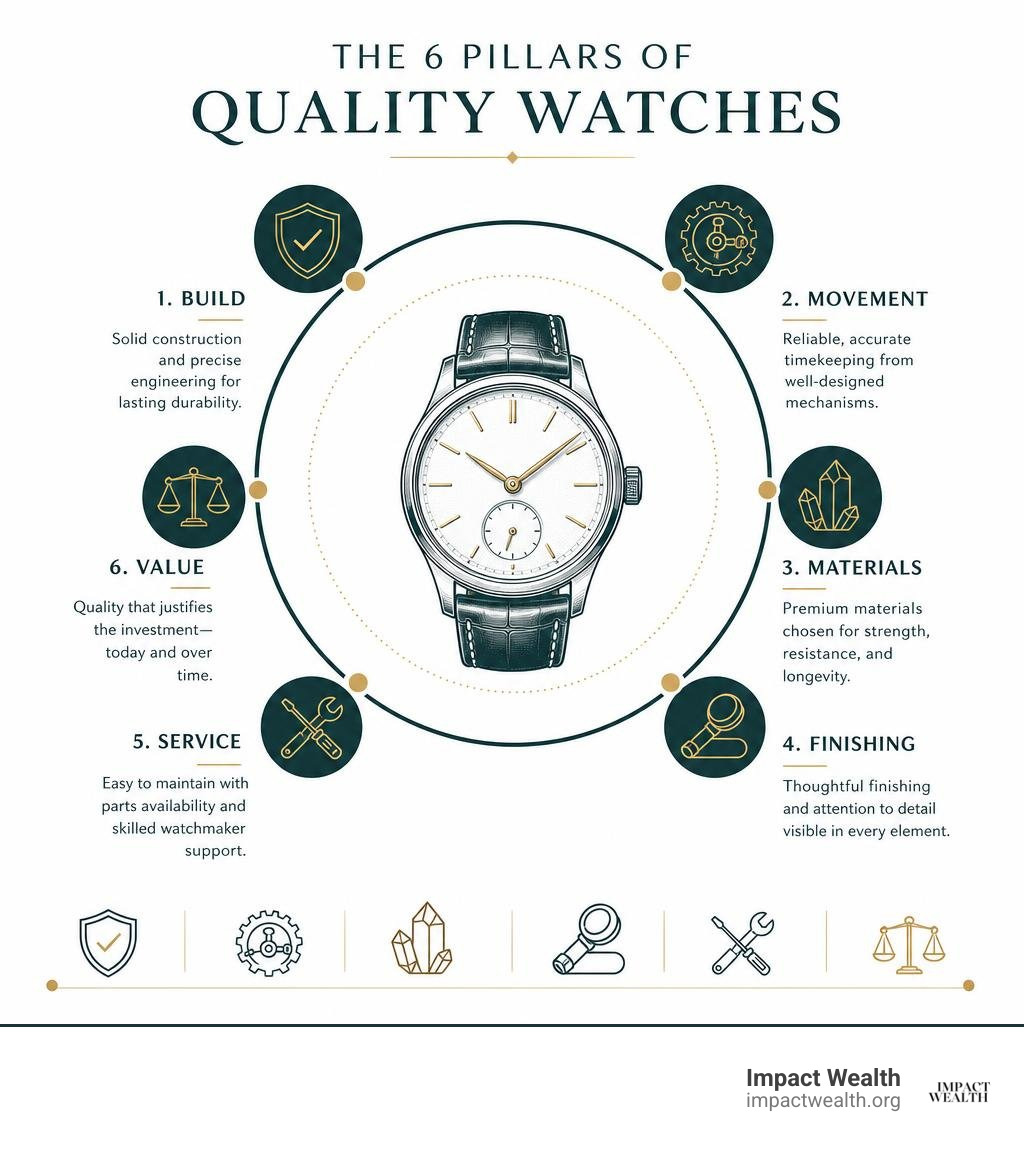
The best quality watches combine precise timekeeping, durable materials, thoughtful engineering, strong finishing, and dependable long-term service – not simply a famous logo or a high price.
For a quick answer, the leading names vary by what “quality” means to you:
- Rolex: Exceptional all-round build quality, robust cases and bracelets, strict in-house accuracy standards, and unusually strong resale demand.
- Patek Philippe and Vacheron Constantin: Elite traditional craftsmanship, refined movement finishing, and heirloom-level complications.
- Audemars Piguet: High-end sports-watch finishing and an iconic design legacy led by the Royal Oak.
- Omega: Technical value, including Master Chronometer movements built to resist magnetic fields up to 15,000 gauss.
- Tudor, Grand Seiko, and IWC: Serious quality below the highest price tier, with strong engineering and proven daily wear appeal.
- Microbrands such as Formex, Baltic, Nodus, and Halios: Often deliver sapphire crystals, titanium, solid water resistance, and reliable workhorse movements for under $1,000.
The right choice depends on whether you value daily durability, movement artistry, quiet design, or long-term collectibility. A $20 Casio F-91W can be remarkably reliable, while a hand-finished Patek Philippe can represent generations of skill. Both can be high quality in their intended role.
For wealthy collectors, the distinction matters: a fine watch can be a personal object first, an heirloom second, and only then a financial asset. This guide separates genuine construction and craft from hype, helping you compare the brands and models that earn their reputations.
Key Criteria That Define the Best Quality Watches
When we evaluate the best quality watches, we look past polished marketing campaigns and examine the physical timepiece. True horological quality stems from a combination of strict metallurgical tolerances, structural case construction, and mechanical reliability. Whether inspecting a piece in Palm Beach, London, or Middle East boutiques, the fundamental markers of excellence remain constant.
A quality watch is built with intentional engineering. Every element—from how smoothly the winding crown threads into the tube to the tactile snap of a double-folding clasp—signals the level of care invested during manufacturing.
Movement Accuracy, COSC, and METAS Certifications
At the core of any fine mechanical watch is its caliber. While traditional quartz movements offer remarkable accuracy for negligible cost, mechanical movements showcase human mechanical mastery. To guarantee reliability, independent testing institutions evaluate movements under rigorous conditions.
The Contrôle Officiel Suisse des Chronomètres (COSC) is the benchmark Swiss standard, testing uncased movements over 15 days in five positions and three temperatures. A COSC-certified movement must maintain a daily accuracy rate of -4 to +6 seconds. However, leading manufactures demand even tighter parameters:
- Rolex Superlative Chronometer: Tests the fully cased watch to guarantee an accuracy of -2 to +2 seconds per day.
- METAS Master Chronometer: Pioneered by Omega, this certification tests fully cased watches for water resistance, power reserve, and magnetic field exposure up to 15,000 gauss, while ensuring 0 to +5 seconds per day precision.
High-complication mechanical engineering, such as a Split Second Chronograph, pushes movement precision to its absolute limits by allowing the wearer to time two simultaneous events down to fractions of a second.
| Certification Standard | Daily Accuracy Target | Test Environment | Key Feature / Focus |
|---|---|---|---|
| COSC Chronometer | -4 / +6 seconds | Uncased movement (15 days) | Baseline Swiss precision standard |
| Rolex Superlative Chronometer | -2 / +2 seconds | Fully cased watch | In-house casing & rate testing |
| METAS Master Chronometer | 0 / +5 seconds | Fully cased watch | Magnetic immunity to 15,000 gauss |
Materials, Metallurgy, and Water Resistance
The outer architecture of a watch protects its delicate internal mechanisms. The best quality watches utilize advanced metallurgy to ensure long-term resistance to wear, salt corrosion, and mechanical shock:
- Oystersteel (904L Alloy): While most brands use 316L stainless steel, Rolex utilizes 904L steel. Richer in chromium and molybdenum, Oystersteel provides extreme corrosion resistance and retains a brilliant luster when polished.
- Proprietary Gold Alloys: Manufactures cast their own precious metals to ensure color permanence. Rolex’s Everose gold, cast in its private foundry since 2005, incorporates platinum to prevent fading when exposed to environment and chlorine.
- Grade 2 & Grade 5 Titanium: Lightweight and exceptionally strong, titanium is widely used in high-performance tool watches by brands like Formex and Halios, offering superior strength-to-weight ratios over steel.
- Cerachrom & Ceramic Bezels: Modern luxury sports watches feature ceramic bezel inserts that are virtually scratchproof and completely immune to color degradation under intense ultraviolet light.
Waterproofing systems are equally essential. A depth rating of 100 meters (330 feet) with a screw-down crown ensures a watch can handle active watersports, swimming, and unpredictable daily conditions without risk of moisture intrusion.
Hand Finishing vs. Industrial Precision
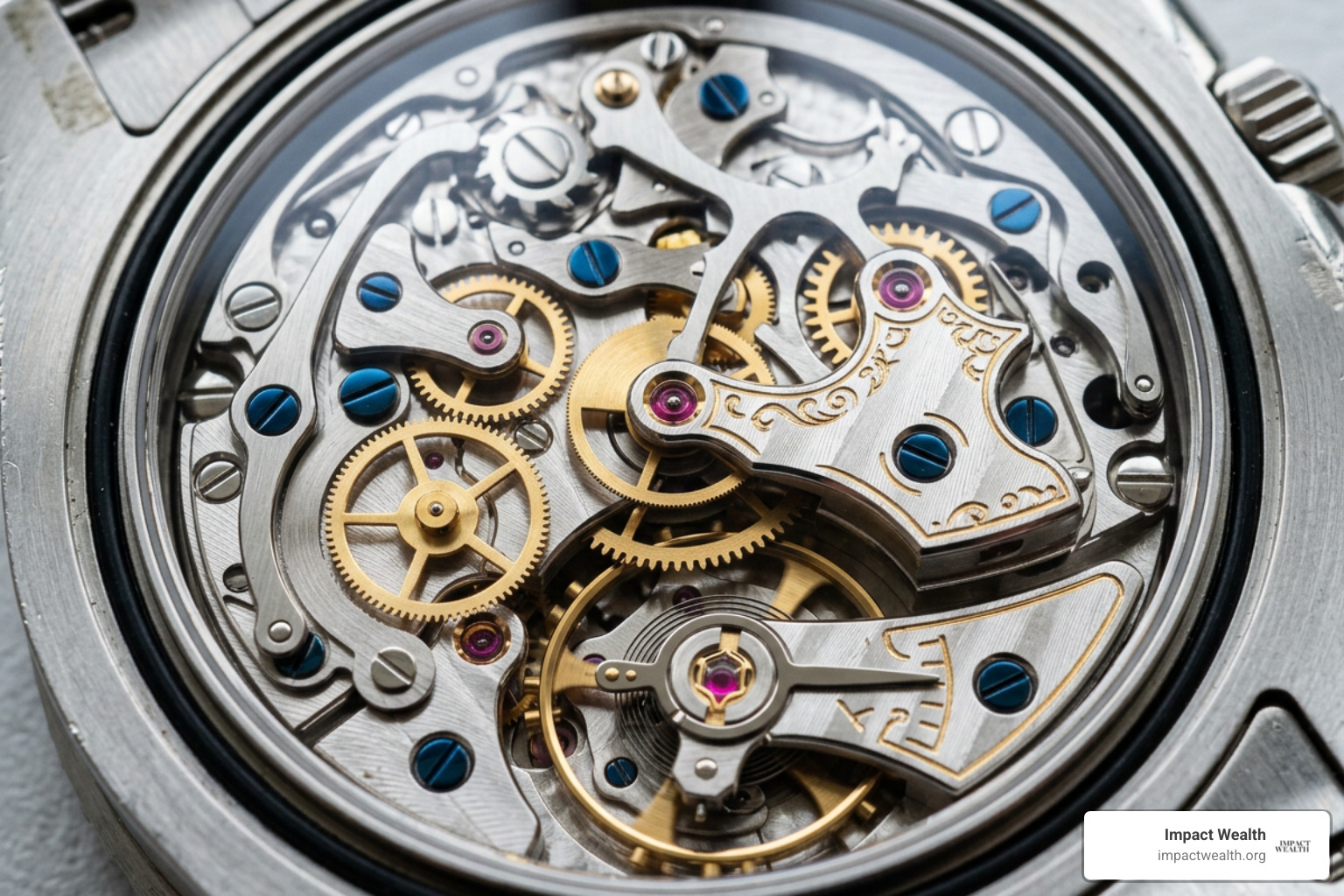
The separation between an entry-level luxury timepiece and haute horlogerie often lies in hand finishing. While modern CNC machinery crafts cases with microscopic precision, human hands provide the final artistic touch.
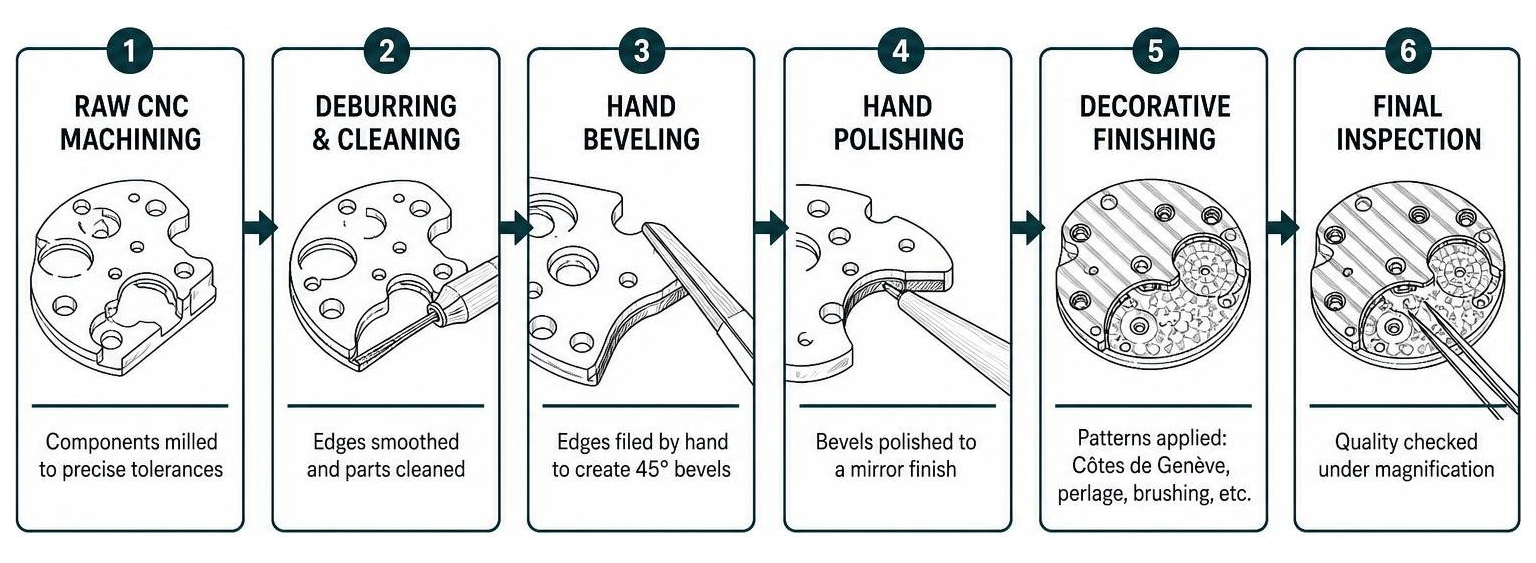
High-end finishing techniques include:
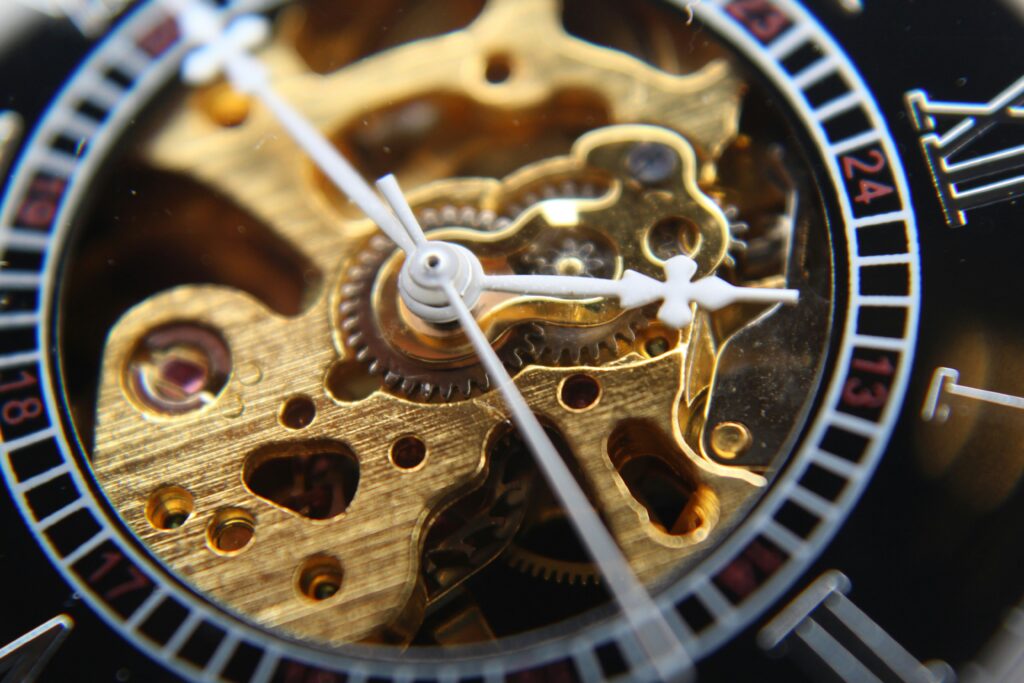
- Anglage (Hand Beveling): Watchmakers manually file and polish the sharp edges of movement bridges to a mirror finish at a 45-degree angle.
- Côtes de Genève: Glinting wave-like parallel stripes etched across movement plates that capture and diffuse ambient light.
- Sunray Brushing & Laser Etching: Dials treated with delicate brushing outwards from the center, or cut using state-of-the-art femtosecond lasers to create intricate geometric patterns without thermal damage to metal substrates.
The World’s Premier Watch Brands Across Price Tiers
Navigating the universe of fine timepieces requires understanding where brands stand in heritage, mechanical innovation, and market positioning.
Legacy Haute Horlogerie Manufactures
At the summit of luxury watchmaking sit the historic Swiss manufactures. Patek Philippe, established with origins reaching back nearly two centuries, represents the gold standard of heirloom collecting. The brand produces coveted grand complications, perpetual calendars, and iconic sports timepieces. Collectors seeking historical significance often explore Patek Philippe Watches for unmatched auction stability and heritage.
Audemars Piguet revolutionized modern watch design in 1972 with the release of the Royal Oak, designed by Gérald Genta. It established the luxury stainless steel sports watch genre, proving that immaculate hand-finishing on steel could command prices equal to precious metals.
Similarly, the Rolex Cosmograph Daytona watch stands as one of the most recognized luxury chronographs on earth, featuring a ceramic Cerachrom bezel and the ultra-reliable caliber 4131.
Technical Innovators and High-Value Swiss Leaders
Moving into high-performance Swiss watchmaking, brands offer extraordinary engineering value:
- Omega: Standard-bearer for anti-magnetic innovation with its Co-Axial escapement and METAS certifications.
- Vacheron Constantin: Founded in 1755, it holds the title of the world’s oldest continuously operating watch manufacturer, celebrated for understated elegance and master craftsmanship.
- Rolex Flagships: Models like the prestigious Rolex Day-Date 40 watch in 18 ct Everose gold showcase proprietary foundry metallurgy paired with high-precision calibers.
- Tudor: Serving as an accessible gateway into serious Swiss watchmaking, Tudor’s Black Bay and Pelagos lines offer robust in-house movements, titanium options, and timeless aesthetic heritage without extensive waiting lists.
High-Performance Microbrands and Independent Watchmaking
The watch industry has seen a massive rise in independent microbrands that punch well above their weight class. Brands like Formex utilize patented case-suspension systems and hardened Grade 2 titanium. Baltic introduces vintage-inspired aesthetics powered by micro-rotor automatic movements. Meanwhile, microbrands like Nodus perform custom in-house movement regulation to achieve tight daily accuracy targets out of the box.
Additionally, the 25 Best German Watch Brands (2026) – Teddy Baldassarre points to Glashütte’s rich heritage of clean dial layouts and hand-carved balance cocks, proving that world-class horology extends beyond Swiss borders. Similarly, enthusiasts looking into global manufacturing nuances can consult resources like the 15 Best Chinese Watch Brands: A Complete Guide.
Everyday Versatility and Long-Term Value Retention
Selecting the best quality watches requires balancing personal lifestyle demands with secondary market considerations. A watch should fit comfortably on the wrist during business hours in Miami or Los Angeles while maintaining its asset integrity over decades.

Selecting the Best Quality Watches for Daily Wear
A true ‘daily wearer’ must combine ergonomic comfort, versatile aesthetic styling, and physical durability. When choosing an everyday timepiece, focus on:
- Case Ergonomics & Thickness: Case diameter is only half the equation; lug-to-lug distance and case thinness dictate true on-wrist comfort. A watch under 12mm thick easily slides underneath a dress shirt cuff.
- Micro-Adjustment Clasps: Systems like the Rolex Easylink or Tudor T-fit allow wearers to adjust bracelet length by 5mm on the fly, accommodating wrist expansion caused by warm weather or physical activity.
- Luminescence & Legibility: High-grade luminescent coatings like BGW9 Super-LumiNova or Chromalight ensure crisp legibility in dark environments.
Evaluating Best Quality Watches on the Secondary Market
For collectors viewing timepieces through an investment lens, secondary market metrics offer valuable guidance. According to market data analyzed in the Luxury Watch Market 2024, steel sports models from top manufactures consistently outperform broader luxury retail goods in value retention.
When evaluating a pre-owned timepiece, always verify:
- Original Box and Papers: Guarantees authenticity, records matching serial numbers, and significantly enhances future resale strength.
- Case Condition & Polishing: Over-polished watch cases lose their crisp bevel lines and factory proportions. Factory-original, unpolished or lightly serviced cases command premiums.
- Service History: Mechanical movements require professional servicing every 5 to 10 years to replace synthetic oils and fresh gaskets. Complete service documentation provides immediate peace of mind.
To explore certified pre-owned options across premier retail destinations, collectors frequently consult authorized regional specialists such as those offering Fine Watches in Palm Beach, Florida, Luxury Watches – CRM Jewelers – Miami, FL, boutique destinations like Jewelry & Watches, regional hubs like Luxury Watch and Jewelry Seller in | Gray & Sons Jewelers, West Coast purveyors like Luxury Watches Los Angeles – Shop High-End Timepieces …, and nationwide platforms like Luxury Watches USA | Rolex, AP & Cartier at Best Prices.
Frequently Asked Questions
What features differentiate entry-level watches from haute horlogerie timepieces?
Haute horlogerie timepieces are defined by extensive hand-finishing, delicate hand-beveled bridge angles (anglage), complex in-house mechanical complications (such as tourbillons, perpetual calendars, or split-second chronographs), and low-volume production using precious metals or specialized alloys. Entry-level luxury watches rely more heavily on automated industrial CNC manufacturing and standardized movement architectures.
Are microbrand watches under $1,000 built as well as luxury Swiss watches?
Modern microbrands often match entry-level Swiss watches in external material quality—offering anti-reflective sapphire crystals, Grade 2 titanium cases, ceramic bezels, and custom movement regulation. However, they typically rely on standardized third-party Japanese or Swiss workhorse movements (such as Seiko NH35 or Sellita SW200-1) rather than hand-finished in-house manufacture calibers.
How important are magnetic resistance and shock absorption in daily watch reliability?
Magnetic fields from smartphones, laptops, and magnetic handbag clasps are the leading cause of mechanical watch inaccuracy, causing hairsprings to stick and run extremely fast. Antimagnetic innovations—such as silicon hairsprings and inner iron cages resisting up to 15,000 gauss—alongside shock protection systems like Paraflex or Incabloc, are critical for maintaining long-term daily precision.
Conclusion
Finding the best quality watches is ultimately a deeply personal journey that bridges mechanical precision, metallurgical mastery, and artistic heritage. Whether you are drawn to the rugged, go-anywhere reliability of a tool watch, the micro-engineered brilliance of an anti-magnetic chronograph, or the hand-finished splendor of a Swiss heirloom, true horological excellence stands the test of time.
At Impact Wealth, we celebrate the finer details that turn simple objects into lasting legacies. To explore more curated insights on fine timepieces, wealth preservation, and high-end lifestyle trends, explore our comprehensive Impact Wealth Luxury Guide.