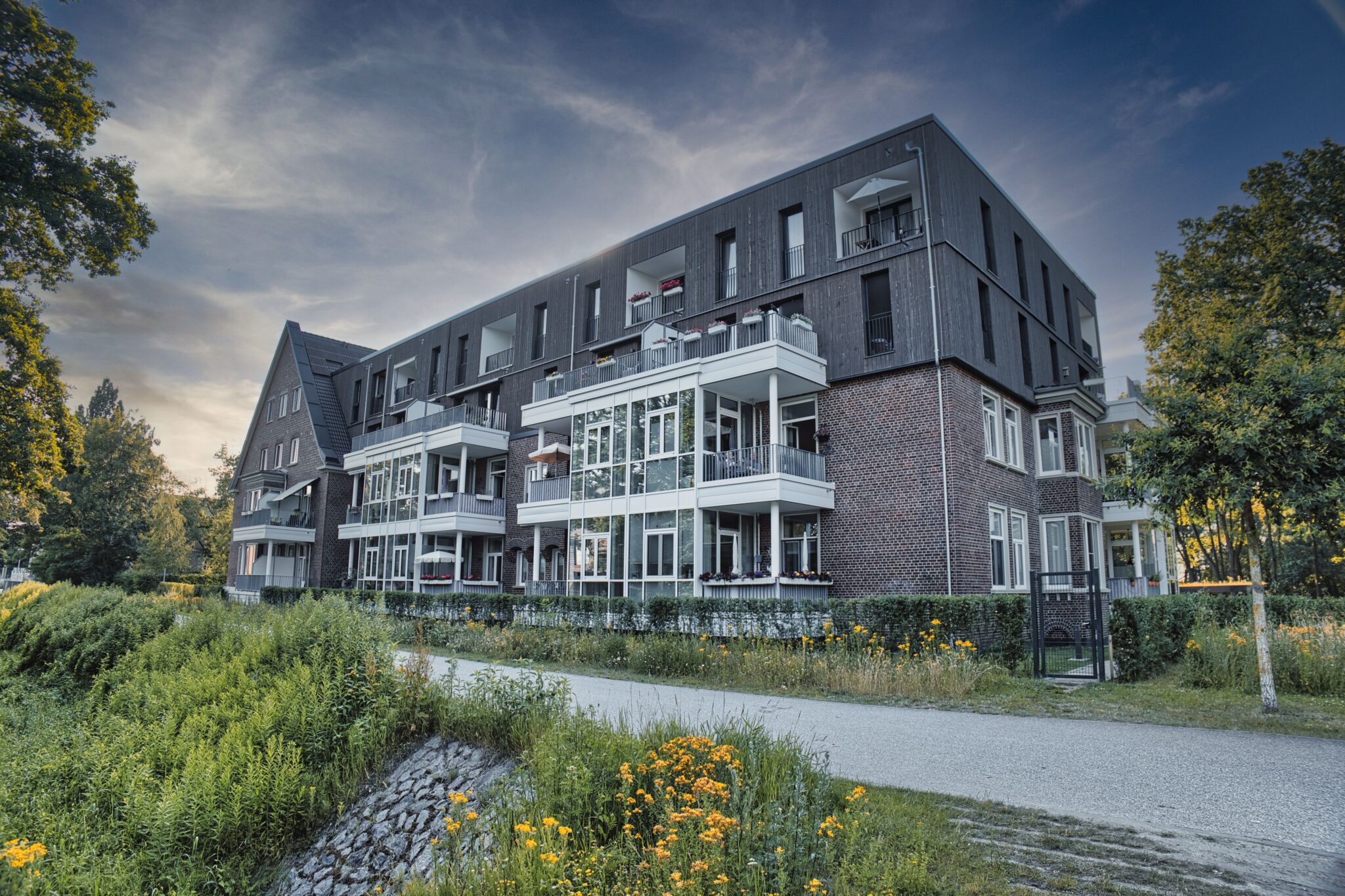
For multifamily investors, a renovation is rarely just a construction project.
It is an operational decision that can affect occupancy, leasing velocity, resident satisfaction, operating costs, and ultimately the long-term performance of the asset.
The finishes matter, of course. Updated kitchens, modern flooring, improved common areas, and refreshed exteriors can make a property more competitive. But for owners and operators managing dozens or hundreds of units, the way those improvements are delivered can be just as important as the improvements themselves.
A beautifully renovated apartment that sits offline longer than expected still represents lost rental opportunity.
That is why experienced multifamily owners increasingly need to think about renovation as a repeatable operating system rather than a series of isolated construction jobs.
TL;DR
Successful multifamily renovations depend on more than choosing attractive finishes. Owners need predictable timelines, standardized scopes, coordinated crews, clear communication, and completed units that can return to service quickly.
The more repeatable the renovation process becomes, the easier it is for an owner or property manager to plan capital expenditures, coordinate leasing, reduce disruption, and protect the performance of the overall asset.
Renovation Downtime Has a Real Cost
In a single-family home, a renovation delay is frustrating.
In a multifamily property, that same delay can become an operating problem.
A unit undergoing renovation generally cannot generate the same income as an occupied, rent-ready unit. When one delay becomes several delays across a larger renovation program, the effects begin to compound.
This makes predictability particularly important.
Owners should be able to answer questions such as:
- When will each unit become available?
- How many units will be offline at one time?
- When can leasing begin marketing the renovated inventory?
- Are materials available before crews enter the unit?
- Are there decisions that could hold up later phases?
- What happens when unexpected conditions are discovered?
The objective is not simply to make construction move as fast as possible. It is to remove avoidable uncertainty from the process.
Standardization Can Turn Renovation Into a Repeatable System
One of the advantages multifamily owners have over individual homeowners is repetition.
Many units share similar layouts, materials, fixtures, appliances, flooring, cabinetry, and paint requirements. Instead of treating each apartment as a completely different project, owners can develop standardized renovation packages.
For example, a property might establish several levels of improvement:
Standard Turn: Paint, flooring, fixtures, minor repairs, and cleaning.
Value-Add Renovation: New flooring, countertops, cabinet improvements, appliances, lighting, fixtures, and updated finishes.
Full Interior Renovation: More significant demolition, cabinetry, surfaces, appliances, plumbing fixtures, lighting, and other interior improvements.
Once the specifications are established, procurement and execution become easier to repeat from unit to unit.
The contractor knows what is expected.
The property manager knows what is being delivered.
The leasing team knows what the finished product will look like.
And ownership has a clearer framework for forecasting capital requirements.
Faster Is Not Always Better. Predictable Is Better.
There is constant pressure in multifamily construction to complete turns quickly.
That pressure makes sense. Owners want units available to lease.
But simply telling a contractor to work faster does not create an efficient renovation program.
Speed usually comes from preparation.
Materials need to be available. Scopes need to be clear. Trades need to be scheduled in the correct sequence. Access needs to be coordinated. Decisions need to be made before they become bottlenecks.
Earthtone Construction, a California contractor specializing in multifamily work, describes its own process around this type of systemization. Its multifamily operation emphasizes phased scheduling, standardized execution, tenant communication, upfront planning, and delivering completed units ready for turnover.
For property owners evaluating a renovation partner, that operational capability can matter as much as the contractor’s ability to install the physical finishes.
Occupied Renovations Require a Different Mindset
Not every multifamily renovation takes place inside a completely vacant building.
Exterior work, community-space improvements, maintenance projects, and renovations across partially occupied properties introduce another consideration: residents still have to live there.
Construction can affect parking, noise levels, walkways, common areas, building access, and day-to-day routines.
Poorly managed projects can therefore create problems beyond the construction schedule itself.
Resident communication should be part of the project plan.
Residents should know what is happening, when work will occur, whether access will be affected, and what they should expect next.
Contractors also need to think about cleanliness, staging, crew behavior, noise, access, and how their work interacts with property management.
Earthtone, for example, specifically incorporates resident coordination and phased scheduling into its multifamily renovation process rather than treating those issues as an afterthought.
This is especially important when renovations are intended to improve the property’s positioning. The construction experience should not undermine the resident experience the investment is ultimately supposed to improve.
Renovations Should Be Evaluated Through the Lens of the Entire Asset
It is easy to judge a renovation by looking at one finished unit.
Investors have to look at the larger system.
Imagine a 100-unit community undergoing a phased value-add program.
The important questions extend far beyond whether Unit 204 received new flooring and countertops.
Ownership needs visibility into questions such as:
- How consistently can renovated units be delivered?
- What percentage of the property can reasonably be under construction at once?
- Is the renovation specification appropriate for the target renter?
- Are certain upgrades unlikely to support the property’s positioning?
- Can materials be sourced consistently across the entire project?
- How will work be coordinated with upcoming lease expirations?
- What happens if the scope expands after demolition?
- How quickly can a completed unit move back into the leasing pipeline?
This is where construction strategy and investment strategy begin to overlap.
A renovation program should support the property’s business plan rather than operate independently from it.
Common Areas and Exteriors Matter Too
Interior unit renovations often receive the most attention because the before-and-after difference is easy to see.
But the resident’s impression of a property begins long before they enter an apartment.
Exterior conditions, landscaping, building finishes, entrances, corridors, gathering areas, and amenities all contribute to how a community is perceived.
Investments in community spaces can also influence how residents actually use the property.
That does not mean owners should renovate every possible feature.
Instead, capital should be allocated intentionally.
An older property might benefit more from exterior rehabilitation and maintenance than from installing an expensive amenity that few residents will use. Another community may already have a strong exterior but need significant interior modernization to remain competitive.
A thoughtful capital plan looks at the entire resident experience rather than automatically following whatever design trend happens to be popular.
Earthtone’s multifamily operation works across interior renovations, exterior renovations, community spaces, new construction, and ongoing maintenance, demonstrating how these different areas can form parts of a broader property strategy.
Don’t Ignore Maintenance After the Renovation
Capital improvements often receive most of the attention, but long-term asset quality depends heavily on what happens afterward.
Small problems become expensive problems when they are repeatedly deferred.
Preventive inspections, responsive repairs, consistent reporting, and dependable maintenance procedures can help protect the capital that has already been invested in the property.
Earthtone’s maintenance offering, for example, emphasizes preventative inspections, ongoing reporting, repairs, and resolving smaller issues before they escalate.
For investors, this reinforces a broader point: value creation does not stop when construction ends.
Protecting an asset requires systems for both improvement and upkeep.
What Should Investors Look for in a Multifamily Contractor?
Price will always matter, but the lowest initial proposal does not necessarily represent the lowest total project cost.
Owners should also evaluate how a contractor operates.
Before selecting a construction partner, consider asking:
How is scheduling handled?
You should understand how units move through the construction pipeline and how delays are communicated.
How standardized is the process?
Repeatability becomes increasingly important as the number of units grows.
How are residents handled?
For occupied properties, communication and site professionalism are critical.
How does the contractor manage quality control?
A fast turnover loses much of its advantage if another crew has to return repeatedly to correct incomplete work.
How are changes documented?
Unexpected conditions happen. The important issue is whether there is a disciplined process for communicating and approving changes.
Can the contractor scale with the portfolio?
A contractor who performs well on one renovation should have systems capable of supporting a larger program if the relationship expands.
Does the team understand multifamily operations?
Working around residents, leasing schedules, property staff, vendors, and multiple simultaneous units is fundamentally different from completing a standalone residential remodel.
Construction Execution Is Part of Investment Execution
Real estate investors spend significant time analyzing acquisition prices, financing structures, rents, operating expenses, market demand, and exit assumptions.
Renovation execution deserves the same attention.
A strong value-add strategy on a spreadsheet still depends on people successfully executing that strategy at the property.
That means controlling scope.
It means coordinating materials.
It means managing timelines.
It means communicating with residents and property teams.
And it means consistently returning completed units to the leasing operation.
For sophisticated multifamily investors, construction should therefore be viewed as more than a necessary expense.
When managed well, it becomes part of the operating infrastructure behind the investment.
The Bottom Line
Multifamily renovation does not need to be unpredictable.
The strongest programs are built around planning, standardization, communication, quality control, and repeatable execution.
Those systems make it easier for property managers to operate the community, easier for leasing teams to understand when inventory will become available, and easier for ownership to make informed capital decisions.
The goal is not simply to renovate apartments.
It is to improve the property while maintaining control over the variables that ultimately influence the investment.
For owners building long-term value in multifamily real estate, that distinction matters.