Not every crash is explained by what people say after it happens. A driver’s first statement may seem important, but it is only one part of a much larger picture. Every collision leaves behind a chain of events that cannot easily be changed or forgotten. The way a vehicle moved, the timing of reactions, and the records created before the impact often become just as important as any conversation at the scene.
Professionals who review these cases, including a distracted driving accident lawyer, often focus on those details because they can reveal patterns that words alone never do. Quiet facts often become the strongest voice.
Every Crash Creates Its Own Timeline
A collision does not begin at the moment two vehicles meet. It starts several seconds earlier as traffic changes, drivers react, and decisions are made behind the wheel. Those few seconds create a timeline that investigators carefully rebuild. They look at where each vehicle was, how quickly it responded, and whether its movement matched the road conditions. Instead of asking only what the driver remembers, they ask whether the timeline supports that version of events. Even small differences can help explain why the crash happened.
A driver may believe there was no time to react. However, if nearby vehicles slowed safely while one vehicle continued forward without changing speed, the timeline may suggest something different. Looking at events in order often provides a clearer understanding than relying on memory alone.
Small Inconsistencies Often Lead to Bigger Questions
Many investigations begin with simple observations that do not seem important at first. A vehicle may drift from its lane without a clear reason. It may fail to respond to a traffic signal or continue moving even though another driver had already slowed down. On their own, these actions do not prove distraction. Still, they encourage investigators to look deeper.
The goal is not to search for one dramatic clue. Instead, they compare several small details that either fit together or create new questions. A statement given after the car crash may sound reasonable, but it also has to match the physical evidence left behind. If those details do not agree, investigators continue looking until the sequence becomes clearer.
Digital Records Add Context Instead of Giving Final Answers
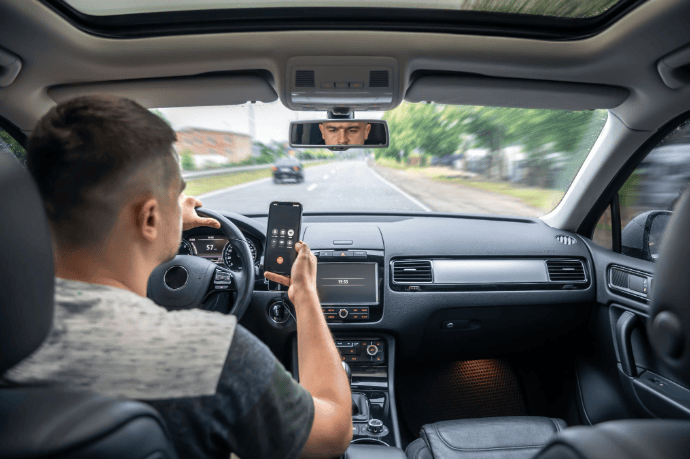
Technology has changed the way crashes are reviewed, but digital records rarely tell the complete story by themselves. Phone activity, navigation apps, vehicle touchscreens, and other connected systems may all create timestamps. Those records become useful only after they are compared with everything else that happened before the collision.
For example, recent phone activity may seem important, yet it does not automatically explain why a crash occurred. Investigators compare that information with the vehicle’s movement, the estimated time of impact, and other available evidence. If every piece points in the same direction, the timeline becomes much stronger. Digital information works best as supporting evidence rather than a final conclusion.
Every Source Has a Different Piece of the Story
No investigation depends on a single source because every piece of information shows the crash from a different angle. Looking at several sources together often creates a more complete picture.
- Witnesses may notice driving behavior before the collision.
- Passengers can describe what happened inside the vehicle.
- Dashcams sometimes record the seconds leading to the impact.
- Security or traffic cameras may capture movements from another location.
Each source adds something unique. Some explain what happened outside the vehicle, while others help confirm the timing of important events. The strongest understanding usually comes from comparing all of them instead of treating one source as the complete answer.
Consistency Often Speaks Louder Than a Confession
Investigators are not simply searching for an admission that someone was distracted. They are looking for consistency between every fact connected to the crash. Vehicle damage, road markings, witness accounts, camera footage, and digital activity all become part of one larger sequence. If they support each other, the investigation grows stronger. If they conflict, more questions need to be answered before clear conclusions can be reached.
That careful process explains why many crash investigations rely on facts that remain long after the vehicles have been removed. A distracted driving accident lawyer may review that complete sequence because understanding how each clue connects can provide a far clearer picture than relying on one statement alone.
Final Thoughts
A driver does not have to admit being distracted for investigators to continue searching for answers. Every collision leaves behind a record of actions, timing, and physical evidence that can be studied from different angles.
While no single clue tells the entire story, several connected details often explain what happened more clearly than memory ever could. Careful investigations are built by fitting those details together, allowing the evidence to speak through the sequence it creates rather than through words alone.