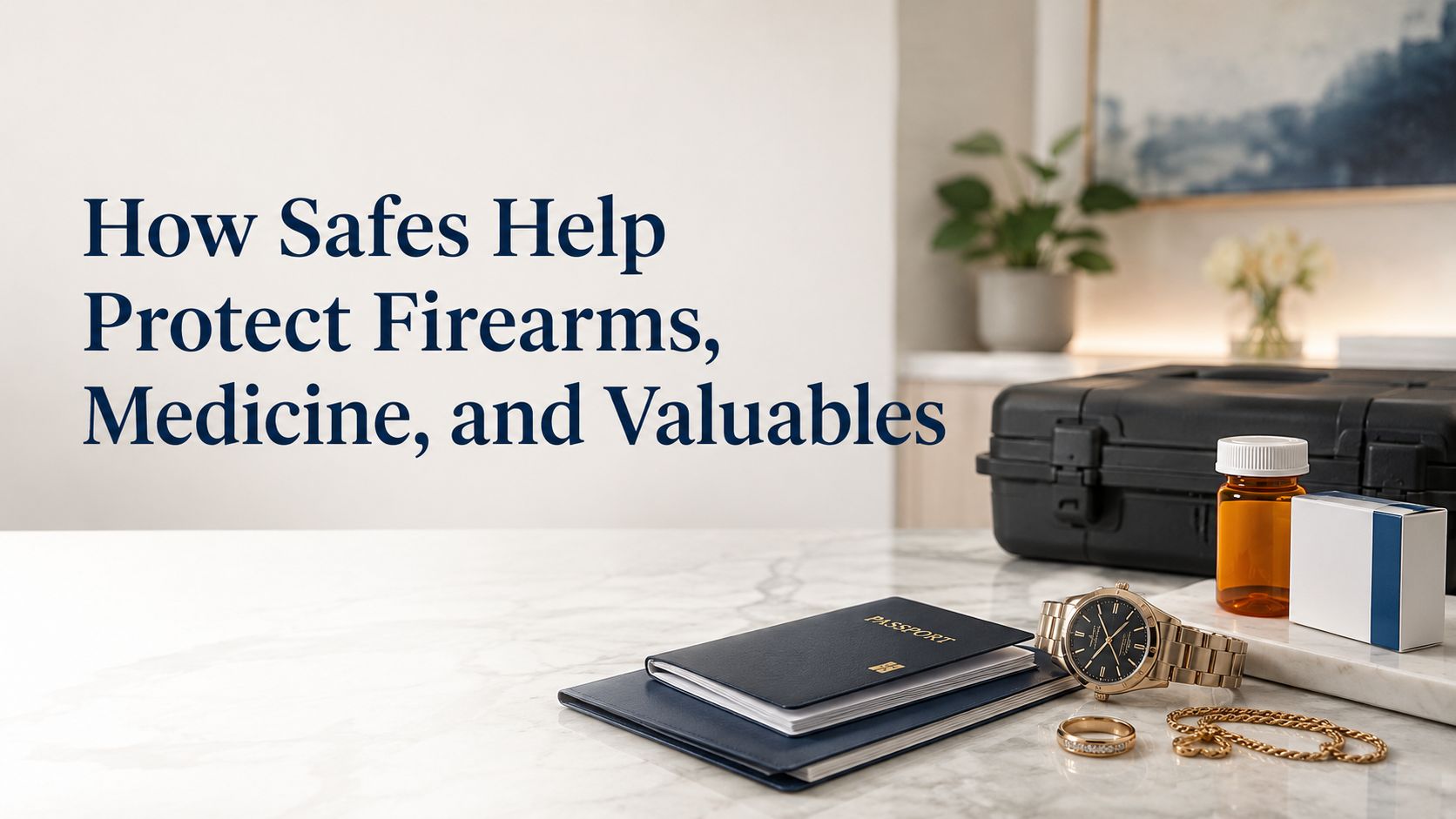
Secure storage is not only about stopping theft. It also helps stop unsafe access. Homes, clinics, pharmacies, and offices all hold items that need better control. Firearms, medicine, cash, records, and jewelry can create real risks when stored poorly.
A safe creates a locked place for items that need extra care. It can help protect people, property, and private information. The right safe also makes daily storage easier to manage.
Why Secure Storage Matters
Many valuable items are small, portable, and easy to steal. Cash, jewelry, passports, medicine, and firearms can all attract theft. A locked drawer or cabinet may not give enough protection.
A safe adds a stronger barrier. It can help slow forced entry and limit access. This matters in homes, pharmacies, clinics, offices, and retail spaces.
Secure storage also helps reduce daily mistakes. People know where sensitive items belong. Staff can follow clear storage rules. Families can keep risky items away from children and visitors.
For businesses, secure storage can support safer work routines. It helps control who can reach cash, medicine, documents, or tools. This reduces loss and makes access easier to manage.
The Role of Safes in Firearm Protection
Firearms need careful storage because misuse can cause severe harm. A gun safe helps keep firearms away from children, guests, and other unapproved users. It also helps protect firearms from theft and damage.
A gun safe can also protect other items. Many owners store passports, papers, jewelry, and cash in the same safe. This works best when the safe has enough space and the right inner layout.
The best safe depends on the firearm type. Long guns need more height. Handguns need smaller locked space. Mixed storage needs shelves, racks, or separate sections.
A safe also helps keep firearms in one known place. This makes storage cleaner and easier to check. It also lowers the risk of leaving firearms in weak storage spots.
How Safes Help Protect Medicine
Medicine can be valuable and risky when stored without control. This is true for prescription drugs, narcotics, and other controlled items. Poor storage can lead to theft, misuse, or lost stock.
Pharmacies and clinics often need stronger storage than a normal cabinet. Staff may need daily access, but access must still be limited. Pharmacy safes help keep medicine locked while allowing controlled use.
INKAS® says its pharmacy safes are made for drugs, medicine, and legal narcotics. The company says these safes are used in community pharmacies, clinics, and hospitals. INKAS® also says its pharmacy safes use time-delay locks and come in common behind-the-counter sizes.
For clinics, secure medicine storage also supports better staff control. Only approved staff should reach certain items. A safe can help reduce mistakes, misuse, and internal theft risks.
Protecting Valuables with the Right Safe
Valuables are not limited to cash or jewelry. They also include passports, deeds, contracts, backup drives, and private records. Some items are hard or impossible to replace.
A home safe can keep valuables in one secure place. This helps during emergencies and reduces the risk of misplaced items. It also limits access from visitors, service workers, and children.
Businesses use safes for cash, keys, records, and small high-value stock. Clinics may store records, medical tools, or controlled supplies. Pharmacies may store medicine, narcotics, and other sensitive items.
| Item type | Common risk | Safe type to consider | Main benefit |
| Firearms | Theft or unsafe access | Gun safe | Keeps firearms locked and organized |
| Medicine | Misuse, theft, or stock loss | Pharmacy safes | Limits access to drugs and narcotics |
| Jewelry and cash | Theft | Burglary safe | Adds stronger theft protection |
| Passports and documents | Loss, theft, or fire damage | Fire and burglary safe | Protects key papers in one place |
| Business records | Privacy risks | Office safe | Helps control access at work |
Fire and burglary protection are different needs. A fire-rated safe is made to protect contents from heat for a set time. A burglary-rated safe is made to resist forced entry. Some safes offer both types of protection.
Where INKAS® Fits Into Secure Storage
INKAS® lists residential safes, commercial safes, vault doors, gun safes, jewelry safes, and pharmacy safes on its site. The company also says its home safes can store documents, cash, jewelry, and household valuables.
INKAS® also offers gun safe options on its product pages. Its site lists RSC, TL15, UL-TL15, and UL-TL30 certified gun safe models. These safes are described with custom inner layouts for different firearm types.
INKAS® pharmacy safes are made for medical and pharmacy settings. The site says some models can include several sections, audit software, strong locks, and keyless locking systems. It also says these safes can store records, reports, recipes, and logbooks.
These details make INKAS® relevant for homes, clinics, and pharmacies. The brand covers firearm storage, medicine storage, cash control, and document protection. This range helps buyers choose one safe type for each risk.
Why INKAS® Safes Are Built for High-Security Needs
INKAS® says its safes are made to protect against theft, fire, and flood. The company also says its safes are tested against prying, drilling, punching, and other force attacks.
The company lists strong steel, strong locks, keyless locking, and divided inner space for pharmacy safes. These features help pharmacies and clinics manage medicine storage with better control.
INKAS® also lists gun safe models with burglary protection and custom interiors. These layouts help owners store different firearm types in a cleaner way.
Custom storage matters when standard layouts do not fit. A firearm owner may need rifle racks and shelves. A pharmacy may need sections for drugs, reports, and logbooks. A business may need compartments for cash and records.
Common Places Where Safes Are Used
Safes are useful in homes, clinics, pharmacies, offices, and stores. Each place has different risks. The safe should match the items, users, and access needs.
At home, safes often protect firearms, passports, jewelry, cash, and documents. A gun safe can also help keep firearms away from children and guests. It should be placed in a secure and discreet area.
In clinics, safes can store medicine, records, supplies, and tools. Clinics may handle items that should not sit in open cabinets. Staff access should be limited to approved users.
In pharmacies, pharmacy safes can protect medicine and legal narcotics. Time-delay locks can help reduce robbery and internal theft risks. Behind-the-counter sizes also help fit daily pharmacy work.
In offices, safes often protect cash, contracts, keys, drives, and private records. A small office safe can reduce loss from theft or misuse. A larger safe may suit records and shared storage.
Key Safe Features to Consider
The first feature to check is construction. Heavy steel and reinforced doors help resist attacks. Weak metal and thin doors may fail quickly during forced entry.
The second feature is the lock. Common options include mechanical locks, electronic locks, and keyless systems. INKAS® lists strong locks and keyless locking systems for some pharmacy safe models.
Use this short list when checking safe features:
- Choose a gun safe with enough space for each firearm type.
- Choose pharmacy safes with controlled access for medicine and narcotics.
- Check fire protection when storing papers or records.
- Check burglary protection when storing cash, jewelry, or firearms.
- Pick shelves, racks, or compartments that match the stored items.
- Plan the safe location before delivery and setup.
Interior layout also matters. Shelves help with documents and boxes. Racks help with long guns. Small compartments help separate medicine, cash, or private items.
Size should include future storage needs. A safe that is full on day one may become a problem. Buyers should leave space for new documents, records, or valuables.
Why Access Control Is Important
Access control means deciding who can open the safe. This is just as important as the safe body. A strong safe loses value when too many people can open it.
Homes need clear rules for firearm and medicine storage. Only approved adults should have access. Codes, keys, and backup access should not be left in open areas.
Clinics and pharmacies need tighter access rules. Staff may need different access levels. Managers should know who can open the safe and when.
Time-delay locks can help in pharmacies and other high-risk spaces. A delay makes the safe less useful during a robbery. It can also reduce pressure on staff.
Electronic locks may support better staff routines. Some models can help manage codes and access. The right option depends on the safe model and storage use.
Choosing the Right Safe for Your Storage Needs
Start with the item being stored. Firearms, medicine, cash, jewelry, and records each need different protection. One safe can hold mixed items, but the layout must work.
Use this list before buying a safe:
- Match the safe to the main item you need to protect.
- Choose a gun safe for firearms and related storage needs.
- Choose pharmacy safes for medicine, narcotics, and medical records.
- Pick a size that leaves room for future storage.
- Check the lock type before placing the order.
- Choose a safe location that is secure but practical.
- Ask about custom layouts when standard shelves do not work.
Next, choose the right size. Long guns need height and racks. Pharmacy stock may need shelves and quick staff access. Documents need room for folders or boxes.
Location also matters. A safe should be easy enough for approved users to reach. It should not be easy for others to see, move, or attack.
For heavy safes, installation should be planned before delivery. The path, floor strength, stairs, and final location all matter. Large safes may need expert delivery or setup.
Final Thoughts
Safes help protect items that need more than basic storage. Firearms, medicine, cash, documents, and jewelry all carry real risk. A strong safe can reduce theft, misuse, and unsafe access.
The best safe is chosen for the item, location, and user. Homes need secure but practical storage. Clinics and pharmacies need tighter access control. Offices need steady protection for cash and records.
INKAS® offers safe options for many of these needs. Its site lists gun safes, pharmacy safes, high-security safes, residential safes, commercial safes, and vault doors. These options give buyers a clear path for safer storage.
FAQ
What items should be stored in a safe?
A safe can store firearms, medicine, cash, jewelry, passports, records, and private files. It is best for items that are valuable, sensitive, or risky.
Can a safe be used for both firearms and valuables?
Yes, a safe can hold firearms and valuables when it has enough space. Use racks, shelves, or separate sections to keep items organized.
Why should medicine be stored in a safe?
Medicine can be stolen, misused, or accessed by the wrong person. A safe helps limit access and protect controlled stock.
What is the purpose of a gun safe?
A gun safe helps keep firearms locked, organized, and away from unapproved users. It also helps protect firearms from theft.
Why do pharmacies use pharmacy safes?
Pharmacies use pharmacy safes to store medicine, drugs, and legal narcotics. INKAS® says its pharmacy safes use time-delay locks and fit common pharmacy work areas.
Are fireproof safes also burglary-resistant?
Not always. Fire protection and burglary protection are separate features. Buyers should check both ratings before choosing a safe.