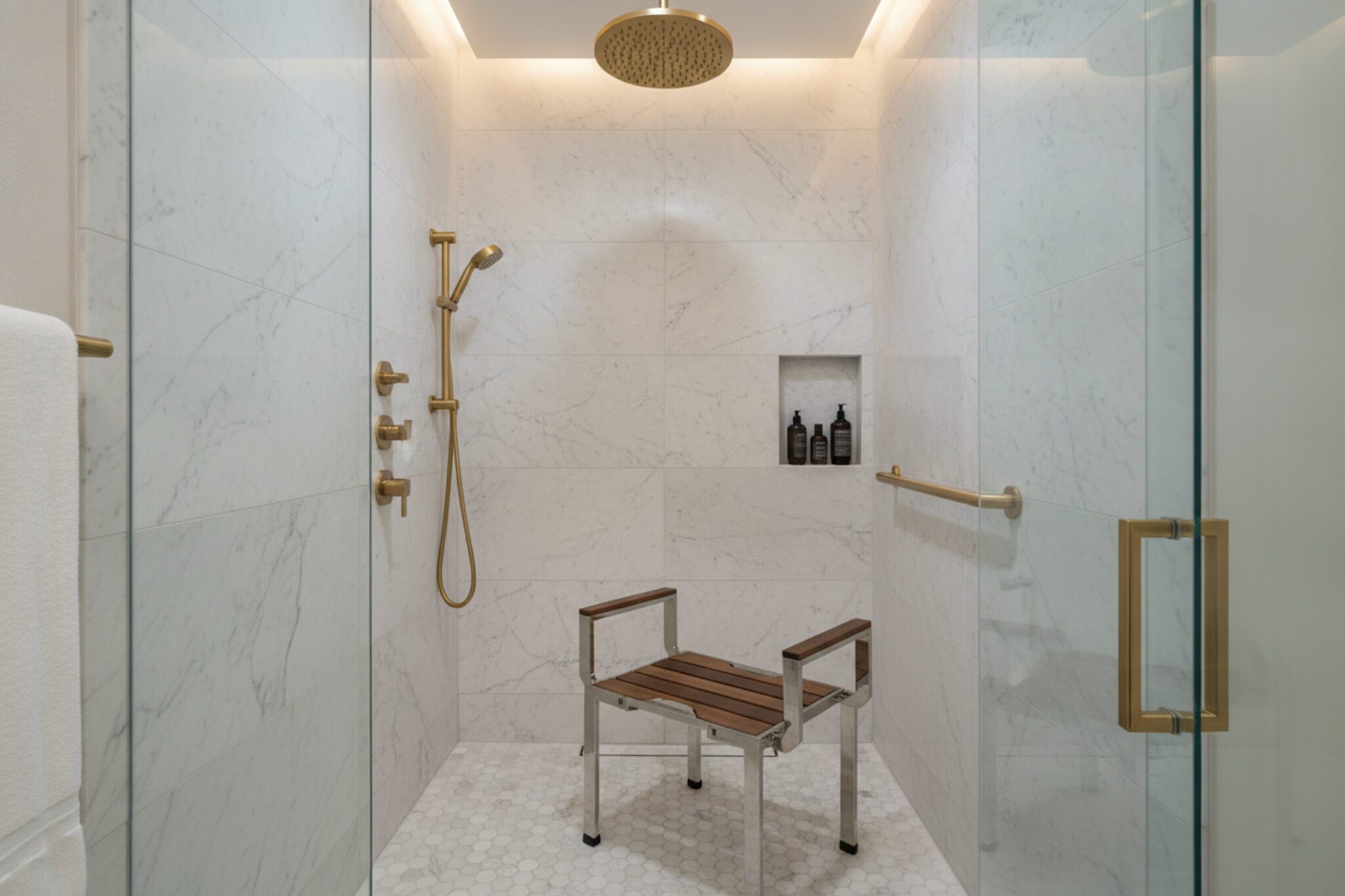
A shower chair purchased primarily for its appearance is a purchase made in the wrong order. The aesthetic dimension of the product is real and worth considering; nobody wants assistive equipment that looks institutional in a home bathroom, but it’s the last consideration that should influence the selection rather than the first. The person who will be using the chair for inside shower applications is using it in an environment that’s wet, often soapy, frequently occupied by someone whose balance or lower limb strength is already compromised, and the consequence of a stability or structural failure in that environment isn’t inconvenience. It’s a fall, and falls in the shower are among the more serious injury events that occur in domestic settings, producing outcomes that the few minutes spent evaluating weight rating and stability before purchase would have prevented.
What Stability Actually Means in a Wet Environment
Stability in a shower chair involves three separate dimensions that interact with each other in ways that a static showroom display doesn’t reveal. The base footprint determines how resistant the chair is to tipping under lateral load, which occurs when the user reaches sideways, shifts their weight asymmetrically, or grips the chair for support. A chair with a narrow base footprint that looks proportional and unobtrusive in a dry display environment may have insufficient tip resistance for the actual use conditions it will be placed into.
The non-slip feet are the second stability dimension, and they vary enough in their actual wet-surface performance that the presence of rubber feet isn’t sufficient information to evaluate slip resistance. Rubber compounds differ in their wet surface friction characteristics, and a chair with rubber feet that performs adequately on a dry bathroom tile and adequately less so on the same tile with soap residue and running water present is a chair whose stability in actual use is different from its stability during a dry evaluation. Testing the chair on the actual shower surface it will be used on, wet, before committing to it, is the most reliable evaluation available because it removes the assumption that rubber feet perform equivalently regardless of their compound and the surface they’re contacting.
The structural rigidity of the frame is the third dimension. A chair that flexes under load, where the frame deflects measurably when the user’s weight shifts or when they use the chair for support during transitions, is a chair that communicates instability to the user through that flex and that may be approaching structural limits under load conditions that weren’t apparent during a static weight test.
Why Weight Rating Is a Safety Specification, Not a General Guideline
Weight ratings on assistive equipment are structural specifications derived from testing rather than conservative estimates with a substantial safety margin. A chair rated to 120 kilograms has been tested to that load and specified to that load, which means a user at or near that rating is using the equipment at or near its structural design limit. The safety factor built into most consumer-grade assistive equipment is enough to prevent catastrophic failure at the rated load but not enough to accommodate the dynamic loading that actual shower use involves, where the user’s effective load on specific chair components can exceed their static body weight during transitions, reaches, and moments of instability.
Selecting a chair with a weight rating that provides meaningful clearance above the user’s body weight accommodates dynamic loading, accommodates the weight of wet clothing if the chair is used in a transfer context, and accommodates the natural variation in how load is applied across the chair during actual use rather than during the controlled static test that established the rating.
What the Frame Material Determines About Long-Term Structural Performance
Shower chairs operate in an environment that’s among the most corrosive in a domestic setting, with daily exposure to water, soap, shampoo, conditioner, and the temperature cycling that comes with regular hot shower use. The frame material determines how the chair’s structural integrity holds up across that environment over time. Aluminum frames with appropriate anodizing or powder coat treatment maintain their structural properties in shower conditions. Steel frames without adequate corrosion protection develop rust at the joints and fastener points, which reduces structural integrity in exactly the locations where load transfer between components occurs, and that reduction accumulates invisibly until it produces a failure under a load the chair would have handled comfortably when it was new.