The Tesla Cybertruck became a global conversation long before most people ever saw one on the road. Within the first moments of its unveiling, the vehicle moved beyond automotive headlines and entered mainstream culture, technology discussions, investment circles, and luxury lifestyle media. The result was the emergence of what many observers now describe as the Cybertruck phenomenon a rare moment when a single product reshaped expectations across multiple industries.
This attention reflects something larger than enthusiasm for electric vehicles. Consumers increasingly associate prestige with innovation, software, and cultural relevance rather than traditional luxury signals. Moreover, affluent buyers increasingly seek products that communicate values and identity alongside performance and ownership.
Tesla recognized this shift early. Instead of refining the familiar pickup formula, the company introduced a product designed to provoke reaction. Consequently, the Cybertruck became both a Tesla electric truck and a new kind of luxury electric vehicle.
Its influence now extends across electric vehicle culture, luxury branding, technology reporting, and evolving expectations for future mobility. More importantly, it reveals how status itself is changing in the digital era.
How the Tesla Cybertruck Captured Global Attention?
Very few vehicle launches become cultural events.
The Cybertruck unveiling generated immediate global attention because Tesla ignored nearly every conventional rule of automotive product launches. Instead of revealing another premium pickup, the company introduced a geometric stainless-steel vehicle that looked closer to speculative fiction than modern transportation.
Public reaction split almost instantly.
Some audiences viewed the vehicle as revolutionary. Others considered it intentionally disruptive. However, disagreement only amplified attention.
Several factors accelerated global interest:
- Viral unveiling moments
- Constant media coverage
- Strong online discussion
- Investor curiosity
- Technology community engagement
- Public fascination with unconventional products
Moreover, Tesla benefited from modern attention dynamics. In the social media era, products that generate conversation often outperform products that seek universal approval.
As a result, the Cybertruck transformed from vehicle launch into sustained public narrative.
Design That Defied Convention
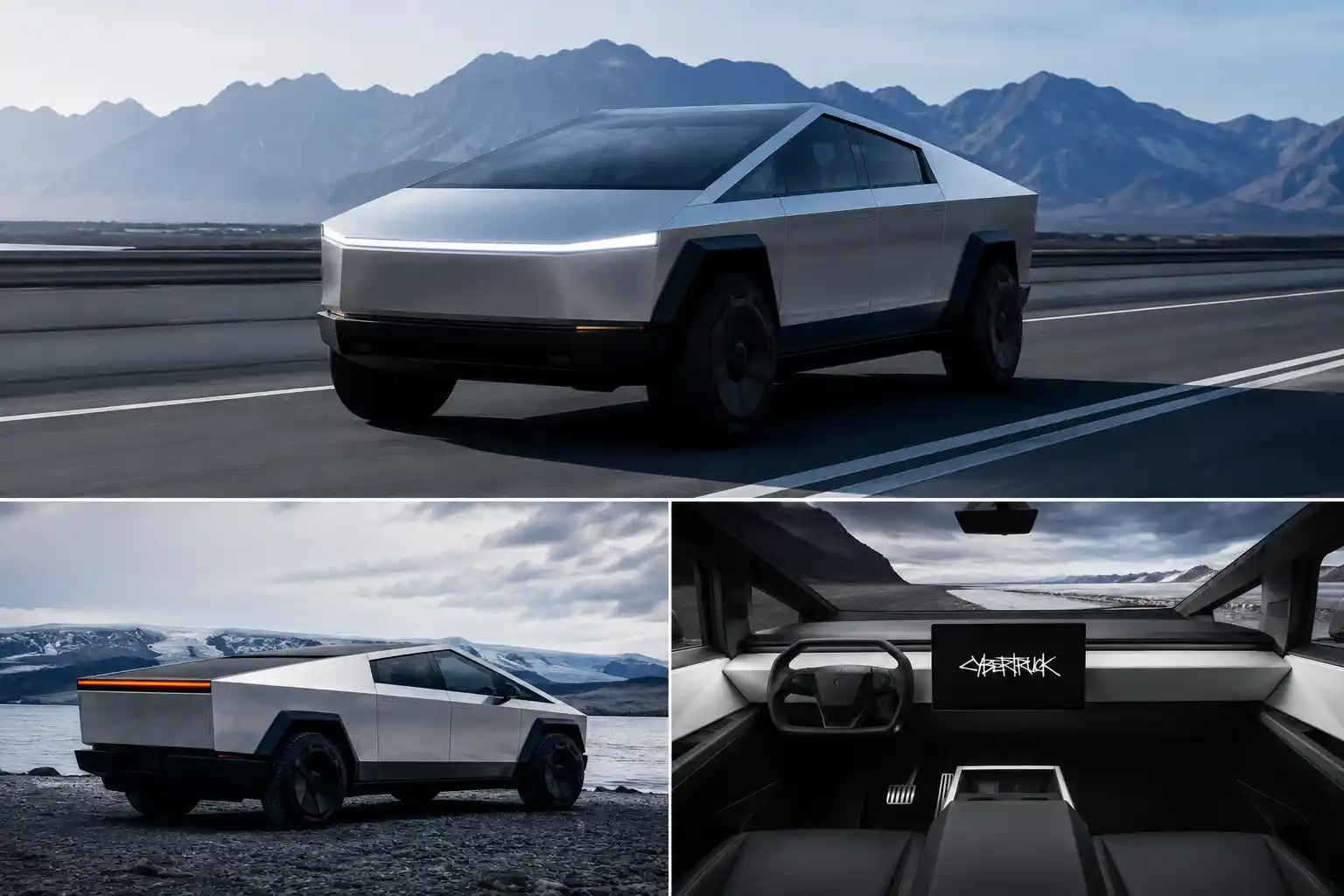
The Cybertruck’s appearance remains one of the most recognizable design decisions in modern automotive history.
Traditional pickup trucks rely on muscular curves and incremental evolution. In contrast, Tesla embraced flat planes, sharp edges, and industrial simplicity.
The stainless steel exterior became central to the vehicle’s identity. Rather than treating the body as decorative skin, Tesla presented durability and engineering visibility as luxury qualities.
The design philosophy introduced several themes:
- Geometric visual identity
- Reduced ornamental styling
- Structural simplicity
- Functional durability
- Futuristic aesthetics
Consequently, the Cybertruck challenged assumptions about premium design.
Design Philosophy Comparison
| Feature | Tesla Cybertruck | Conventional Pickup |
|---|---|---|
| Exterior | Stainless steel exoskeleton | Painted body panels |
| Styling | Geometric | Familiar contours |
| Identity | Technology-first | Utility-first |
| Luxury Signal | Innovation | Heritage |
| Visual Impact | Highly distinctive | Traditional |
Meanwhile, competing manufacturers increasingly introduced sharper styling and more visible technology integration.
The broader impact extends beyond pickup trucks. The Cybertruck demonstrated that polarizing design can become a strategic advantage when paired with strong brand identity.
Technology at the Core of the Experience
The Cybertruck experience does not end at delivery.
Tesla’s broader philosophy centers on software-defined ownership, where vehicles continuously evolve after purchase.
Over-the-air updates remain one of the most important differentiators.
Instead of waiting for new model years, owners receive functionality improvements directly through software deployment. Consequently, the ownership experience feels dynamic rather than fixed.
Core technology themes include:
- Over-the-air feature updates
- Connected digital ecosystem
- Centralized infotainment
- Personalization tools
- AI-assisted convenience features
- Mobile integration
Moreover, software creates long-term engagement.
Traditional luxury vehicles often emphasize craftsmanship and materials. Tesla instead positions digital interaction as premium value.
As a result, buyers increasingly evaluate vehicles through the same lens used for consumer technology products.
This shift has become a defining feature of Tesla innovation.
Why the Cybertruck Became a Cultural Symbol?
Products become cultural symbols when they communicate meaning beyond functionality.
The Cybertruck achieved that transition unusually quickly.
Celebrity ownership amplified visibility. Meanwhile, social media transformed sightings into shareable moments that extended public awareness.
Ownership now carries multiple signals:
- Interest in technology
- Willingness to challenge convention
- Participation in future mobility
- Alignment with innovation culture
- Distinct personal identity
Additionally, scarcity strengthened perception.
Demand and limited production contributed to exclusivity dynamics typically associated with luxury categories.
Consumer psychology also played a major role.
Unlike traditional premium products that reward refinement, the Cybertruck rewards visibility and conversation. Therefore, ownership becomes public participation in a broader cultural movement.
That dynamic helped establish the vehicle as a recognizable modern status symbol.
Tesla Cybertruck vs Competing Premium Vehicles
The Cybertruck competes across several categories simultaneously.
It attracts luxury buyers, technology enthusiasts, pickup consumers, and lifestyle adopters.
Rivian R1T
Rivian emphasizes adventure and premium utility.
Its design feels approachable and refined, while technology supports exploration and outdoor positioning.
GMC Hummer EV Pickup
The Hummer EV combines electrification with dramatic physical presence.
Its appeal focuses on performance and visibility rather than digital ecosystem leadership.
Mercedes-Benz G-Class
The G-Class continues to represent heritage luxury.
Its cultural influence remains strong, although tradition defines much of its premium positioning.
Ford F-150 Lightning
Ford modernizes an established pickup icon.
The strategy prioritizes familiarity and practical electrification.
Competitive Positioning
| Vehicle | Innovation | Luxury | Cultural Impact | Buyer Appeal |
| Tesla Cybertruck | Exceptional | Digital Premium | Extremely High | Technology Leaders |
| Rivian R1T | Advanced | Adventure Luxury | Growing | Explorers |
| GMC Hummer EV Pickup | High | Bold Premium | Strong | Performance Buyers |
| Mercedes-Benz G-Class | Moderate | Heritage Luxury | Iconic | Prestige Buyers |
| Ford F-150 Lightning | High | Practical Premium | Broad | Existing Truck Owners |
The comparison highlights an important distinction.
Competitors extend existing vehicle categories. Tesla created a new cultural category around ownership itself.
The Future of the Cybertruck Phenomenon (2026 and Beyond)
The Cybertruck reflects broader luxury automotive trends 2026.
Prestige increasingly depends on technology integration, sustainability, personalization, and connected ecosystems.
Several developments appear likely:
- Software-defined ownership
- Expanded AI integration
- Personalized vehicle experiences
- Greater digital connectivity
- Sustainability as luxury value
Moreover, affluent consumers increasingly expect products that evolve continuously.
Vehicles may soon function more like digital platforms than traditional mechanical products.
Consequently, future luxury could depend less on heritage and more on adaptability.
The Cybertruck sits directly at the center of this transition.
Unique Insight
The Tesla Cybertruck phenomenon is ultimately not about transportation.
It reflects identity in the digital age.
Ownership increasingly communicates technological optimism and future orientation. Meanwhile, innovation continues replacing heritage as a signal of prestige.
Several insights explain this transformation:
- Design becomes conversation
- Software creates long-term loyalty
- Technology builds emotional attachment
- Buyers seek philosophy as much as products
- Cultural influence strengthens luxury value
Consequently, affluent consumers increasingly pursue products that mirror how they see themselves rather than how luxury historically defined success.
The Cybertruck demonstrates that cultural influence may become just as valuable as engineering excellence in shaping future luxury icons.
Conclusion
The Tesla Cybertruck emerged as far more than a vehicle launch.
It became a case study in how technology, design, and culture intersect to create modern prestige.
Through radical styling, software-driven ownership, and strategic exclusivity, Tesla created one of the most discussed products of the electric era.
Moreover, the vehicle reflects changing definitions of luxury where innovation, identity, and digital ecosystems increasingly shape consumer desire.
As mobility evolves, the Cybertruck may be remembered less as a pickup truck and more as one of the first global symbols of modern technological identity.
Frequently Asked Questions
Why is the Cybertruck considered a phenomenon?
Its combination of design, technology, exclusivity, and media attention created influence far beyond automotive audiences.
Is the Cybertruck a luxury vehicle?
Many consumers view it as a luxury electric vehicle because of innovation, premium pricing, and ownership experience.
How did Tesla create so much attention?
Tesla used unconventional design, viral exposure, and ecosystem thinking to sustain public discussion.
Does software matter in modern vehicle ownership?
Yes. Software increasingly shapes convenience, personalization, and long-term customer engagement.
Why do affluent buyers choose the Cybertruck?
Many value uniqueness, innovation leadership, and visible technological identity.
Is the Tesla Cybertruck practical for daily use?
Yes. The Tesla Cybertruck combines utility, connectivity, and digital functionality for everyday ownership.
How does Cybertruck compare to Rivian R1T?
Cybertruck emphasizes disruption and ecosystem integration, while Rivian focuses on premium adventure experiences.
Will software define future luxury vehicles?
Current trends suggest digital capabilities will become central to premium ownership.
What role does social media play in the Cybertruck phenomenon?
Social visibility accelerates awareness and reinforces ownership identity.
Could future status symbols become technology products?
Many indicators suggest innovation and connected experiences will increasingly define prestige.