The Mercedes-Benz C-Class continues to hold a unique position in the global automotive market because it represents more than transportation. For decades, the model has served as one of the most recognizable gateways into German luxury ownership, combining prestige, recognizable branding, and executive-style design in a relatively attainable package. Even in 2026, when SUVs dominate global sales charts, the Mercedes C-Class Status Symbol remains deeply relevant among urban professionals, first-time luxury buyers, and aspirational consumers seeking social recognition through automotive ownership.
The appeal of the C-Class is rooted in symbolism as much as engineering. In many cities across Europe, Asia, the Middle East, and North America, driving a Mercedes-Benz still communicates professional achievement and financial progress. Consequently, the C-Class occupies a strategic role within the Mercedes-Benz hierarchy because it allows buyers to participate in premium branding without entering flagship pricing territory associated with larger luxury sedans like the E-Class or S-Class.
Meanwhile, the global luxury compact sedan segment has evolved into a highly competitive battlefield. Rivals such as the BMW 3 Series and Audi A4 continue to challenge Mercedes with sharper driving dynamics, advanced technology, and aggressive financing strategies. Nevertheless, the Mercedes C-Class Status Symbol endures because it bridges aspiration with accessibility. For many consumers, especially younger professionals entering higher income brackets, the car acts as a visible marker of career advancement while still maintaining everyday usability and manageable ownership costs compared with larger luxury vehicles.
Mercedes C-Class Status Symbol: Why It Still Defines Entry Luxury Prestige
The Mercedes C-Class Status Symbol remains influential because it serves as the entry point into one of the world’s strongest luxury automotive brands. Within the Mercedes-Benz lineup, the C-Class sits below the E-Class and S-Class, yet it inherits much of the design philosophy, interior styling, and branding cues associated with those flagship models. Therefore, buyers often perceive the vehicle as offering “big Mercedes energy” at a lower financial threshold.
From a consumer psychology perspective, the three-pointed star badge carries enormous symbolic weight. In many urban markets, owning a Mercedes-Benz still communicates sophistication, stability, and upward mobility. The C-Class specifically appeals to consumers who want the prestige of a German luxury car without entering ultra-premium pricing categories. Consequently, the vehicle functions as a status shortcut for buyers seeking social validation through recognizable luxury branding.
However, the balance between affordability and prestige is delicate. While the C-Class is considered an entry-level Mercedes luxury model, ownership costs can still be substantial compared with mainstream sedans. Insurance premiums, dealership servicing, premium fuel requirements, and optional technology packages increase long-term expenses. Moreover, rising vehicle prices in 2026 have narrowed the affordability gap between entry luxury sedans and larger crossover SUVs.
Nevertheless, the C-Class continues to define the executive compact sedan category because it combines luxury perception with practical daily usability. Buyers receive compact dimensions suited to urban driving, a refined cabin experience, and access to the Mercedes ecosystem without the financial burden associated with flagship luxury ownership. That balance remains central to the Mercedes C-Class Status Symbol in modern automotive culture.
Key Reasons the C-Class Maintains Prestige
- Recognizable Mercedes-Benz branding globally
- Lower entry cost than flagship luxury models
- Executive-style exterior styling
- Strong urban image among professionals
- High perceived luxury value relative to size
- Widespread leasing and financing accessibility
- Association with career achievement and success
Design, Branding, and Identity Behind Mercedes C-Class Status Symbol
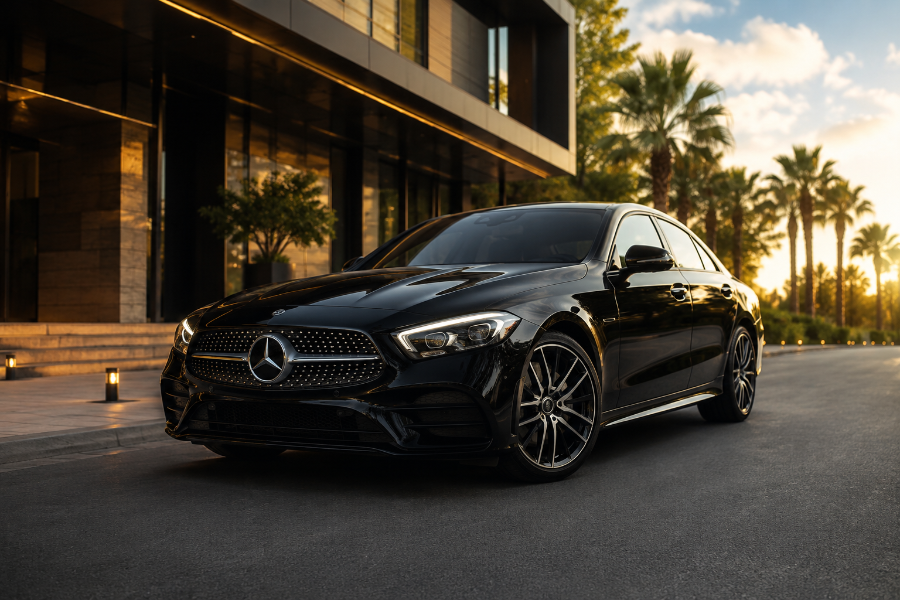
Mercedes-Benz has carefully evolved the C-Class design language to mirror its larger luxury sedans. The 2026 model features smoother body lines, aggressive LED lighting signatures, and grille styling closely linked to higher-end Mercedes products. Consequently, many consumers perceive the car as more premium than its actual market position suggests.
The exterior design strategy plays a major role in maintaining the Mercedes C-Class Status Symbol. Buyers are not simply purchasing transportation; they are purchasing visual association with a globally recognized luxury brand. The design intentionally echoes the styling identity of the S-Class because Mercedes understands that visual continuity strengthens aspirational appeal throughout its lineup hierarchy.
Inside the cabin, digitalization has become central to luxury perception. The latest C-Class integrates large infotainment displays, ambient lighting systems, minimalist dashboard architecture, and customizable driver interfaces. Meanwhile, premium materials and advanced software features help elevate the ownership experience beyond what traditional compact sedans typically offer. Buyers increasingly associate digital sophistication with modern luxury, especially younger consumers entering the premium compact cars segment.
However, branding perception sometimes exceeds actual performance capability. While the cabin experience feels premium, the C-Class still operates within the limitations of an entry luxury platform. Rear seat space remains moderate, ride comfort varies depending on wheel configuration, and certain materials in lower trims may not fully match flagship luxury standards. Nevertheless, Mercedes successfully creates perceived luxury elevation through design coherence and advanced technology presentation.
Elements That Strengthen Luxury Perception
- S-Class-inspired exterior styling
- Large digital cockpit displays
- Ambient lighting customization
- Premium branding consistency
- Minimalist luxury interior design
- Advanced infotainment integration
- Urban executive visual identity
Mercedes C-Class vs Key Entry Luxury Rivals (2026)
| Model | Brand Perception | Interior Tech | Driving Comfort | Status Appeal | Price Positioning |
|---|---|---|---|---|---|
| Mercedes C-Class | Strong luxury prestige | Highly digital | Comfort-focused | Very high | Premium |
| BMW 3 Series | Sporty executive image | Advanced | Driver-focused | High | Competitive |
| Audi A4 | Modern understated luxury | Refined interface | Balanced | Moderate-high | Slightly lower |
| Genesis G70 | Emerging premium identity | Strong value tech | Comfortable | Growing | Aggressive pricing |
Why the Mercedes C-Class Appeals to Young Professionals?
Young professionals represent one of the most important demographics for the Mercedes C-Class Status Symbol. Many buyers in their late twenties and thirties view the vehicle as a reward for career advancement and financial growth. Consequently, the car often becomes a symbolic “first luxury identity marker” rather than merely a practical transportation decision.
Leasing and financing trends have significantly expanded access to entry-level Mercedes luxury vehicles. In 2026, monthly payment structures dominate the luxury compact sedan market, allowing consumers to prioritize brand experience over outright ownership costs. Therefore, many buyers focus less on total vehicle price and more on achievable monthly affordability. This financing culture supports continued demand for premium compact cars among urban professionals.
Corporate image also plays an important role. In industries such as finance, consulting, technology, and real estate, vehicle ownership can subtly influence personal branding. Driving a Mercedes-Benz often reinforces perceptions of professionalism and success. Meanwhile, the C-Class provides enough luxury visibility to satisfy image-conscious buyers without appearing excessively extravagant.
However, financial practicality remains an important consideration. Entry luxury ownership can create pressure through insurance costs, maintenance requirements, and rapid depreciation. Some younger consumers may prioritize the prestige factor while underestimating long-term expenses. Nevertheless, the C-Class continues to succeed because it offers a compromise between aspiration and relative accessibility within the German luxury cars segment.
Why Professionals Choose the C-Class
- Career success signaling
- Executive appearance without flagship pricing
- Flexible leasing options
- Daily urban usability
- Strong social recognition factor
- Premium technology features
- Manageable size for city driving
Performance vs Perception: What the C-Class Really Offers?
The Mercedes C-Class Status Symbol is often stronger than its actual performance credentials. Most 2026 C-Class variants rely on turbocharged four-cylinder engines combined with mild hybrid systems designed to improve fuel efficiency and reduce emissions. These powertrains deliver smooth acceleration and refined commuting performance, but they are not intended to rival high-performance sports sedans.
Ride comfort remains one of the model’s strongest practical attributes. Mercedes prioritizes cabin refinement, noise insulation, and suspension tuning aimed at relaxed daily driving. Consequently, the C-Class appeals more to buyers seeking premium comfort than aggressive driving engagement. In contrast, the BMW 3 Series continues to attract enthusiasts prioritizing sharper handling dynamics.
Fuel efficiency also contributes to the C-Class appeal in urban markets. Smaller turbocharged engines combined with hybrid assistance provide reasonable consumption figures while preserving premium driving refinement. Therefore, the model aligns well with modern consumer expectations surrounding efficiency and environmental awareness in luxury compact sedan ownership.
However, there is a noticeable gap between perceived luxury and actual mechanical positioning. Some consumers associate the Mercedes badge with high-performance engineering excellence, yet the standard C-Class primarily functions as a comfortable executive commuter vehicle. Nevertheless, perception often matters more than outright performance in the entry luxury sedan category.
Real-World Performance Characteristics
- Turbocharged four-cylinder engines
- Mild hybrid efficiency systems
- Smooth highway cruising capability
- Comfort-oriented suspension tuning
- Balanced fuel economy
- Moderate rear passenger space
- Better daily usability than outright sportiness
The Role of Technology in Maintaining Status Appeal
Technology has become essential to maintaining the Mercedes C-Class Status Symbol in 2026. Luxury buyers increasingly evaluate vehicles based on digital experiences rather than traditional mechanical prestige alone. Consequently, Mercedes invests heavily in infotainment presentation, connectivity features, and software-driven personalization.
The MBUX infotainment system remains central to the ownership experience. Large touchscreen displays, voice-command integration, and AI-supported interface functions create a highly modern cabin atmosphere. Moreover, younger buyers often associate advanced digital ecosystems with premium value, particularly in urban luxury markets where technology adoption strongly influences purchasing decisions.
Driver assistance systems also reinforce premium positioning. Adaptive cruise control, lane-keeping systems, parking assistance, and semi-autonomous functions contribute to a perception of technological sophistication. Meanwhile, connectivity features such as smartphone integration, over-the-air updates, and personalized user profiles strengthen customer engagement with the vehicle ecosystem.
However, rising technology expectations create new challenges. Consumers increasingly compare luxury sedans with software-focused competitors including Tesla and emerging EV brands. Consequently, Mercedes must continuously update digital systems to maintain relevance in the executive compact segment. The luxury experience now depends as much on software responsiveness as physical craftsmanship.
Important Technology Features
- MBUX infotainment ecosystem
- AI-enhanced voice commands
- Digital driver displays
- Smartphone connectivity integration
- Semi-autonomous driving assistance
- Personalized cabin settings
- Over-the-air software updates
Entry Luxury Sedan vs Premium SUV (Ownership Comparison)
| Factor | Entry Luxury Sedan | Premium SUV |
|---|---|---|
| Status Appeal | Executive sophistication | Lifestyle prestige |
| Driving Experience | Lower center of gravity | Elevated visibility |
| Practicality | Moderate | Higher cargo flexibility |
| Cost Efficiency | Better fuel economy | Higher operating costs |
| Urban Use | Easier parking and maneuvering | Larger footprint |
| Prestige Factor | Traditional luxury identity | Modern luxury trend |
Market Position: Why the C-Class Still Sells Strong Globally?
The Mercedes C-Class continues to perform strongly because Mercedes-Benz maintains exceptional global brand equity. In emerging markets especially, German luxury cars remain powerful symbols of social mobility and financial achievement. Consequently, the C-Class benefits from aspirational demand across regions including Asia, the Middle East, and Eastern Europe.
Corporate leasing also plays a major role in sustaining demand. Many companies include executive compact sedans within employee compensation structures, particularly in Europe. Therefore, the C-Class remains deeply embedded in fleet purchasing strategies despite growing SUV popularity. This fleet presence further reinforces public visibility and status perception.
Meanwhile, entry luxury models function as critical volume drivers for luxury automakers. Mercedes understands that many future E-Class or S-Class customers begin their brand journey with the C-Class. Therefore, maintaining strong appeal in the compact luxury segment supports long-term customer loyalty and broader brand ecosystem growth.
However, competitive pressure continues to intensify. BMW, Audi, Genesis, and Tesla all target affluent younger buyers with increasingly advanced products. Rising technology expectations and changing consumer preferences toward crossovers create additional pressure. Nevertheless, the Mercedes C-Class Status Symbol retains resilience because of decades of established prestige and strong global recognition.
Challenges Facing Mercedes C-Class Status Symbol Positioning
SUV dominance remains one of the largest threats facing luxury compact sedans. Many consumers now prefer crossover practicality, elevated seating positions, and family-oriented versatility. Consequently, traditional sedans face declining market share in several global regions, particularly North America.
Competition has also become significantly stronger. Brands such as Genesis now offer impressive interior quality and advanced technology at lower price points. Meanwhile, Tesla continues reshaping luxury expectations around software and electrification rather than traditional craftsmanship. Therefore, Mercedes faces pressure from both established German rivals and disruptive new entrants.
Pricing increases present another challenge. Modern luxury vehicles incorporate increasingly expensive technology systems, safety equipment, and emissions compliance engineering. As a result, the C-Class has become less accessible than earlier generations, potentially weakening its role as an attainable entry-level Mercedes luxury product.
Nevertheless, Mercedes still benefits from unmatched heritage in luxury branding. While newer competitors may offer stronger value propositions, many buyers continue prioritizing symbolic brand recognition over purely rational purchasing criteria. The Mercedes C-Class Status Symbol remains rooted in emotional appeal as much as objective product analysis.
Key Challenges Facing the C-Class
- Declining sedan popularity
- Rising ownership costs
- Intense luxury segment competition
- Higher consumer tech expectations
- EV transition pressures
- Brand dilution risks in entry segment
- SUV market dominance globally
Future of Entry Luxury Sedans in 2026 and Beyond
The future of the luxury compact sedan segment will increasingly depend on electrification, software integration, and personalization. Mercedes-Benz is already shifting toward hybrid and EV-focused platforms designed to meet tightening emissions regulations and evolving consumer expectations. Consequently, future C-Class models will likely prioritize digital ecosystems as heavily as mechanical engineering.
Subscription-based ownership models are also reshaping the luxury market. Younger consumers increasingly value flexibility over long-term ownership commitments. Therefore, leasing, short-term subscriptions, and software-enabled upgrade systems may become central to how entry luxury vehicles are marketed and consumed.
Artificial intelligence integration will further influence luxury perception. Personalized interfaces, predictive driver assistance, and adaptive digital environments are expected to define premium experiences in the coming decade. Meanwhile, luxury branding itself may become increasingly tied to technological sophistication rather than traditional engine performance.
Despite the shift toward SUVs and crossovers, compact luxury sedans are unlikely to disappear entirely. The Mercedes C-Class Status Symbol continues to represent professional identity, executive elegance, and aspirational achievement in ways that many utility-focused vehicles cannot fully replicate. For many consumers, the C-Class remains less about speed or practicality and more about communicating social progress and personal success.
FAQs
Why is the Mercedes C-Class considered a status symbol?
The C-Class carries the prestige of the Mercedes-Benz brand while remaining relatively accessible compared with larger luxury models. It symbolizes professional achievement and social mobility.
Is the C-Class a good first luxury car?
Yes. It offers premium branding, modern technology, and manageable dimensions, making it popular among first-time luxury buyers.
How does the C-Class compare to BMW 3 Series?
The C-Class prioritizes comfort and luxury perception, while the BMW 3 Series focuses more heavily on sporty driving dynamics.
Is the Mercedes C-Class expensive to maintain?
Maintenance costs are generally higher than mainstream sedans due to premium parts, dealership servicing, and insurance expenses.
What makes the C-Class popular among young professionals?
Its combination of prestige, leasing accessibility, urban usability, and executive-style design appeals strongly to career-focused buyers.
Does the C-Class feel like a real luxury car?
Yes, especially in cabin design and technology presentation. However, it remains an entry luxury model rather than a flagship premium sedan.
What engine options does the C-Class have in 2026?
Most variants use turbocharged four-cylinder engines combined with mild hybrid systems for improved efficiency and refinement.
Is the C-Class better than an SUV?
It depends on priorities. Sedans provide sharper road manners and executive styling, while SUVs offer greater practicality and versatility.
Why do people buy entry-level Mercedes cars?
Many buyers want access to Mercedes-Benz prestige without paying flagship luxury prices. Brand recognition plays a major role.
Is the C-Class still relevant in 2026?
Yes. Despite SUV dominance, the C-Class remains important because it combines luxury branding, technology, and aspirational value in a compact package.