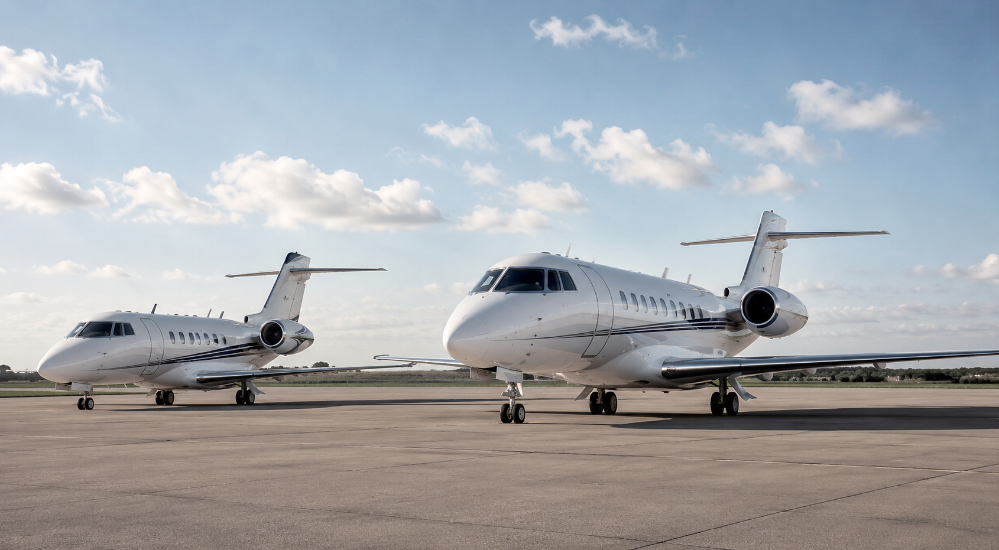
The debate around Light Jet vs Midsize Jet has become increasingly important as private aviation enters a new phase of growth in 2026. Across the global charter market, both business and leisure travelers are reevaluating how they use private aircraft, with a stronger focus on efficiency, productivity, flexibility, and operational value rather than pure luxury symbolism. As regional travel demand rises and airport congestion continues affecting commercial airlines, private jet charter operators are seeing renewed interest in aircraft categories optimized for different mission profiles.
A decade ago, many travelers simply selected aircraft based on prestige or cabin appearance. However, the modern private aviation market is far more data-driven. Corporate executives now compare runway access, flight range, charter pricing, fuel burn, and turnaround efficiency before selecting a business jet category. Consequently, the decision between a light private jet and a midsize private jet increasingly reflects operational strategy as much as passenger comfort.
The expansion of on-demand charter platforms and fractional ownership programs is also reshaping private aviation in 2026. Travelers are booking shorter regional flights more frequently while simultaneously demanding nonstop capability for mid-range business missions. This shift has elevated the importance of the Light Jet vs Midsize Jet discussion because both aircraft classes serve distinct but overlapping segments of the evolving private jet charter market.
Light Jet vs Midsize Jet: Understanding the Core Differences
The primary distinction in the Light Jet vs Midsize Jet comparison centers on cabin dimensions, flight range, and operational capability. Light jets are generally designed for short- to medium-range regional travel and typically accommodate between six and eight passengers. Aircraft in this category prioritize efficiency, lower operating costs, and access to smaller airports. Popular examples include the Citation CJ3+, Phenom 300, and Learjet 75.
Midsize private jets, by comparison, are built to deliver longer nonstop flights while improving cabin comfort and baggage capacity. These aircraft usually seat seven to nine passengers and provide greater cabin height, wider seating arrangements, and larger lavatory areas. Models such as the Citation Latitude, Hawker 800XP, and Gulfstream G280 represent the core midsize segment used heavily in executive charter operations.
From an operational perspective, light jets excel in regional connectivity. They can often use shorter runways and secondary airports closer to urban centers. This capability significantly reduces total travel time for short business trips. However, these aircraft may face payload restrictions on longer routes, particularly when carrying full passenger loads or larger baggage volumes.
Midsize jets offer superior endurance and cruise performance. They can handle coast-to-coast missions in many regions while maintaining higher passenger comfort standards. Nevertheless, larger aircraft dimensions and increased fuel consumption translate into higher charter pricing and operating expenses. Therefore, selecting the appropriate category depends heavily on route length, passenger count, and mission flexibility.
Performance, Range & Operational Flexibility
Range capability remains one of the most important variables in the business jet comparison market. Most light private jets offer ranges between 1,500 and 2,200 nautical miles, making them ideal for regional routes such as Dubai to Riyadh, New York to Miami, or London to Geneva. Their performance profile supports fast executive movement across high-frequency business corridors.
However, midsize jets generally extend range capability into the 2,300 to 3,000 nautical mile segment. This operational difference enables nonstop travel on longer sectors that would otherwise require fuel stops in a light jet. Consequently, midsize aircraft are more attractive for executives prioritizing schedule reliability and uninterrupted productivity during travel.
Runway flexibility is another major differentiator. Light jets are engineered to operate from shorter airfields and secondary airports where larger aircraft may face restrictions. This advantage is increasingly relevant in 2026 as regional airport demand grows worldwide. Smaller airports reduce congestion, improve boarding efficiency, and provide closer proximity to industrial zones and business districts.
Nevertheless, midsize jets compensate with stronger high-altitude cruise performance and enhanced weather capability. Many midsize aircraft cruise faster and higher than light jets, allowing them to avoid turbulence and optimize fuel-efficient routing. Therefore, while light jets maximize airport accessibility, midsize jets often improve overall long-distance operational consistency.
Light Jet vs Midsize Jet Comparison
| Feature | Light Jet | Midsize Jet |
|---|---|---|
| Typical Range | 1,500–2,200 nm | 2,300–3,000 nm |
| Passenger Capacity | 6–8 | 7–9 |
| Cabin Height | Limited stand-up space | Partial or full stand-up cabin |
| Cruise Speed | 430–460 knots | 450–520 knots |
| Baggage Capacity | Moderate | Higher volume |
| Charter Cost | Lower hourly rate | Higher hourly rate |
| Runway Flexibility | Excellent | Moderate |
| Best Mission | Regional trips | Mid-range executive travel |
Cabin Comfort & Passenger Experience
Passenger experience increasingly influences aircraft selection decisions within the private aviation 2026 market. Light jets provide comfortable interiors for short business missions, but cabin dimensions remain relatively compact. Most light jets do not offer full stand-up height, which can become noticeable during flights exceeding three hours.
Despite size limitations, modern light jets have evolved considerably. Aircraft manufacturers now integrate advanced soundproofing, touchscreen cabin controls, Wi-Fi connectivity, and ergonomic seating into smaller cabins. Consequently, many executives consider light jets highly efficient mobile offices for regional travel without paying premium midsize charter rates.
Midsize private jets elevate cabin comfort substantially. Wider fuselage dimensions create more personal space between passengers while enabling larger worktables and conference-style seating layouts. This configuration supports in-flight meetings, collaborative discussions, and longer productivity windows for corporate teams traveling together.
Noise levels also improve significantly in midsize cabins due to stronger insulation systems and aircraft design improvements. Moreover, larger baggage compartments allow travelers to transport golf equipment, presentation materials, or extended-trip luggage more comfortably. However, the increased comfort comes with operational trade-offs including higher fuel burn and elevated charter pricing.
Charter Pricing & Ownership Economics
Charter economics remain central to the Light Jet vs Midsize Jet decision-making process. Light jets generally offer lower hourly charter rates, typically ranging from $2,500 to $4,500 per flight hour depending on aircraft age, operator structure, and regional market conditions. These aircraft are especially attractive for companies seeking efficient short-haul mobility without excessive operating overhead.
Fuel efficiency is a major reason light jets remain popular in the on-demand charter market. Smaller engines and lighter airframes consume less fuel, reducing both direct operating costs and environmental impact. In an era where sustainability pressure is growing across aviation sectors, this operational efficiency matters increasingly to corporate travel managers.
Midsize jets command higher hourly charter rates, often between $4,500 and $8,000 per hour. Nevertheless, travelers frequently justify these costs through increased nonstop capability, improved passenger comfort, and stronger mission flexibility. A longer-range aircraft can eliminate refueling stops that would otherwise disrupt executive schedules and increase total travel time.
Ownership economics further widen the gap between categories. Maintenance reserves, crew salaries, insurance costs, and hangar fees rise substantially with aircraft size. Therefore, fractional ownership buyers and charter operators must carefully balance passenger expectations against utilization efficiency when selecting fleet composition.
Private Jet Charter Economics
| Category | Estimated Hourly Cost | Fuel Usage | Best Mission Type | Airport Flexibility | Comfort Level |
|---|---|---|---|---|---|
| Light Jet | $2,500–$4,500 | Lower | Regional business travel | Very High | Moderate |
| Midsize Jet | $4,500–$8,000 | Moderate–High | Longer executive trips | High | High |
Which Travelers Prefer Light Jets?
Light private jets remain highly attractive for regional executives and entrepreneurs who prioritize efficiency over cabin size. These travelers often conduct multiple short business trips within a single week and value reduced turnaround times more than extended onboard amenities. Consequently, light jets dominate high-frequency regional charter sectors worldwide.
Smaller travel groups also benefit significantly from the economics of light jets. A company transporting four to six executives on short routes can achieve strong value while maintaining privacy and scheduling flexibility unavailable through commercial airlines. Moreover, light jets allow travelers to avoid major hub congestion by using secondary airports closer to final destinations.
The rise of technology-driven charter platforms in 2026 has further strengthened demand for light aircraft. Digital booking systems now allow businesses to secure regional aircraft rapidly with transparent pricing structures. As cost sensitivity grows among corporate travel departments, many organizations increasingly prefer smaller jets for shorter missions.
However, light jets are less suitable for long-duration leisure travel involving extensive luggage requirements or larger passenger groups. Limited baggage capacity and compact cabins may reduce comfort during multi-hour flights. Therefore, while highly efficient, light jets perform best when operational speed and airport access are prioritized above luxury cabin space.
Why Midsize Jets Dominate Premium Charter Demand?
Midsize private jets continue dominating premium executive charter demand because they combine longer-range capability with significantly improved cabin comfort. Corporate travelers conducting interstate or international business often prefer nonstop travel to maximize productivity and reduce scheduling risk.
The ability to hold meetings in-flight remains a key advantage for midsize aircraft. Larger cabins support face-to-face collaboration while allowing passengers to move more freely during longer journeys. Consequently, midsize jets increasingly function as mobile executive offices rather than simple transportation assets.
Leisure travelers also contribute heavily to midsize charter growth. Families and high-net-worth individuals frequently prioritize baggage space, cabin comfort, and onboard amenities for holiday travel. Ski equipment, luxury shopping luggage, and extended-stay baggage requirements are easier to accommodate in midsize aircraft compared with light jets.
Nevertheless, midsize aircraft are not universally superior. Their higher operational costs make them less economical for short regional sectors where flight duration may only be one or two hours. Therefore, charter operators carefully match aircraft size to mission requirements to optimize both profitability and customer satisfaction.
2026 Private Aviation Trends Reshaping Charter Markets
The global private aviation sector continues evolving rapidly in 2026 due to shifting business travel patterns and expanding regional connectivity. One of the most significant developments is the growth of on-demand charter membership programs and fractional ownership structures. Travelers increasingly prefer flexible access models over full aircraft ownership because they reduce capital exposure while preserving mobility benefits.
Regional private aviation demand is also expanding beyond traditional luxury markets. Secondary cities and industrial regions now generate stronger charter traffic as businesses seek direct connections unavailable through commercial airline networks. This trend particularly benefits light jets due to their superior airport accessibility and lower operating costs.
Sustainability pressure is another defining industry trend. Operators are investing in sustainable aviation fuel programs, optimized routing systems, and newer aircraft with improved fuel efficiency. Consequently, light jets gain competitive advantages in environmentally conscious travel planning because they generally consume less fuel per mission than larger aircraft categories.
Technology-driven booking ecosystems are further transforming charter operations. Artificial intelligence-based pricing systems, digital fleet management, and real-time aircraft availability platforms are streamlining charter access worldwide. Private aviation increasingly resembles productivity-focused mobility infrastructure rather than purely aspirational luxury transportation.
The broader Light Jet vs Midsize Jet discussion ultimately reflects this market transformation. Smaller jets emphasize operational efficiency, rapid regional access, and cost control, while midsize aircraft prioritize executive comfort and extended mission capability. As business aviation matures, travelers are selecting aircraft based less on prestige and more on measurable operational outcomes.
FAQs
What is the difference between Light Jet vs Midsize Jet?
The main difference involves range, cabin size, passenger comfort, and operating economics. Light jets focus on efficient regional travel, while midsize jets provide longer-range capability and enhanced cabin comfort.
Which private jet is cheaper to charter?
Light private jets are generally cheaper to charter because they consume less fuel and have lower operating costs compared with midsize aircraft.
How far can a light jet fly?
Most light jets can fly between 1,500 and 2,200 nautical miles depending on passenger load, weather conditions, and aircraft model.
What is a midsize private jet?
A midsize private jet is a business aircraft category offering larger cabins, longer range, and improved passenger comfort compared with light jets.
Which jet is better for business travel?
The answer depends on mission requirements. Light jets suit short regional business trips, while midsize jets are better for longer nonstop executive travel.
Are midsize jets more comfortable?
Yes. Midsize jets usually provide more cabin space, better noise insulation, larger lavatories, and improved seating layouts for longer flights.
How many passengers fit in a light jet?
Most light jets accommodate six to eight passengers comfortably depending on cabin configuration and baggage requirements.
What are the operating costs of midsize jets?
Operating costs include fuel, maintenance, crew salaries, insurance, and hangar fees. These costs are significantly higher than light jet operating expenses.
Which jet category is best for regional travel?
Light jets are generally better for regional travel because of their lower costs and ability to access smaller airports efficiently.
Is private jet charter worth it in 2026?
For businesses and travelers prioritizing time savings, schedule flexibility, privacy, and regional connectivity, private jet charter remains highly valuable in 2026.