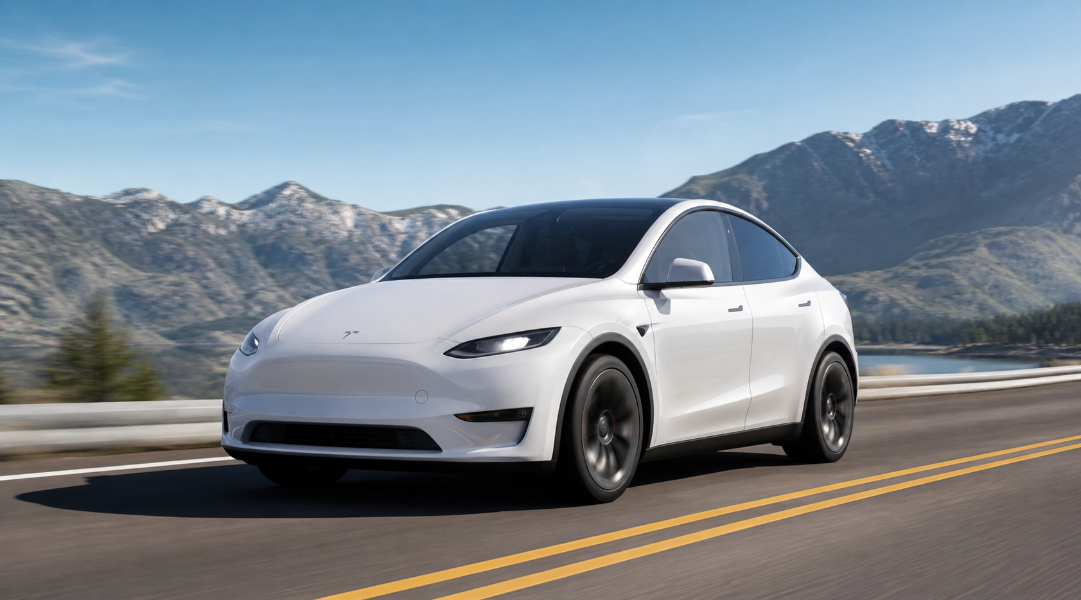
The Tesla Model Y has become one of the defining vehicles of the modern automotive industry. What began as an expansion of Tesla’s electric vehicle lineup has evolved into a global commercial success that reshaped expectations around electric mobility, crossover practicality, and software-defined transportation. In 2026, the Tesla Model Y remains one of the world’s most recognizable electric SUVs and continues to influence how legacy automakers approach electrification.
Its rise reflects a broader transformation within the automotive market. Consumers are no longer viewing electric vehicles as niche environmental products aimed primarily at early adopters. Instead, EVs have entered the mainstream, particularly in the crossover SUV category where practicality, cargo space, efficiency, and technology matter more than traditional performance metrics. The Tesla Model Y sits directly at the center of this transition, combining everyday usability with a highly integrated software ecosystem and extensive charging infrastructure.
Moreover, the Tesla Model Y has become symbolic of a new automotive value proposition. Traditional car buying decisions once focused heavily on engine displacement, mechanical refinement, and dealership experience. However, buyers increasingly prioritize software features, charging accessibility, battery efficiency, and over-the-air updates. Consequently, Tesla’s approach to vehicle design and ownership has helped the Model Y emerge as a benchmark in the global electric SUV market while also intensifying competition across the broader EV industry.
Tesla Model Y and the Rise of the Global Electric SUV Market
The global electric SUV market expanded rapidly between 2022 and 2026, driven largely by consumer demand for practical family-oriented vehicles rather than compact commuter EVs. Crossovers and SUVs already dominated traditional gasoline-powered markets in the United States, China, and Europe. Therefore, it was inevitable that electric mobility would eventually follow the same pattern. The Tesla Model Y entered the market at precisely the moment consumers began seeking larger EVs with real-world usability.
One of Tesla’s major advantages was timing. While many automakers initially focused on compact electric sedans or compliance vehicles, Tesla recognized that the crossover segment represented the largest opportunity for mass adoption. The Tesla Model Y offered elevated seating, strong cargo capacity, dual-motor performance options, and long-range capability without sacrificing efficiency. Consequently, it appealed to both existing Tesla owners and mainstream SUV buyers transitioning from gasoline-powered vehicles.
Another critical factor was consumer psychology. Many buyers were hesitant to switch to electric cars because earlier EVs often appeared experimental or compromised. However, the Tesla Model Y resembled a familiar modern crossover while still delivering the technological identity associated with Tesla. This balance between familiarity and innovation helped the vehicle expand beyond tech enthusiasts and environmentally conscious early adopters.
Nevertheless, the broader electric SUV market also exposed Tesla to increasing pressure. Legacy automakers such as BMW, Hyundai, and Volkswagen accelerated EV production programs targeting the same consumer base. Chinese manufacturers also expanded aggressively with lower-cost alternatives. As a result, Tesla’s dominance in the electric SUV market became more difficult to maintain despite the Model Y’s strong sales leadership.
Key Drivers Behind Electric SUV Growth
- Consumers prefer higher seating positions and versatile interiors
- Improved battery density made larger EVs more practical
- Government incentives accelerated EV adoption globally
- Charging infrastructure improved significantly across major markets
- Families increasingly prioritized technology integration and safety systems
- Automakers shifted investments away from sedans toward crossovers
- Fleet operators and ride-share services adopted electric SUVs rapidly
Why Tesla Model Y Became a Global Sales Phenomenon?
The Tesla Model Y’s global success is closely tied to Tesla’s manufacturing strategy and pricing efficiency. Unlike many competitors that relied on fragmented supply chains and slower production systems, Tesla designed its Gigafactories to maximize vertical integration and manufacturing speed. This allowed the company to scale production rapidly while continuously refining battery efficiency and assembly methods.
Tesla’s pricing strategy also played a major role. Although the Model Y occupies the premium EV category, it often undercut luxury electric rivals while offering stronger charging infrastructure and software capabilities. In several markets, buyers viewed the vehicle as a relatively attainable premium EV rather than an ultra-luxury product. Consequently, Tesla expanded beyond affluent early adopters and attracted middle-income households seeking long-term operating savings.
Another reason for the Model Y’s success lies in its broad regional appeal. In North America, it appealed to consumers replacing midsize gasoline SUVs. In Europe, it benefited from tightening emissions regulations and urban electrification policies. Meanwhile, in China, Tesla leveraged local manufacturing and strong brand recognition to compete directly with domestic EV manufacturers. This global adaptability distinguished the Tesla Model Y from several competitors that struggled to achieve consistent demand across multiple regions.
However, Tesla’s rapid expansion also created challenges. Production ramp-ups occasionally led to criticism regarding build quality consistency, panel alignment, and interior refinement. Additionally, repeated price adjustments generated uncertainty among consumers regarding resale values. While Tesla maintained strong sales momentum, these concerns highlighted the risks associated with aggressive scaling strategies.
Factors Behind Tesla Model Y Sales Leadership
- Large-scale Gigafactory production reduced manufacturing costs
- Broad appeal across family, commuter, and premium buyer segments
- Strong brand recognition in global EV markets
- Extensive charging network improved ownership convenience
- Efficient battery technology increased real-world usability
- Continuous software improvements enhanced long-term vehicle value
- Competitive pricing compared with luxury EV rivals
Tesla Model Y vs Global EV Rivals
| Vehicle | Starting Price | Estimated Range | Charging Network | Technology Ecosystem | Cargo Space | Efficiency | Overall Value |
|---|---|---|---|---|---|---|---|
| Tesla Model Y | Mid-premium | High | Extensive Supercharger access | Strong OTA software | Excellent | Very High | Strong |
| Hyundai Ioniq 5 | Competitive | High | Expanding third-party networks | Advanced infotainment | Very Good | High | Strong |
| BMW iX3 | Premium | Moderate | Public charging dependent | Luxury-focused software | Good | Moderate | Premium-oriented |
| Volkswagen ID.4 | Affordable-mid | Moderate | Regional charging networks | Practical digital interface | Good | Moderate | Balanced |
| BYD Sealion EV | Aggressive pricing | Competitive | China-focused infrastructure | Rapidly improving ecosystem | Strong | High | High in Asia |
Technology, Software & Charging Advantage
Tesla’s software ecosystem remains one of the defining advantages of the Tesla Model Y. Unlike traditional automakers that often separate hardware and software development across multiple suppliers, Tesla maintains tight integration between vehicle systems, battery management, infotainment, and cloud connectivity. Consequently, owners receive frequent over-the-air updates that improve functionality without requiring dealership visits.
The Tesla Model Y also benefits from a highly simplified interior design philosophy centered around a large touchscreen interface. Supporters argue this approach creates a cleaner and more futuristic user experience. Moreover, Tesla’s navigation system integrates charging route planning automatically, helping drivers optimize long-distance travel efficiency. These features reinforced Tesla’s image as a technology-first automaker rather than a conventional car company.
Another critical advantage is the Supercharger network. Charging infrastructure remains one of the largest barriers to EV adoption globally. Tesla addressed this issue earlier than many rivals by investing heavily in proprietary fast-charging systems across North America, Europe, and Asia. Consequently, Tesla Model Y owners often experience greater charging reliability and shorter wait times compared with drivers dependent on fragmented public charging networks.
Despite these strengths, Tesla’s software-centric strategy also attracts criticism. Some consumers dislike the heavy reliance on touchscreen controls for essential functions. Others remain skeptical about advanced driver assistance branding and autonomous driving timelines. Therefore, while Tesla’s technology leadership remains influential, it also highlights broader debates surrounding software-defined vehicles and regulatory oversight.
Tesla Technology Advantages
- Over-the-air software updates
- Integrated navigation and charging systems
- Advanced battery thermal management
- High energy efficiency compared with many rivals
- Expanding Supercharger infrastructure globally
- Simplified user interface and ecosystem integration
- Smartphone-like ownership experience
Read also: Cadillac Lyriq vs Tesla Model Y vs BMW iX3: Which Electric SUV Is Worth It in 2026?
The Tesla Model Y Ownership Experience
The Tesla Model Y ownership experience emphasizes practicality as much as technology. Unlike some performance-focused EVs, the Model Y prioritizes usable cargo space, family-friendly seating, and daily convenience. The crossover layout makes it attractive to consumers transitioning from traditional SUVs, particularly households seeking a versatile electric vehicle capable of commuting, road trips, and urban driving.
Interior minimalism remains one of the vehicle’s most polarizing characteristics. Supporters appreciate the uncluttered cabin and modern digital environment. However, critics argue that the reduction of physical buttons can create usability challenges during driving. Nevertheless, the overall cabin experience aligns closely with Tesla’s broader brand identity centered around simplicity and software integration.
Maintenance costs also play a major role in consumer adoption. Electric vehicles generally require fewer mechanical repairs than internal combustion vehicles because they contain fewer moving parts. Consequently, many Tesla Model Y owners report lower long-term maintenance expenses compared with gasoline SUVs. Charging at home further improves convenience, particularly in suburban markets with established residential charging infrastructure.
However, ownership economics vary significantly depending on region. Insurance costs for Tesla vehicles can be relatively high in certain markets, and repair availability may differ across countries. Additionally, public charging accessibility still varies outside major urban centers. Therefore, while the Tesla Model Y offers strong ownership advantages, real-world experiences remain influenced by local infrastructure and service networks.
Tesla Model Y Ownership Economics
| Ownership Factor | Tesla Model Y Impact |
|---|---|
| Fuel Savings | Lower operating costs compared with gasoline SUVs |
| Home Charging Costs | Generally cheaper than fuel expenses |
| Maintenance | Reduced mechanical servicing needs |
| Insurance | Higher in some regions |
| Depreciation | Influenced by Tesla price adjustments |
| Software Features | Continuous updates add perceived value |
| Charging Convenience | Strong in markets with Supercharger access |
Tesla Model Y and Tesla’s Global Expansion Strategy
Tesla’s global expansion strategy is deeply connected to the success of the Tesla Model Y. Gigafactories in the United States, China, and Europe allowed the company to localize production and reduce shipping costs while responding more efficiently to regional demand. This manufacturing approach helped Tesla maintain supply flexibility during periods of global automotive disruption.
The Shanghai Gigafactory became especially important for Tesla’s growth in Asia and export operations. Chinese production efficiency enabled Tesla to compete more aggressively on pricing while increasing output volume. Meanwhile, European manufacturing expansion improved access to EU markets and reduced dependency on overseas logistics. Consequently, Tesla strengthened its position as a global automaker rather than a purely American EV company.
Tesla also prioritized supply chain integration, particularly regarding battery sourcing and manufacturing processes. By investing heavily in battery technology and production optimization, the company improved energy efficiency while lowering per-unit costs. This strategy became increasingly important as global EV competition intensified and battery materials faced pricing volatility.
However, Tesla’s expansion also exposed operational risks. Political tensions, trade policies, and regional regulatory differences continue influencing global EV production strategies. Moreover, local competitors in China and Europe are improving rapidly, reducing Tesla’s first-mover advantage. Therefore, the long-term sustainability of Tesla’s global expansion depends on continuous innovation and operational discipline.
Tesla Global Expansion Drivers
- Regional Gigafactory production efficiency
- Reduced logistics and import costs
- Faster delivery timelines for consumers
- Battery manufacturing optimization
- Stronger supply chain integration
- Ability to scale production rapidly
- Improved competitiveness in Europe and China
Challenges & Criticism Facing the Model Y
Despite strong sales performance, the Tesla Model Y faces growing criticism and competitive pressure. Build quality concerns remain one of the most persistent issues discussed among consumers and automotive reviewers. While Tesla improved manufacturing consistency over time, reports regarding panel gaps, paint quality, and interior refinement continue affecting brand perception in some markets.
Price volatility also created uncertainty. Tesla frequently adjusted pricing in response to market conditions, production costs, and competitive dynamics. Consequently, some buyers experienced rapid depreciation or frustration regarding changing vehicle values. This pricing flexibility helped Tesla maintain sales momentum but occasionally weakened consumer confidence in resale stability.
Competition within the electric SUV market intensified dramatically by 2026. Chinese manufacturers expanded aggressively with affordable EV offerings featuring advanced technology and competitive range figures. Traditional automakers also improved software integration and charging partnerships. Therefore, Tesla can no longer rely solely on early-mover advantages to maintain leadership.
Another criticism involves Tesla’s ecosystem dependence. Many features function best within Tesla’s proprietary infrastructure and software environment. While this integration enhances convenience for some users, others prefer more open systems compatible with multiple charging providers and digital platforms. Consequently, Tesla’s tightly controlled ecosystem remains both a competitive strength and a limitation.
2026 EV Market Trends Shaping Tesla’s Future
The global EV market in 2026 is increasingly shaped by affordability, software integration, and regional manufacturing competition. Consumers now expect electric vehicles to deliver not only sustainability benefits but also advanced digital functionality and practical ownership economics. The Tesla Model Y continues benefiting from these trends, particularly among buyers seeking a premium yet relatively accessible electric SUV.
Chinese EV manufacturers represent one of the most significant challenges to Tesla’s future dominance. Brands supported by large-scale domestic production are introducing lower-cost vehicles with increasingly competitive battery technology and software ecosystems. Consequently, pricing pressure across the global EV market is intensifying, especially in Europe and Asia.
Software-defined vehicles are also becoming central to automotive competition. Automakers increasingly differentiate products through connectivity, autonomous driving systems, and digital services rather than purely mechanical engineering. Tesla’s early investment in software infrastructure positioned the Model Y well within this transition. However, rivals are rapidly improving their capabilities through partnerships and internal development.
Autonomous driving development remains another important factor shaping Tesla’s future. While Tesla continues promoting advanced driver assistance technologies, regulatory scrutiny and safety debates remain active globally. Therefore, the pace of autonomous deployment will likely influence Tesla’s long-term valuation and market perception as much as vehicle sales themselves.
How the Tesla Model Y Represents Mass-Market Premium Electrification
- Combines premium technology with mainstream practicality
- Prioritizes software and ecosystem integration over luxury materials
- Demonstrates efficiency-focused automotive engineering
- Reflects global demand for crossover EVs
- Bridges the gap between early adopters and mainstream consumers
- Redefines automotive value around digital functionality
FAQs
What is Tesla Model Y?
The Tesla Model Y is an all-electric crossover SUV developed by Tesla, combining long-range battery technology, software integration, and family-oriented practicality.
Why is Tesla Model Y so popular?
Its popularity comes from strong range capability, charging convenience, practical SUV design, and Tesla’s software ecosystem.
Is Tesla Model Y the best-selling EV?
The Tesla Model Y has ranked among the world’s best-selling EVs and electric SUVs in multiple global markets.
How much does Tesla Model Y cost?
Pricing varies by region and trim level, but the vehicle generally competes within the mid-to-premium electric SUV category.
What range does Tesla Model Y offer?
Depending on the configuration, Tesla Model Y variants typically provide competitive long-range capability suitable for daily and long-distance driving.
Is Tesla Model Y better than competitors?
It excels in charging infrastructure and software integration, although some rivals offer stronger interior refinement or lower pricing.
What makes Tesla charging different?
Tesla’s Supercharger network is known for reliability, fast charging speeds, and seamless navigation integration.
What are Tesla Model Y weaknesses?
Common criticisms include build quality inconsistencies, reliance on touchscreen controls, and fluctuating pricing strategies.
Why are SUVs dominating the EV market?
Consumers prefer crossover practicality, cargo space, elevated seating positions, and family usability, making SUVs the dominant global vehicle category.
Is Tesla Model Y worth buying in 2026?
For many buyers seeking a practical electric SUV with strong charging support and software features, the Tesla Model Y remains highly competitive in 2026.