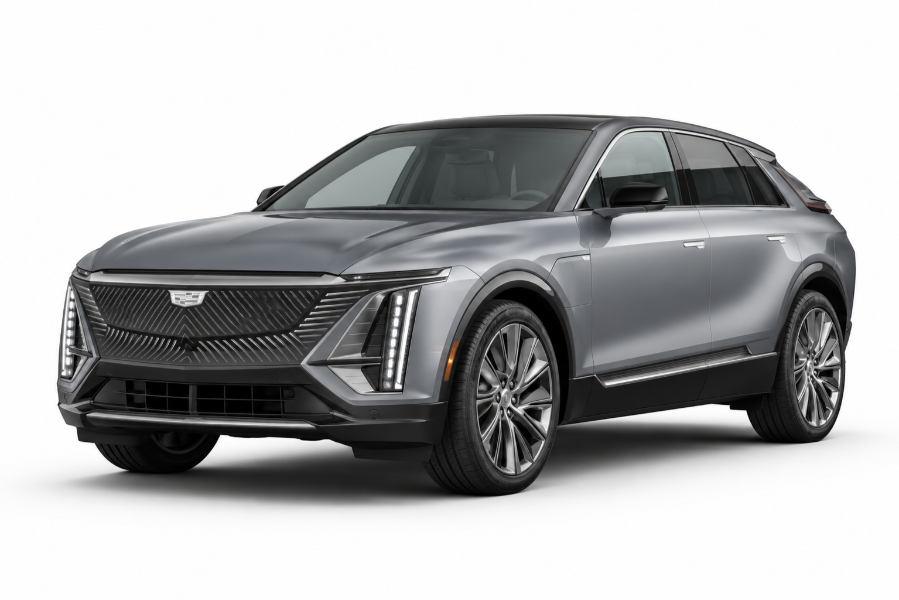
The Cadillac Lyriq has become one of the most important vehicles in Cadillac’s modern history. At a time when the global automotive market is rapidly shifting toward electrification, the Lyriq represents more than just another luxury electric SUV 2026 contender. It symbolizes Cadillac’s attempt to redefine American luxury for the EV era while competing directly against Tesla and established German manufacturers.
Over the last three years, consumer interest in premium electric SUVs has accelerated across North America. Buyers who once prioritized horsepower and engine displacement are increasingly focused on range efficiency, cabin quietness, digital technology, and long-distance comfort. Consequently, vehicles like the Cadillac Lyriq are entering a market where expectations are significantly different from traditional luxury benchmarks.
Moreover, the rise of software-driven vehicles has transformed the definition of luxury itself. Modern buyers now expect seamless infotainment systems, advanced driver assistance, fast charging compatibility, and premium interior craftsmanship to coexist in one package. In this environment, Cadillac is positioning the Lyriq as a distinctly American luxury EV that combines traditional comfort with next-generation electric architecture.
Cadillac Lyriq and Cadillac’s EV Reinvention Strategy
Cadillac’s transition toward an all-electric future is among the most ambitious shifts currently underway within the American automotive industry. General Motors has invested heavily in battery technology, modular EV platforms, and software integration, with the Cadillac Lyriq serving as the centerpiece of that transformation. Rather than introducing a niche compliance EV, Cadillac designed the Lyriq to redefine the brand’s identity globally.
The significance of the Cadillac Lyriq extends beyond sales numbers. Historically, Cadillac was associated with large gasoline-powered luxury sedans and SUVs focused on comfort and prestige. However, the global EV transition forced legacy manufacturers to reconsider their long-term relevance. Therefore, the Lyriq acts as both a technological showcase and a strategic reset for Cadillac’s future positioning.
At the center of this strategy is General Motors’ Ultium platform. The modular battery architecture allows Cadillac to scale battery size, drivetrain configurations, and software features across future EV models. Moreover, the Ultium system was developed to reduce production complexity while improving energy efficiency and charging performance across multiple vehicle categories.
From a market perspective, the Cadillac Lyriq is also helping Cadillac attract a younger luxury buyer demographic. Many EV consumers entering the premium segment are first-time luxury vehicle owners who prioritize technology, sustainability, and design sophistication. Consequently, Cadillac is attempting to modernize its image without abandoning the comfort-oriented characteristics traditionally associated with American luxury vehicles.
Key Elements of Cadillac’s EV Strategy
- Ultium battery platform shared across future GM EVs
- Expansion toward an all-electric Cadillac lineup
- Increased software integration and over-the-air updates
- Focus on premium EV SUVs instead of sedans
- Investment in autonomous and driver assistance systems
- Emphasis on luxury ride comfort over aggressive performance
- Competitive pricing relative to European rivals
Cadillac Lyriq Performance, Range & Driving Experience
The Cadillac Lyriq review conversation often begins with its driving refinement rather than outright acceleration numbers. While many EV manufacturers emphasize extreme performance statistics, Cadillac has instead prioritized ride comfort, cabin isolation, and smooth power delivery. This approach aligns closely with the brand’s historical identity and differentiates the Lyriq from more aggressive competitors.
The rear-wheel-drive version of the Cadillac Lyriq delivers approximately 340 horsepower, while the dual-motor all-wheel-drive configuration increases output to roughly 500 horsepower. In practical driving conditions, this results in strong low-end acceleration and effortless highway merging. However, the Lyriq avoids the overly sharp throttle tuning sometimes associated with performance-focused EVs.
Battery range remains one of the Lyriq’s strongest competitive advantages. Depending on trim configuration, the vehicle delivers an EPA-estimated range exceeding 300 miles on a full charge. Real-world usability is particularly important here because premium SUV buyers increasingly expect electric vehicles to handle long-distance travel without constant charging interruptions.
Charging performance is another critical factor shaping ownership experience. The Cadillac Lyriq supports DC fast charging capabilities that can add substantial driving range within approximately 30 minutes under ideal conditions. Nevertheless, real-world charging experiences still depend heavily on charger reliability, station availability, weather conditions, and regional infrastructure quality across North America.
Ride quality continues to be one of the vehicle’s defining strengths. The suspension tuning prioritizes comfort over aggressive cornering behavior, resulting in a composed and quiet driving experience. Moreover, the cabin insulation effectively minimizes road and wind noise, reinforcing the luxury positioning that Cadillac is trying to establish in the EV market.
Real-World Driving Strengths
- Smooth and predictable acceleration
- Quiet highway cruising experience
- Comfortable suspension calibration
- Long-distance usability with competitive range
- Stable handling for daily driving
- Strong regenerative braking integration
- Minimal cabin vibration compared to gasoline SUVs
Limitations Buyers Should Consider
- Charging speed still trails some premium EV competitors
- Large vehicle size can reduce urban maneuverability
- Software responsiveness occasionally inconsistent
- Public charging reliability varies by region
- Less sporty handling than BMW or Porsche rivals
Cadillac Lyriq vs Luxury EV Rivals
| Vehicle | Starting Price | Estimated Range | Charging Speed | Horsepower | Interior Tech | Ride Quality | Overall Value |
|---|---|---|---|---|---|---|---|
| Cadillac Lyriq | Mid-$60,000 range | 300+ miles | Competitive DC fast charging | Up to 500 hp | 33-inch curved LED display | Excellent comfort focus | Strong |
| Tesla Model Y | Lower starting price | 300+ miles | Industry-leading network access | Up to 456 hp | Minimalist interface | Firm ride | High efficiency |
| BMW iX | Higher pricing | 300+ miles | Fast charging capable | Up to 516 hp | Premium digital systems | Balanced luxury/sport mix | Premium |
| Mercedes EQE SUV | Premium pricing | Around 280–300 miles | Strong charging capability | Up to 402 hp | Advanced cabin technology | Soft luxury ride | Moderate |
| Genesis Electrified GV70 | Competitive premium pricing | Lower range | Solid charging performance | Around 429 hp | Luxury-focused cabin | Refined handling | Strong |