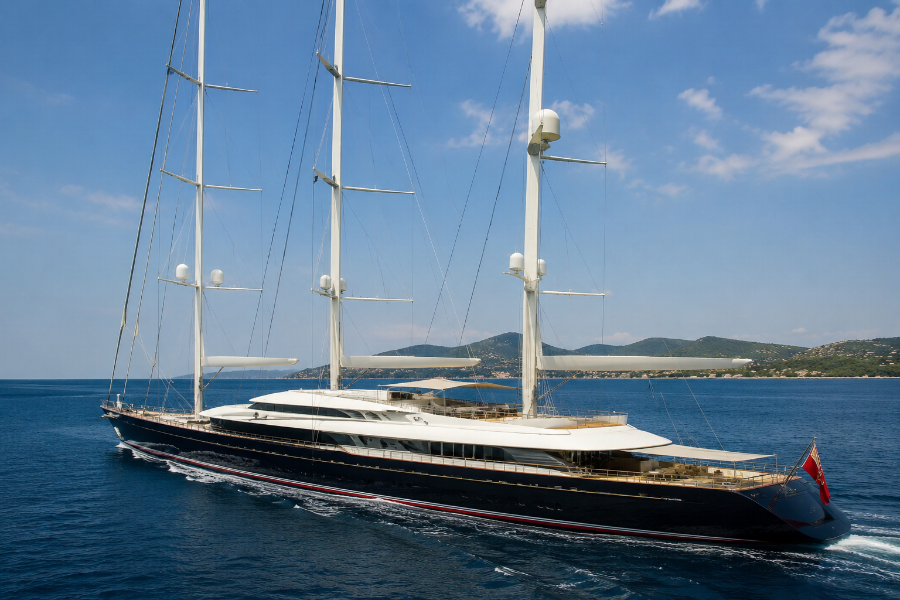
The Bezos Sailing Yacht has become one of the most recognizable ultra-luxury assets in the modern billionaire economy. Officially named Koru, the massive sailing yacht owned by Jeff Bezos represents far more than maritime recreation. It symbolizes status, engineering sophistication, global mobility, and the evolving relationship between billionaires and prestige infrastructure. At approximately 127 meters in length, Koru is widely recognized as one of the world’s largest sailing yachts and one of the most ambitious private sailing vessels ever constructed.
In recent months, industry discussion surrounding the Bezos Sailing Yacht has intensified after reports and brokerage speculation suggested that ultra-high-net-worth individuals may be reassessing large asset portfolios in response to changing global liquidity conditions, tax scrutiny, and evolving luxury consumption patterns. However, no official confirmation has been issued indicating that Bezos has formally listed Koru for sale. Much of the conversation remains within the realm of market speculation and yacht industry analysis rather than verified transaction activity.
Nevertheless, the attention surrounding any possible decision involving the Bezos Sailing Yacht reveals how the global superyacht sector has evolved into a strategic financial ecosystem rather than a simple luxury niche. In 2026, mega yachts increasingly function as mobile private estates, executive networking platforms, privacy-controlled environments, and long-range mobility assets for billionaires navigating a volatile global landscape. Consequently, even rumors surrounding a vessel like Koru generate worldwide attention across financial media, luxury publications, brokerage firms, and maritime markets.
Bezos Sailing Yacht: Why Koru Became a Global Symbol of Billionaire Wealth
The Bezos Sailing Yacht immediately distinguished itself from traditional motor yachts because of its scale, design philosophy, and symbolic positioning within the billionaire class. Built by Oceanco, Koru combines classical sailing aesthetics with modern engineering and extreme customization. The vessel reportedly measures approximately 127 meters, placing it among the largest sailing yachts ever built and one of the most technologically advanced private sailing vessels operating globally.
Unlike many ultra-modern motor yachts focused primarily on speed and entertainment, Koru embraces the prestige associated with sailing heritage. Large sailing yachts occupy a unique position in billionaire culture because they project sophistication, patience, and old-world exclusivity rather than pure excess. Consequently, vessels like Koru often appeal to billionaires seeking distinction within an already elite ownership category. The symbolism matters almost as much as the engineering itself.
Industry analysts also note that the Bezos Sailing Yacht reflects a broader billionaire trend toward “luxury infrastructure.” Rather than functioning as occasional leisure purchases, mega yachts increasingly operate as floating residences, secure meeting spaces, mobile hospitality environments, and highly private transportation ecosystems. Therefore, yachts are no longer evaluated solely by entertainment value but also by strategic mobility and lifestyle flexibility.
Several factors elevated Koru into a global symbol of billionaire wealth:
- Massive 127-meter sailing platform
- Custom-built by elite Dutch shipbuilder Oceanco
- Advanced sailing and hybrid operational systems
- Multi-deck luxury accommodations
- Support vessel integration capabilities
- Global media visibility tied to Jeff Bezos
- Distinctive three-mast sailing architecture
- Long-range oceanic cruising capability
Moreover, the yacht’s public visibility amplified its symbolic status. Because Bezos remains one of the world’s most recognized billionaires, every appearance of Koru generated extensive media coverage. The vessel quickly became associated with the broader conversation surrounding billionaire lifestyles, private mobility, and wealth concentration in the post-pandemic luxury economy.
Inside the Reported Decision to Sell the World’s Largest Sailing Yacht
Speculation surrounding a potential sale of the Bezos Sailing Yacht emerged largely from brokerage chatter and broader market discussions rather than confirmed public filings or official announcements. As of 2026, there is no verified confirmation that Jeff Bezos has formally listed Koru for sale. However, the rumors themselves reveal important insights into billionaire asset strategy and the evolving economics of ultra-luxury ownership.
Reports suggest that ultra-high-net-worth individuals are increasingly rotating assets to improve liquidity flexibility while maintaining diversified lifestyle portfolios. In that context, even iconic assets like mega yachts may periodically be reassessed based on operating efficiency, utilization rates, taxation exposure, or broader investment strategy. Consequently, yacht market observers often interpret brokerage speculation through a financial lens rather than purely lifestyle considerations.
The possibility of billionaire asset rotation has become more common in the 2026 luxury environment for several reasons:
- Rising global operating costs
- Increased environmental scrutiny
- Higher marina and docking fees
- Growing charter market opportunities
- Expanded private aviation competition
- Liquidity prioritization among billionaires
- Wealth diversification into technology and AI sectors
- Cross-border tax complexity
However, selling a vessel like Koru is far more complicated than disposing of traditional luxury assets. The world’s largest sailing yachts occupy an extremely limited buyer pool. Potential purchasers must possess not only enormous financial resources but also the operational infrastructure required to manage such a vessel. Therefore, mega yacht transactions often take years rather than months.
Industry insiders also emphasize that billionaire yacht ownership is frequently cyclical. Owners may commission one vessel, use it heavily for several years, and eventually transition toward explorer yachts, expedition vessels, or hybrid support fleets that better align with evolving mobility preferences. Consequently, speculation around the Bezos Sailing Yacht may reflect broader market curiosity rather than concrete transactional evidence.
Koru Yacht Breakdown
| Feature | Details |
|---|---|
| Yacht Name | Koru |
| Owner | Jeff Bezos |
| Builder | Oceanco |
| Approximate Length | 127 meters |
| Yacht Category | Mega sailing yacht |
| Estimated Value | Reportedly over $500 million |
| Crew Size | Estimated 35–45+ |
| Design Style | Classic sailing yacht with modern luxury systems |
| Support Features | Accompanying support vessel capabilities |
| Annual Operating Cost | Potentially $20M–$30M+ annually |
| Market Status | No officially confirmed sale |
The Economics of Owning a Mega Sailing Yacht
Owning a mega sailing yacht like Koru involves extraordinary operational economics that extend far beyond the initial construction price. Industry estimates suggest that annual operating expenses for vessels of this scale can easily reach tens of millions of dollars depending on usage patterns, crew structure, maintenance schedules, and global cruising activity. Consequently, mega yacht ownership functions more like operating a private corporation than managing a leisure asset.
Crew expenses alone represent one of the largest recurring cost categories. Large sailing yachts require specialized maritime professionals including captains, engineers, navigational officers, chefs, hospitality teams, security personnel, and maintenance technicians. Because billionaire owners expect hotel-level service standards combined with maximum privacy, staffing requirements remain exceptionally high throughout the year regardless of sailing frequency.
Major cost categories typically include:
- Crew salaries and benefits
- Insurance coverage
- Marina and docking fees
- Technical maintenance
- Hull servicing and repainting
- Fuel and logistics support
- Global compliance and licensing
- Security operations
- Provisioning and hospitality
- Tender and support vessel operations
Moreover, sailing yachts of Koru’s scale involve unique engineering complexities. The vessel’s massive masts, advanced rigging systems, sail technology, and integrated mechanical infrastructure require constant inspection and specialized expertise. Consequently, maintenance downtime can become operationally intensive and financially significant.
Insurance and docking economics have also become increasingly challenging in 2026. Premium marinas capable of hosting vessels exceeding 100 meters remain limited globally, driving berth competition and escalating costs. Additionally, geopolitical uncertainty and environmental regulations continue influencing maritime insurance premiums. Therefore, ownership economics now extend well beyond luxury into strategic operational planning.
Importantly, mega yachts rarely appreciate like traditional investment assets. While iconic vessels may retain symbolic prestige, depreciation remains a major financial factor. Nevertheless, billionaires often view such assets differently from conventional investments. Prestige, mobility, privacy, and social positioning frequently outweigh pure financial efficiency.
Why Billionaires Buy and Sometimes Exit Luxury Yachts?
Billionaires purchase mega yachts for a combination of lifestyle, privacy, networking, and mobility reasons that extend beyond recreational use. In many cases, yachts operate as highly secure environments where owners can host meetings, entertain influential guests, travel internationally, and maintain isolation from public attention. Consequently, yachts function as floating ecosystems tailored to elite personal and business lifestyles.
The Bezos Sailing Yacht illustrates this broader shift toward mobility-centered luxury ownership. Unlike static mansions, mega yachts allow owners to relocate globally while maintaining controlled environments. This flexibility became increasingly valuable following years of geopolitical volatility, heightened media scrutiny, and growing privacy concerns among ultra-wealthy individuals.
Key motivations behind billionaire yacht ownership include:
- Privacy and security
- International mobility
- Prestige signaling
- Exclusive entertainment capacity
- Family lifestyle flexibility
- Strategic networking environments
- Access to remote destinations
- Luxury infrastructure independence
However, billionaires also exit yacht ownership for strategic reasons. Asset diversification has become increasingly important as wealthy individuals rebalance holdings toward technology investments, artificial intelligence ventures, infrastructure, private equity, or liquidity preservation strategies. Consequently, even emotionally significant assets may eventually become candidates for rotation or sale.
Public perception also plays a growing role. Environmental criticism surrounding large yachts intensified throughout the 2020s and continues influencing billionaire reputation management. Some owners now prefer quieter explorer vessels, hybrid propulsion systems, or flexible charter arrangements that reduce visibility while maintaining luxury access.
Therefore, the modern billionaire approach to yachts increasingly focuses on utility optimization rather than permanent ownership attachment. In this evolving environment, speculation surrounding the Bezos Sailing Yacht reflects larger shifts occurring throughout ultra-luxury markets globally.
Mega Yacht Ownership vs Other Billionaire Assets
| Asset Type | Liquidity | Prestige | Maintenance Cost | Privacy | Appreciation Potential |
|---|---|---|---|---|---|
| Mega Yacht | Low | Extremely High | Extremely High | High | Moderate to Low |
| Private Jet | Medium | High | High | Medium | Low |
| Luxury Real Estate | Medium | High | Moderate | Medium | Medium to High |
| Art Collections | Medium | Very High | Moderate | High | High |
| Equity Investments | High | Variable | Low | High | High |
The State of the Global Superyacht Market in 2026
The global superyacht market in 2026 continues demonstrating resilience despite economic uncertainty and rising regulatory pressure. Demand remains particularly strong for explorer yachts, hybrid vessels, and custom-designed sailing yachts capable of combining luxury with long-range operational flexibility. Consequently, the billionaire yacht ecosystem has evolved into a highly specialized sector driven by customization and strategic mobility.
One of the most important developments involves sustainability pressure within the marine luxury sector. Wealthy buyers increasingly face scrutiny regarding emissions, fuel consumption, and environmental symbolism. Therefore, shipbuilders are investing heavily in hybrid propulsion systems, cleaner fuel experimentation, lightweight materials, and energy-efficient engineering technologies.
Several major 2026 superyacht trends include:
- Increased demand for explorer yachts
- Expansion of hybrid propulsion systems
- Growth in luxury yacht charter demand
- Rising brokerage market activity
- Greater emphasis on sustainability
- Multi-vessel billionaire fleets
- Privacy-focused design architecture
- Flexible ownership structures
The brokerage market has also become more active as billionaires reassess utilization patterns and asset efficiency. Some owners now prefer chartering or fractional access rather than full ownership, particularly for secondary vessels. Consequently, yacht brokerage firms are adapting toward more service-based luxury mobility models.
At the same time, the ultra-high-end sailing yacht segment remains exceptionally exclusive. Large sailing yachts require advanced engineering expertise and long construction timelines, limiting supply even among elite shipyards. Therefore, vessels comparable to Koru remain extraordinarily rare within the global market.
Bezos Sailing Yacht and the Future of Ultra-Luxury Mobility
The Bezos Sailing Yacht represents a broader transition occurring within billionaire mobility strategy. Increasingly, ultra-wealthy individuals view assets like mega yachts, private jets, and remote estates as interconnected components of global lifestyle infrastructure rather than isolated luxury purchases.
This shift is changing how billionaires evaluate ownership economics. Flexibility, mobility access, privacy control, and operational efficiency now influence purchasing decisions as much as prestige. Consequently, some billionaires are reducing direct ownership exposure while increasing access through charter networks, partnerships, or rotational asset strategies.
Moreover, yacht charters have become substantially more sophisticated in 2026. Ultra-luxury charter experiences now provide billionaire-level service without requiring permanent ownership obligations. For some wealthy individuals, charter access offers greater flexibility with fewer long-term liabilities.
Nevertheless, iconic ownership still carries symbolic power. Vessels like Koru remain status-defining assets within elite circles because they communicate engineering ambition, financial scale, and lifestyle exclusivity simultaneously. Therefore, even as flexible luxury access expands, ownership of landmark yachts continues holding immense prestige value.
Importantly, the Bezos Sailing Yacht demonstrates how modern billionaire assets increasingly blend luxury with operational functionality. These vessels serve as secure travel hubs, networking environments, hospitality platforms, and mobile residences capable of supporting global lifestyles with minimal public exposure.
Risks & Trade-Offs of Mega Yacht Ownership
Despite their prestige, mega yachts involve substantial operational and reputational risks. Annual operating burdens alone can reach extraordinary levels, particularly for vessels exceeding 100 meters. Consequently, ownership requires constant financial commitment regardless of actual usage frequency.
Environmental criticism remains another growing challenge. Large yachts often attract public scrutiny because of fuel consumption, emissions, and symbolic wealth inequality debates. Therefore, billionaire owners increasingly face pressure to demonstrate sustainability initiatives or adopt cleaner technologies.
Major risks associated with mega yacht ownership include:
- Massive recurring operational costs
- Depreciation pressure
- Regulatory compliance complexity
- Environmental criticism
- Insurance escalation
- Limited resale buyer pool
- Marina availability constraints
- Global taxation scrutiny
Resale complexity represents one of the most underestimated challenges. Unlike traditional luxury goods, ultra-large yachts have extremely narrow buyer markets. Consequently, sales cycles can become prolonged and heavily negotiated. Even globally famous vessels may remain on brokerage markets for extended periods depending on economic conditions and buyer appetite.
However, for billionaires prioritizing mobility, exclusivity, and lifestyle independence, mega yachts continue offering unique advantages unavailable through most other luxury assets. Therefore, despite rising complexity and costs, the global fascination with vessels like Koru remains exceptionally strong.
FAQs
What is Bezos Sailing Yacht?
The Bezos Sailing Yacht refers to Koru, the massive sailing yacht owned by Jeff Bezos and built by Oceanco.
What is the name of Jeff Bezos’ yacht?
Jeff Bezos’ sailing yacht is named Koru.
Is Jeff Bezos selling Koru?
As of 2026, no official confirmation has been issued regarding a sale of Koru. Reports remain speculative.
How big is Koru yacht?
Koru is approximately 127 meters long, making it one of the world’s largest sailing yachts.
How much is Bezos’ sailing yacht worth?
Industry estimates place the yacht’s value at more than $500 million.
Who built Koru?
Koru was built by Dutch shipbuilder Oceanco.
Why do billionaires buy mega yachts?
Billionaires buy mega yachts for privacy, mobility, prestige, networking, and lifestyle flexibility.
How much does a superyacht cost to maintain?
Large superyachts can cost tens of millions of dollars annually to operate and maintain.
What is the world’s largest sailing yacht?
Several yachts compete for the title depending on classification, but Koru is widely recognized among the largest sailing yachts globally.
What are superyacht trends in 2026?
Key trends include sustainability technology, explorer yachts, flexible ownership models, and increased charter demand.