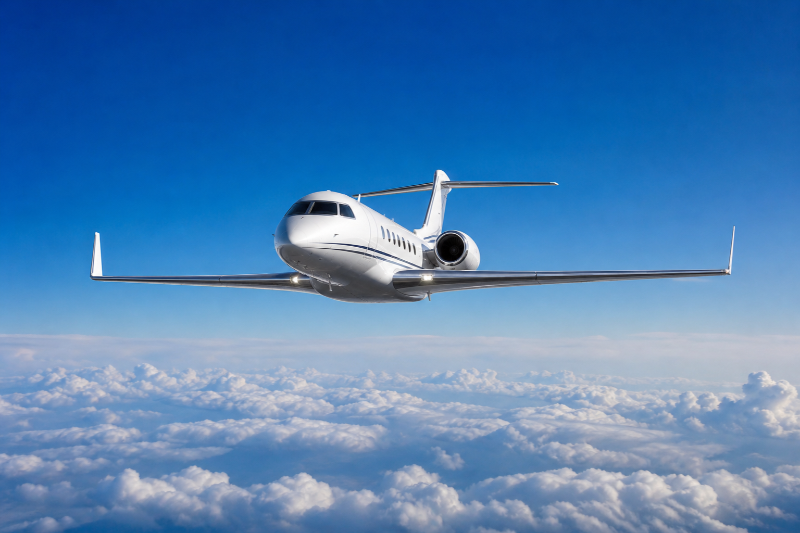
The Bombardier High-Speed Business Jet marks a decisive shift in modern aviation, signaling a return to the long-standing ambition of faster-than-ever executive travel. While the era of supersonic passenger aviation faded with Concorde, renewed demand from global business leaders is driving innovation toward ultra-fast, high-efficiency aircraft that can dramatically reduce travel time without compromising practicality. This latest development reflects a broader industry trend where speed is no longer a luxury—it is becoming a strategic necessity.
In 2026, corporate executives operate in an environment defined by real-time decision-making, global operations, and compressed timelines. Consequently, the ability to move quickly across continents has evolved into a competitive advantage. The Bombardier High-Speed Business Jet addresses this demand by pushing the limits of subsonic performance, achieving near-supersonic speeds while maintaining compliance with modern aviation regulations.
Moreover, this aircraft represents a calculated balance between performance, efficiency, and sustainability. Rather than pursuing full supersonic travel like Concorde, Bombardier has focused on maximizing speed within subsonic boundaries, enabling faster routes, reduced operational costs, and broader global accessibility. This positions the aircraft as a transformative solution in the next generation of business aviation.
Bombardier High-Speed Business Jet Redefines Ultra-Fast Executive Travel
Performance Comparison: High-Speed Business Jet vs Competitors
| Aircraft Model | Max Speed | Range (NM) | Capacity | Efficiency Focus | Best Use Case |
|---|---|---|---|---|---|
| Bombardier High-Speed Jet | Mach 0.94–0.98 | 7,000+ | 10–16 | High-speed efficiency | Ultra-fast global travel |
| Gulfstream G700 | Mach 0.90–0.925 | 7,750 | 13–19 | Range & comfort | Long-haul luxury travel |
| Global 7500 | Mach 0.925 | 7,700 | 14–19 | Balanced performance | Intercontinental missions |
The table illustrates how the Bombardier High-Speed Business Jet prioritizes speed while maintaining competitive range and capacity. Unlike its competitors, which emphasize comfort and endurance, this aircraft is specifically optimized for reducing travel time.
Engineering Innovation Behind the Fastest Business Jet
The engineering behind the Bombardier High-Speed Business Jet, led by the Bombardier Global 8000, marks a major step forward in aerodynamic design. Engineers designed its advanced wing to reduce drag at high subsonic speeds. Moreover, they refined the sweep angle and added adaptive control surfaces, which improve efficiency across different flight conditions. As a result, the aircraft maintains strong performance even at very high cruising speeds.
In addition, Bombardier equips the Global 8000 with next-generation engines tuned for high-speed travel. These engines produce higher thrust while still controlling fuel consumption. Therefore, operators can balance speed with operating costs more effectively. Furthermore, engineers use lightweight composite materials to reduce overall weight, which improves performance without weakening structural strength.
Cabin pressurization also plays a key role in passenger comfort. At higher altitudes, maintaining a comfortable cabin becomes more difficult. However, the Bombardier Global 8000 uses advanced pressurization systems to simulate a lower cabin altitude. As a result, passengers feel less fatigue and stay more comfortable during long-haul flights.
Moreover, the aircraft features advanced avionics that support high-speed navigation and real-time adjustments. The flight systems quickly adapt routes based on weather and air traffic. Consequently, pilots can improve both efficiency and safety throughout the journey.
Inside the Bombardier High-Speed Business Jet Cabin Experience
The cabin experience of the Bombardier High-Speed Business Jet is designed to function as a fully integrated executive workspace. Despite operating at higher speeds, the aircraft maintains a remarkably quiet cabin environment, thanks to advanced noise reduction technologies and soundproofing materials.
The interior is configured to support productivity, with dedicated workspaces, conference areas, and private suites. High-speed internet connectivity ensures that passengers can remain connected at all times, enabling real-time communication and decision-making. This transforms the aircraft into a mobile office, allowing executives to maximize their time in transit.
Furthermore, the cabin features customizable lighting, ergonomic seating, and advanced climate control systems. These elements are designed to enhance comfort and reduce fatigue, ensuring that passengers arrive at their destination ready to perform at their best.
In addition, the aircraft offers a range of luxury amenities, including entertainment systems, gourmet catering options, and personalized service. This combination of functionality and comfort makes the Bombardier High-Speed Business Jet a standout in the premium aviation segment.
High-Speed Jets vs Traditional Business Jets
| Feature | High-Speed Jets | Traditional Jets |
|---|---|---|
| Travel Time | Significantly reduced | Standard durations |
| Cost | Higher upfront & operational | Lower overall cost |
| Efficiency | Optimized for speed | Balanced efficiency |
| Comfort | Advanced, high-tech cabins | Luxury-focused |
| Productivity | Maximum onboard efficiency | Moderate productivity |
This comparison highlights how high-speed jets are redefining priorities in business aviation. While traditional jets focus on comfort and range, high-speed jets emphasize time savings and productivity.
Why Executives Demand Ultra-Fast Private Jets?
The demand for the Bombardier High-Speed Business Jet is driven by the increasing value of time in global business operations. Executives often need to travel between multiple continents within short timeframes, making speed a critical factor in maintaining efficiency.
Faster travel enables quicker decision-making cycles, allowing companies to respond more effectively to market changes. This is particularly important in industries such as finance, technology, and energy, where timing can have a significant impact on outcomes.
Moreover, high-speed jets provide a competitive advantage by enabling face-to-face interactions that would otherwise be impractical. In a globalized economy, the ability to connect with partners and clients quickly can be a decisive factor in securing deals and maintaining relationships.
Therefore, the Bombardier High-Speed Business Jet represents more than just an aircraft—it is a strategic tool for enhancing business performance and maintaining a competitive edge.
Market Impact of Bombardier High-Speed Business Jet on Aviation
The introduction of the Bombardier High-Speed Business Jet is expected to have a significant impact on the business aviation market. As demand for faster travel continues to grow, other manufacturers are likely to accelerate their own high-speed development programs.
This shift is driving increased competition, leading to rapid advancements in technology and performance. Consequently, the industry is moving toward a new standard where speed becomes a primary differentiator alongside range and comfort.
In addition, the launch is expected to stimulate demand for premium aviation services. Operators and charter companies may expand their fleets to include high-speed jets, offering clients faster and more efficient travel options.
Furthermore, the aircraft’s emphasis on efficiency and sustainability aligns with broader industry trends. As environmental concerns become more prominent, manufacturers are focusing on developing solutions that balance performance with reduced emissions.
Limitations and Regulatory Challenges in High-Speed Aviation
Despite its advantages, the Bombardier High-Speed Business Jet still faces key challenges. First, regulators restrict supersonic flight over populated areas. These rules prevent sonic booms; therefore, they limit how much faster aircraft can fly beyond Mach 1. As a result, manufacturers must focus on high subsonic speeds instead of full supersonic travel.
Moreover, higher speeds increase fuel use. Even though modern engines improve efficiency, operators must carefully balance speed and fuel cost. Consequently, airlines and private owners must plan routes and operations with greater precision to control expenses.
In addition, certification creates another hurdle. Engineers must test the aircraft under many conditions and meet strict safety rules before launch. This process takes time; therefore, it often delays entry into service and raises development costs.
However, new research continues to push progress forward. Engineers now test better materials, smarter systems, and improved designs. As a result, the industry expects many of these limits to ease in the coming years, opening the door for faster and more efficient aircraft.
2026 Aviation Trends: Speed as a Strategic Asset
In 2026, the aviation industry is shifting strongly toward speed innovation. The Bombardier High-Speed Business Jet clearly reflects this trend, as it shows how faster travel can create real business value. Today, companies treat time savings as a strategic asset rather than just a convenience.
Furthermore, manufacturers are investing in lighter materials, improved aerodynamics, and more efficient engines. These upgrades boost performance; meanwhile, they also help reduce fuel burn and emissions. As a result, the industry moves toward a balance between speed and sustainability.
At the same time, demand for ultra-long-range jets continues to grow. Executives need aircraft that can connect distant cities without stopping; therefore, companies focus on building jets with both speed and range. This demand drives continuous innovation across the sector.
Ultimately, the Bombardier High-Speed Business Jet brings all these trends together. It shows how speed, efficiency, and sustainability can work side by side. Consequently, it offers a clear view of the future of business aviation, where saving time becomes a true competitive advantage.
FAQs
What is Bombardier High-Speed Business Jet?
The Bombardier High-Speed Business Jet is a next-generation private aircraft designed to operate at near-supersonic speeds while maintaining efficiency and compliance with aviation regulations.
How fast is Bombardier High-Speed Business Jet?
It is expected to reach speeds between Mach 0.94 and Mach 0.98, making it one of the fastest business jets in the world.
Is it supersonic like Concorde?
No, it operates just below the speed of sound to avoid regulatory restrictions and improve efficiency.
What is its range?
The jet is designed to have a range of over 7,000 nautical miles, enabling long-haul intercontinental travel.
How much does it cost?
The estimated price ranges from $75 million to over $100 million, depending on customization.
How does it compare to Gulfstream G700?
It offers higher speed but slightly less range compared to the Gulfstream G700, focusing more on time efficiency.
Why are high-speed jets important for executives?
They reduce travel time, improve productivity, and provide a competitive advantage in global business operations.
What are the limitations of high-speed aviation?
Limitations include regulatory restrictions, higher fuel consumption, and certification challenges.
When will it be available?
The aircraft is expected to enter service in the late 2020s, pending certification and testing.
Is this the future of business aviation?
Yes, high-speed jets are likely to play a major role in the future of business aviation, driven by demand for faster and more efficient travel.