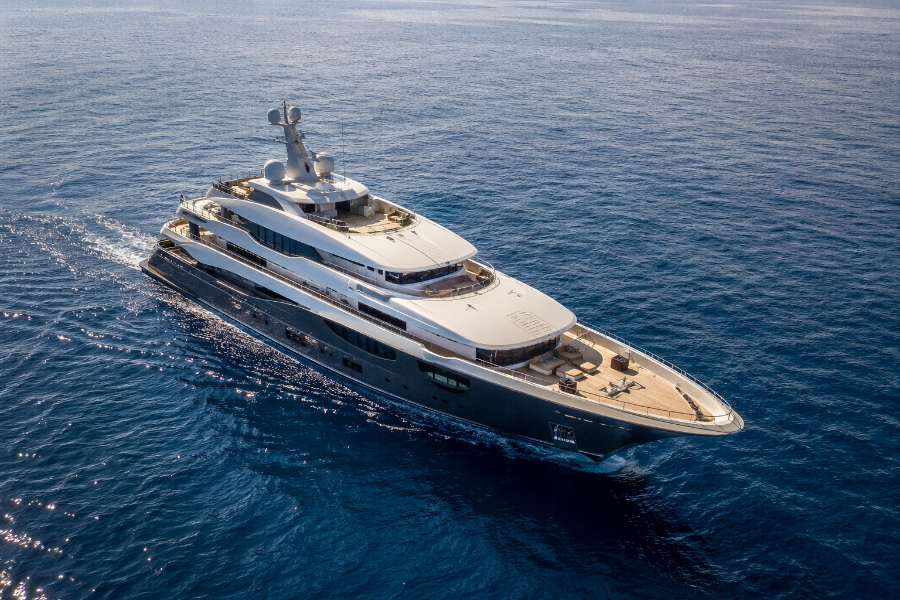
In 2026, the rise of Superyacht Refit is no longer a quiet industry shift it is a defining strategy among ultra-high-net-worth yacht owners managing $100M+ assets. As highlighted by Boat International, the recent refit and redelivery of a 74-meter Amels superyacht underscores how legacy vessels are being strategically reengineered rather than replaced. This reflects a broader transformation in elite yachting, where performance optimization and long-term value preservation are taking precedence over new construction.
Moreover, the increasing complexity of new-build timelines, coupled with rising construction costs and regulatory pressures, has made refitting a compelling alternative. Rather than commissioning entirely new vessels, many UHNW individuals are choosing to reengineer proven platforms. This allows them to retain the structural integrity of a successful hull while integrating cutting-edge technology, modern design, and sustainability enhancements that align with current expectations.
Consequently, Superyacht Refit has become a silent yet powerful move within elite yachting circles. It signals not just wealth, but strategic foresight an understanding that legacy assets can be transformed into high-performing, revenue-generating, and future-ready investments without the inefficiencies associated with new builds.
What Is a Superyacht Refit?
A Superyacht Refit refers to the comprehensive modernization of an existing yacht, typically involving structural, mechanical, technological, and aesthetic upgrades. Unlike routine maintenance, which focuses on preserving operational functionality, a refit aims to elevate the vessel to contemporary standards in both performance and luxury. This process can range from partial upgrades to full-scale transformations that rival new-build quality.
Furthermore, refits are designed to align older yachts with evolving industry benchmarks. This includes integrating advanced navigation systems, upgrading propulsion efficiency, and redesigning interiors to reflect modern luxury preferences. As client expectations shift toward experiential and personalized environments, refits enable legacy yachts to remain relevant in a competitive global market.
However, it is critical to distinguish refits from minor refurbishments. While maintenance ensures compliance and safety, a Superyacht Refit fundamentally alters the yacht’s value proposition. It enhances not only the onboard experience but also the asset’s market positioning, making it attractive for both private use and charter operations.
Why UHNW Owners Choose Refits?
UHNW yacht owners increasingly view Superyacht Refit as a strategic alternative to new builds due to its cost efficiency and time advantages. Building a new superyacht can take anywhere from three to five years, often exceeding initial budgets due to customization complexities. In contrast, a refit typically requires 6 to 18 months, offering a faster route to achieving comparable luxury and performance outcomes.
Moreover, refits allow owners to retain proven hull platforms that have already demonstrated reliability and seaworthiness. This reduces technical risk while enabling targeted enhancements. Instead of starting from scratch, owners can focus resources on high-impact upgrades that directly improve usability, efficiency, and guest experience.
From an investment perspective, Superyacht Refit functions as a capital optimization strategy. It enables owners to maximize returns on existing assets while minimizing depreciation. By upgrading key systems and aesthetics, yachts can achieve higher charter rates and maintain stronger resale value, making refits an increasingly attractive financial decision.
Refit vs New Build Superyachts
| Factor | Superyacht Refit | New Build |
|---|---|---|
| Cost | Lower (multi-million) | Higher ($100M+) |
| Timeline | 6–18 months | 3–5 years |
| Customization | Moderate to High | Fully Custom |
| Risk | Lower (proven platform) | Higher (new engineering) |
| Value Retention | High with upgrades | Depreciates faster initially |
Scope of a $100M+ Superyacht Refit
The scope of a Superyacht Refit in the $100M+ category is extensive, often encompassing a full transformation of both interior and exterior elements. Interior redesigns typically focus on creating residential-style luxury environments, incorporating open layouts, premium materials, and bespoke furnishings that reflect contemporary tastes.
In addition, technology upgrades play a critical role in modern refits. This includes advanced audiovisual systems, high-speed connectivity, and integrated smart controls that enhance onboard convenience. These upgrades ensure that the yacht meets the expectations of modern UHNW clients who demand seamless digital experiences even at sea.
Propulsion and efficiency improvements are another key component. By upgrading engines, optimizing fuel systems, and integrating hybrid technologies, refits significantly enhance operational performance. As a result, Superyacht Refit projects not only improve aesthetics but also redefine the yacht’s functional capabilities.
Engineering & Technical Transformation
Engineering upgrades are at the core of any successful Superyacht Refit, particularly for vessels in the $100M+ range. Structural enhancements may include hull reinforcements, corrosion treatment, and modifications to improve hydrodynamic efficiency. These changes ensure the yacht remains compliant with modern safety and classification standards.
Furthermore, stabilization systems are often upgraded to enhance onboard comfort. Advanced stabilizers reduce motion, providing a smoother experience for guests even in challenging sea conditions. This is particularly important for charter operations, where guest satisfaction directly impacts revenue.
Energy efficiency is another critical focus area. Refits increasingly incorporate fuel optimization technologies, energy storage systems, and sustainable solutions such as hybrid propulsion. Consequently, these upgrades reduce operational costs while aligning the yacht with global sustainability trends, making Superyacht Refit both a technical and environmental advancement.
Design Evolution in Refits
Design trends in Superyacht Refit projects have shifted significantly toward minimalist, residential-style aesthetics. Owners are moving away from overly ornate interiors in favor of clean lines, neutral palettes, and natural materials that create a sense of understated luxury.
Moreover, the use of sustainable materials has become a defining feature of modern refits. From responsibly sourced wood to eco-friendly textiles, these choices reflect a growing awareness of environmental impact without compromising on quality or elegance. Lighting design has also evolved, with an emphasis on maximizing natural light and enhancing spatial flow.
Importantly, design is not just about aesthetics—it directly influences charter appeal and owner satisfaction. A well-executed Superyacht Refit can transform a dated interior into a highly desirable environment, increasing both usage and revenue potential.
Read also: Turquoise Yacht N2H (Project Arrow): A Luxury Floating Villa at Sea
Charter Market Impact
The charter market has become a significant driver behind the rise of Superyacht Refit projects. Yachts that undergo comprehensive refits often achieve higher charter rates due to improved amenities, modern design, and enhanced performance capabilities.
Additionally, demand from high-end clients continues to evolve, with a preference for yachts that offer contemporary luxury experiences. Refitted yachts are better positioned to meet these expectations, making them more competitive in the global charter market.
Consequently, Superyacht Refit directly influences revenue generation. By upgrading key features, owners can attract premium clientele, increase occupancy rates, and maximize returns on their investment.
Pre-Refit vs Post-Refit Value
| Metric | Pre-Refit | Post-Refit |
|---|---|---|
| Asset Value | Declining | Stabilized/Enhanced |
| Charter Revenue | متوسط | High |
| Guest Experience | Outdated | Premium |
| Market Position | متوسط | Competitive |
Cost & Investment Perspective
The cost of a Superyacht Refit varies significantly depending on the scope, but for $100M+ yachts, it typically falls within the multi-million-dollar range. While this represents a substantial investment, it is considerably lower than commissioning a new build of similar caliber.
Moreover, the return on investment is driven by both tangible and intangible factors. Increased charter income, improved resale value, and extended asset lifespan all contribute to the financial viability of refits. These benefits make refits a compelling option for owners seeking to optimize capital allocation.
From a broader perspective, Superyacht Refit can be viewed as a lifecycle optimization strategy. By periodically upgrading key systems and design elements, owners can preserve the yacht’s relevance and value over decades, transforming it into a long-term luxury asset rather than a depreciating liability.
Limitations & Considerations
Despite its advantages, Superyacht Refit is not without limitations. Structural constraints can restrict the extent of modifications, particularly in older vessels where design flexibility is limited. This can impact the ability to fully align the yacht with modern standards.
Additionally, refits involve complex engineering and project management challenges. Coordinating multiple upgrades within a limited timeframe requires meticulous planning and execution. Delays or unforeseen technical issues can increase costs and extend timelines.
Furthermore, the refit process necessitates temporary downtime, during which the yacht is unavailable for use or charter. This represents an opportunity cost that must be considered when evaluating the overall investment.
2026 Superyacht Trends
In 2026, Superyacht Refit is emerging as a dominant trend within the industry, driven by the need for strategic repositioning and sustainability. Owners are increasingly prioritizing upgrades that enhance efficiency, reduce environmental impact, and align with evolving regulatory requirements.
Moreover, experiential luxury has become a key focus area. Refits are incorporating features such as wellness spaces, immersive entertainment systems, and flexible layouts that cater to diverse guest preferences. This reflects a broader shift toward personalized and experience-driven luxury.
Importantly, Superyacht Refit is now being viewed as a portfolio management strategy. UHNW individuals are treating yachts as long-term assets that require periodic reinvestment to maintain value and performance. This approach signals a fundamental change in how luxury assets are perceived and managed.
FAQs
What is a superyacht refit?
A Superyacht Refit is the comprehensive upgrade and modernization of an existing yacht, enhancing its performance, design, and value.
How much does a yacht refit cost?
Costs typically range from several million dollars to tens of millions, depending on the scope and yacht size.
Is refitting better than building new?
Refitting is often more cost-effective and faster, making it a strategic alternative to new builds for many UHNW owners.
How long does a refit take?
Most Superyacht Refit projects take between 6 and 18 months, depending on complexity.
Does refit increase yacht value?
Yes, a well-executed refit can significantly enhance asset value, charter revenue, and market competitiveness.