Private Jet Manufacturing is one of the most complex and technologically advanced processes in modern aviation. Every aircraft represents thousands of engineering hours, strict safety compliance, and precision craftsmanship.
Unlike commercial aircraft production, private jet manufacturing focuses heavily on performance, customization, and luxury. Buyers expect aircraft that combine cutting-edge aerodynamics with tailored interiors designed around their personal preferences.
Moreover, the industry blends advanced aerospace engineering, digital design tools, and handcrafted cabin finishing. Consequently, building a private jet involves multiple stages, from concept design to final flight testing.
Understanding how companies build these aircraft provides valuable insight into the innovation that powers the private aviation industry.
The Private Jet Manufacturing Process
Private Jet Manufacturing follows a structured and highly regulated development cycle. Manufacturers must ensure that every aircraft meets strict aviation safety standards while also delivering exceptional performance.
Aircraft Concept and Market Research
Before any engineering begins, aviation companies analyze market demand and customer needs.
Manufacturers consider factors such as:
-
Desired flight range
-
Passenger capacity
-
Fuel efficiency
-
Airport accessibility
-
Operational costs
For example, some buyers prefer ultra-long-range jets capable of intercontinental flights, while others need light jets optimized for regional travel.
Therefore, the initial concept phase determines the aircraft category and overall design philosophy.
Engineering and Aircraft Design
Once the concept is finalized, aerospace engineers begin designing the aircraft.
Key engineering disciplines involved include:
-
Aerodynamics
-
Structural engineering
-
Propulsion integration
-
Systems architecture
-
Cabin layout design
Engineers use advanced computational tools and wind tunnel testing to optimize aircraft performance. Moreover, digital twin technology allows manufacturers to simulate real-world operating conditions before production begins.
The result is a carefully balanced design that maximizes speed, range, and efficiency.
Prototype Development
After design validation, manufacturers build a prototype aircraft.
This stage includes:
-
Structural testing
-
Component validation
-
System integration
-
Ground testing
However, prototypes rarely enter commercial service immediately. Instead, they undergo extensive testing and modifications based on performance data.
Consequently, manufacturers refine the design before moving to full production.
Final Assembly and Production
Once engineering and testing are completed, the aircraft moves into the production stage.
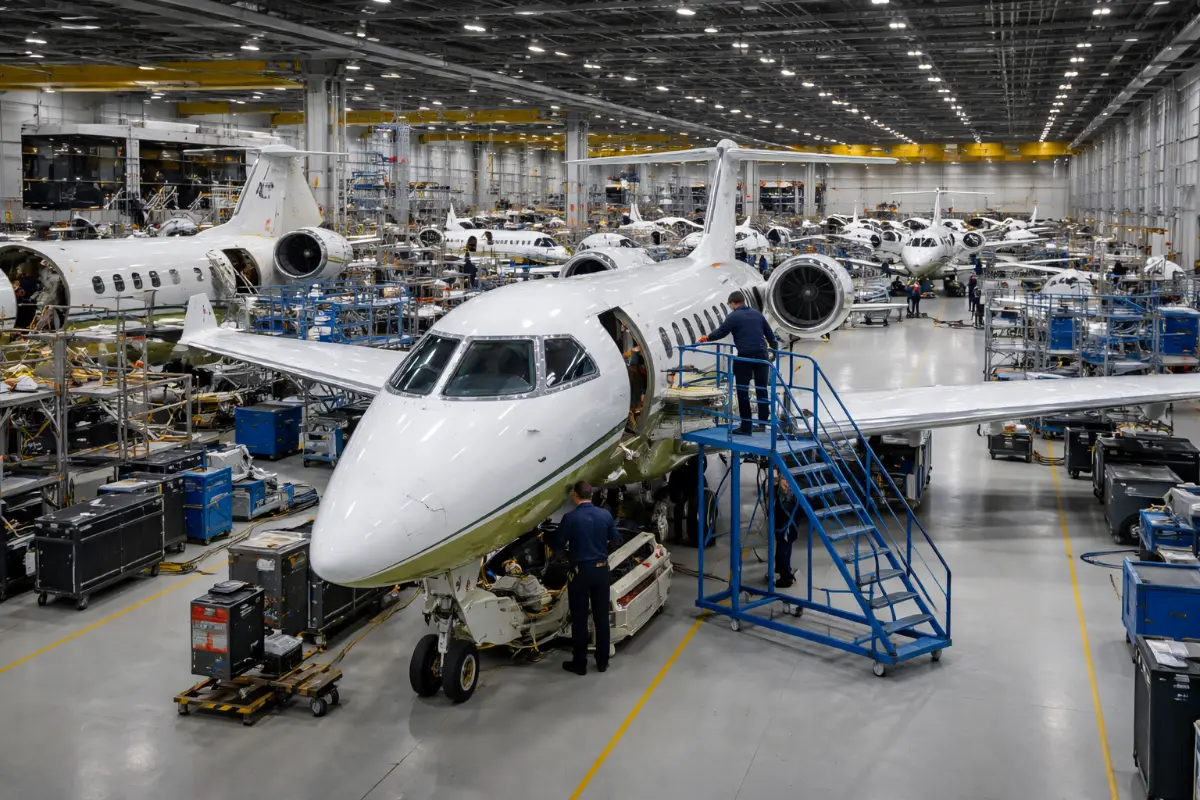
Private jet manufacturing facilities operate similar to high-precision industrial assembly lines, though with greater emphasis on manual craftsmanship.
Major Assembly Components
Aircraft production involves assembling several major sections:
-
Fuselage
-
Wings
-
Tail assembly
-
Landing gear
-
Engine mounts
-
Electrical and hydraulic systems
These components are produced either in-house or by specialized aerospace suppliers.
Moreover, final assembly plants integrate all systems into a fully functional aircraft.
Aircraft Systems Integration
A modern private jet includes thousands of components that must work together seamlessly.
Key systems integrated during manufacturing include:
-
Flight control systems
-
Electrical systems
-
Hydraulic systems
-
Fuel systems
-
Navigation and communication systems
Engineers perform multiple system checks to ensure reliability.
Therefore, integration is one of the most critical steps in private jet manufacturing.
Cabin Design and Luxury Interior Development
A defining feature of private jet manufacturing is custom cabin design. Buyers expect an interior that reflects their personal style and operational needs.
Interior Layout Planning
Cabin designers work closely with customers to plan the interior layout.
Typical configurations include:
-
Executive seating areas
-
Conference spaces
-
Sleeping quarters
-
Dining sections
-
Private lavatories
Moreover, aircraft cabins must comply with strict weight distribution and safety regulations.
Consequently, interior design combines luxury with engineering constraints.
Premium Materials and Finishes
Private jet interiors often feature premium materials such as:
-
Hand-stitched leather seating
-
Natural stone countertops
-
Exotic wood veneers
-
Custom lighting systems
-
High-end carpeting
However, aviation standards require materials to meet flammability and durability requirements.
Therefore, manufacturers use specialized treatments and aerospace-grade materials.
In-Flight Technology and Entertainment
Modern private jets integrate advanced cabin technology.
Examples include:
-
High-speed satellite internet
-
Smart cabin controls
-
Large display screens
-
Video conferencing systems
-
Wireless entertainment streaming
Moreover, passengers can often control lighting, temperature, and media systems through mobile devices.
Advanced Avionics and Flight Deck Technology
Another key component of private jet manufacturing is avionics integration.
The cockpit of a modern business jet resembles a sophisticated digital command center.
Key Avionics Features
Modern private jets commonly include:
-
Large touchscreen displays
-
Synthetic vision systems
-
Terrain awareness technology
-
Automatic flight management systems
-
Weather radar integration
These systems improve pilot situational awareness and flight safety.
Moreover, many jets feature fly-by-wire control systems, replacing traditional mechanical flight controls with digital commands.
Safety Certification and Regulatory Compliance
Every aircraft must meet strict safety standards before entering service.
Manufacturers must obtain certification from aviation authorities such as:
-
Federal Aviation Administration (FAA)
-
European Union Aviation Safety Agency (EASA)
-
Other national regulators
Testing procedures include:
-
Structural stress tests
-
Flight performance testing
-
Emergency system verification
-
Environmental testing
Consequently, certification can take several years before a new aircraft model enters the market.