• 2020 Ultimate Luxury Holiday Gift Guide
  • Activity
  • Art Basel Special Issue
  • Art Basel Winter Issue – Jeff Koons
  • Art Week 2024 Issue | Deepak Chopra Cover Story
  • Aspen 2024 Power Couple Issue – Amy & Gary Green
  • Capital Corner
  • Checkout
  • Coming Soon
  • Disclaimer – Privacy Policy
  • Fall 2021 Issue
  • Fall Issue 2025 Salvatore Ferragamo Jr.
  • Forgot Password
  • Groups
  • Holiday 2021
  • Home
  • Home 1
  • Impact Wealth Community
  • Impact Wealth Issues – A Luxury Lifestyle Family Office Magazine
  • Impact Wealth Magazine
  • Impact Wealth Subscription – Magazine and Newsletter
  • Impact Wealth Summer Issue 2025 – Stephen Ross
  • Impact Wealth’s Summer 2023 Issue
  • Issue Winter 2021 – Tim Draper
  • Members
  • Messages
  • My account
  • Press
  • Reset Password
  • Resources
  • Shop
  • Signup
  • Special Issue Steelpointe Yacht Show – 2021
  • Spring 2022 – The Trailblazers Issue
  • Spring 2023 Issue
  • Spring 2024 Issue with Jackie Siegel
  • Spring 2025 Issue with Cover Star Wilbur Ross
  • Spring Special 2021 Issue
  • Summer 2021 Issue
  • Summer 2022
  • Summer 2024 Issue with our Cover Star Richard Taite
  • ttest
  • User Profile
  • Wealth with Impact – Podcast
  • Winter 2021 Issue
  • Winter 2023 Issue
  • Winter 2023 Palm Beach Issue – Kimberly Guilfoyle
Monday, March 9, 2026
  • Login
  • Register
Subscribe
Impact Wealth
No Result
View All Result
  • Lifestyle
    • Health & Wellness
    • Fine Dining & Beverage
    • Fashion
    • Event Coverage
    • The Arts
    • Resources
  • Travel
    • Travel Lifestyle
  • Investing
    • Wealth
    • Retirement
    • Real Estate
    • Philanthropy
    • Family Office Trends
  • Impact Interviews
  • Subscribe Now
  • About Us
    • Press
  • Join Our Community
  • Sign up for Newsletter
  • Lifestyle
    • Health & Wellness
    • Fine Dining & Beverage
    • Fashion
    • Event Coverage
    • The Arts
    • Resources
  • Travel
    • Travel Lifestyle
  • Investing
    • Wealth
    • Retirement
    • Real Estate
    • Philanthropy
    • Family Office Trends
  • Impact Interviews
  • Subscribe Now
  • About Us
    • Press
  • Join Our Community
  • Sign up for Newsletter
No Result
View All Result
Impact Wealth
No Result
View All Result
Home Real Estate

Future Properties Will Think for You

by Muhammad Ahmad
in Real Estate
Future Properties Will Think for You

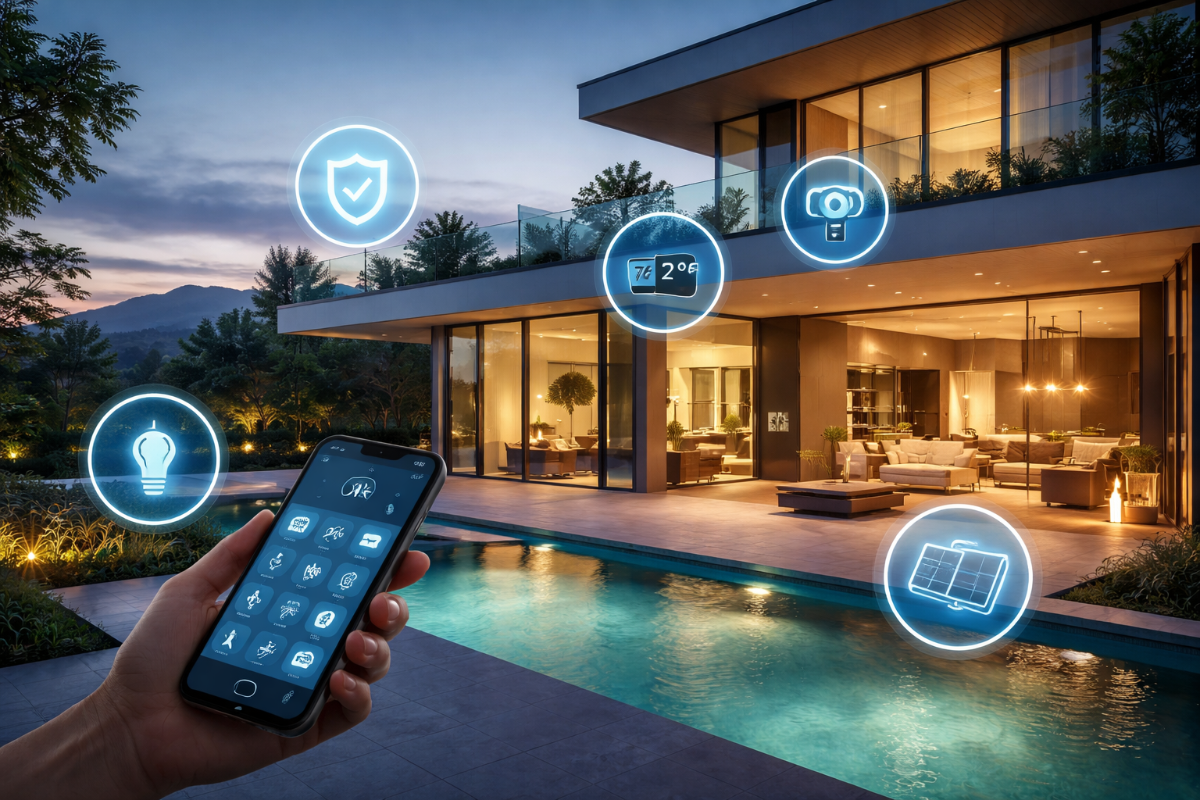
The idea of homes that understand people is no longer science fiction. Smart Future Homes are quickly becoming a real part of modern life. These homes use technology to make everyday tasks easier, safer, and more efficient. Lights can turn on automatically, temperature adjusts itself based on your comfort, and security systems can recognize who belongs in the house. Because of this, living spaces are slowly turning into intelligent environments that respond to human needs.

In the past, homes were simple structures that provided shelter. However, technology has changed that concept completely. Today, Smart Future Homes use artificial intelligence, connected devices, and automation systems to create a seamless living experience. For example, your home might learn your morning routine, start brewing coffee, open curtains, and adjust lighting before you even get out of bed. Consequently, daily life becomes more comfortable and efficient.

Moreover, these intelligent properties are not only about convenience. They also help save energy, improve safety, and increase property value. Real estate developers, homeowners, and buyers are now paying close attention to these innovations. As technology grows more advanced, Smart Future Homes will continue to transform how people live, interact with their homes, and manage their living spaces.

Evolution of Smart Home Technology

The journey toward intelligent housing did not happen overnight. It started with simple automation and gradually evolved into fully connected ecosystems.

Early Home Automation

In the early days, home automation was limited to basic timers and remote controls. People could schedule lights to turn on or off or control televisions from across the room. Although these features were convenient, they were not intelligent.

Rise of Connected Devices

Later, the internet changed everything. Wi-Fi enabled devices allowed homeowners to control appliances through smartphones. Smart thermostats, smart plugs, and voice assistants began appearing in households.

Transition to Smart Future Homes

Today, automation is far more advanced. Smart Future Homes combine artificial intelligence, machine learning, and connected sensors to create homes that actually learn from human behavior. Therefore, instead of manually controlling devices, the house automatically adapts to the user’s preferences.

AI-Powered Automation in Future Properties

Artificial intelligence is the brain behind modern intelligent homes. It allows devices to analyze data, recognize patterns, and make decisions.

AI systems in Smart Future Homes monitor daily activities and gradually learn routines. For example:

  • The system recognizes when residents usually wake up.

  • It adjusts lighting and room temperature accordingly.

  • It suggests energy-saving settings during periods of low activity.

Moreover, voice assistants like smart speakers are evolving into central control hubs. They connect appliances, security systems, entertainment devices, and even kitchen equipment.

Consequently, homeowners no longer need to manage dozens of individual devices. AI integrates them into a single ecosystem that works together smoothly.

Smart Security Systems

Safety is one of the biggest advantages of Smart Future Homes. Modern security technology goes far beyond traditional alarms.

Facial Recognition Access

Many smart homes now use facial recognition or biometric entry systems. Instead of keys, residents can unlock doors using their faces or fingerprints. This eliminates the risk of lost keys.

Real-Time Monitoring

Smart cameras and sensors continuously monitor activity around the property. If the system detects unusual movement, it sends instant alerts to the homeowner’s phone.

AI Threat Detection

Artificial intelligence can distinguish between normal activity and potential threats. For instance, it can tell the difference between a family member arriving home and an unknown visitor.

Therefore, security systems in Smart Future Homes provide both prevention and quick response.

Smart Climate Control

Comfort is another important feature of intelligent living spaces. Climate control systems are becoming smarter and more efficient.

Smart thermostats analyze factors such as:

  • Outdoor weather

  • Indoor humidity

  • Occupancy patterns

As a result, they automatically adjust heating or cooling levels to maintain comfort while reducing energy consumption.

Moreover, Smart Future Homes can divide climate control into zones. Each room can maintain a different temperature based on the preferences of its occupants.

Energy Management in Smart Future Homes

Energy efficiency is a major focus in modern property design. Smart technology helps reduce electricity waste and supports sustainability goals.

Energy management systems monitor real-time power usage. They identify which appliances consume the most electricity and recommend ways to reduce consumption.

For example:

  • Smart lighting turns off automatically when rooms are empty.

  • Solar panels connect with energy storage systems.

  • Appliances operate during off-peak energy hours.

Consequently, homeowners save money while also reducing environmental impact.

Comparison: Traditional Homes vs Smart Future Homes

Feature Traditional Homes Smart Future Homes
Lighting Control Manual switches Automated and sensor-based
Security Basic locks and alarms AI cameras and biometric access
Energy Use Limited monitoring Real-time energy tracking
Climate Control Fixed thermostat settings AI-adjusted temperatures
Device Connectivity Standalone appliances Fully connected ecosystem

Role of IoT Devices and Connected Ecosystems

The Internet of Things (IoT) is the foundation of Smart Future Homes. IoT refers to everyday devices connected to the internet that can communicate with each other.

Examples include:

  • Smart refrigerators

  • Voice assistants

  • Smart washing machines

  • Connected lighting systems

  • Intelligent door locks

These devices form a connected ecosystem where information flows between systems.

For instance, when a smart lock detects that a homeowner has arrived, it can signal other devices to:

  • Turn on hallway lights

  • Adjust room temperature

  • Start playing music

Therefore, IoT integration creates a seamless and automated home environment.

Impact on Real Estate Value and Buyer Expectations

The real estate industry is already seeing major changes due to Smart Future Homes.

Increased Property Value

Properties with integrated smart systems often sell faster and at higher prices. Buyers view smart features as long-term investments.

Changing Buyer Preferences

Modern buyers expect homes to include:

  • Smart security systems

  • Automated lighting

  • Energy-efficient devices

  • Integrated home assistants

Consequently, developers are now designing properties with built-in smart infrastructure rather than adding it later.

Comparison: Standard Property vs Smart Future Property

Factor Standard Property Smart Future Property
Market Appeal Moderate High demand
Energy Efficiency Basic Advanced energy optimization
Security Features Traditional systems AI-powered protection
Property Value Growth Slower Faster appreciation
Buyer Expectations Simple comfort Intelligent automation

Privacy and Cybersecurity Challenges

Despite many advantages, Smart Future Homes also raise concerns about privacy and security.

Connected devices constantly collect data about daily activities. While this data improves automation, it may also create risks if not properly protected.

Data Privacy Concerns

Smart home systems collect information such as:

  • Voice commands

  • Movement patterns

  • Device usage behavior

If companies misuse this data, users may lose control over their personal information.

Cybersecurity Risks

Hackers may attempt to access connected systems. If security measures are weak, attackers could potentially control devices or access sensitive data.

However, technology companies are developing stronger protections. These include:

  • End-to-end encryption

  • Multi-factor authentication

  • Secure cloud storage

Therefore, cybersecurity will remain an essential part of future smart home development.

Future Trends in Intelligent Living Spaces

Technology is evolving rapidly, and Smart Future Homes will continue to improve in many ways.

Predictive AI Homes

Future homes may predict needs before residents even request them. AI could analyze habits and automatically prepare living environments.

Health Monitoring Systems

Smart sensors may track health conditions such as sleep quality, heart rate, and air quality.

Consequently, homes could support better wellness and preventive healthcare.

Fully Autonomous Homes

In the long term, homes may manage themselves completely. Systems will coordinate cleaning robots, food management, security monitoring, and energy usage without human involvement.

Integration with Smart Cities

Future properties will also connect with city infrastructure. Homes may communicate with transportation systems, power grids, and public services.

Therefore, intelligent living spaces will become part of a much larger connected ecosystem.

Frequently Asked Questions

What are Smart Future Homes?

Smart Future Homes are residential properties equipped with advanced technologies such as artificial intelligence, IoT devices, and automated systems that manage household functions efficiently.

Are smart homes expensive?

Initially, smart home systems may cost more than traditional setups. However, they often reduce energy bills and maintenance costs over time.

Do smart homes improve property value?

Yes. Homes with advanced automation, energy management, and security systems usually attract more buyers and higher market value.

Are smart homes safe from hackers?

Most modern systems include strong encryption and authentication methods. However, homeowners should still use secure passwords and regular software updates.

Can smart homes save energy?

Yes. Automated lighting, smart thermostats, and energy monitoring systems help reduce electricity consumption significantly.

Tags: AI powered homesfuture smart house technologyintelligent home automationIoT smart home ecosystemSmart Future Homes
Previous Post

Top Supercar Road Trips Every Enthusiast Should Take

Next Post

Top Races That Could Decide the 2026 F1 Championship

Related Posts

Location Is No Longer Everything What Modern Homebuyers Really Want
Real Estate

Location Is No Longer Everything: What Modern Homebuyers Really Want

Real Estate

What Homeowners Should Know About Property Exterior Improvements

Luxury bathroom with garden view.
Real Estate

3 Effortless Luxury Bathroom Upgrades for Instant Elegance

Faux brick wall panels in the living room.
Real Estate

How to Create Luxury Interiors with Dundee Deco

lake with city
Investing

Australia Impact Investing: 7 Ways Real Estate Investors Are Creating Long-Term Impact and Stable Returns

Real Estate

Modern Shingle Installation Techniques For Enhanced Structural Safety

No Result
View All Result
Facebook Instagram Linkedin

Top Races That Could Decide the 2026 F1 Championship
Top Supercar Road Trips Every Enthusiast Should Take
Lazzara Unveils 50m LMY 165 Superyacht With Patented Sea Chest
Miami's Riverfront Gets a New After-Dark Destination
Five Habits You Can Adopt Now to Build Your Wealth
2026 F1 Championship Predictions Who Will Challenge George Russell for the Title
2026 F1 Championship Schedule Upcoming Races and Key Circuits to Watch
2026 F1 Championship Russell Takes Early Lead

Categories

  • Beauty
  • Biography
  • Business
  • Career
  • Celebrity
  • Charitable Events
  • Culture
  • Entertainment
  • Environment
  • Environmental Health
  • Events
  • Family
  • Family Office
  • Fashion
  • Feature
  • Finance
  • Fine Dining & Beverage
  • Health & Wellness
  • Impact Investing
  • Impact Leaders
  • Interviews
  • Investing
  • Legal Rights
  • Lifestyle
  • Luxury Living
  • Marketing
  • Net Worth
  • Philanthropy
  • Politics
  • Profile
  • Real Estate
  • Resource Guide
  • Retirement
  • Rights
  • Sustainability
  • Tech
  • The Arts
  • Travel
  • Travel Lifestyle
  • Uncategorized
  • Upcoming Event
  • Vehicles
  • Wealth
  • Wealth Management

© 2025 ImpactWealth  | Disclaimer – Privacy Policy

No Result
View All Result
  • Lifestyle
    • Health & Wellness
    • Fine Dining & Beverage
    • Fashion
    • Event Coverage
    • The Arts
    • Resources
  • Travel
    • Travel Lifestyle
  • Investing
    • Wealth
    • Retirement
    • Real Estate
    • Philanthropy
    • Family Office Trends
  • Impact Interviews
  • Subscribe Now
  • About Us
    • Press
  • Join Our Community
  • Sign up for Newsletter

© 2020 ImpactWealth

Welcome Back!

Login to your account below

Forgotten Password? Sign Up

Create New Account!

Fill the forms below to register

All fields are required. Log In

Retrieve your password

Please enter your username or email address to reset your password.

Log In
No Result
View All Result
  • Lifestyle
    • Health & Wellness
    • Fine Dining & Beverage
    • Fashion
    • Event Coverage
    • The Arts
    • Resources
  • Travel
    • Travel Lifestyle
  • Investing
    • Wealth
    • Retirement
    • Real Estate
    • Philanthropy
    • Family Office Trends
  • Impact Interviews
  • Subscribe Now
  • About Us
    • Press
  • Join Our Community
  • Sign up for Newsletter

© 2020 ImpactWealth