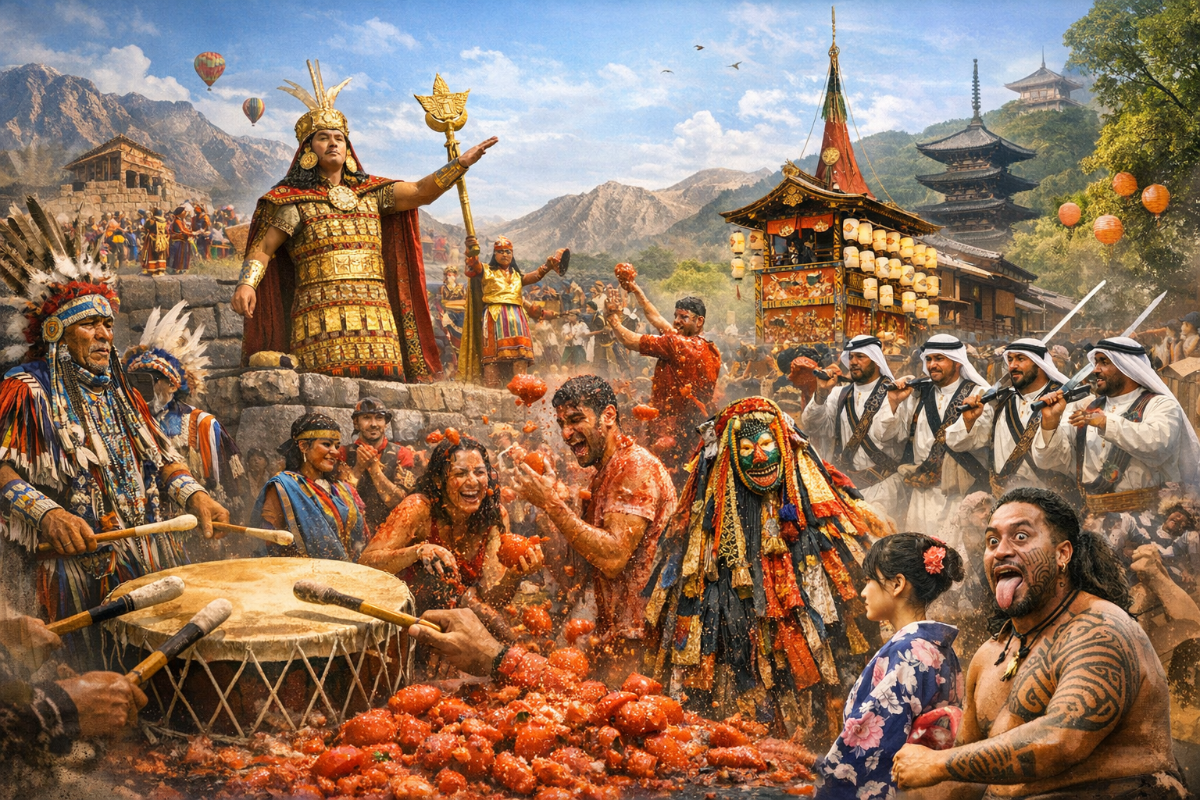
Unique Cultural Traditions Around the World are more than colorful festivals or ceremonial rituals they are living expressions of history, belief systems, geography, and deeply rooted community values. Every dance step, garment, chant, or communal feast tells a story shaped by centuries of adaptation, survival, migration, and faith. For travel enthusiasts and anthropology students alike, these traditions offer a direct pathway into the soul of a culture.
When we explore Unique Cultural Traditions Around the World, we begin to see how societies preserve their identities across generations. Traditions anchor communities during periods of change, reinforcing collective memory while adapting to modern realities. Moreover, they strengthen social bonds by creating shared experiences that connect elders to youth, locals to visitors, and the past to the present.
In an increasingly interconnected era, Unique Cultural Traditions Around the World also influence tourism, education, and global awareness. Cultural festivals attract international audiences, sacred ceremonies gain digital documentation, and once-local customs become globally recognized symbols. However, this visibility brings both opportunity and responsibility especially regarding preservation and respectful engagement.
Why Cultural Traditions Matter?
Traditions function as cultural ecosystems. Anthropologically speaking, they operate as mechanisms of social cohesion, identity reinforcement, and intergenerational knowledge transmission. They encode moral values, historical narratives, and cosmological beliefs into tangible practices.
Geography plays a decisive role. Mountain communities develop rituals tied to seasonal cycles; coastal populations shape traditions around maritime life; desert societies craft ceremonies reflecting scarcity and resilience. Consequently, tradition is rarely accidental it emerges from the intimate dialogue between people and place.
Furthermore, traditions often serve economic roles. Cultural tourism contributes billions globally, yet the commercialization of heritage can reshape rituals themselves. Therefore, understanding both preservation and adaptation is crucial when examining global traditions.
North America: Powwows (United States & Canada)
Origin and Historical Background
Powwows trace their roots to Indigenous North American tribes, particularly the Plains nations. Historically, they were spiritual gatherings connected to war victories, seasonal transitions, and communal decision-making. In the late 19th century, colonial policies suppressed many Indigenous ceremonies. However, communities preserved these traditions privately, ensuring their survival.
Cultural and Religious Significance
Powwows symbolize resilience and cultural continuity. They serve as intertribal gatherings that strengthen Indigenous identity while welcoming broader audiences. Moreover, they offer a space for spiritual expression through dance and song.
Rituals, Clothing, and Symbolism
Regalia—often mistakenly called costumes carry deep meaning. Feathered headdresses, beadwork, and handcrafted moccasins represent lineage and achievement. Drum circles form the heartbeat of the event, symbolizing unity.
Community Participation
Powwows are inclusive events with dance competitions, communal meals, and storytelling sessions. Elders transmit knowledge, while youth competitions ensure continuity.
Modern Evolution
Today, powwows are celebrated internationally, featured in academic research and cultural tourism programs. However, Indigenous leaders continue to advocate for authenticity and respectful representation.
South America: Inti Raymi (Peru)
Historical Background
Inti Raymi, the Festival of the Sun, originates from the Inca Empire in the 15th century. It honored Inti, the sun god, during the winter solstice in the Southern Hemisphere.
Cultural Significance
The ceremony reaffirmed the divine authority of the Sapa Inca and expressed gratitude for agricultural cycles. Consequently, it strengthened political and spiritual unity within the empire.
Rituals and Symbolism
Participants wear elaborate Andean attire, reenacting ancient rituals in Cusco. Music, dance, and symbolic offerings to the sun play central roles.
Modern Recognition
Revived in the 20th century, Inti Raymi now attracts thousands of visitors annually. Moreover, it has become a cultural emblem of Peruvian identity.
Tradition Overview Table
| Country | Tradition Name | Origin Period | Cultural Significance | Global Awareness Level |
|---|---|---|---|---|
| USA/Canada | Powwow | Pre-colonial | Indigenous identity & unity | High |
| Peru | Inti Raymi | 15th Century | Sun worship & agricultural cycle | High |
| Spain | La Tomatina | 1940s | Community celebration | High |
| Nigeria | Egungun Festival | Ancient Yoruba era | Ancestral veneration | Moderate |
| Saudi Arabia | Ardah | 18th Century | Tribal unity & honor | Moderate |
| Japan | Gion Matsuri | 9th Century | Spiritual purification | High |
| New Zealand | Haka | Pre-colonial Māori | War dance & identity | Very High |
Europe: La Tomatina (Spain)
Historical Background
La Tomatina began in 1945 in Buñol, reportedly during a local festival dispute. It evolved into an organized tomato-throwing event.
Cultural Significance
Although playful, it represents communal participation and shared joy. However, it lacks the religious depth seen in older traditions.
Rituals and Participation
Thousands gather annually to engage in a coordinated tomato battle. Protective goggles and rules ensure safety.
Modern Impact
La Tomatina is now a global tourist attraction. Consequently, it significantly impacts Spain’s seasonal tourism economy.
Africa: Egungun Festival (Nigeria)
Origin
Rooted in Yoruba cosmology, the Egungun Festival honors ancestral spirits believed to guide the living.
Religious Significance
Masked performers embody ancestral spirits, reinforcing moral conduct within the community.
Ritual Elements
Elaborate layered costumes conceal the dancer entirely, symbolizing the spiritual realm. Drumming and chants accompany processions.
Preservation
Despite modernization, Yoruba communities continue safeguarding the ritual through local councils and cultural education programs.
Cultural Impact Matrix
| Region | Type of Tradition | Tourism Influence | Preservation Efforts | Modernization Impact |
|---|---|---|---|---|
| North America | Indigenous Gathering | Educational tourism | Tribal governance | Cultural revitalization |
| South America | Solstice Festival | Heritage tourism | State-sponsored events | Reenactment adaptations |
| Europe | Community Festival | Mass tourism | Municipal regulation | Commercial expansion |
| Africa | Spiritual Ritual | Cultural tourism | Oral transmission | Urban adaptation |
| Middle East | Martial Dance | National identity tourism | Government support | Formal performances |
| Asia | Religious Festival | Pilgrimage tourism | Shrine preservation | Media broadcast |
| Oceania | War Dance | Sports & cultural tourism | Indigenous leadership | Global media exposure |
Middle East: Ardah (Saudi Arabia)
Historical Roots
Ardah originated as a tribal war dance in the Arabian Peninsula. It symbolized strength before battle.
Cultural Significance
Today, it represents national pride and unity. Moreover, it is performed during state ceremonies and national holidays.
Ritual Components
Men stand in rows holding swords, chanting poetry accompanied by drums.
Modern Recognition
Recognized by UNESCO as intangible cultural heritage, Ardah demonstrates how martial traditions evolve into cultural symbols.
Asia: Gion Matsuri (Japan)
Historical Background
Dating back to 869 CE, Gion Matsuri began as a purification ritual during a plague outbreak.
Religious Meaning
The festival seeks divine protection from misfortune. Shrines play a central role.
Symbolism and Ritual
Massive wooden floats, known as yamaboko, are paraded through Kyoto. Traditional garments reflect Heian-era aesthetics.
Global Influence
Gion Matsuri attracts international visitors and scholars, reinforcing Japan’s cultural diplomacy.
Oceania: The Haka (New Zealand)
Origins
The Māori haka originated as a war dance but encompasses various ceremonial purposes.
Cultural Meaning
It expresses strength, unity, and emotional intensity. Moreover, it honors ancestors and welcomes guests.
Performance Elements
Rhythmic chanting, synchronized stomping, and expressive facial gestures define the haka.
Modern Evolution
Globally recognized through New Zealand’s rugby team, the haka demonstrates how indigenous rituals gain international visibility while retaining cultural roots.
The Future of Cultural Traditions Beyond 2026
Globalization continues to reshape Unique Cultural Traditions Around the World. Digital documentation, social media broadcasting, and virtual tourism platforms are expanding global access. However, increased exposure can risk oversimplification or commercialization.
Consequently, cultural preservation strategies are evolving. Governments collaborate with UNESCO. Communities establish heritage councils. Digital archives safeguard oral histories. Moreover, heritage tourism now emphasizes ethical participation and cultural sensitivity.
Anthropologists predict that hybrid traditions will emerge—blending historical rituals with contemporary artistic expressions. Therefore, the future of cultural heritage lies not in static preservation but in adaptive continuity.
Conclusion
Unique Cultural Traditions Around the World reflect humanity’s shared yet diverse narrative. They preserve identity, transmit values, and cultivate belonging. While modernization and globalization reshape these practices, they remain vital anchors of cultural continuity.
For travelers, educators, and cultural explorers, engaging respectfully with global traditions deepens understanding beyond surface-level tourism. Moreover, supporting preservation efforts ensures these living expressions endure for generations to come.
As we move beyond 2026, the responsibility lies not only with governments or scholars but with global citizens. Cultural traditions will continue evolving—yet their essence, rooted in community and memory, will remain profoundly human.
Frequently Asked Questions (FAQ)
1. How are cultural traditions preserved today?
Through oral transmission, formal education, UNESCO recognition, digital archiving, and community-led cultural programs.
2. How does globalization impact traditions?
Globalization increases visibility and tourism but may risk commercialization or cultural dilution if not managed responsibly.
3. How can tourists engage respectfully?
Research cultural norms, seek local guidance, avoid intrusive behavior, and support community-owned initiatives.
4. Are younger generations maintaining traditions?
Yes, though often in adapted forms. Social media and digital storytelling are helping youth reconnect with heritage.
5. Why is protecting cultural heritage important?
It safeguards collective memory, strengthens identity, promotes intercultural understanding, and preserves humanity’s diverse legacy.