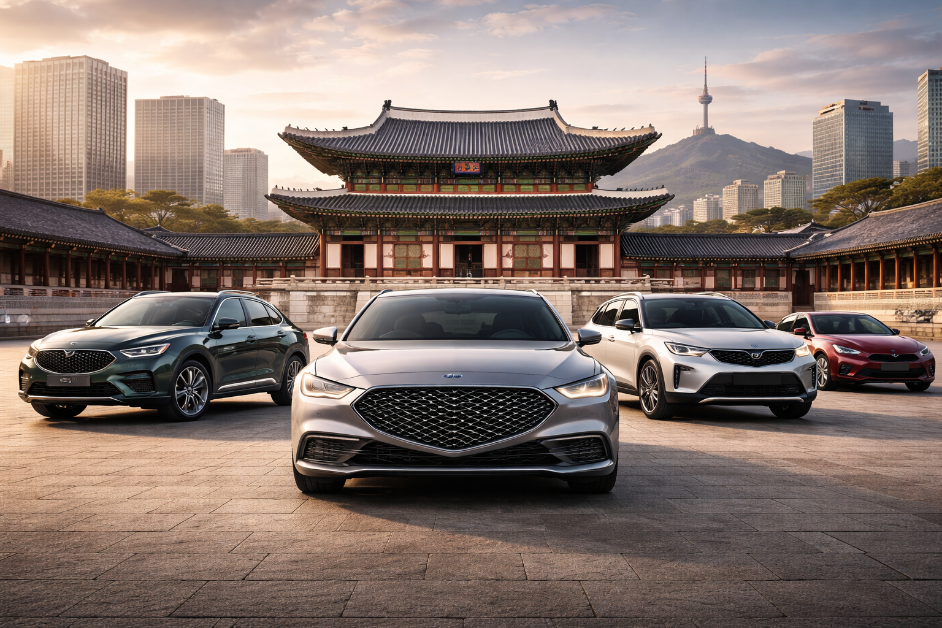
The global automotive industry is experiencing a quiet revolution. Once known primarily for affordability and reliability, South Korean automakers have successfully climbed into the premium segment with confidence. Today, the Top 10 Luxury Korean Cars are competing directly with German, Japanese, and American luxury marques, delivering exceptional design, advanced engineering, and world-class technology at highly competitive price points.
Over the past decade, brands like Genesis, Kia, and Hyundai have invested heavily in performance platforms, electrification, AI-powered infotainment systems, and refined interior craftsmanship. As a result, Korean luxury sedans and SUVs are no longer alternatives they are legitimate rivals to BMW, Mercedes-Benz, Audi, and Lexus. Moreover, global consumers are recognizing the value proposition: premium quality without inflated branding costs.
In this comprehensive guide to the Top 10 Luxury Korean Cars You Must Know in 2026, we examine performance specifications, interior sophistication, advanced safety systems, pricing strategies, and market positioning. Whether you are an automotive enthusiast, luxury car buyer, or performance-focused investor, this deep dive highlights why premium Korean automobiles are shaping the future of luxury mobility.
Why Korean Luxury Cars Are Dominating in 2026?
The transformation has been strategic and systematic:
-
Dedicated luxury brands (Genesis)
-
Advanced electrification platforms (E-GMP architecture)
-
Global design leadership
-
Competitive pricing models
-
Extended warranties and strong after-sales networks
Consequently, high-end Korean vehicles now lead in innovation while maintaining strong resale value and reliability ratings.
The Top 10 Luxury Korean Cars You Must Know in 2026
1. Genesis G90
The Genesis G90 represents Korea’s flagship luxury sedan.
Engine Options:
-
3.5L Twin-Turbo V6
-
3.5L Twin-Turbo V6 with Electric Supercharger
Horsepower: Up to 409 hp
Price Range: $90,000–$105,000
Luxury Highlights:
-
Executive rear seating package
-
Massaging seats
-
23-speaker Bang & Olufsen sound system
-
Advanced Highway Driving Assist 2
The G90 competes directly with the Mercedes S-Class, offering comparable comfort at a lower price.
2. Genesis GV80 Coupe
A performance-oriented luxury SUV.
Engine: 3.5L Twin-Turbo V6
Horsepower: Up to 375 hp
Price Range: $70,000–$85,000
It combines aggressive styling with refined interiors, positioning itself against the BMW X6 and Mercedes GLE Coupe.
3. Genesis Electrified G80
A fully electric luxury sedan.
Power Output: 365 hp (dual motor AWD)
Range: Approx. 280–300 miles
Price Range: $75,000–$80,000
Moreover, it offers ultra-fast charging and premium eco-conscious materials, challenging the Tesla Model S and BMW i5.
4. Genesis GV70
A compact luxury SUV with athletic handling.
Engine Options:
-
2.5L Turbo (300 hp)
-
3.5L Twin-Turbo V6 (375 hp)
Price Range: $50,000–$65,000
Its interior quality rivals Audi Q5 while offering better warranty coverage.
5. Genesis Electrified GV70
An EV version of the popular GV70.
Power: 429 hp (Boost Mode 483 hp)
Range: ~250 miles
Price: $65,000–$75,000
Consequently, it blends performance with sustainability.
6. Kia EV9 GT-Line
A three-row electric luxury SUV.
Power: Up to 379 hp
Range: 270–300 miles
Price Range: $60,000–$75,000
High-tech cabin, panoramic displays, and Level 2+ driver assistance elevate Kia into the premium SUV space.
7. Kia K8 (High-Spec Trim)
A premium executive sedan in global markets.
Engine: 3.5L V6
Power: 300 hp
Price: $40,000–$50,000
Offers ventilated seats, advanced infotainment, and premium materials.
8. Hyundai Grandeur (Azera Premium)
Hyundai’s upscale flagship sedan.
Engine: Hybrid & V6 options
Power: 230–300 hp
Price: $38,000–$48,000
As a result, it appeals to buyers seeking understated luxury.
9. Hyundai Ioniq 6 Limited
A luxury-oriented electric sedan.
Power: 320 hp (dual motor)
Range: Up to 361 miles
Price: $50,000–$58,000
Streamlined aerodynamics and minimalist luxury define its appeal.
10. Genesis X Concept (Production Variant Expected)
A high-end electric grand tourer.
Projected Power: 400+ hp
Positioning: Halo luxury EV
Although limited production is expected, it signals the future of Korean performance luxury.
Summary of the Top 10 Luxury Korean Cars
| Model | Engine/Powertrain | Horsepower | Price Range | Key Luxury Features |
|---|---|---|---|---|
| Genesis G90 | 3.5L Twin-Turbo V6 | 409 hp | $90k–$105k | Executive rear seats, B&O audio |
| Genesis GV80 Coupe | 3.5L TT V6 | 375 hp | $70k–$85k | Sport luxury interior |
| Electrified G80 | Dual Motor EV | 365 hp | $75k–$80k | Fast charging, premium trim |
| GV70 | Turbo I4 / V6 | 375 hp max | $50k–$65k | AWD, digital cockpit |
| Electrified GV70 | Dual Motor EV | 429 hp | $65k–$75k | Boost mode |
| Kia EV9 GT | Dual Motor EV | 379 hp | $60k–$75k | 3-row luxury EV |
| Kia K8 | 3.5L V6 | 300 hp | $40k–$50k | Executive sedan comfort |
| Hyundai Grandeur | Hybrid/V6 | 300 hp | $38k–$48k | Premium materials |
| Ioniq 6 Limited | Dual Motor EV | 320 hp | $50k–$58k | Long range EV |
| Genesis X (Upcoming) | Electric | 400+ hp | TBD | Luxury grand tourer |
How Korean Luxury Cars Compare to Traditional Brands?
Build Quality
Premium Korean automobiles now feature soft-touch materials, real wood trims, quilted leather, and precision assembly comparable to German rivals.
Performance
Twin-turbo V6 engines and high-output EV platforms deliver competitive acceleration figures.
Technology
Korean luxury sedans and SUVs lead in:
-
Over-the-air updates
-
AI-powered voice assistants
-
Augmented reality head-up displays
Moreover, driver-assistance systems are often standard rather than optional.
Technology & Luxury Feature Comparison
| Model | Infotainment | Safety Systems | Interior Materials | Driving Aids |
|---|---|---|---|---|
| G90 | 12.3” Dual Screens | HDA 2 | Nappa Leather | Adaptive Cruise |
| GV80 Coupe | 27” OLED Display | Blind Spot View | Aluminum & Leather | Lane Assist |
| Electrified G80 | AR HUD | Collision Avoidance | Eco Materials | Highway Assist |
| GV70 | Digital Cluster | Smart Cruise | Quilted Leather | AWD Dynamics |
| EV9 | Triple Display | Level 2+ ADAS | Sustainable Trim | Semi-Autonomous |
| Ioniq 6 | Curved Dual Screens | SmartSense | Minimalist Eco | Highway Drive Assist |
Market Positioning & Investment Perspective
The Top 10 Luxury Korean Cars You Must Know in 2026 reflect a broader strategic shift:
-
Aggressive electrification
-
Competitive global pricing
-
Expanding North American & European presence
-
Premium dealership experience upgrades
Consequently, Korean brands are not merely participating they are reshaping the luxury automotive hierarchy.
For investors, this translates into:
-
Growing global brand equity
-
Expanding EV market share
-
Strong R&D investments
-
Increasing premium segment margins
The Future of Korean Luxury Cars in 2026 and Beyond
The rise of high-end Korean vehicles signals a structural shift in global luxury mobility. As electrification accelerates and autonomous technologies mature, Korean automakers are positioned at the forefront of innovation.
Moreover, their strategy emphasizes technology integration, sustainable materials, and aggressive pricing. However, as brand prestige continues to strengthen, pricing power may gradually increase.
As a result, the Top 10 Luxury Korean Cars You Must Know in 2026 are more than premium vehicles they represent the next phase of automotive evolution. For enthusiasts, buyers, and investors alike, Korean luxury cars are no longer emerging players they are global leaders redefining what modern luxury means.
Frequently Asked Questions (FAQs)
1. Are Korean luxury cars reliable?
Yes. Korean manufacturers consistently rank high in reliability surveys and offer extended warranties, often surpassing German competitors.
2. How do prices compare to BMW or Mercedes?
Generally 10–20% lower for similar performance and features, offering better value.
3. Are these vehicles available globally?
Genesis and Kia luxury models are widely available in North America, Europe, and Asia. However, availability may vary by market.
4. Do Korean luxury cars hold resale value?
Resale values are improving significantly, especially for Genesis SUVs and EV models.
5. Is after-sales support competitive?
Yes. Comprehensive warranties and expanding dealership networks enhance ownership confidence.