
Written by: John McDonald, Analyst with Metals.com
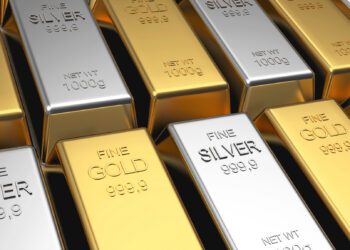
Since the earliest points in recorded history, gold has been an indicator of wealth and power. It can be tempting to wonder, much as with the chicken and the egg, which came first: the power or the gold?
Analyzing investor behavior spanning centuries, the answer becomes clear: the gold comes first. Many wonder how the wealthiest individuals and countries started their trajectory toward their current status. Gold is the constant in the equation.
To further explain this phenomenon, let’s take a look at how gold behaves both in its capacity as an investment vehicle offering appreciation and increased wealth and as a safe-haven hedge against risk in the markets. By evaluating the decisions and behaviors of the most powerful investors, countries, and civilizations, today’s investors can begin to recreate similar lasting wealth in their own portfolios.
Gold’s Value Begins with Recorded History
In both good markets and bad, gold is a constant. Coins containing gold first appeared around 800 B.C., but the Egyptians were using gold to decorate themselves and their most powerful figures more than 4,000 years earlier.
This period of time, during which the Egyptians used gold to celebrate their most powerful leaders, was also the point in history when writing was invented, different forms mathematics and astronomy emerged, and agriculture spread across Eurasia. This is also the era that introduced metal casting, which would become key to gold’s introduction as currency.
History demonstrates gold is inextricably intertwined with wealth, power, and knowledge. It is incorruptible but also malleable, which made it an ideal decorative covering. Ancient civilizations revered it as the ideal material for religious objects.
Gold was used medicinally by philosophers like Pliny in the first century. While it probably was not, as he suggested, a good defense against magic potions, it was clearly the preferred substance to harness power over one’s environment and exert influence over a wide array of disciplines.
The earliest recordings of history indicate there were many processes in place for assaying the authenticity and purity of gold, and as early as 3000 B.C. alchemists were attempting to convert base metals into the precious yellow metal. While these attempts ultimately were unsuccessful, they are the foundation for modern chemistry.
By the birth of Christ, gold was firmly cemented in the human tradition as an indicator of wealth, power, education, and influence. This historical tradition remains today and plays a significant role in the reasoning behind the decisions today’s wealthiest individuals and countries make regarding the acquisition of this most precious metal.
With this historical background in mind, we will examine three reasons the world’s billionaires buy gold in both good markets and bad.
Reason #1: Gold has never been anything other than a valuable commodity.
Literally from the dawn of recorded history, gold has been a valuable commodity. It predates minted money by thousands of years. No wonder the world’s wealthiest investors find ownership of gold to be the ultimate hedge against any economic swing!
According to the Credit Suisse Global Wealth Report, about 11 percent of the world’s wealthiest investors’ assets were held in gold as of October 2019. By comparison, most conventionally “affluent” investors keep their gold holdings at 5 percent or less of their total portfolio.
The world’s wealthiest rely not just on the value of this yellow metal, but also on its staying power. No matter what happens on a global scale, gold will hold its perceived worth and act as a reliably appreciating asset over the long term.
Reason #2: Bad news for the financial markets means good news for gold investors.
In a Summer 2019 interview with Bloomberg, billionaire investor Paul Tudor Jones said gold will be his “favorite trade” until at least mid-2020 and probably until mid-2021. Jones explained that the precious metal has “everything going for it” precisely because the world is currently gripped by geopolitical uncertainty stemming from areas in which gold has historically indicated power and stability.
Jones cited shrinking global trade, a pending economic shift in the United States that could negatively and permanently affect the value of the U.S. dollar, and generalized uncertainty worldwide that is causing central banks to buy up gold.
Jacob Rothschild, investment banker and member of the prominent Rothschild banking family, agreed, writing in a letter to investors that central bankers are “the greatest experiment in monetary policy in the history of the world…[and] we are therefore in uncharted waters.” In that letter, he recommended investors preserve the existing wealth in their portfolios with gold investments.
Reason #3: Gold values tend toward negative correlation to conventional assets and financial instruments.
Historically, gold values have tended to rise when other popular and “conventional” assets lose value. As stock values dropped substantially during the 2008 financial crisis, gold prices soared.
This negative correlation has long been a favored argument of gold bulls like Ray Dalio, founder of the world’s largest hedge fund, Bridgewater Associates, who recently made headlines for encouraging investors to get into the gold market in response to fears of the spreading coronavirus.
Dalio has made more money for his clients since 1975 than any other hedge fund and is notorious for his preference for gold not just as a hedge but as a viable alternative for portfolio diversification. He famously tells investors, “If you don’t own gold, you know neither history nor economics.” With a net worth of $16.8 billion, Dalio is another gold-loving billionaire who appears to know both.
$1.2 Trillion Makes a Solid Argument
Although many investors and investment advisors tend to recommend their clients keep 5 percent or less of their assets in gold investments when the economy is growing, as it continues to do at present, the world’s wealthiest seldom deviate from the 10-percent-plus gold policy established over eons.
For an institutional example of the value of this practice, look no further than China, which has emerged as a global economic power over the past two decades. The country has purchased hundreds of tons of gold, much of it undisclosed. In mid-2015, the country had 53.3 million ounces; today it likely holds at least 10 million more than that.
At present, China is floundering in the grip of the coronavirus, which could reduce its annual economic growth to 5.6 percent (down from 6.1 percent in 2019). However, this compares very positively to the effects of the 2002 SARS virus, which knocked twice that off of the country’s (much smaller and arguably more stable) economy at the time.
Despite general consensus that today’s China has a much more vulnerable economy today, the country appears likely to weather a much more severe and horribly mismanaged pandemic with an 0.5 percent loss rather than more than 1 percent.
Chief economist for the Asia-Pacific at French bank Natixis went so far as to predict “gradual stabilization for the rest of the year” starting at the end of Q1 2020 even though at time of publication, the true extent of the virus was still emerging. There may be no more compelling demonstration of the value of gold in a portfolio than this.
Gold prices can be volatile in the short term, but history bears out that investments in the yellow metal are one of the most reliable and predictable indicators of wealth and stability for the world’s wealthiest investors.
Written by: John McDonald, Metals.com Analyst
Sources: Investopedia, Bloomberg, Forbes, Visual Capitalist, MarketWatch, SchiffGold, Ancient History Encyclopedia, Seeking Alpha, New York Times, FP