Updated posts August 2026
Beyond the Metaverse: How the Multiverse Is Redefining Digital Reality
Three decades ago, American sci-fi author Neal Stephenson introduced the idea of a dystopian future designed for the privileged few. In his 1992 novel Snow Crash, the theme revolved around a future world where people could escape into an alternative 3D realm. In that same novel, he introduced the word metaverse and imagined the concept of the avatar.

While the term metaverse has been popularly attributed to Snow Crash, the idea of virtual reality has been around well before its time. VR technology and devices have long been essential to medicine, flight simulation, automobile design, and military training. By providing immersive environments for learning and discovery, VR forms the crux of today’s metaverse. However, metaverse proponents believe the possibilities extend well beyond VR alone. As it continues to evolve, the metaverse may incorporate technologies like augmented reality and mixed reality to offer a depth of experience shareable by internet users everywhere, a genuinely shared reality.


Metaverse Defined
The metaverse is a digital world that exists alongside the physical world, where users can interact with each other and their environment through personalized avatars. It’s a concept encompassing immersive, hyper-realistic virtual environments with the potential to reshape how we work, play, and socialize in the future. Many also describe it as the next iteration of the internet, closely intertwined with what’s known as Web 3.0.
In recent years, the metaverse has drawn considerable interest from tech giants. From Facebook to Microsoft to Roblox, companies have been racing to secure their share of this emerging industry. Statistics point to a double digit growth rate, with experts predicting the metaverse market could reach $783.3 billion by 2024, up from $478.7 billion in 2020, representing a compound annual growth rate of 13.1 percent.
The Next Big Thing
You may have seen and heard of the metaverse, but what about the multiverse? Essentially, both terms refer to a shared space that allows people to experience an immersive world through virtual and augmented reality technologies. While a multiverse is generally understood to be made up of multiple metaverses, the value it brings goes further still. After all, we’re no longer just talking about role playing games.
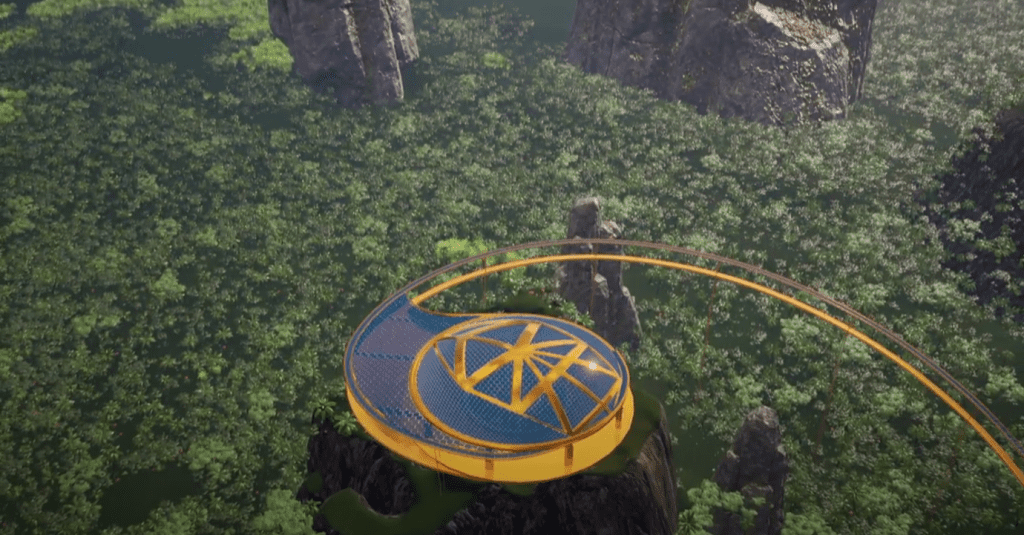
Within a multiverse, there are far more possibilities to combine real world opportunity with virtual experience. The GOLD Multiverse is one such example. Inside GOLD, various worlds allow people to interact both virtually and physically. Users can contribute to initiatives like helping build an eco-park, purchase tokens to pay for purchases, or even train and take classes inside GOLD. From there, they can step into the physical park in Bali, connect face to face with trainers and mentors, and earn from their digital assets in real life. This synergy between digital and physical experience is what differentiates the multiverse from the internet we know today.

Multiverse and Utility
The multiverse is only the beginning. Through evolving technologies, parallel realities are now genuinely possible. But what does that actually offer in practice? Here are several potential applications.
1. Gaming
For many years, VR has been used extensively in gaming, making it one of the most obvious applications of the multiverse. Players will be able to fully immerse themselves in a game world and interact with other players in real time.
2. Education and Training
The multiverse can be used to create immersive, interactive environments that allow people to learn in more engaging, effective ways. Within the GOLD Multiverse, for example, is the fitness metaverse META Gym, which allows users to train with the world’s top fitness experts both virtually and in real life.
3. Communities
The multiverse can connect people from all over the world, allowing groups to hold virtual meetings, events, and conferences without the need for travel or gathering in a single physical location.
4. Virtual Tourism
The multiverse can provide virtual tours of places people cannot physically visit. Using the combined power of the metaverse, AR, and VR, people can step into a genuinely enhanced virtual world.
5. Media Industry
The multiverse can be used to create virtual worlds for the media industry, serving as a tool for building virtual film sets and delivering more immersive experiences for audiences.
6. Retail
The multiverse can help promote brands in ways never previously possible. This technology offers greater engagement and allows people to experience brands in an entirely new light. Italian fashion houses Maison Valentino and Prada are among the luxury brands that have already created fashion for avatars, taking real steps toward commerce within the metaverse.
7. Real Estate
Inclusivity is one of the core values of the multiverse, connecting people across demographics and perspectives and allowing them to coexist and thrive together. Within the multiverse, everyone has the opportunity to purchase the real estate of their dreams, imagine acquiring parcels of land or luxury properties without the exorbitant prices typically attached to them in the physical world.
Why This Convergence Matters Now
What makes the multiverse concept genuinely different from earlier internet innovations is its deliberate blending of digital ownership with tangible, real world outcomes. Rather than existing purely as entertainment or escapism, platforms like GOLD are being built around the idea that time and value created online should translate directly into benefits people can actually use offline, a shift that could meaningfully change how digital economies are structured going forward.

These are just a few of the known applications of the multiverse, and with constantly evolving technology, the future feels practically limitless. Real or virtual? With the possibilities the multiverse offers, the answer may increasingly be both, and more.
Ronny Tome is the Executive Chairman of the Ducatus Group. An early blockchain and cryptocurrency adopter, Ronny once held the record for the highest crypto transaction when he sold a luxury villa in Bali in exchange for Bitcoin. As founder of Ducatus, Ronny’s vision is to bring blockchain to everyday people and encourage its application in daily life. Ducatus created the DucatusX blockchain and serves as the technology partner of the new GOLD Multiverse.
Author
Ronny Tome is the Executive Chairman of the Ducatus Group. An early blockchain and cryptocurrency adopter, Ronny once held the record for the highest crypto transaction when he sold a luxury villa in Bali in exchange for Bitcoin. As the founder of Ducatus, Ronny’s vision is to bring blockchain to everyday people and encourage its application in everyday life. Ducatus created the DucatusX blockchain and is the technology partner of the new GOLD Multiverse.
References:
https://www.statista.com/statistics/1295784/metaverse-market-size/
https://www.bloomberg.com/professional/blog/metaverse-may-be-800-billion-market-next-tech-platform/
https://www.voguebusiness.com/technology/valentino-to-dress-meta-avatars-in-digital-fashion
https://www.weforum.org/agenda/2022/11/property-buying-in-the-metaverse-is-the-future/