Updated August 2026
A Piece of London’s Indian History Prepares to Close Its Doors
Tucked away in central London, the India Club may not grab your attention at first glance. Yet for over seven decades, it has been a cherished spot for London’s Indian community, offering a comforting taste of home.
Situated within the historic Hotel Strand Continental, the India Club, with its lounge, restaurant, and bar, holds a special place in South Asian hearts across London. Sadly, it now faces closure, as the building’s owners plan a modern hotel upgrade that involves demolishing part of this historic structure.
The impending closure has left many saddened. Despite earlier efforts to preserve it, the club’s management recently declared September 17th as the final day of operation.
A History Rooted in Independence and Community
The India Club’s history runs deep. It was founded in the 1950s by members of the India League, including India’s first Prime Minister, Jawaharlal Nehru. In the 1990s, the Markers took over the lease.
Initially serving as a meeting place for India’s freedom fighters, the club quickly transformed into a hub for the broader South Asian community in London. Historian Kusoom Vadgama remembers it as the place where Indians in the 1950s and 60s could gather, speak their own language, enjoy familiar food, and feel a little less alone in a new land.
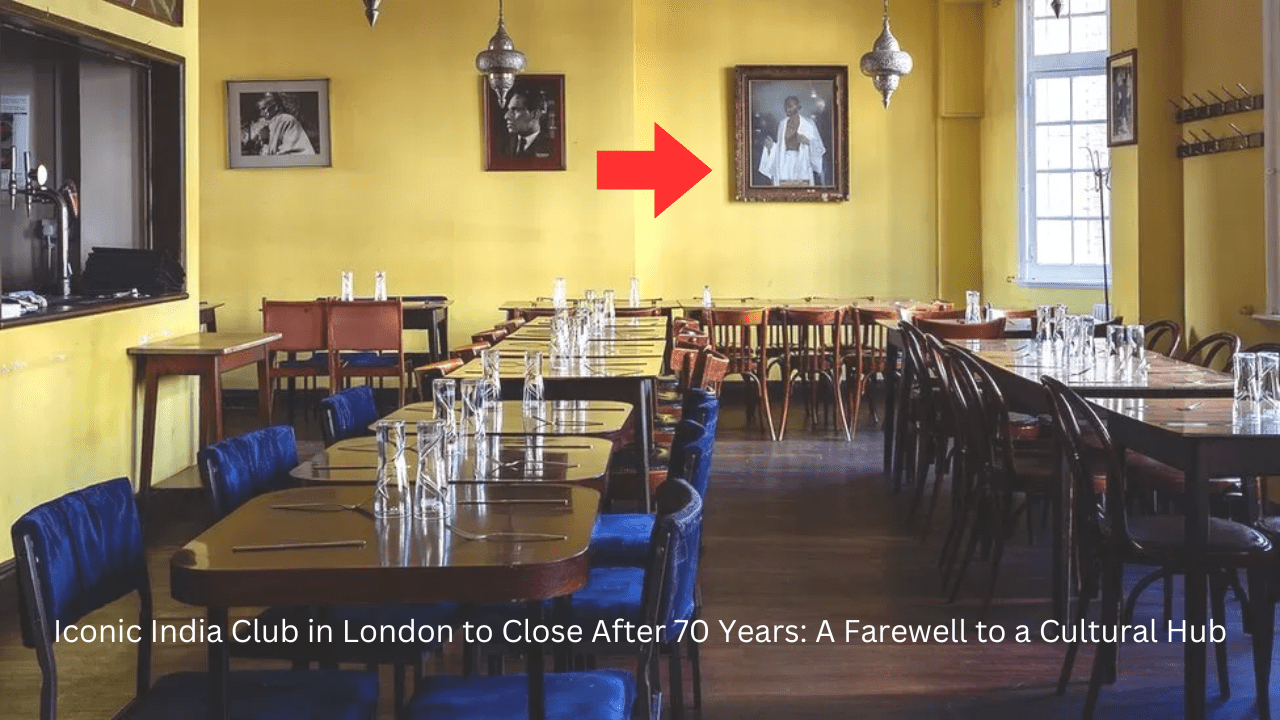
For those craving the tastes of India, the club served up dosas, butter chicken, pakoras, masala chai, and more. Its ambiance, with chandeliers, Formica tables, and classic chairs, harkened back to pre-independence India’s coffee shops, where culture and politics were the topics of the day.
The club’s walls, adorned with portraits of famous Indian and British figures who visited over the years, only added to its historical charm.
More Than a Restaurant: A Gathering Place Across Generations
What made the India Club endure for so long wasn’t simply its menu, but its role as a rare kind of shared space, one where politics, culture, and everyday community life could coexist under the same roof. Over time, it became a favorite gathering spot not only for immigrants but also for journalists and various India-British organizations. Journalist Shrabani Basu remembers it as an affordable spot for Indian food in central London during the 1980s, a detail that speaks to how the club managed to remain accessible even as the city around it changed.
Smita Tharoor, a motivational speaker, fondly recalls her father’s stories about the club. It held a special place in her family’s heart, and even after her father’s passing, she continued to visit. Now, as the India Club faces its final days, cherished memories are all that remain.
Similar story to read: Elon Musk Applauds India’s Chandrayaan-3 Budget Amid Interstellar Comparisons