
A private cigar lounge is more than a room with comfortable chairs and a box of cigars. At its best, it is a personal retreat: a place to unwind, entertain guests, celebrate milestones, and enjoy a carefully curated collection in an environment designed for comfort, elegance, and preservation.
For homeowners who appreciate fine cigars, premium spirits, and thoughtful interiors, a home cigar lounge can become one of the most distinctive spaces in the house. Whether it is built into a study, basement, wine room, library, pool house, or dedicated entertainment area, the key is to balance atmosphere with function. Every detail matters, from seating and ventilation to lighting, storage, and the cigar humidor cabinets that protect the collection itself.
Start With the Purpose of the Space
Before choosing furniture or finishes, decide how the lounge will be used. Some homeowners want a quiet retreat for evening relaxation, while others want a social space for hosting clients, friends, or family. The design should reflect that purpose.
A smaller lounge may only need two leather club chairs, a side table, a compact bar, and a well-sized humidor cabinet. A larger entertaining space may call for multiple seating zones, built-in cabinetry, a full bar, a television, display shelving, and proper ventilation.
Homeowners should also consider how a specialty room can influence property appeal. For those preparing to sell house fast in Detroit, thoughtful upgrades and unique spaces can help a home feel more distinctive and memorable. A private cigar lounge, when designed with proper seating, ventilation, a bar area, and a statement humidor cabinet, can transform an underused room into a polished space for entertaining and relaxation.
The most successful cigar lounges feel intentional. They are not just spare rooms with cigar accessories added later. They are designed around the ritual of smoking, conversation, and collecting.
Choose Seating That Encourages Relaxation
Seating is one of the most important design decisions in a cigar lounge. Comfort should come first, but style matters too. Traditional cigar lounges often use leather club chairs, tufted sofas, or deep lounge chairs because they create a sense of warmth and permanence.
Leather is especially popular because it feels luxurious, ages beautifully, and is easier to clean than many fabrics. Dark brown, cognac, charcoal, oxblood, and black leather all work well in cigar lounge interiors. For a more contemporary space, consider sleek lounge chairs with wood, brass, or matte metal accents.
The layout should encourage conversation. Instead of lining chairs against the wall, create a seating arrangement that faces inward. A pair of club chairs with a central table works well for smaller rooms. For larger lounges, combine sofas, armchairs, and occasional chairs to create a relaxed hospitality setting.
Side tables are essential. Guests need a place for an ashtray, drink, lighter, cutter, or book. Choose sturdy tables made from wood, stone, glass, or metal, and avoid delicate materials that may be damaged by heat or moisture.
Invest in Proper Ventilation
A cigar lounge cannot function properly without ventilation. Even the most beautifully designed space will become uncomfortable if smoke lingers. Good ventilation protects furniture, walls, artwork, and the overall air quality of the home.
At minimum, a private cigar lounge should have an exhaust system that removes smoke from the room and vents it outdoors. A high-quality air purifier can help, but it should not be the only solution. For enclosed or heavily used lounges, homeowners may want to consult an HVAC professional to design a system with negative air pressure, proper filtration, and dedicated exhaust.
The goal is to keep smoke from spreading into the rest of the home. Doors, seals, return-air placement, and airflow direction all matter. A lounge located near an exterior wall or in a detached guest house may be easier to ventilate than a room in the center of the home.
Ventilation is not the most glamorous part of cigar lounge design, but it is one of the most important.
Make the Humidor Cabinet the Centerpiece
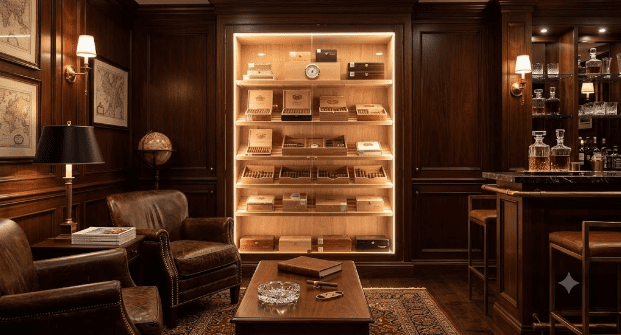
For serious cigar enthusiasts, storage is not an afterthought. For those just beginning to explore their options, browsing a range of cigar humidors, from desktop models to full cabinet units, is a helpful way to understand what level of storage best fits your current collection and long-term goals. Cigars are sensitive to temperature, humidity, and airflow. Without proper storage, even premium cigars can dry out, crack, mold, or lose their intended flavor profile.
This is where cigar humidor cabinets become essential. Unlike small desktop humidors, a cabinet humidor offers greater capacity, better organization, and a stronger visual presence. It can store boxes, trays, rare cigars, everyday selections, and aging collections in one elegant unit.
A well-designed humidor cabinet can also serve as a statement piece. In a luxury home lounge, it may function almost like a wine cellar display, showcasing the owner’s taste and collection. Glass doors, Spanish cedar interiors, LED lighting, precision humidity control, and furniture-grade finishes can make the cabinet both practical and beautiful.
Brands and retailers such as Your Elegant Bar are especially relevant for homeowners looking to integrate cigar humidor cabinets into a refined home bar or lounge setting. A cabinet humidor from a source like Your Elegant Bar can help bridge the gap between cigar preservation and interior design, allowing the humidor to feel like part of the room rather than a separate accessory.
When selecting a humidor cabinet, consider:
- Capacity: Choose a cabinet that allows your collection to grow.
- Humidity control: Look for reliable systems that maintain consistent relative humidity.
- Temperature stability: This is especially important in warm climates or rooms with direct sunlight.
- Interior materials: Spanish cedar is commonly used because it supports aging and aroma preservation.
- Display style: Glass-front cabinets are ideal for showcasing cigars, while solid-door designs offer a more understated look.
- Room integration: Match the cabinet’s finish to the lounge’s woodwork, bar, or furniture.
A cigar lounge should make cigar selection feel like part of the experience. The humidor cabinet should be easy to access, properly lit, and positioned where it naturally draws attention.
Add a Bar or Beverage Station
A cigar lounge pairs naturally with a home bar. This does not always require a full built-in bar with plumbing. Depending on the size of the space, a bar cart, sideboard, cabinet, or custom wet bar may be enough.
The beverage area should support the lifestyle of the room. Whiskey, cognac, rum, espresso, sparkling water, and craft cocktails are all common pairings for cigars. Storage for glassware, decanters, ice tools, cocktail accessories, and bottles keeps the lounge organized and guest-ready.
For a cohesive look, coordinate the bar area with the humidor cabinet. Matching wood tones, brass hardware, stone countertops, or similar lighting can make the space feel custom. If the humidor cabinet and bar cabinet sit near each other, they can create a natural focal wall.
Use Lighting to Set the Mood
Lighting should be warm, layered, and adjustable. Bright overhead lighting can make a cigar lounge feel harsh, while low, indirect lighting creates atmosphere.
Use a mix of lighting sources:
- Ceiling fixtures for general illumination
- Wall sconces for warmth and architectural interest
- Table lamps for intimacy
- Cabinet lighting for the humidor and bar
- Dimmers to adjust the room from daytime use to evening entertaining
Avoid placing cigars or humidor cabinets in direct sunlight. Sun exposure can raise internal temperatures and affect cigar quality. If the room has windows, use shades, drapery, or UV-filtering treatments to protect the collection.
Select Materials That Age Well
A cigar lounge should feel rich, grounded, and durable. Materials such as leather, walnut, mahogany, oak, stone, brass, bronze, and textured wallcoverings all work beautifully.
Darker palettes are common, but the room does not have to feel old-fashioned. A modern cigar lounge might use blackened wood, smoked glass, matte metal, stone surfaces, and minimalist furniture. A classic lounge might feature paneled walls, Persian rugs, leather chairs, antique books, and traditional artwork.
The best approach is to design the space around the home’s overall character. A cigar lounge in a mountain estate may look different from one in a penthouse, coastal residence, or modern villa. The shared goal is to create a space that feels personal, comfortable, and elevated.
Include Practical Accessories
The accessories in a cigar lounge should be functional as well as decorative. A beautiful room still needs the right tools.
Consider including:
- Large ashtrays
- Cigar cutters
- Torch lighters
- Cedar spills
- Humidor solution or humidity packs
- Serving trays
- Coasters
- Waste receptacles with lids
- Cigar journals or tasting notebooks
- Display trays for featured cigars
Keep accessories organized. Built-in drawers, bar cabinets, and humidor compartments can prevent clutter. The lounge should feel curated, not crowded.
Think About Sound and Entertainment
Some cigar lounges are designed for quiet reflection, while others are built for conversation, sports, music, or private screenings. Consider adding an integrated sound system, television, record player, or concealed speakers.
Acoustic comfort is also important. Rugs, upholstered furniture, drapery, bookshelves, and wall treatments can soften the room and make conversation more pleasant. A lounge with too many hard surfaces may look beautiful but feel loud and cold.
Personalize the Room
A private cigar lounge should tell a story about the homeowner. Art, books, travel objects, photography, sports memorabilia, watches, decanters, or vintage cigar advertisements can make the room feel collected rather than staged.
However, restraint matters. The room should not feel like a themed restaurant. Choose a few meaningful pieces and let the materials, furniture, humidor cabinet, and lighting do most of the work.
Final Thoughts
Designing a private cigar lounge at home is about creating an experience. The seating should invite guests to stay. The ventilation should keep the air comfortable. The lighting should set the mood. The bar should support hospitality. And the cigar humidor cabinet should protect and present the collection with the same care given to wine, watches, art, or other luxury collectibles.
For homeowners who want the room to feel polished and purposeful, cigar storage should be planned early in the design process. A quality humidor cabinet from a brand such as Your Elegant Bar can become both a functional investment and a visual anchor for the space.
A well-designed cigar lounge is not just a place to smoke. It is a private retreat built around craftsmanship, conversation, and the pleasure of slowing down.