Finding clothes that look and feel great can make getting dressed much easier. While fashion trends come and go, understanding how different cuts, fabrics, colors, and proportions work with your natural shape can help you build a wardrobe that feels comfortable and confident.
The idea of dressing for your body type should not be about hiding certain parts of your body or following strict fashion rules. Instead, it is about understanding what you enjoy wearing and discovering styles that highlight your favorite features. Every body is different, and the same clothing can look completely different from one person to another.
Understand Your Natural Shape
Before choosing clothing, it can be helpful to understand your general body proportions. Common fashion guides describe shapes using terms such as hourglass, pear, apple, rectangle, or inverted triangle.
These categories are only general guidelines. You do not need to fit perfectly into one category, and your body may change over time. The purpose of identifying proportions is simply to understand how clothing can create different visual effects.
Pay attention to your shoulders, waist, hips, and overall proportions rather than focusing on a specific clothing size. Fit and proportion are usually more useful than a label.
Choose Clothes That Fit Properly
One of the most important factors in flattering clothing is fit. Even an expensive outfit may not look its best if it is too tight, too loose, too short, or too long.
Clothing should allow you to move comfortably while maintaining the shape you want. Pay particular attention to shoulder seams, waistbands, sleeve lengths, and trouser hems.
A good fit does not necessarily mean wearing fitted clothing. Oversized and relaxed styles can look extremely fashionable when their proportions are intentional.
If a garment almost fits but needs a small adjustment, tailoring can make a significant difference.
Dressing an Hourglass Shape
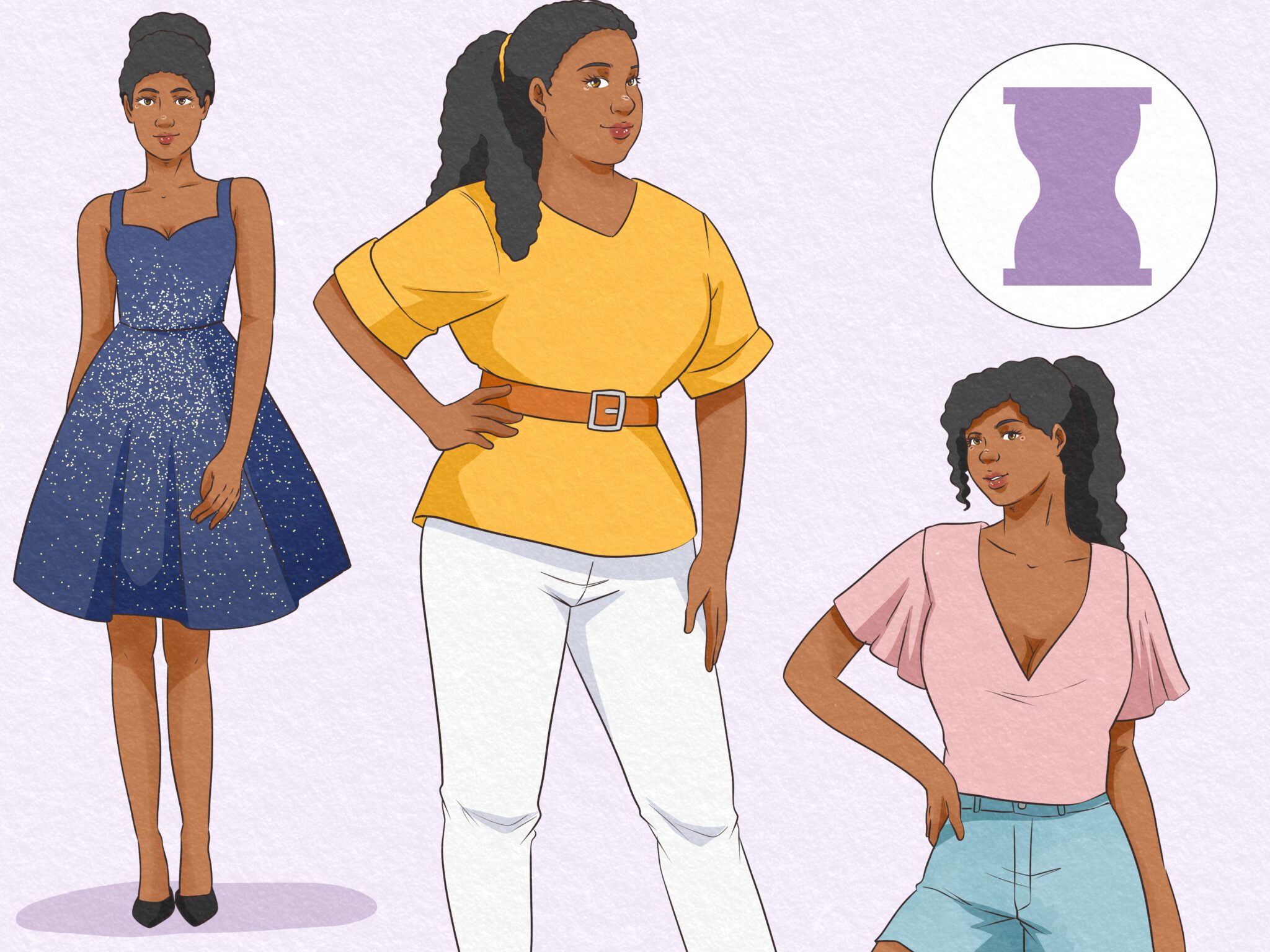
An hourglass shape is generally characterized by relatively balanced shoulders and hips with a more defined waist.
If you enjoy emphasizing your natural proportions, waist-defining styles can work particularly well. Wrap dresses, belted coats, high-waisted trousers, fitted jackets, and tailored dresses can create a balanced silhouette.
However, there is no requirement to emphasize the waist. Relaxed clothing, oversized sweaters, and straight-cut outfits can also look excellent depending on your personal style.
The key is choosing proportions that make you feel comfortable and confident.
Dressing a Pear Shape
A pear-shaped silhouette is often described as having hips that are wider than the shoulders.
If you want to create visual balance, you can experiment with drawing attention toward the upper body. Interesting necklines, statement earrings, textured tops, and structured jackets can achieve this effect.
Straight-leg or wide-leg trousers can create a balanced appearance, while A-line skirts and dresses can provide comfortable movement around the hips.
Again, these are suggestions rather than requirements. If you love fitted trousers or bold prints on the lower half of your outfit, wear them confidently.
Dressing an Apple Shape
Apple-shaped proportions are often described as having more visual fullness around the middle section of the body.
Comfortable fabrics and relaxed silhouettes can be useful choices. V-neck tops, flowing blouses, straight-leg trousers, and structured jackets can create attractive vertical lines.
Layering can also be effective. A long open cardigan or jacket can add structure without making the outfit feel restrictive.
The most important consideration is comfort. Avoid clothing that constantly needs adjusting or feels tight around the waist.
Dressing a Rectangle Shape
A rectangle shape generally has shoulders, waist, and hips that appear relatively similar in width.
If you want to create the appearance of more definition, you can experiment with belted clothing, peplum-style tops, high-waisted trousers, layered outfits, and garments with interesting structure.
Alternatively, you can embrace a streamlined silhouette. Straight-leg trousers, oversized shirts, minimalist dresses, and simple tailoring can create a sophisticated contemporary look.
Dressing an Inverted Triangle Shape
An inverted triangle silhouette is often characterized by shoulders that are wider than the hips.
If your goal is to create visual balance, you might experiment with simpler tops and more visual interest around the lower half. Wide-leg trousers, A-line skirts, patterned pants, and textured bottoms can help achieve this effect.
Simple necklines and softer shoulder details can also create a relaxed silhouette.
But broad shoulders are not something that needs to be hidden. Strong shoulder lines can look particularly striking in tailored jackets and structured fashion.
Pay Attention to Necklines
The neckline of a garment can significantly influence its appearance. V-necks can create a longer vertical line, while crew necks offer a classic and balanced look. Square necklines can provide structure, and boat necks can emphasize the shoulder area.
Experimenting with different necklines is often more useful than following rigid body-type rules. Try several styles and observe which ones make you feel most comfortable.
Use Color to Create Balance
Color is another powerful styling tool. Darker shades can create a visually streamlined appearance, while bright or contrasting colors naturally attract attention.
If you want to highlight a particular part of an outfit, introduce color, pattern, or texture there. For example, a colorful scarf can draw attention toward the face, while patterned trousers can make the lower half of an outfit more prominent.
Monochromatic outfits can create a long, cohesive visual line and are an easy option when you want a polished appearance.
Think About Patterns and Prints
Patterns can change the visual impression of clothing. Large prints tend to be more noticeable, while smaller patterns can create a subtler effect.
Vertical stripes can create a lengthening effect, while horizontal patterns can add visual width. However, these effects depend on the garment’s cut, fabric, and placement.
Rather than avoiding particular patterns, experiment with them. Fashion is ultimately about discovering combinations that work for you.
Consider Fabric and Texture
Fabric can affect both the appearance and comfort of an outfit. Structured fabrics can create sharper silhouettes, while soft and flowing materials can create movement.
If you want a tailored appearance, fabrics with enough structure to hold their shape can be useful. For relaxed outfits, lightweight knits, cotton, linen, and flowing fabrics may be more comfortable.
Texture can also add visual interest to simple clothing. Ribbed knitwear, denim, leather-look materials, embroidery, and textured fabrics can make an otherwise basic outfit more distinctive.
Choose the Right Rise and Length
The rise of trousers, jeans, and skirts can dramatically affect proportions. High-rise bottoms can visually lengthen the legs and define the waist, while mid-rise and low-rise styles create different silhouettes.
Similarly, the length of a skirt or dress can change the overall appearance of an outfit. Midi lengths offer versatility, while shorter styles create a more casual appearance and longer lengths can provide a dramatic effect.
The best length is often the one that allows you to move comfortably and complements the footwear you plan to wear.
Don’t Ignore Your Personal Style
Body-type advice should never replace personal preference. If you love oversized clothing, you do not have to stop wearing it because a fashion guide recommends fitted silhouettes. If you enjoy bright colors or bold patterns, you should not avoid them simply because they are considered unsuitable for a particular body shape.
Fashion is a form of self-expression. Styling guidelines are tools that you can use when helpful, not rules that you must follow.
Build Around Your Favorite Features
Instead of concentrating on areas you want to hide, think about the features you enjoy highlighting.
You might love your shoulders, waist, legs, neckline, or overall height. Choose clothing that makes those features feel special.
This positive approach can make shopping more enjoyable and help you develop a wardrobe that reflects your personality.
Conclusion
Choosing flattering clothes for your body type is ultimately about understanding proportions, experimenting with different styles, and prioritizing comfort and confidence. General body-shape categories can provide useful starting points, but they should never limit your choices.
Focus on proper fit, flattering proportions, colors you enjoy, comfortable fabrics, and silhouettes that make you feel good. Try different necklines, trouser rises, skirt lengths, patterns, and layers to discover what works best for you.
The most flattering outfit is not necessarily the one that follows every traditional fashion rule. It is the outfit that fits well, feels comfortable, reflects your personality, and gives you confidence.
Fashion should help you express yourself rather than tell you what you can or cannot wear. Once you understand the basics of proportion and styling, you can adapt trends to suit your own shape and create a wardrobe that feels genuinely yours.