Families lose more value to undocumented collections than most of them lose to market movements, and almost nobody treats it as a risk worth a morning.
The pattern repeats across estates. An executor opens a safe and finds forty watches, nobody living knows which were bought where, the boxes and papers were separated from the pieces at some point in the nineteen nineties, and a collection assembled with real knowledge is sold by people who have none.
Collection documentation is unglamorous work that protects more value per hour than almost anything else a family office does. It serves insurance, it serves probate, and it serves the next generation who will otherwise be guessing.
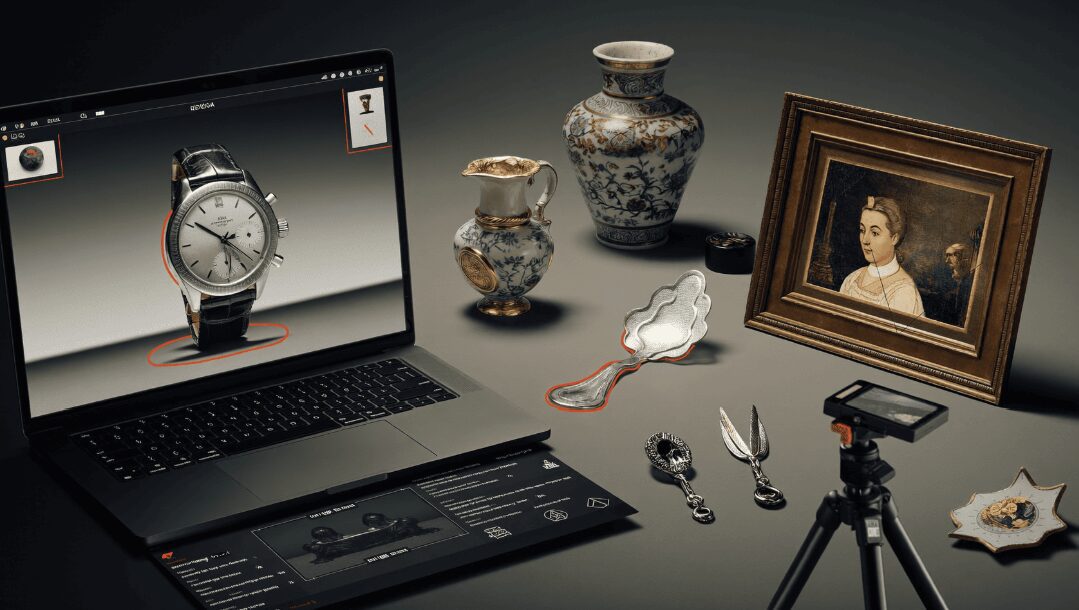
An AI Image Editor belongs in that process narrowly, and Higgsfield provides one, with a line that does not move.
What Does an Insurer Actually Need?
More than a list and less than people fear.
- Scheduled items itemised individually, not under blanket contents
- Current valuations, refreshed on the insurer’s cycle
- Photographs of each piece from multiple angles
- Serial numbers, hallmarks and signatures recorded
- An AI Image Editor adjustment limited to exposure
Scheduled coverage is the single distinction that catches families out most often. Blanket contents cover carries per-item limits that bear no relationship whatsoever to what one watch or one canvas is actually worth, and discovering that in the days after a loss is the worst possible moment.
Revaluation cycles vary between insurers and typically run every few years. Markets move, and a valuation from 2019 protects a 2019 figure.
Ask your broker what they require specifically. The list is usually shorter than expected.
What Must Never Be Altered?
Any image forming part of a record.
- Never remove a scratch, chip or blemish
- Never retouch patina or honest wear
- Never enhance a signature or hallmark
- Never alter a condition photograph in any way
- Never let an AI Image Editor change what is in the frame
This is the line, and it is not a stylistic preference. A condition photograph submitted to an insurer is a representation about the state of an item, and altering it is a materially false statement on which a claim may later rest.
Patina is the subtler version of the same mistake. Collectors across several categories specifically value honest wear and will pay for it, so an image quietly smoothed to look pristine misrepresents the object in both directions at once.
Exposure and white balance correction, so the item is visible and the colour is accurate, is the entire permitted scope.
How Should Provenance Be Recorded?
As a chain, with the gaps acknowledged.
- Where and when acquired, with the invoice, outside any AI Image Editor file
- Previous owners, where known
- Exhibition and publication history for art
- Any restoration and who carried it out, never an AI Image Editor cover-up
- Gaps noted honestly rather than glossed
Provenance drives value in art more than almost any other single factor, and an incomplete chain that is honestly and openly described is worth a great deal more than one that appears complete on paper and does not survive proper examination.
Restoration history belongs in the record permanently. Undisclosed restoration discovered at sale is the single most common cause of a withdrawn lot.
Record it as you acquire rather than reconstructing later. Reconstruction is where the gaps appear.
Does This Matter for Estate Planning?
It is the strongest argument for doing it at all.
- Executors cannot value what they cannot identify
- Probate valuation requires documentation
- Heirs frequently have no idea what is held
- Specific bequests need unambiguous identification
- No AI Image Editor file substitutes for the record itself
The identification problem is the genuinely practical one here. A will leaving a particular piece to a particular person becomes a dispute waiting to happen the moment that description could reasonably apply to three different items sitting in the same cabinet.
Families repeatedly discover value only after a sale, when somebody who bought cheaply resells well. A catalogue prevents that entirely.
Share the existence of the record with whoever will need it. A perfect catalogue nobody can find is no catalogue.
How Should the Record Be Secured?
As carefully as the collection.
- Never geotag collection photographs
- Never post items publicly or on social accounts
- Restrict access to the catalogue itself
- Store a copy off-site and encrypted
- Keep AI Image Editor working files inside the same controls
A complete catalogue is, viewed from the wrong angle, a shopping list. It identifies exactly what exists, what each item is worth and frequently where in the house it sits, which is precisely the information nobody outside a very short and deliberate list should ever hold.
Social posting is by far the commonest exposure in practice. A photograph of a wrist or a wall, posted entirely innocently by somebody in the household, identifies both the item and where it lives in a single frame.
Treat the catalogue itself with the same care you would give account credentials.
Who Should Hold Copies?
A defined short list, documented.
- The principal, holding the master AI Image Editor catalogue
- The family office or adviser, where one exists
- The insurance broker, for scheduled items
- The executor, or instructions on how to reach it
- Nobody else, by default
The executor point is the one families overlook almost universally. A meticulous catalogue that exists somewhere and cannot be located after a death has failed at precisely the moment it was built for.
Written instructions held with the will, saying where the record is and how to access it, solve this in two lines.
Review the access list annually without fail. Advisers change, relationships end, and old copies persist.
What Should Be Photographed?
More than the obvious view.
- Overall images from several angles
- The back, underside and edges
- Serial numbers and hallmarks, close and legible
- Every existing flaw, individually
- Boxes, papers and documentation alongside the piece
Photographing every flaw deliberately is the part people instinctively resist and the part that protects them most. Recorded damage is damage that demonstrably existed before the claim, while unrecorded damage is simply an argument waiting to be had.
Boxes and papers matter enormously across several collecting categories. For watches in particular, completeness materially affects value, which is visible in the catalogues of any major sale including the Patek Philippe lots at Phillips Hong Kong.
Keep the paperwork with the piece in the record, even where they are stored separately.
What Does Good Practice Look Like Technically?
Consistent and unremarkable.
- Neutral background, the same each time
- Even, diffuse light with no hard reflections
- A scale reference in at least one frame
- The same setup across the collection
- Batch correction in an AI Image Editor, exposure only
Reflective items are the genuine technical challenge in this work. Polished metal, glass cases and varnished surfaces all throw hard reflections, and diffused light from a large soft source is the standard professional answer to it.
A colour reference card in frame makes accurate colour correction possible later, which matters for anything where colour affects value.
Consistency across a whole collection is what makes the catalogue genuinely readable afterwards. Forty items photographed the same way can be compared at a glance, while forty photographed differently cannot.
Should a Professional Be Engaged?
For significant pieces, yes.
- Specialist photographers exist for art and objects
- Appraisers frequently arrange photography
- Auction houses photograph to a known standard
- Your own record still has value alongside
- An AI Image Editor does not replace either
Professional photography is appropriate for anything approaching the top of a collection, and the cost is small against the value being documented.
Your own record remains useful between professional updates and for the long tail of a collection that would never justify a specialist.
Both can coexist perfectly well, and Higgsfield handles the correction either way. The catalogue simply holds whichever exists for each piece.
Does Lending to Exhibitions Change This?
It does, and the documentation becomes contractual rather than merely prudent.
Lending a work to a museum or a private exhibition involves condition reports produced at each handover, and a lender without their own record is accepting somebody else’s account of what left the house.
What a loan requires:
- A condition report agreed before the piece leaves
- Photographs at handover, by both parties
- Transit insurance arranged and confirmed in writing
- A second report on return, compared against the first
- No AI Image Editor involvement in either report
The return comparison is where disputes arise, and they arise because one side has a thorough record and the other does not. Matching photographs taken at both points settle almost everything before anybody involves a lawyer.
Nail-to-nail cover is the standard arrangement and worth confirming rather than assuming. Gaps between a lender’s policy and a borrower’s are where losses sit.
Keep the loan paperwork in the item’s folder permanently. Exhibition history adds to provenance, and the record of where a piece has shown its value.
Agree who photographs, when, and who holds the files before anything is created.
How Should the Files Be Organised?
By item, with everything attached.
- One folder per item, with AI Image Editor files kept apart
- Originals kept unedited, outside Higgsfield, always
- Invoices and appraisals in the same folder
- Store the Higgsfield project apart from the record
- Date every update to a valuation or condition
Higgsfield keeps the correction work in one place as part of an AI creative suite, which suits a family office handling this internally rather than outsourcing it.
Keeping originals unedited is what makes the record defensible. The corrected version is for the catalogue and the original is the evidence.
Separating any working files from the record prevents the only confusion that genuinely matters here, which is an adjusted image sitting where a condition photograph should.
How Often Should It Be Updated?
On acquisition, and on a cycle.
- Photograph on acquisition, before any AI Image Editor correction
- Revalue on the insurer’s cycle
- Re-photograph after any restoration or damage
- Review annually against the insurance schedule
- Note disposals rather than deleting them
Photographing at the point of acquisition is the single habit that makes the whole exercise manageable. A collection documented piece by piece as it grows never requires the daunting catch-up project that puts most families off entirely.
Keeping disposal records matters for tax and for the family’s understanding of what was held and when.
An hour a year, once the catalogue genuinely exists, is enough to maintain the whole thing.
What Would Starting Look Like?
A weekend, for most collections.
- Confirm what your insurer requires for scheduled items
- Set up a consistent, neutral photography position
- Work through the collection item by item
- Photograph every flaw deliberately
- Record serials, hallmarks and documentation, before Higgsfield
- Correct exposure only, in an AI Image Editor
- Store securely and tell the executor where it lives
Then send the insurer what they asked for and see what the schedule actually says.
Most families find at least one significant item carrying blanket contents cover rather than a scheduled valuation, which is the finding that pays for the weekend.
FAQ’s
Why schedule items individually?
Blanket contents cover carries per-item limits unrelated to what a single watch or canvas is worth.
Can a condition photograph be retouched?
Never. It is a representation of an item’s state, and a claim may later rest on it.
What do families most often lose?
Value at probate, because executors cannot identify or value what was never documented.
How should the catalogue be secured?
Like account credentials. It identifies what exists, what it is worth and frequently where it sits.
What may an AI Image Editor do?
Exposure and white balance correction only, so the item is visible and the colour is accurate.
Conclusion
A collection assembled over decades is frequently dispersed by people who never knew what it contained, and the only thing that prevents it is a record somebody made on an ordinary weekend.
An AI Image Editor corrects exposure so a catalogue reads consistently, and Higgsfield keeps that work alongside the record without ever entering it.
Photograph the flaws, record the serials, keep the papers with the piece, and tell your executor where the file lives.